
Ipe Decking in Florida (2026)
Considering ipe decking in Florida? Learn about its durability, cost, maintenance, and how it stands up to Florida's harsh climate.
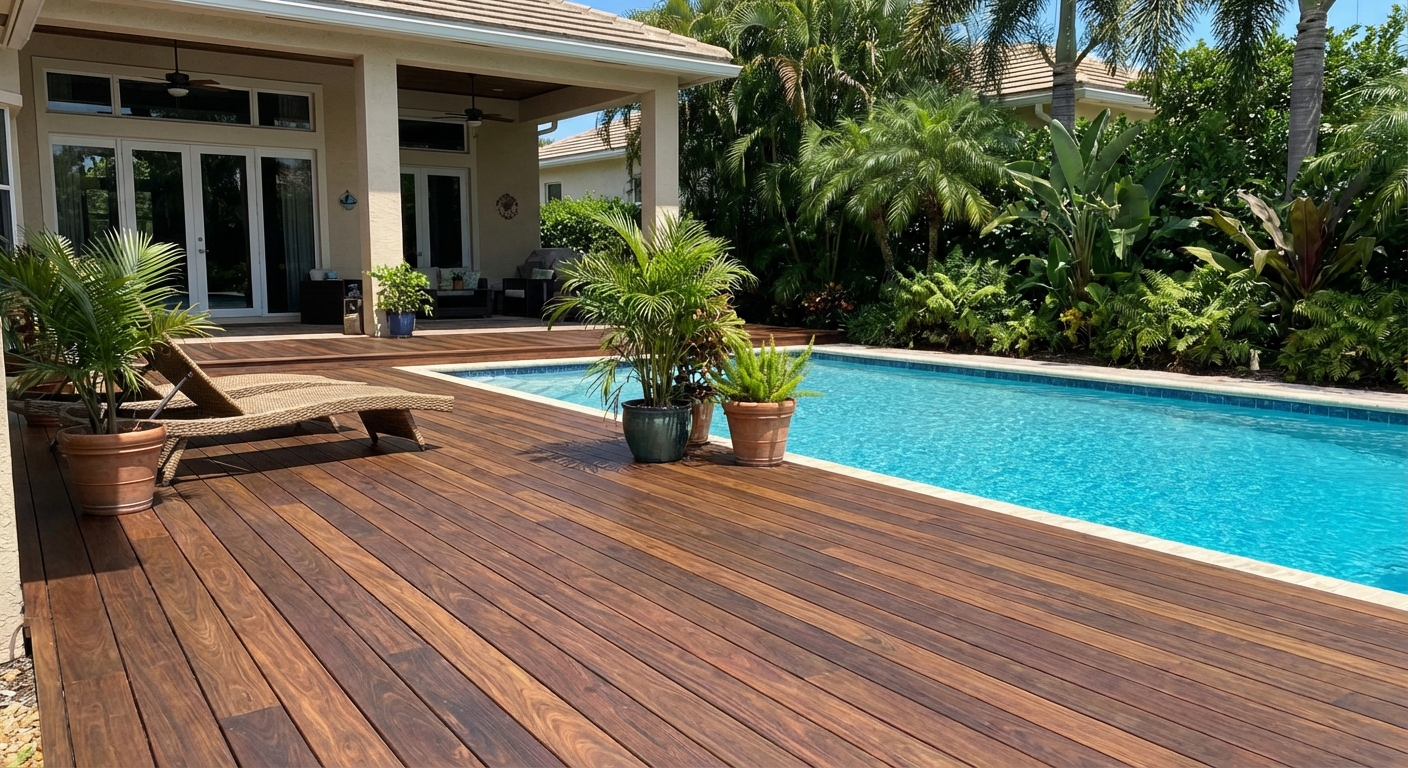
Are you tired of replacing your deck every few years due to rot, insects, or sun damage? In Florida's challenging climate, choosing the right decking material is crucial. Ipe, a premium hardwood, offers exceptional durability and resistance to the elements, making it a popular choice for homeowners in Miami, Tampa, Orlando, Jacksonville, Fort Lauderdale, and across the Sunshine State.
🌳 Tool Alert: Material Comparison
PT vs Composite vs Cedar. Compare 25-year total cost of ownership including maintenance.
Compare Materials →What is Ipe Decking?
Looking for more regional information? Check out our Florida State Decking Hub.
🏗️ Planning a deck project?
Get a free manual project review, or visualize your dream deck with AI before requesting quotes.
Ipe (pronounced "ee-pay") is a dense, exotic hardwood sourced from South America. It's renowned for its exceptional strength, hardness, and natural resistance to decay, insects, and fire. Ipe's rich, reddish-brown color and fine grain also make it an aesthetically appealing option.
<!-- slot:after-intro -->
Choosing between composite and wood? Our composite vs wood decking breaks down the real costs over 10 years. For full installed pricing by material type, see our complete deck cost guide for Florida.
Why Ipe is a Good Choice for Florida
Florida's climate presents unique challenges for outdoor structures. Here's why ipe decking stands out:
- High Humidity Resistance: With average relative humidity between 70-90% year-round, Florida's moisture levels can quickly degrade many decking materials. Ipe's dense grain makes it naturally resistant to moisture absorption, minimizing the risk of rot and decay. This is a huge advantage compared to softer woods like cedar, which require constant sealing and maintenance to survive. For more on this, see Best Decking Material for Florida Humidity.
- Insect Resistance: Termites, especially the Formosan subterranean termite, are a major threat in Florida. Ipe's density makes it naturally resistant to termite infestation, reducing the need for chemical treatments. While pressure-treated lumber is still essential for the substructure, using ipe for the decking itself adds an extra layer of protection.
- UV Resistance: Florida's intense sun exposure can fade and damage many decking materials over time. Ipe's natural oils and density help it withstand UV degradation, maintaining its color and structural integrity for years. However, it will eventually fade to a silver-gray patina if left untreated.
- Durability: Ipe is one of the hardest woods available, making it incredibly resistant to scratches, dents, and wear. This is particularly important for pool decks and high-traffic areas. Its density also makes it naturally slip-resistant, an important safety consideration for pool decks.
- Fire Resistance: Ipe has a Class A fire rating, the same as concrete and steel. This is a significant safety advantage, especially in areas prone to wildfires.
- Hurricane Resistance: While no deck is completely hurricane-proof, ipe's strength and density can help it withstand high winds and impact. Proper installation and adherence to the Florida Deck Building Codes: Key Requirements for 2026 are crucial to ensure your deck meets wind uplift requirements. Remember that Miami-Dade County has the strictest building codes in the US (High Velocity Hurricane Zone), so extra attention to detail is needed.
Ipe Decking: Cost Considerations in Florida
Ipe is a premium material, and its cost reflects its superior performance. Here's a comparison of installed deck costs in Florida:
| Material | Cost per Square Foot (Installed) |
| ------------------ | -------------------------------- |
| Pressure-Treated | $25 - $45 |
| Composite | $45 - $75 |
| Cedar | $35 - $60 |
| Ipe | $65 - $110 |
As you can see, ipe is significantly more expensive upfront than other decking options. However, its long lifespan and minimal maintenance requirements can make it a cost-effective choice in the long run. Think of it as an investment rather than just an expense. For more detailed cost breakdowns, check out How Much Does a Deck Cost in Florida? Complete 2026 Guide and Deck Cost in Miami: Local Pricing Guide for 2026.
<!-- slot:mid-content -->
Installing Ipe Decking in Florida: Key Considerations
Installing ipe decking requires specialized skills and knowledge due to its hardness and density. Here are some important factors to consider:
- Pre-Drilling: Ipe is so hard that it's almost impossible to drive screws or nails without pre-drilling. Using the correct drill bits and techniques is essential to avoid splitting the wood.
- Fasteners: Stainless steel screws are recommended to prevent corrosion in Florida's humid environment. Hidden fastener systems can create a clean, seamless look, but they require careful installation.
- Substructure: A solid, well-built substructure is crucial for supporting ipe decking. Pressure-treated lumber is the standard choice for the substructure, providing protection against termites and rot. Ensure adequate spacing between joists to prevent sagging.
- Acclimation: Allow the ipe decking to acclimate to the local climate for several days before installation. This will help minimize expansion and contraction after installation.
- Permits: Most Florida cities require permits for decks over 200 sqft or 30 inches above grade. Be sure to check with your local building department before starting your project. In Miami-Dade, obtaining permits through the Building Dept can be very strict and take 6-12 weeks. In Tampa/Hillsborough, permits are handled through the county's Building Services. For a deeper dive, see Do You Need a Deck Permit in Florida? State & City Rules.
- Professional Installation: Due to the complexities of working with ipe, it's highly recommended to hire a qualified and experienced deck builder. Look for contractors familiar with ipe installation and local building codes. If you're in Tampa, check out Best Deck Builders in Tampa: How to Find the Right Contractor. If you're in Orlando, see Best Deck Builders in Orlando: What to Look For in 2026. Jacksonville residents can check Best Deck Builders in Jacksonville: Local Guide, and those in Fort Lauderdale can look at Best Deck Builders in Fort Lauderdale: How to Choose in 2026.
Maintaining Your Ipe Deck in Florida
While ipe is naturally durable, some maintenance is still required to keep it looking its best:
- Cleaning: Regularly sweep your deck to remove dirt and debris. Wash it with a mild soap and water solution at least once a year to prevent mold and mildew growth. Florida's humidity and frequent rain can create ideal conditions for these organisms.
- Sealing: Applying a UV-resistant sealant every 1-2 years can help maintain ipe's original color and prevent it from fading to gray. However, some homeowners prefer the natural silver-gray patina that ipe develops over time.
- Oiling: Applying a penetrating oil can help nourish the wood and prevent it from drying out and cracking. This is especially important in Florida's intense sun.
- Inspecting: Regularly inspect your deck for any signs of damage, such as loose boards, cracks, or insect activity. Address any issues promptly to prevent them from escalating.
Remember that Florida's year-round UV exposure will degrade finishes faster than in northern states. The best months to build are typically November-April, during the dry season with milder temperatures.
Visualize Your Dream Deck
Before you start building, take the time to plan your deck design carefully. Consider the size, layout, and features you want to include. Use PaperPlan (paperplan.app) to visualize your deck with PaperPlan design with different materials and layouts before committing to a contractor. This can help you make informed decisions and avoid costly mistakes.
<!-- slot:before-faq -->
Ipe decking is a significant investment, but its exceptional durability and resistance to Florida's harsh climate make it a worthwhile choice for many homeowners. By following these guidelines, you can ensure that your ipe deck will provide years of enjoyment and beauty.
<!-- slot:end -->
🎨 Not sure which material to pick?
Upload a photo of your backyard and see exactly how Trex, TimberTech, or cedar would look — free and instant.
Frequently Asked Questions
Is ipe decking slippery when wet?
Ipe has a naturally high slip resistance due to its dense grain. However, any surface can become slippery when wet, especially if it's covered in algae or mildew. Regular cleaning can help maintain ipe's slip resistance. This is particularly important for pool decks where slip resistance is critical.
How long will an ipe deck last in Florida?
With proper installation and maintenance, an ipe deck can last 50+ years in Florida. This is significantly longer than most other decking materials, making it a cost-effective choice in the long run.
Does ipe decking get hot in the sun?
Like all decking materials, ipe can get hot in direct sunlight. However, its density helps it retain heat longer than some other materials. Choosing a lighter stain or sealant can help reduce heat absorption. Consider the orientation of your deck to minimize sun exposure during peak hours.
Can I paint ipe decking?
While you *can* paint ipe decking, it's generally not recommended. Paint can chip and peel, requiring frequent maintenance. Ipe's natural beauty is best appreciated with a clear sealant or oil. Painting also negates many of the benefits of ipe, like its natural color and grain.
Is ipe decking environmentally friendly?
The environmental impact of ipe decking depends on how it's sourced. Look for ipe that is certified by the Forest Stewardship Council (FSC) to ensure it comes from responsibly managed forests. Choosing sustainably sourced ipe helps protect rainforest ecosystems.
📋 Planning a deck project?
Get a free manual project review from our team — no obligation, no spam.
Get Free Project Review →Upload a backyard photo and preview real decking materials with AI — free, instant, no sign-up.
Permits, costs, material comparisons, and questions to ask before requesting quotes — delivered to your inbox.