
Cedar Deck Cost in Florida (2026)
Thinking of a cedar deck in Florida? Learn the costs, pros & cons, and how to combat humidity. Get local pricing and maintenance tips now!
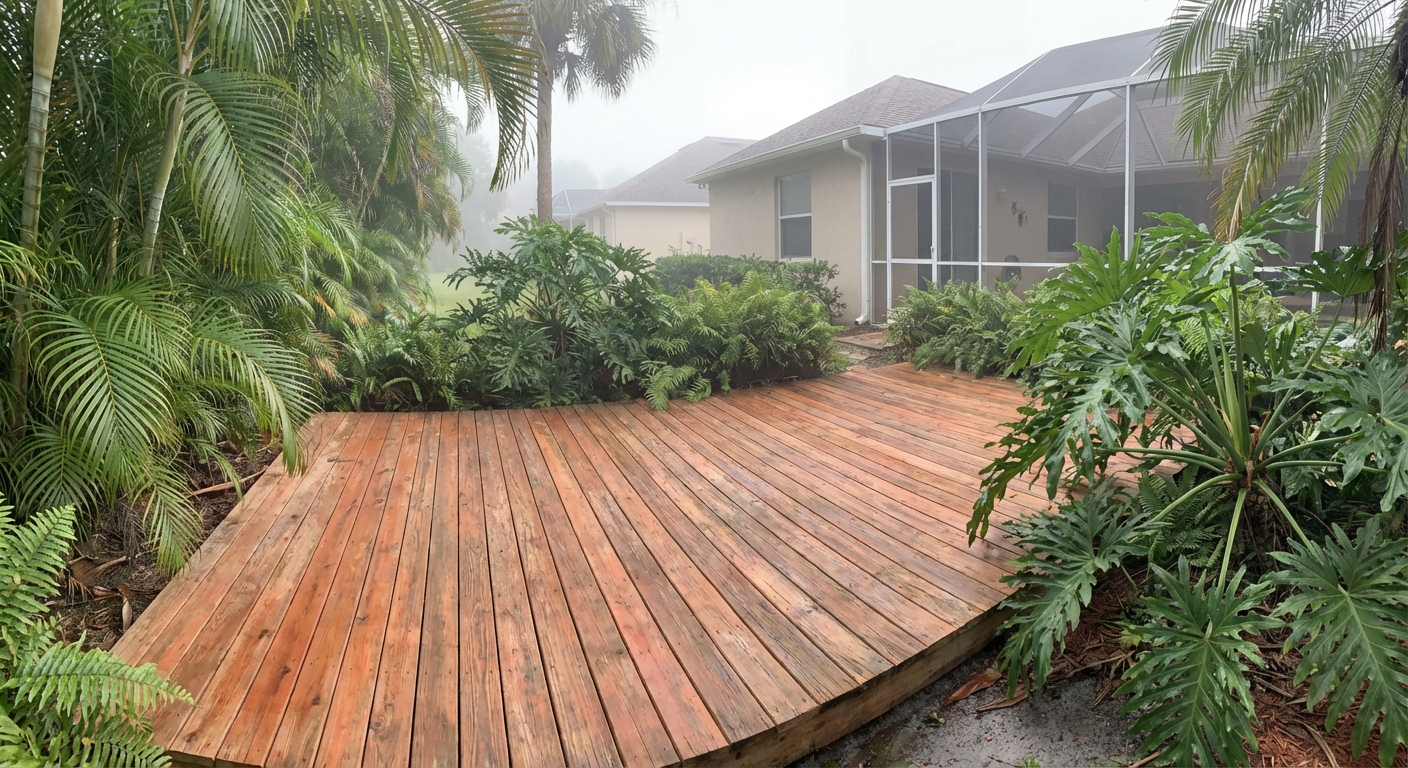
So, you're dreaming of a beautiful cedar deck for your Florida home. But with the state's notorious humidity, you're probably wondering if it's a wise investment. Let's break down the costs, the pros and cons of cedar in Florida's climate, and what you need to know to make the right decision.
🧮 Tool Alert: Deck Cost Calculator
Estimate your project costs in seconds based on local pricing bands for your area.
Calculate My Cost →Cedar Deck Cost in Florida: What to Expect
Looking for more regional information? Check out our Florida State Decking Hub.
🏗️ Planning a deck project?
Get a free manual project review, or visualize your dream deck with AI before requesting quotes.
Cedar offers a natural beauty that many homeowners find appealing. However, that beauty comes at a cost, and in Florida, that cost can be influenced by factors like humidity, hurricane codes, and the need for specialized installation.
Here's a general cost breakdown for different decking materials in Florida, including cedar:
| Material | Cost per Square Foot (Installed) |
|-------------------|-----------------------------------|
| Pressure-Treated | $25 - $45 |
| Composite | $45 - $75 |
| Cedar | $35 - $60 |
| Ipe | $65 - $110 |
As you can see, cedar falls in the mid-range, slightly more expensive than pressure-treated wood but generally less than composite decking. The final price depends on the grade of cedar you choose (clear, knotty), the complexity of the design, and your location. Expect to pay more in areas like Miami or Fort Lauderdale, where labor costs are higher.
<!-- slot:after-intro -->
For a broader look at deck pricing across different materials and regions, see our complete deck cost guide for Florida. Timing your build right can also save thousands — check our guide on the best time to build a deck.
Keep in mind that these are *installed* costs. If you're a skilled DIYer, you could save money by purchasing the materials and building the deck yourself. However, be sure you're familiar with local building codes and permit requirements.
The Pros and Cons of Cedar Decking in Florida's Climate
Cedar boasts several advantages, but it also faces challenges in Florida's humid environment.
Pros:
- Natural Beauty: Cedar has a rich, warm color and attractive grain.
- Natural Resistance: Cedar contains natural oils that resist rot, decay, and insects (to some extent).
- Workability: Cedar is relatively easy to cut, drill, and fasten, making it a good choice for complex deck designs.
- Lower Heat Retention: Compared to some composite materials, cedar stays cooler underfoot in direct sunlight.
Cons:
- Humidity: Florida's 70-90% relative humidity can cause cedar to warp, crack, and splinter if not properly maintained.
- Maintenance: Cedar requires regular cleaning, staining, and sealing to protect it from the elements. Expect to refinish every 1-3 years, depending on sun exposure.
- Termites: While cedar has some natural resistance, it's not immune to Formosan subterranean termites, a major problem in Florida. Pressure treatment of the substructure is essential.
- UV Exposure: Florida's intense sun degrades finishes quickly. High-quality UV-resistant stains are a must.
- Cost: While not the most expensive option, cedar is still a significant investment.
Florida-Specific Considerations for Cedar Decks
Building a cedar deck in Florida requires careful planning and attention to detail. Here's what you need to consider:
Building Codes and Permits
Most Florida cities require permits for decks larger than 200 square feet or more than 30 inches above grade. The Florida Deck Building Codes: Key Requirements for 2026 are stringent, particularly regarding wind uplift. Your deck must be able to withstand hurricane-force winds.
- Miami-Dade County: Has the strictest building codes in the US, especially within the High Velocity Hurricane Zone. Expect a lengthy permit process (6-12 weeks) through the Building Department. See Miami Deck Permit: Requirements, Costs & Miami-Dade Rules.
- Tampa/Hillsborough County: Permits are obtained through the county Building Services. Check Tampa Deck Permit Guide: What You Need Before Building.
- Statewide: Ensure your deck design complies with the Florida Building Code.
Foundation and Substructure
A solid foundation is crucial for any deck, but especially so in Florida's sandy soil and high water tables. Consider using concrete footings that extend below the frost line (though frost isn't a huge concern in most of Florida, proper depth is still important for stability). The substructure (posts, beams, joists) *must* be pressure-treated lumber to resist rot and termites.
Fasteners
Use high-quality, corrosion-resistant fasteners (stainless steel or coated) to prevent rust and staining. The salt air, especially near the coast, accelerates corrosion.
Sealing and Staining
Regular sealing and staining are critical to protect your cedar deck from moisture, UV damage, and mold. Choose a high-quality, oil-based stain with UV inhibitors and mildewcides. Reapply every 1-3 years, or as needed.
Mold and Mildew Prevention
Florida's humidity fosters mold and mildew growth. Regularly clean your deck with a deck cleaner containing a mildewcide. Proper ventilation under the deck can also help.
<!-- slot:mid-content -->
Best Time to Build
The best time to build a deck in Florida is during the dry season, from November to April. Temperatures are milder, and there's less rain and humidity to contend with.
Ground-Level Decks
Due to the flat terrain and high water tables in many parts of Florida, ground-level decks are a popular option. Ensure proper drainage to prevent water from pooling under the deck.
Pool Decks
Pool Deck Ideas for Florida Homes: Materials, Costs & Designs are extremely popular. If you're building a pool deck, choose a cedar with a naturally slip-resistant surface or add a non-slip coating. Safety is paramount.
Comparing Cedar to Other Decking Materials in Florida
How does cedar stack up against other popular decking options in Florida? Let's take a look:
| Material | Pros | Cons | Maintenance | Lifespan |
|-------------------|------------------------------------------------------------------------------------------------------------------|-------------------------------------------------------------------------------------------------------------------------------------|-------------------------------------------------------------------------------------------------------------|---------------|
| Pressure-Treated | Most affordable, readily available, resists rot and insects (when properly treated) | Can warp and crack, requires regular staining/sealing, less attractive than cedar or composite | Regular cleaning, staining/sealing every 1-3 years | 15-25 years |
| Composite | Low maintenance, resists rot, insects, and fading, available in various colors and textures | More expensive than pressure-treated or cedar, can get hot in direct sunlight, not as natural-looking | Occasional cleaning with soap and water | 25-50 years |
| Cedar | Natural beauty, resists rot and insects (to some extent), stays cooler than composite | Requires regular staining/sealing, susceptible to warping and cracking in high humidity, can be attacked by termites | Regular cleaning, staining/sealing every 1-3 years | 15-20 years |
| Ipe | Extremely durable, resists rot, insects, and fire, beautiful natural grain | Most expensive option, difficult to work with, can be prone to splintering | Occasional cleaning and oiling (optional, to maintain color; otherwise weathers to silver-gray naturally) | 50+ years |
Consider your budget, maintenance preferences, and aesthetic goals when choosing a decking material. Explore Composite vs Wood Decking in Florida: Pros, Cons & Costs for a deeper comparison.
Finding a Reputable Deck Builder in Florida
Building a deck that can withstand Florida's climate and meet building codes requires expertise. Hiring a qualified and experienced deck builder is crucial. Here's how to find the right contractor:
- Get Multiple Quotes: Contact at least three different deck builders and compare their bids.
- Check References: Ask for references from past clients and follow up with them.
- Verify Licensing and Insurance: Ensure the contractor is licensed and insured in Florida.
- Review Their Portfolio: Look at examples of their previous work to assess their craftsmanship.
- Read Online Reviews: Check online review sites like Google, Yelp, and the Better Business Bureau.
- Get a Detailed Contract: The contract should outline the scope of work, materials, payment schedule, and warranty.
For local recommendations, see:
- Best Deck Builders in Tampa: How to Find the Right Contractor
- Best Deck Builders in Orlando: What to Look For in 2026
- Best Deck Builders in Jacksonville: Local Guide
- Best Deck Builders in Fort Lauderdale: How to Choose in 2026
Before you even reach out to contractors, it's helpful to visualize your deck with PaperPlan design. Use PaperPlan (paperplan.app) to visualize your deck design with different materials and layouts before committing to a contractor. This allows you to experiment with cedar and other materials to see what best suits your style and budget.
<!-- slot:before-faq -->
Ultimately, building a cedar deck in Florida requires careful consideration and proactive maintenance. By understanding the challenges and taking the necessary precautions, you can enjoy a beautiful and durable outdoor space for years to come.
<!-- slot:end -->
🎨 Not sure which material to pick?
Upload a photo of your backyard and see exactly how Trex, TimberTech, or cedar would look — free and instant.
Frequently Asked Questions
Is cedar a good choice for decks in Florida?
Cedar *can* be a good choice, but it requires more maintenance than composite or Ipe. You'll need to regularly clean, stain, and seal it to protect it from humidity, UV damage, and insects. Ensure the substructure is pressure-treated to prevent termite damage.
How often do I need to stain a cedar deck in Florida?
Generally, you should stain your cedar deck every 1-3 years in Florida. The frequency depends on sun exposure and the quality of the stain. Look for signs of fading, cracking, or water damage, which indicate it's time to re-stain.
What is the best type of cedar for a deck in Florida?
Western Red Cedar is generally considered the best choice for decking due to its natural resistance to rot and insects. However, even Western Red Cedar needs to be properly maintained in Florida's humid climate.
How much does a permit cost for a deck in Florida?
Permit costs vary depending on your location and the size of your deck. Expect to pay anywhere from $200 to $1000 or more. Contact your local building department for specific pricing. The overall How Much Does a Deck Cost in Florida? Complete 2026 Guide will give you a broader picture of costs.
Can I build a deck myself in Florida, or do I need to hire a contractor?
You *can* build a deck yourself, but it's essential to have the necessary skills and knowledge of building codes. If you're not comfortable with the process, hiring a licensed and insured contractor is recommended. Failing to comply with building codes can result in fines and the need to tear down and rebuild the deck. Also, remember that Deck Cost in Miami: Local Pricing Guide for 2026 and other regions will vary.
📋 Planning a deck project?
Get a free manual project review from our team — no obligation, no spam.
Get Free Project Review →Upload a backyard photo and preview real decking materials with AI — free, instant, no sign-up.
Permits, costs, material comparisons, and questions to ask before requesting quotes — delivered to your inbox.