
Deck Cost in Jacksonville (2026)
What does a deck cost in Jacksonville in 2026? See real per-square-foot prices by material, local labor rates, and tips to save on your Jax deck build.
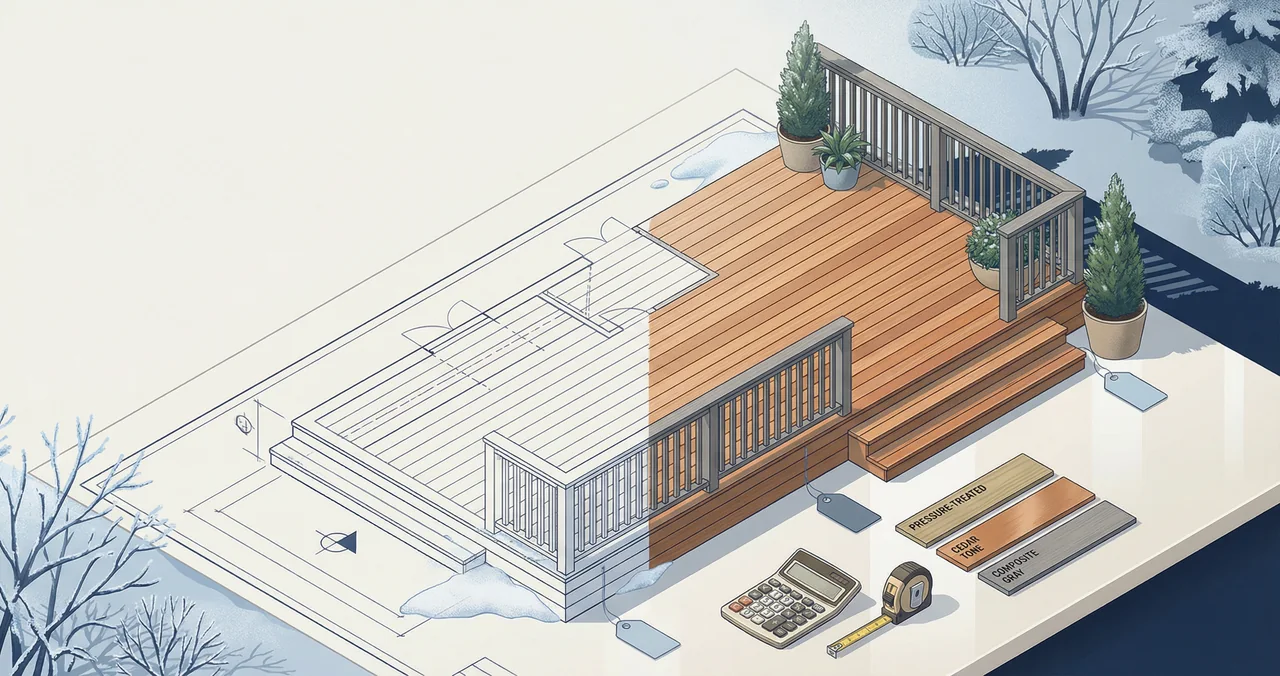
How Much Does a Deck Cost in Jacksonville Right Now?
You're probably here because you got a quote that felt high — or you haven't called anyone yet and want to know what to expect. Either way, here's the short answer: most Jacksonville homeowners pay between $8,000 and $24,000 for a new deck, depending on size, material, and how complex the design gets.
🏗️ Planning a deck project?
Get a free manual project review, or visualize your dream deck with AI before requesting quotes.
🧮 Tool Alert: Deck Cost Calculator
Estimate your project costs in seconds based on local pricing bands for your area.
Calculate My Cost →Looking for more regional information? Check out our Florida State Decking Hub.
A basic 12×16 pressure-treated deck runs around $5,000–$8,600. A 16×20 composite deck with railing and stairs? You're looking at $14,400–$24,000 or more.
Those ranges are wide for a reason. Jacksonville's building environment — year-round construction season, humid subtropical climate, and termite pressure — shapes what materials make sense and what contractors charge. Let's break it all down.
<!-- slot:after-intro -->
For a broader look at deck pricing across different materials and regions, see our complete deck cost guide for Florida.
Average Deck Cost in Jacksonville by Material
Material choice drives most of your budget. Here's what Jacksonville homeowners are paying in 2026 for a fully installed deck, including framing, fasteners, and basic railing:
| Material | Installed Cost per Sq Ft | 12×16 Deck (192 sq ft) | 16×20 Deck (320 sq ft) |
|---|---|---|---|
| Pressure-Treated Wood | $25–$45 | $4,800–$8,640 | $8,000–$14,400 |
| Cedar | $35–$55 | $6,720–$10,560 | $11,200–$17,600 |
| Composite (mid-range) | $45–$75 | $8,640–$14,400 | $14,400–$24,000 |
| Trex (premium lines) | $50–$80 | $9,600–$15,360 | $16,000–$25,600 |
| Ipe (hardwood) | $60–$100 | $11,520–$19,200 | $19,200–$32,000 |
Pressure-treated pine is the most common choice in Northeast Florida. It's affordable and widely available. The tradeoff: Jacksonville's humidity and UV exposure mean you'll need to seal or stain every 1–2 years to prevent warping, graying, and mold growth.
Composite decking has gained serious ground in Jax over the past few years, and for good reason. It handles moisture and insects without the annual maintenance cycle. The upfront cost is higher, but you're not buying stain and renting a pressure washer every spring.
Cedar looks great but isn't the best fit for Jacksonville's climate unless you're committed to regular upkeep. The natural oils resist rot, but intense humidity and UV break it down faster here than in drier regions.
Ipe is the premium pick — incredibly dense, naturally resistant to rot, insects, and UV. It'll outlast everything else on this list. But it's expensive, heavy, and harder to work with, which means higher labor costs too.
Cost Per Square Foot Breakdown
That per-square-foot number includes more than just decking boards. Here's roughly how it splits:
Materials (40–50% of total cost)
- Decking boards: The biggest material line item
- Framing lumber: Pressure-treated joists, beams, and posts (even under composite decking, the frame is almost always pressure-treated)
- Fasteners and hardware: In coastal areas of Jacksonville — Ponte Vedra, Atlantic Beach, Jacksonville Beach — you'll need hurricane-rated connectors and stainless steel or hot-dipped galvanized fasteners. Standard hardware corrodes fast in salt air
- Railing: Basic wood railing adds $15–$25 per linear foot. Aluminum or cable railing systems jump to $40–$80+ per linear foot
- Concrete footings: Posts set in concrete below the frost line (just 6–12 inches in Jacksonville — one of the few cost advantages of building here vs. northern states)
Labor (50–60% of total cost)
- Typical labor rates run $15–$30 per square foot in Jacksonville
- Complex builds (multi-level, curved, rooftop) push labor toward the higher end
- Jacksonville's year-round building season means contractors stay busy but don't face the same seasonal crunch you see up north — which can work in your favor when negotiating
Labor Costs in Jacksonville
Labor is where your quote can swing dramatically. Two contractors bidding on the same 16×20 composite deck might come in $3,000–$5,000 apart.
Here's what affects labor pricing in Jacksonville:
- Deck height: A ground-level deck on blocks is simpler (and cheaper) than a second-story deck requiring tall posts, extra bracing, and stair systems
- Site conditions: Sloped yards in areas like Mandarin or San Marco may need retaining work or extra engineering. Waterfront properties along the St. Johns River often require additional structural considerations
- Access: Can materials be delivered close to the build site, or does everything need to be carried through a narrow side yard? Access issues add labor hours
- Permits and inspections: Jacksonville requires deck permits for structures over 200 square feet or more than 30 inches above grade. Your contractor should handle the permit process through Jacksonville's Building and Development Services department. Permit fees typically run $150–$500 depending on scope
- Demolition: Tearing out an old deck before building new adds $3–$8 per square foot
A good rule of thumb: get at least three quotes from licensed Jacksonville contractors. Compare not just price but scope — make sure each quote covers the same railing, stairs, footings, and permit work. If you're looking for vetted deck builders in other major cities, local directories can help you compare.
<!-- slot:mid-content -->
What Affects Your Total Price
Beyond material and labor, several factors specific to Jacksonville push costs up or down.
Deck Size and Layout
Straightforward rectangles are cheapest to build. Every angle, curve, or level change adds cutting, fitting, and framing time. A simple 12×16 rectangle might cost $25–$45/sq ft in pressure-treated wood. Add an octagonal bump-out and wrap-around stairs, and you could hit $40–$55/sq ft for the same material.
Railing and Stairs
These are easy to underestimate. A 16×20 deck might need 50+ linear feet of railing. At $40–$80 per linear foot for aluminum or composite railing, that's $2,000–$4,000 just in railing. Stairs with code-compliant railing add another $1,000–$3,000 depending on height and material. For an overview of railing system options and pricing, there are good comparisons available.
Built-In Features
Benches, planters, pergola attachments, lighting, and under-deck storage all add cost. Deck lighting alone ranges from $500 for basic post caps to $3,000+ for a full recessed LED system. Jacksonville's warm evenings make lighting a worthwhile investment — you'll actually use your deck after dark most of the year.
Foundation Requirements
Jacksonville's sandy soil generally makes for straightforward footing work. The shallow frost line (6–12 inches) means footings don't need to go deep — a real cost saver compared to northern builds. However, flood zone requirements in parts of Arlington, San Marco, and riverside neighborhoods may dictate elevated construction, which significantly increases structural costs.
Hurricane and Code Requirements
Duval County enforces the Florida Building Code, which includes wind load requirements. Depending on your location and deck height, you may need:
- Hurricane ties and rated connectors on all structural connections
- Enhanced post-to-beam connections
- Engineering drawings for larger or elevated decks
These requirements add $500–$2,000 to a typical build but are non-negotiable — and they protect your investment when storms roll through.
Composite vs Wood: Cost Comparison for Jacksonville
This is the decision most Jacksonville homeowners wrestle with. Here's how the math works over time:
| Factor | Pressure-Treated Wood | Composite |
|---|---|---|
| Installed cost (320 sq ft) | $8,000–$14,400 | $14,400–$24,000 |
| Annual maintenance | $200–$500 (stain/seal) | ~$0 (occasional wash) |
| Maintenance over 10 years | $2,000–$5,000 | $200–$400 |
| Expected lifespan | 10–15 years | 25–30+ years |
| 10-year total cost | $10,000–$19,400 | $14,600–$24,400 |
| Mold/mildew resistance | Low (needs treatment) | High (built-in) |
| Termite resistance | Moderate (treated) | Immune |
| UV fading | Grays without stain | Minimal with capped products |
In Jacksonville's climate, composite pulls ahead faster than in drier regions. The humidity here accelerates wood degradation. Pressure-treated decks that might last 15–20 years in Colorado may only hit 10–12 in Jacksonville without diligent maintenance.
If your budget is firm at under $10,000 for a mid-size deck, pressure-treated wood is your best bet. Commit to sealing it within the first year and every 1–2 years after.
If you can stretch to $15,000–$20,000, composite is the smarter long-term play for a Jacksonville deck. You'll skip the annual maintenance routine and get a deck that handles the humidity, UV, and insect pressure without degrading.
Use PaperPlan to visualize different decking materials on your own home before committing — seeing composite vs. wood tones against your siding and landscaping makes the decision easier.
If you're comparing low-maintenance decking options, the same material rankings largely apply regardless of region, with composite and capped PVC leading the pack.
How to Save Money on Your Jacksonville Deck
You don't have to gut your budget to get a solid deck. Here are practical ways to bring costs down:
1. Build During the Off-Season (May–September)
This sounds counterintuitive — summer is Jacksonville's slow season for outdoor construction because of the heat, afternoon storms, and humidity. Some contractors offer 10–15% discounts during these months to keep crews working. The best window for comfortable building is October through April, but the best window for deals might be the opposite.
2. Keep the Design Simple
A rectangular deck with a single set of stairs is the most cost-effective layout. Every angle, curve, and level adds labor. If you want visual interest, invest in a higher-quality material on a simple footprint rather than a complex design in cheap lumber.
3. Choose Pressure-Treated for the Frame, Composite for the Surface
Almost every deck in Jacksonville uses pressure-treated lumber for the substructure — even under composite decking. This is standard practice and perfectly sound. Don't let anyone upsell you on composite or aluminum framing unless you have a specific structural reason.
4. Do Selective DIY
Leave the structural work, footings, and permit process to a licensed contractor. But you can save $500–$1,500 by handling finish work yourself:
- Installing post caps and trim
- Adding skirting
- Running low-voltage lighting
- Staining/sealing (for wood decks)
If you're curious about whether you can build your own deck, the structural and permit requirements are the biggest consideration — and Jacksonville's building code is strict on load and wind ratings.
5. Get Multiple Quotes — But Compare Apples to Apples
Three quotes minimum. Make sure each includes:
- Permit costs
- Footing and foundation work
- Railing (material and style)
- Stairs
- Cleanup and haul-away
- Warranty terms
A low quote that excludes railing or permit work isn't actually low.
6. Consider Phased Construction
Build the deck platform now, add the pergola or built-in seating next year. Splitting the project into phases spreads cost without compromising structural integrity — just make sure the initial build accounts for future additions in the footing layout.
<!-- slot:before-faq -->
🎨 Not sure which material to pick?
Upload a photo of your backyard and see exactly how Trex, TimberTech, or cedar would look — free and instant.
Frequently Asked Questions
How much does a 12×16 deck cost in Jacksonville?
A 12×16 pressure-treated deck (192 sq ft) typically costs $4,800–$8,640 installed in Jacksonville. The same size in composite runs $8,640–$14,400. These ranges include framing, basic railing, footings, and labor. Stairs, complex railing, and permit fees can add $1,000–$3,000 to either number.
Do I need a permit to build a deck in Jacksonville?
Yes, in most cases. Jacksonville requires a building permit for decks over 200 square feet or more than 30 inches above grade. Even smaller decks may need permits depending on your property's zoning and proximity to easements or waterways. Contact Jacksonville's Building and Development Services department before starting. Building without a permit creates real problems at resale and with insurance claims.
What is the best decking material for Jacksonville's climate?
Composite decking is the best overall choice for Jacksonville's hot, humid climate. It resists moisture, mold, UV fading, and insects without ongoing maintenance. Capped composite products from brands like Trex, TimberTech, and Fiberon perform especially well. Pressure-treated pine is the budget-friendly alternative, but plan on sealing it every 1–2 years to prevent mold and deterioration. For a deeper comparison of composite decking brands, material quality varies significantly by price tier.
When is the best time to build a deck in Jacksonville?
October through April offers the most comfortable building conditions — lower humidity, minimal rain interruption, and cooler temperatures for crews. However, summer (May–September) can yield better pricing since many contractors have more availability. If you're flexible on timing, get quotes in late spring for a summer build and compare them to fall pricing. Understanding best time to build a deck based on your local climate helps you plan both budget and timeline.
How long does it take to build a deck in Jacksonville?
Most residential decks take 1–3 weeks from start to finish once materials arrive and permits are approved. The permit process itself can take 1–4 weeks in Duval County depending on complexity and current workload. A straightforward 12×16 ground-level deck might be done in 3–5 working days. Multi-level builds, waterfront properties, or decks requiring engineering review take longer. Factor in 4–8 weeks total from signing a contract to walking on your finished deck.
<!-- slot:end -->
📋 Planning a deck project?
Get a free manual project review from our team — no obligation, no spam.
Get Free Project Review →Upload a backyard photo and preview real decking materials with AI — free, instant, no sign-up.
Permits, costs, material comparisons, and questions to ask before requesting quotes — delivered to your inbox.