
Composite Deck Cost in Florida (2026)
Planning a composite deck in Florida? Get 2026 cost estimates, factor in humidity & hurricane codes, and learn how to save money on your dream deck.
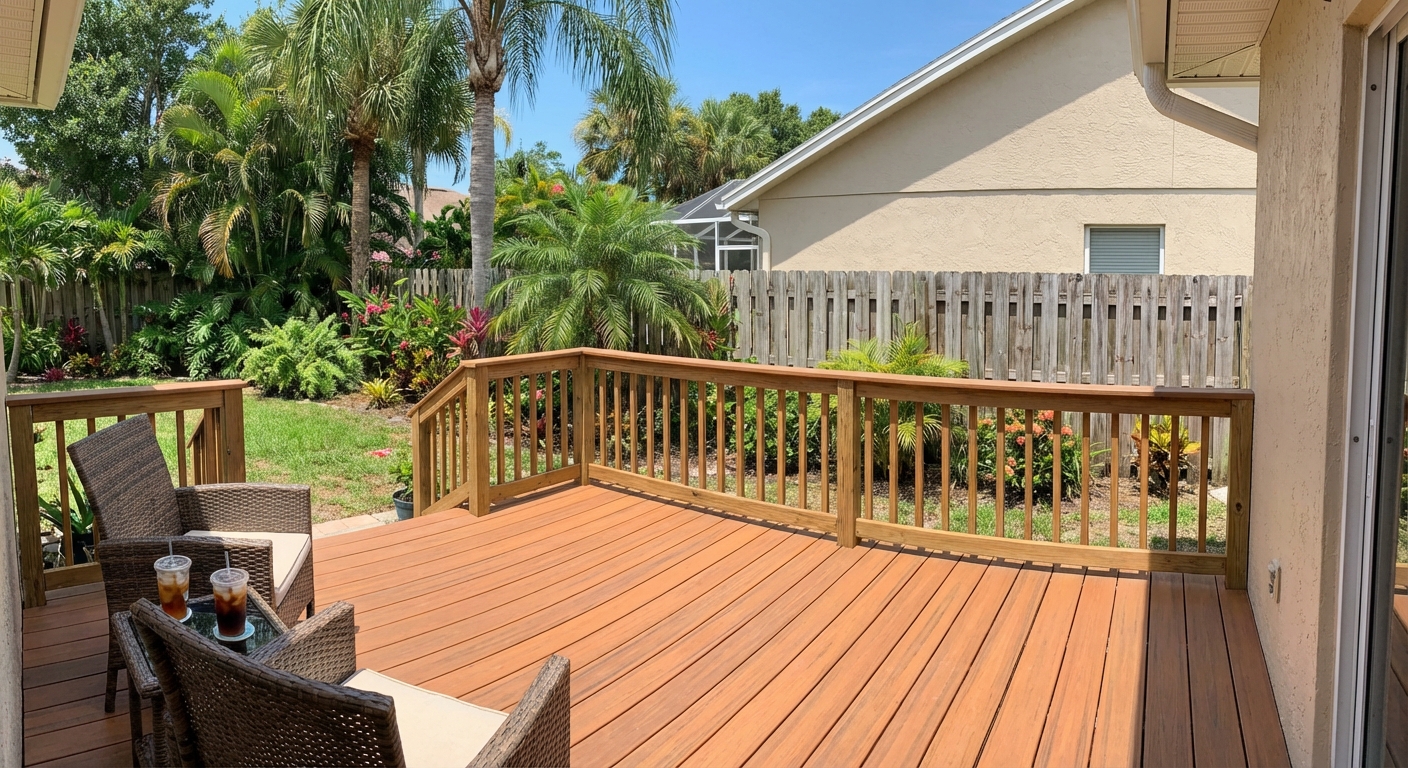
Dreaming of a new composite deck in your Florida backyard? You're likely wondering about the cost. This guide breaks down what you can expect to pay for a composite deck in Florida in 2026, taking into account the state's unique climate, building codes, and regional price variations. We'll cover material costs, labor, permits, and tips for getting the best value for your money.
🧮 Tool Alert: Deck Cost Calculator
Estimate your project costs in seconds based on local pricing bands for your area.
Calculate My Cost →Understanding Florida Deck Costs: Beyond the Square Footage
Looking for more regional information? Check out our Florida State Decking Hub.
🏗️ Planning a deck project?
Get a free manual project review, or visualize your dream deck with AI before requesting quotes.
The price of a composite deck in Florida can vary significantly based on several factors. While national averages provide a general idea, Florida's unique environment and building regulations necessitate a more tailored approach to estimating your project costs. Remember, Florida has no state income tax, meaning homeowners often invest more heavily in outdoor living spaces.
Here's a breakdown of the average installed costs you can expect for different decking materials in Florida:
- Pressure-Treated Wood: $25-45 per square foot
- Composite Decking: $45-80 per square foot
- Cedar Decking: $35-55 per square foot
- Trex Decking: $50-85 per square foot
- Ipe Decking: $65-110 per square foot
<!-- slot:after-intro -->
For a broader look at deck pricing across different materials and regions, see our complete deck cost guide for Florida. Timing your build right can also save thousands — check our guide on the best time to build a deck.
Key Cost Factors Specific to Florida
- Material Selection: Composite decking itself has a wide price range. Basic composite boards are more affordable than high-end, capped composites with advanced stain and scratch resistance. Trex, a popular brand, falls on the higher end of the composite spectrum.
- Size and Complexity: A larger deck will naturally cost more. Intricate designs, multiple levels, built-in benches, or custom railings will increase labor costs.
- Labor Costs: Labor rates vary across Florida. Expect higher rates in major metropolitan areas like Miami, Fort Lauderdale, and Orlando compared to more rural areas.
- Permits and Inspections: Most Florida counties require permits for decks attached to your home or exceeding 200 square feet. Permit fees vary. In Tampa/Hillsborough, expect to pay around $200-600 for permits.
- Florida Building Code: Florida's hurricane-resistant building codes are among the strictest in the US. These codes mandate specific construction techniques and materials, adding to the overall cost.
- Wind Load Requirements: Decks must be built to withstand wind loads ranging from 110 to 180 mph, depending on your specific zone.
- Substructure: The substructure (the frame beneath the decking) is crucial for stability and longevity. Using pressure-treated lumber for the substructure is common, but upgrading to composite or metal framing can add to the cost but increase lifespan.
- Fasteners: Due to Florida's coastal environment and high humidity, using stainless steel or hot-dipped galvanized fasteners is essential, especially if you live within 3000 feet of saltwater.
- Site Preparation: Clearing the area, leveling the ground, and removing debris can add to the cost, especially if you have an uneven or sloped yard.
- Geographic Location: Material and labor costs differ across the state. Miami-Dade County, with its stringent building codes (requiring NOA - Notice of Acceptance - for materials), typically has higher costs than Jacksonville, which has a relatively straightforward permit process.
Composite Decking: A Smart Choice for Florida Homes
Composite decking is an excellent choice for Florida homeowners due to its durability, low maintenance, and resistance to common Florida issues:
- Humidity: Florida's extreme humidity (70-90% year-round) can cause wood decks to warp, rot, and attract mold. Composite decking resists moisture damage.
- Termites: Florida is home to both subterranean and drywood termites. Composite decking is termite-resistant, eliminating the need for constant treatment.
- Salt Air Corrosion: Salt air near the coast accelerates corrosion of metal components. Composite decking doesn't corrode, and when paired with stainless steel fasteners, your deck will be more resistant to salt damage.
- UV Degradation: Florida's intense sun can fade and damage wood decks. Many composite decking options are UV-resistant, maintaining their color and appearance for years.
Popular Composite Decking Brands and Their Costs
Here's a look at some popular composite decking brands and their approximate installed costs per square foot in Florida:
| Brand | Description | Approximate Installed Cost (per sq ft) |
|----------------|----------------------------------------------------------------------------------------------------------------------------------------|---------------------------------------|
| Trex | A leading brand known for its durability, wide range of colors and styles, and eco-friendly options. | $50 - $85 |
| TimberTech | Offers a variety of composite and capped polymer decking options with advanced moisture resistance and realistic wood grain textures. | $48 - $82 |
| Fiberon | Known for its innovative PermaTech cap layer, providing exceptional stain and fade resistance. | $46 - $80 |
| Deckorators | Offers a variety of composite decking options with unique textures and colors, often at a slightly more affordable price point. | $44 - $75 |
| MoistureShield | Engineered for superior moisture resistance, making it an excellent choice for waterfront properties or areas with high humidity. | $47 - $81 |
*These are approximate costs and can vary based on the specific product line, installer, and location.*
Use PaperPlan (paperplan.app) to visualize your deck with PaperPlan design with different materials and layouts before committing to a contractor. Seeing the different composite options in a realistic rendering can help you make the right choice for your home and budget.
Permit Costs and Building Codes: Navigating Florida Regulations
Navigating Florida's building codes and permit requirements is crucial for a successful and compliant deck project. The Florida Building Code (FBC) is the statewide standard, but local municipalities often have additional requirements.
Key Building Code Considerations
- Wind Load Requirements: Your deck must be designed and built to withstand specific wind loads based on your location. This affects the type of fasteners, posts, and framing required.
- Guardrails: Decks exceeding 30 inches above grade require guardrails at least 36 inches high.
- Stairways: Stairways must meet specific requirements for rise, run, and handrails.
- Footings: Footings must be properly sized and installed to support the deck's weight and resist uplift forces.
- Inspections: Multiple inspections are typically required throughout the construction process to ensure compliance with the building code.
Permit Process by City
- Miami-Dade: Known for the strictest codes, requires a Notice of Acceptance (NOA) for all materials. Expect higher permit fees and longer processing times.
- Tampa/Hillsborough: Permits are obtained through Hillsborough County Building Services. Fees range from $200 to $600, depending on the deck's size and complexity.
- Orlando/Orange County: Permits are obtained through the Orange County Building Division. Check their website for specific requirements and fees.
- Jacksonville/Duval County: Generally a more straightforward permit process compared to South Florida.
It's always best to consult with your local building department or a qualified deck contractor to ensure your project complies with all applicable codes and regulations. Ignoring permit requirements can result in fines, delays, and even the removal of your deck. Do You Need a Deck Permit in Florida? State & City Rules Explained can offer more detailed information.
<!-- slot:mid-content -->
Labor Costs: Finding the Right Deck Builder in Florida
Labor costs account for a significant portion of your total deck project cost. The complexity of the design, the size of the deck, and the contractor's experience all influence labor rates.
Factors Affecting Labor Costs
- Contractor Experience: Experienced and licensed contractors typically charge more than less experienced or unlicensed contractors. However, the added cost is often worth it for the quality of workmanship and peace of mind.
- Project Complexity: Intricate designs, multiple levels, or difficult site conditions will increase labor hours and costs.
- Geographic Location: Labor rates vary across Florida. Major metropolitan areas like Miami, Tampa, and Orlando typically have higher labor costs than more rural areas.
- Demand: During peak construction season (especially after hurricane season), demand for deck builders increases, which can drive up labor rates.
How to Find a Reputable Deck Builder
- Get Multiple Quotes: Obtain quotes from at least three different contractors to compare pricing and services.
- Check References: Ask for references from past clients and follow up to inquire about their experience with the contractor.
- Verify Licenses and Insurance: Ensure the contractor is properly licensed and insured to protect yourself from liability.
- Read Reviews: Check online reviews on sites like Google, Yelp, and the Better Business Bureau to get an idea of the contractor's reputation.
- Review Their Portfolio: Look at examples of their previous work to assess the quality of their craftsmanship.
- Get a Detailed Contract: A comprehensive contract should outline the scope of work, materials to be used, payment schedule, and warranty information.
Cost-Saving Tips for Your Florida Composite Deck Project
Building a composite deck is an investment. Here are some ways you can potentially save money without compromising quality or safety:
- Choose a Simpler Design: Opting for a straightforward rectangular deck design can reduce labor costs compared to more complex shapes or features.
- Consider a Ground-Level Deck: Ground-level decks are often less expensive to build due to simpler framing requirements and reduced permit costs. This is especially popular in Florida due to the prevalence of slab-on-grade construction.
- Build During the Off-Season: Consider building your deck during the off-season (October-May) when demand for contractors is lower, potentially leading to lower labor rates. Avoid peak hurricane season (June-November).
- Compare Material Prices: Shop around for the best prices on composite decking materials. Consider buying directly from a distributor or lumberyard.
- DIY Some of the Work: If you're handy, you can save money by handling some of the simpler tasks yourself, such as demolition of an old deck or site preparation. However, leave structural work and electrical wiring to the professionals.
- Explore Financing Options: Some contractors offer financing options to help you spread out the cost of your deck project.
Popular Florida Deck Features and Their Costs
Many Florida homeowners customize their decks with features that enhance their outdoor living experience. Here's a look at some popular options and their approximate costs:
- Screened-In Decks: Provide protection from insects and the elements. Add $10-$20 per square foot to the base deck cost.
- Pool Decks: Enhance your pool area with a slip-resistant and stylish deck. Costs vary depending on the size and shape of the pool. Expect to pay a premium for specialized pool-decking materials.
- Waterfront Decks: Maximize your waterfront views with a custom-designed deck. Costs can be higher due to stringent building codes and potential challenges related to water access.
- Shade Structures: Provide relief from the Florida sun with a pergola, awning, or roof. Add $15-$30 per square foot for a basic pergola.
- Built-In Benches: Offer comfortable seating and can save space. Add $50-$150 per linear foot.
- Outdoor Lighting: Enhance the ambiance and safety of your deck. Add $50-$150 per light fixture, plus installation costs.
Best Decking Material for Florida Humidity: What Won't Warp or Rot can help you make the best material choice for these features.
<!-- slot:before-faq -->
🎨 Not sure which material to pick?
Upload a photo of your backyard and see exactly how Trex, TimberTech, or cedar would look — free and instant.
Frequently Asked Questions
How much does it cost to maintain a composite deck in Florida?
Composite decks require minimal maintenance compared to wood decks. You'll typically need to clean the deck with soap and water or a composite deck cleaner a few times a year. You may also need to occasionally reseal or stain the deck, depending on the specific product. Overall, expect to spend around $50-$200 per year on maintenance, depending on the size of your deck.
How long will a composite deck last in Florida?
A well-built and properly maintained composite deck can last for 25-50 years or even longer in Florida. The lifespan depends on the quality of the materials, the construction techniques, and the level of maintenance provided.
Is it cheaper to build a wood deck or a composite deck in Florida?
Initially, a pressure-treated wood deck is typically cheaper to build than a composite deck. However, over the long term, composite decking can be more cost-effective due to its lower maintenance requirements and longer lifespan. Consider the long-term cost of staining, sealing, and repairing a wood deck when comparing prices. Composite vs Wood Decking in Florida: Pros, Cons & Costs offers a more in-depth comparison.
What are the best months to build a deck in Florida?
The best months to build a deck in Florida are typically from October to May, avoiding the peak hurricane season (June-November). The weather is generally milder during these months, and contractors may be more readily available.
<!-- slot:end -->
📋 Planning a deck project?
Get a free manual project review from our team — no obligation, no spam.
Get Free Project Review →Upload a backyard photo and preview real decking materials with AI — free, instant, no sign-up.
Permits, costs, material comparisons, and questions to ask before requesting quotes — delivered to your inbox.