
Deck Maintenance in Ontario (2026)
Your deck is an extension of your home, a valuable space for enjoying Ontario's beautiful (and sometimes unpredictable) weather. But Ontario's climate presents...
Ontario Deck Maintenance: A Homeowner's Guide to Longevity
Your deck is an extension of your home, a valuable space for enjoying Ontario's beautiful (and sometimes unpredictable) weather. But Ontario's climate presents unique challenges for decks, making proper maintenance crucial. This guide will equip you with the knowledge to keep your deck in top condition for years to come, saving you money and ensuring a safe outdoor space for your family.
🏗️ Planning a deck project?
Get a free manual project review, or visualize your dream deck with AI before requesting quotes.
Why Ontario's Climate Demands Diligent Deck Care
Ontario's climate is particularly brutal on decks for several reasons:
- Freeze-Thaw Cycles: This is arguably the biggest culprit. Water penetrates the wood (or even some composites), expands when it freezes, and then thaws. This constant expansion and contraction weakens the wood fibers, leading to cracks, splits, and ultimately, rot.
- Heavy Snowfall: The weight of heavy snow can stress deck boards, posts, and railings. In areas like Barrie and Muskoka, which see significant snow accumulation, this is even more pronounced.
- Intense UV Radiation: Ontario summers, while enjoyable, bring intense UV radiation that fades and degrades wood finishes and can even damage some composite materials over time.
- High Humidity: Ontario's summers can be humid, creating a perfect environment for mold and mildew growth, especially in shaded areas or under the deck. This not only looks unsightly but can also contribute to wood rot.
Ignoring these factors can lead to costly repairs or even premature deck replacement. Read on to learn how to proactively protect your investment.
A Seasonal Deck Maintenance Calendar for Ontario Homeowners
Following a seasonal maintenance schedule is the key to a long-lasting deck. Here's a breakdown of what you should be doing throughout the year:
Spring: Renewal and Repair
Spring is the ideal time to assess winter damage and prepare your deck for the warmer months.
- Inspection Checklist (Spring Deck Checklist Ontario):
- Frost Heave: Check for lifted or shifted posts, especially if your deck is built on piers.
- Loose Boards: Look for loose screws or nails and replace or tighten them. Pay attention to areas around stairs and railings.
- Rot at Ledger/Joists: The ledger board (where the deck connects to the house) is a prime location for rot. Probe the wood with a screwdriver. If it feels soft or spongy, it's likely rotting. Similarly, check the joists underneath the deck.
- Popped Fasteners: Check for nail pops and screw heads sticking up. These can create tripping hazards and indicate underlying wood movement.
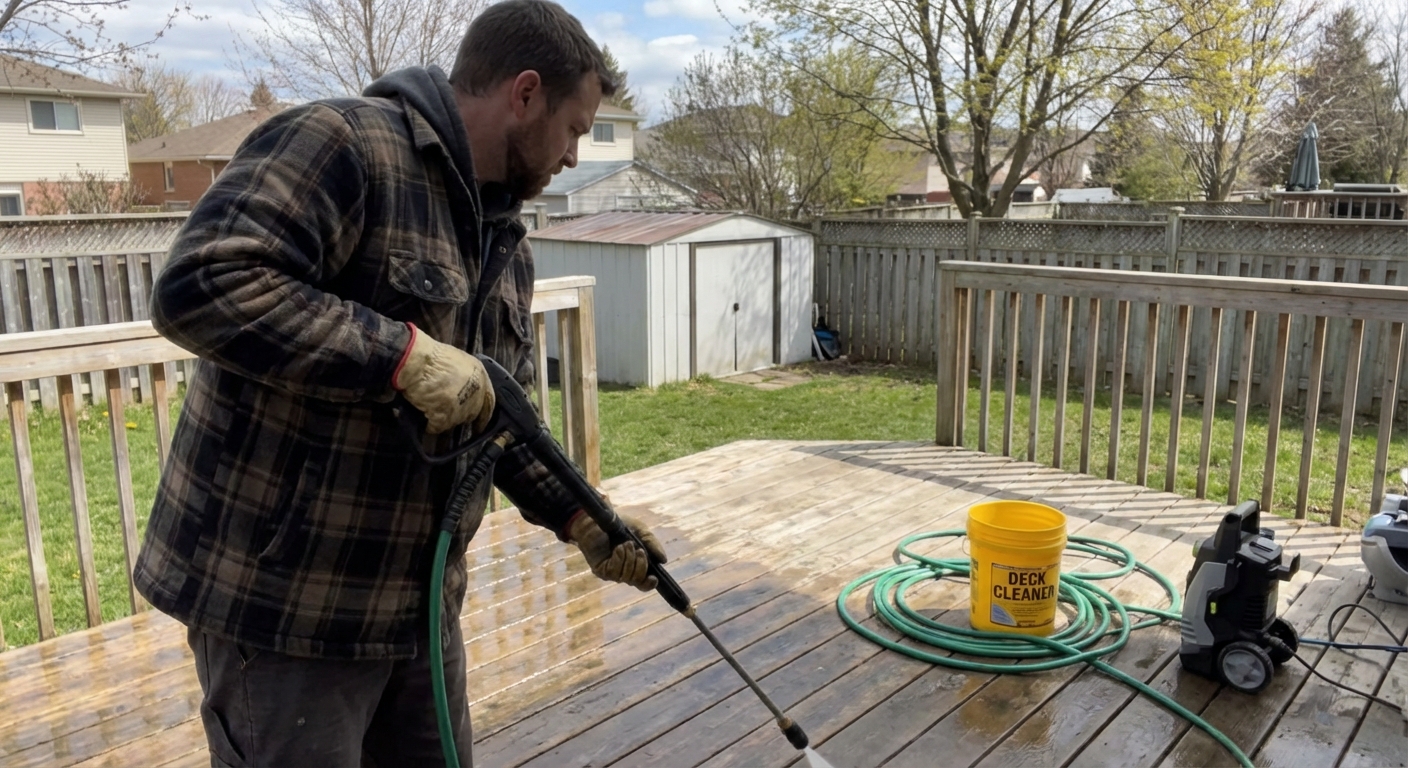
- Power Washing:
- Wood Decks: Use a power washer with a 800-1200 PSI setting. Too much pressure can damage the wood. Use a wide fan nozzle and keep the nozzle at least 12 inches away from the surface. Focus on removing dirt, mildew, and loose debris.
- Composite Decks: Use a lower pressure setting, around 500-800 PSI. Some composite manufacturers recommend specific cleaning solutions, so check your deck's warranty and care instructions.
- Stain/Sealer Application (Deck Staining Ontario): After power washing and allowing the deck to dry thoroughly (typically 24-48 hours), apply a high-quality stain or sealer. Choose a product specifically designed for exterior decks and follow the manufacturer's instructions carefully. Consider the weather forecast to avoid rain within 24 hours of application.
Summer: Ongoing Care and Monitoring
Summer is about enjoying your deck, but it's also a time for regular cleaning and monitoring.
- Regular Cleaning: Sweep or hose down your deck regularly to remove dirt, pollen, and spills. Promptly clean up any food or drink spills to prevent staining.
- Mold/Mildew Check: Regularly inspect for mold and mildew, especially in shaded areas. Clean affected areas with a mold and mildew cleaner specifically designed for decks. Pay particular attention to the spaces between deck boards.
- Under-Deck Drainage: Ensure that the area under your deck is properly drained. Pooling water can contribute to moisture problems and attract pests. Consider improving drainage with gravel or a French drain if needed.
Fall: Preparation for Winter
Fall is the time to prepare your deck for the harsh winter months ahead.
- Leaf Removal: Regularly clear leaves from your deck. Trapped leaves hold moisture, creating a breeding ground for mold and mildew and accelerating wood rot.
- Final Clean: Give your deck a final thorough cleaning before winter sets in. Power wash if necessary, but ensure the deck is completely dry before the first frost.
- Water Repellent: Consider applying a water repellent to your deck to protect it from moisture penetration during the winter. This is especially important for older decks or those with less effective stain or sealant.
Winter: Minimizing Damage
Winter requires a specific approach to deck care to prevent damage.
- Plastic Shovel: Use a plastic shovel to remove snow from your deck. Metal shovels can scratch and damage the surface.
- Avoid Salt on Wood Decks (Winter Deck Care Ontario): Salt can damage wood decks. Use sand or calcium chloride instead for ice melting. Calcium chloride is generally considered safer for concrete and wood than rock salt.
- Regular Snow Removal: Brush off snow regularly, especially after heavy snowfalls. This reduces the weight on the deck and prevents ice buildup.
Deck Maintenance by Material Type
The type of material your deck is made from significantly impacts the maintenance requirements.
- Pressure-Treated Lumber (Pressure-Treated Deck Ontario):
- Stain: Stain every 2-3 years to protect against UV damage and moisture.
- Seal: Seal annually to help repel water and prevent warping.
- Warping: Regularly check for warping, especially in wider boards.
- Composite Decking (Composite vs Wood Decking Ontario):
- Washing: Wash your deck at least twice a year with a mild soap and water solution.
- Mold Between Boards: Check for mold and mildew growth between boards, especially in shaded areas. Use a specialized composite deck cleaner if necessary.
- No Staining: Composite decking typically doesn't require staining or sealing.
- Cedar Decking:
- Oil/Stain: Apply a penetrating oil or stain annually to protect the wood and maintain its appearance.
- Checking/Splitting: Cedar is more prone to checking (small surface cracks) and splitting than pressure-treated lumber. Keep the wood well-oiled or stained to minimize these issues.
The Cost of Maintenance vs. Replacement
Investing in regular deck maintenance is far more cost-effective than replacing your deck.
- Maintenance Costs: Maintaining a typical $12,000 deck in Ontario costs approximately $200-400 per year. This includes cleaning supplies, stain/sealer, and minor repairs.
- Replacement Costs (Deck Cost Ontario Complete Guide): Replacing the same deck could cost $12,000 or more, depending on the size, materials, and complexity of the project.
By spending a small amount of time and money each year on maintenance, you can significantly extend the life of your deck and avoid a much larger expense down the road.
Signs Your Deck Needs More Than Maintenance
While regular maintenance can prevent many problems, some issues require more than just a surface cleaning or fresh coat of stain. Here are some signs that your deck needs professional attention:
- Structural Issues: Sagging beams, loose posts, or wobbly railings are serious structural problems that need to be addressed immediately.
- Widespread Rot: If rot is present in multiple areas of the deck, especially in critical structural components, it may be necessary to replace damaged sections or the entire deck.
- Bouncy/Soft Spots: Bouncy or soft spots in the deck flooring indicate that the underlying wood is rotting and needs to be replaced. These areas are unsafe and could collapse.
If you notice any of these signs, it's crucial to consult with a qualified deck contractor to assess the damage and recommend the appropriate course of action. Your family's safety is not worth the risk.
DIY vs. Hiring a Pro for Deck Maintenance
Deciding whether to tackle deck maintenance yourself or hire a professional depends on your skills, time, and the complexity of the task.
DIY Advantages:
- Cost Savings: You can save money on labor costs.
- Control: You have complete control over the process and materials used.
- Personal Satisfaction: There's a sense of accomplishment in maintaining your own deck.
DIY Considerations:
- Time Commitment: Deck maintenance can be time-consuming, especially if you have a large deck.
- Skill Required: Some tasks, like repairing structural damage or applying stain evenly, require specific skills and knowledge.
- Safety: Working at heights or using power tools can be dangerous if you're not careful.
Hiring a Pro Advantages:
- Expertise: Professionals have the knowledge and experience to properly maintain your deck.
- Time Savings: You can free up your time to focus on other tasks.
- Quality Results: Professionals have the tools and techniques to achieve a high-quality finish.
Hiring a Pro Considerations:
- Cost: Hiring a professional will be more expensive than doing it yourself.
- Finding a Reputable Contractor: It's important to research and choose a reputable contractor with a proven track record.
If you're comfortable with basic tasks like cleaning and applying stain, DIY maintenance might be a good option. However, for more complex repairs or if you lack the time or skills, hiring a professional is often the best choice. Reach out to Deck Repair Near Me Ontario for a trusted contractor.
FAQ: Deck Maintenance in Ontario
Here are some frequently asked questions about deck maintenance in Ontario:
- How often should I stain or seal my wood deck? This depends on the type of wood, the quality of the stain/sealer, and the amount of sun exposure. Generally, you should stain every 2-3 years and seal annually.
- What's the best way to clean mold and mildew off my deck? Use a mold and mildew cleaner specifically designed for decks. Follow the manufacturer's instructions carefully and rinse thoroughly. Be sure to address the underlying cause of the mold growth, such as poor drainage or excessive shade.
- Can I use bleach to clean my deck? Bleach can damage some types of wood and can also harm plants and landscaping. It's best to use a specialized deck cleaner instead.
- Is it okay to power wash my deck? Yes, but use caution. Use a low pressure setting (800-1200 PSI for wood, 500-800 for composite) and a wide fan nozzle. Keep the nozzle at least 12 inches away from the surface to avoid damaging the wood.
- How do I know if my deck is structurally sound? Look for signs of sagging, loose posts, wobbly railings, and rot. If you have any concerns, consult with a qualified deck contractor.
- What type of stain or sealer should I use? Choose a high-quality stain or sealer specifically designed for exterior decks. Consider the type of wood your deck is made from and the level of protection you need. A clear sealer will show off the wood's natural grain, while a tinted stain will provide more UV protection.
By following this comprehensive guide, you can keep your Ontario deck in excellent condition for years to come, providing a safe and enjoyable outdoor space for your family. Remember to prioritize safety, choose the right materials and techniques, and address any problems promptly to avoid costly repairs down the road.
Upload a backyard photo and preview real decking materials with AI — free, instant, no sign-up.
Permits, costs, material comparisons, and questions to ask before requesting quotes — delivered to your inbox.