
Do You Need a Permit for a Gazebo in Ontario?
Ontario gazebo permit requirements explained: when you need one, size limits, costs, and how to stay compliant with OBC and municipal bylaws.
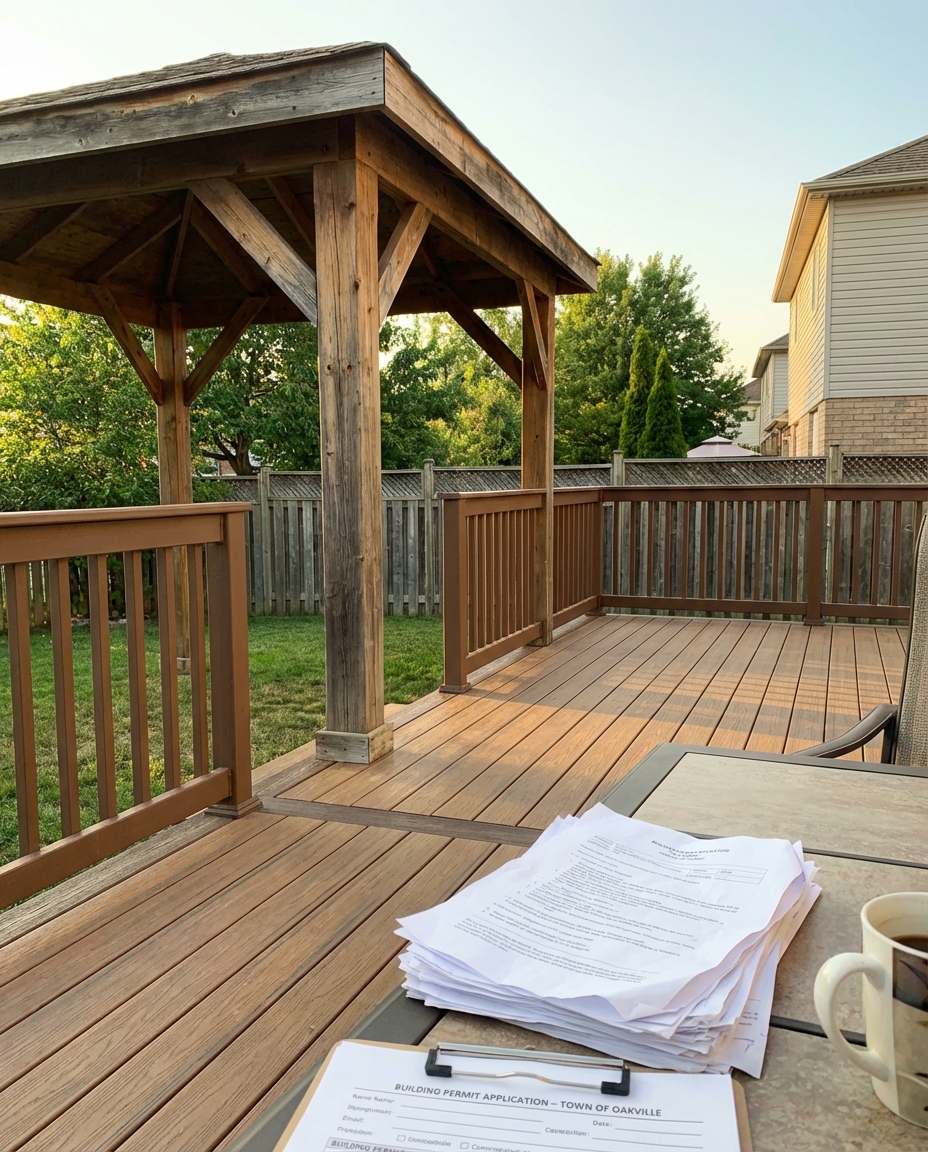
Most Ontario homeowners can build a detached gazebo up to 10 square metres (107 square feet) without a building permit, but that's just the starting point. Municipal bylaws, zoning setbacks, and how you use the structure all affect whether you need approval.
Here's what actually determines if your gazebo project requires a permit in Ontario.
Ontario Building Code Exemptions for Gazebos
The Ontario Building Code (OBC) exempts small detached accessory structures from building permit requirements if they meet specific criteria:
🏗️ Planning a deck project?
Get a free manual project review, or visualize your dream deck with AI before requesting quotes.
Size limit: 10 square metres (107 sq ft) maximum floor area Height limit: Single storey only Foundation: No permanent foundation required for exemption Use: Must be detached and accessory to a residential property
A standard 10×10 foot gazebo falls just under this threshold at 100 square feet. An 11×11 foot structure exceeds it.
But passing the OBC exemption doesn't mean you're clear—municipal zoning bylaws add another layer.
Municipal Bylaws Override Provincial Rules
Each municipality in Ontario can impose stricter requirements than the OBC. Kitchener, Waterloo, and Cambridge all have specific rules:
Kitchener Gazebo Requirements
- Setback from property line: Typically 0.6 metres (2 feet) minimum
- Maximum lot coverage: Gazebo counts toward total accessory structure coverage
- Heritage districts: Additional approvals may be required
Waterloo Gazebo Requirements
- Rear/side yard setback: Usually 0.6 metres minimum
- Height restriction: Often capped at 4 metres regardless of OBC allowance
- Flood plains: Special restrictions if your property is in a flood zone
Cambridge Gazebo Requirements
- Setback requirements: Minimum 0.6–1 metre depending on zone
- Corner lots: May have additional sightline restrictions
- Lot coverage limits: Gazebo plus other structures can't exceed percentage limits
Contact your local building department before starting construction. A 5-minute phone call prevents costly mistakes.
When You Definitely Need a Permit
These scenarios always trigger permit requirements in Ontario:
Over 10 square metres floor area: An 11×11 gazebo needs a permit Permanent foundation: Pouring concrete footings or a slab requires approval Attached to your house: No longer a detached structure Electrical or plumbing: Running power lines or water requires electrical/plumbing permits Second storey or elevated platform: Multi-level structures need engineering review Commercial or rental use: Business activity changes classification
Screened gazebos with walls typically need permits regardless of size—they're considered enclosed structures, not open accessory buildings.
Setback Rules You Can't Ignore
Even permit-exempt gazebos must comply with zoning setbacks:
| Location | Typical Minimum Distance |
|---|---|
| Rear property line | 0.6–1 metre |
| Side property line | 0.6–1 metre |
| Front yard | Often prohibited entirely |
| Neighbouring windows | 1.5 metres (privacy rule) |
Corner lots face stricter rules. Your gazebo can't block sightlines for drivers at intersections.
Homeowners associations may impose additional setback requirements beyond municipal bylaws. Check your property deed and HOA regulations.
Foundation Choices Affect Permit Requirements
How you anchor your gazebo determines whether you need permits:
No permit typically required:
- Pre-fabricated gazebo kits on gravel base
- Deck blocks or concrete pavers
- Temporary/seasonal structures
Permit usually required:
- Poured concrete footings below frost line
- Concrete slab foundation
- Permanent anchoring systems
Ontario's frost line sits around 1.2 metres (4 feet) deep. If you're digging that deep for footings, you need a permit—and you should call Ontario One Call (811) before digging to locate underground utilities.
Lot Coverage Limits Matter
Every municipality caps how much of your property can be covered by structures. A gazebo counts toward this total along with:
- Your house
- Detached garage or shed
- Deck or patio (if covered)
- Pool cabana
- Other accessory buildings
Typical residential lot coverage limits in KWC range from 35% to 45% depending on zoning. Exceeding this triggers zoning violations even if the gazebo itself is permit-exempt.
Pre-Fabricated vs. Custom-Built Gazebos
Pre-fabricated kit gazebos (Costco, Home Depot, Wayfair) usually come with engineering stamps and comply with OBC structural requirements. They're easier to get approved if you do need a permit.
Custom-built gazebos may require:
- Engineer-stamped drawings for structural design
- Detailed site plans showing setbacks
- Material specifications proving OBC compliance
Custom projects cost more to permit because of engineering fees—budget $500–$1,500 for professional drawings if required.
Connected Decks and Gazebos
Building a gazebo on top of an existing deck changes everything. The combined structure often requires:
- Structural engineering review (deck may not support additional load)
- Building permit regardless of gazebo size
- Updated deck framing to carry new weight
- Compliance with deck railing height requirements
If your deck didn't originally require a permit, adding a gazebo might trigger retroactive inspection of the entire structure. See deck permit requirements in Kitchener, Waterloo, and Cambridge for details.
Roofing Material and Building Code
The OBC classifies structures partly by roofing material and permanence:
Fabric canopies: Often considered temporary, easier to keep permit-exempt Metal roofing: Durable but still acceptable for exempt structures Shingle roofing: Signals permanent construction, may trigger closer scrutiny Glass or polycarbonate: Changes wind load calculations, may require engineering
Heavy roofing materials increase snow load requirements. Ontario gazebos must handle 2.4 kPa minimum snow load in most regions—higher in rural areas.
Electrical and Lighting Permits
Adding electrical service to your gazebo requires a separate electrical permit regardless of gazebo size:
Typical costs:
- Electrical permit: $50–$150
- Licensed electrician labor: $800–$2,000 for basic wiring
- ESA (Electrical Safety Authority) inspection: $100–$200
Low-voltage LED lighting (12V or 24V systems) may not require permits depending on your municipality, but line-voltage (120V) always does.
Check out deck lighting permit requirements for similar rules that apply to gazebos.
What Happens If You Skip the Permit
Building without a required permit in Ontario creates serious problems:
Immediate consequences:
- Stop-work orders from municipal bylaw enforcement
- Daily fines ($500–$5,000 depending on municipality)
- Forced removal of non-compliant structures
Long-term issues:
- Home insurance claims denied if undeclared structure involved
- Property sale complications (buyers' lawyers flag unpermitted work)
- Retrofit costs to bring structure up to code before permit issued
Municipalities can place liens on your property for unpaid fines. It's never worth the risk.
Permit Application Process in KWC
If you do need a permit, here's the typical timeline:
- Site plan preparation (1–3 days): Measure setbacks, mark gazebo location
- Application submission (1 day): Submit to municipal building department
- Plan review (2–4 weeks): Building officials check code compliance
- Permit issuance (1 day): Pay fees, receive permit
- Construction (variable): Build according to approved plans
- Final inspection (scheduled): Book inspection when complete
Total timeline: 3–6 weeks from application to approved inspection.
Permit costs in KWC:
- Kitchener: $150–$400 depending on gazebo value
- Waterloo: $125–$350
- Cambridge: $140–$375
See deck permit costs in KWC for similar fee structures.
Heritage Properties and Conservation Areas
Special rules apply if your home is designated heritage or sits in a conservation district:
- Ontario Heritage Act approval required before building
- Heritage committee review (adds 4–8 weeks to timeline)
- Design must match historical character
- Materials and colours may be restricted
Contact your municipal heritage planner early. Heritage approvals run parallel to building permits—you need both.
Pool Barriers and Gazebos
If your gazebo sits near a pool, Ontario's pool barrier regulations apply:
- Gazebo walls can't create climbing hazards near pool fence
- Gates and openings must maintain barrier integrity
- Setback from pool fence often required
Pool barriers are strictly enforced. Inspectors will fail installations that create safety gaps.
Temporary vs. Permanent Structures
Ontario municipalities distinguish between seasonal and year-round structures:
Temporary (usually permit-exempt):
- Installed spring, removed fall
- No permanent foundation
- Fabric or soft-sided construction
Permanent (usually requires permit):
- Left up year-round
- Hard-sided walls
- Anchored foundation
Moving a "temporary" structure to storage each winter is a legitimate way to avoid permit requirements—but it must actually leave the site for several months.
HOA and Condo Restrictions
Homeowners associations and condominium corporations often ban gazebos outright or require:
- Architectural committee approval before building
- Specific size, color, and material restrictions
- Removal within 30 days if neighbors complain
HOA rules supersede municipal bylaws. You might be legally permitted but contractually prohibited.
How to Verify Your Property's Rules
Before buying materials, take these steps:
- Call your building department: Ask about gazebo-specific rules for your zone
- Request a zoning map: Confirm your property's zoning designation
- Check title and deed: Look for restrictive covenants
- Review HOA bylaws: If applicable, get written approval
- Contact neighbors: Courtesy notice prevents disputes
This due diligence takes 2–3 hours but prevents months of headaches.
🎨 Not sure which material to pick?
Upload a photo of your backyard and see exactly how Trex, TimberTech, or cedar would look — free and instant.
Common Questions
Can I build a 12×12 gazebo without a permit in Ontario?
No. A 12×12 gazebo is 144 square feet (13.4 square metres), exceeding the 10 square metre OBC exemption threshold. You'll need a building permit in every Ontario municipality regardless of foundation type or use.
Does a gazebo increase my property taxes in Ontario?
Usually yes. Municipalities conduct periodic property assessments, and permanent structures like gazebos increase your home's assessed value. Expect a small increase—typically $50–$200 annually depending on gazebo size and finish quality. Temporary structures removed each winter generally don't affect assessments.
Can I build a gazebo right on my property line?
No. Ontario municipalities require minimum setbacks from property lines—typically 0.6 to 1 metre (2–3 feet) for accessory structures. Building on the line violates zoning bylaws even if your neighbor approves. You'll face removal orders and fines. Check setback requirements for KWC which apply similarly to gazebos.
What if my neighbor complains about my gazebo?
Municipal bylaw officers investigate complaints and can order modifications or removal if your gazebo violates setbacks, height limits, or lot coverage rules. If it's compliant, neighbor complaints alone can't force removal. However, if your HOA has architectural standards, neighbor complaints may trigger association enforcement even if municipal bylaws are satisfied.
Do I need a permit to replace an existing gazebo?
Depends on size and foundation. Replacing a permit-exempt gazebo with another under 10 square metres on the same non-permanent foundation typically doesn't require a new permit. But upgrading to a larger gazebo or adding a permanent foundation triggers permit requirements. When in doubt, confirm with your building department—replacement projects sometimes reveal that the original structure was never properly permitted.
Upload a backyard photo and preview real decking materials with AI — free, instant, no sign-up.
Permits, costs, material comparisons, and questions to ask before requesting quotes — delivered to your inbox.