
How to Build a Deck in Tennessee (2026)
DIY deck building in TN? Our step-by-step guide covers permits, materials, climate considerations, and expert tips for a long-lasting deck.
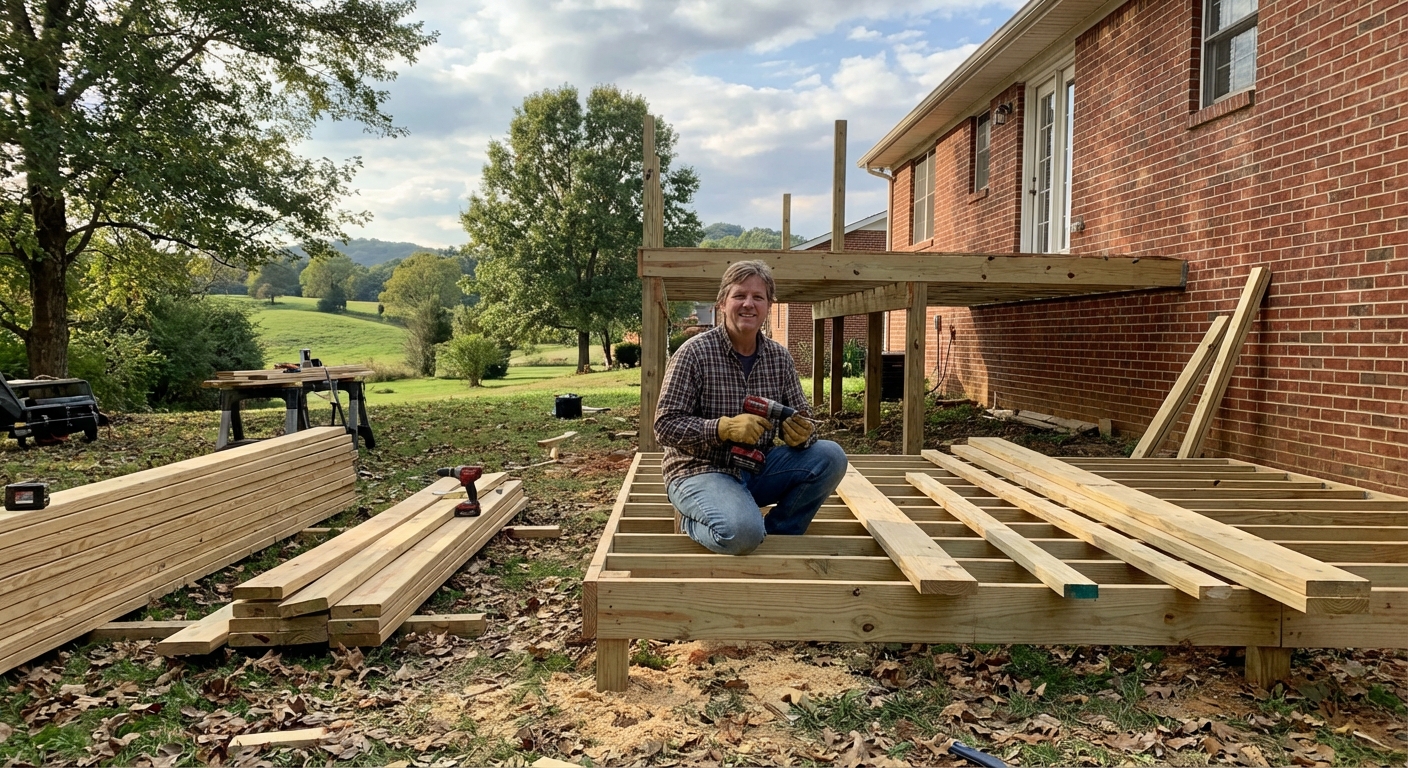
Thinking about building a deck yourself in Tennessee? With no state income tax on wages, many Tennessee homeowners are choosing to invest in their property. Building a deck can increase your home's value and provide a great outdoor living space. This guide provides a comprehensive, step-by-step approach tailored to Tennessee’s unique climate and building codes. From permits to materials, you’ll learn everything you need to know to build a deck that will last for years to come.
📐 Tool Alert: Deck Stair Calculator
Calculate rise, run, and stringer cuts while ensuring IRC/OBC code compliance.
Calculate Stairs →Planning Your Tennessee Deck Project
Looking for more regional information? Check out our Tennessee State Decking Hub.
🏗️ Planning a deck project?
Get a free manual project review, or visualize your dream deck with AI before requesting quotes.
Before you even think about picking up a hammer, careful planning is crucial. This involves considering the size, location, design, and materials for your deck, all while keeping Tennessee's specific conditions in mind.
Define Your Deck's Purpose and Size
How will you use your deck? Will it be for grilling, dining, relaxing, or entertaining? The answer will determine the size and layout. Consider the following:
- Furniture: Account for the space needed for tables, chairs, and other outdoor furniture.
- Traffic Flow: Ensure enough space for people to move comfortably around the deck.
- Grilling Area: If you plan to grill, allocate a safe and convenient space away from high-traffic areas.
Most Tennessee cities require permits for decks larger than 200 sq ft or 30 inches above grade. Keep this in mind when planning your deck's size to avoid unnecessary permitting hassles.
Choose the Ideal Location
Consider the following factors when selecting your deck's location:
- Sun Exposure: Tennessee summers are hot and humid (temperatures often reach 85-95°F). Consider the amount of sun your deck will receive and plan for shade if necessary. Covered decks are a popular choice in TN for a reason!
- Accessibility: How easily can you access the deck from inside your home and from the yard?
- Privacy: Consider the proximity to neighbors and potential noise levels.
- Drainage: Tennessee receives over 50 inches of rain annually, so proper drainage is critical to prevent water damage.
East Tennessee, with cities like Johnson City and Knoxville, often features hilly or mountainous terrain. This makes elevated decks and multi-level designs common to maximize views and manage sloping yards.
Obtain Necessary Permits
Most Tennessee cities require permits for deck construction. Contact your local building codes department *before* starting any work. Here's where to look in a few key cities:
- Franklin: City of Franklin Building & Codes Dept
- Murfreesboro: Murfreesboro Planning & Codes
- Clarksville: Clarksville Building & Codes
- Johnson City: Johnson City Building Division
Permit requirements typically include:
- Detailed site plan showing the deck's location and dimensions
- Construction drawings outlining the deck's structure and materials
- Proof of homeowner's insurance
Failing to obtain the necessary permits can result in fines and delays.
Select Your Decking Materials
The choice of decking material impacts cost, aesthetics, and longevity. Here’s a breakdown of common options in Tennessee:
| Material | Pros | Cons | Average Installed Cost (per sq ft) |
| ----------------- | ------------------------------------------------------------------------------------------------------------------------------------ | ----------------------------------------------------------------------------------------------------------------------------------- | ------------------------------------ |
| Pressure-Treated | Most affordable, readily available, resists rot and insects | Can warp or crack, requires regular staining or sealing, less aesthetically pleasing than other options | $22-40 |
| Composite | Low maintenance, resists fading and staining, long lifespan, various colors and textures | More expensive than pressure-treated, can get hot in direct sunlight, some brands are prone to mold and mildew in humid environments | $40-70 |
| Cedar | Naturally beautiful, resists rot and insects, pleasant aroma | Softer wood, requires regular sealing, more expensive than pressure-treated | $30-50 |
| Trex (Composite) | Highly durable, low maintenance, resists fading, staining, and insects, made from recycled materials | More expensive than other composite options, can get very hot in direct sunlight | $45-75 |
Tennessee's high humidity (often 60%+ year-round) makes moisture resistance a key factor. Choose materials that can withstand these conditions. Use PaperPlan (paperplan.app) to visualize your deck with PaperPlan design with different materials and layouts before committing to a contractor or starting the build yourself.
<!-- slot:after-intro -->
Step-by-Step Deck Building Guide
Once you've planned your deck, it's time to start building. Here's a step-by-step guide to help you through the process.
1. Prepare the Site
- Clear the Area: Remove all vegetation, debris, and obstacles from the deck site.
- Level the Ground: Ensure the ground is level to prevent uneven settling.
- Mark the Layout: Use stakes and string to mark the exact perimeter of your deck.
2. Install Footings
Footings provide a stable base for your deck. In Tennessee, the frost line is typically 12-18 inches deep.
- Dig Holes: Dig holes for your footings according to your local building codes. Ensure they extend below the frost line.
- Pour Concrete: Pour concrete into the holes to create the footings.
- Install Post Anchors: Embed post anchors into the wet concrete to secure the deck posts.
Middle Tennessee, including Nashville, Franklin, and Murfreesboro, often has limestone bedrock close to the surface. This can make digging footings challenging. Consider using specialized drilling equipment or consulting with a local contractor.
3. Set the Posts
- Cut Posts to Length: Cut the deck posts to the appropriate height, considering the desired deck height and the thickness of the beams.
- Attach Posts to Anchors: Secure the posts to the post anchors using bolts or screws.
- Plumb and Brace Posts: Ensure the posts are perfectly plumb (vertical) and brace them temporarily to keep them in place.
4. Install the Beams
- Cut Beams to Length: Cut the beams to the required length.
- Attach Beams to Posts: Attach the beams to the posts using bolts, screws, or specialized beam hangers.
- Ensure Beams are Level: Use a level to ensure the beams are perfectly horizontal.
5. Install the Joists
- Cut Joists to Length: Cut the joists to the required length.
- Space Joists Evenly: Space the joists evenly, typically 12-16 inches apart, depending on the decking material and local building codes.
- Attach Joists to Beams: Attach the joists to the beams using joist hangers.
6. Install the Decking
- Cut Decking Boards to Length: Cut the decking boards to the required length.
- Space Decking Boards Evenly: Space the decking boards slightly apart to allow for expansion and contraction.
- Attach Decking Boards to Joists: Attach the decking boards to the joists using screws or hidden fastener systems.
7. Install Railings and Stairs (if applicable)
- Install Railing Posts: Install railing posts securely to the deck frame.
- Attach Railings: Attach railings to the posts, ensuring they meet local building codes for height and spacing.
- Build and Install Stairs: If your deck is elevated, build and install stairs according to local building codes.
8. Finishing Touches
- Inspect the Deck: Carefully inspect the entire deck for any loose screws, splinters, or other potential hazards.
- Apply Stain or Sealant: Apply a stain or sealant to protect the wood from the elements. Refer to our guide on the Best Deck Stain for Tennessee Weather: Durability & Tips for optimal choices.
- Clean the Area: Clean up any debris and dispose of construction materials properly.
<!-- slot:mid-content -->
Tennessee-Specific Considerations
Building a deck in Tennessee requires specific attention to the local climate and environmental factors.
Termite Protection
Termite pressure is significant throughout Tennessee. Take these precautions:
- Ground Contact Treatment: Treat the soil around the deck footings with a termite preventative.
- Treated Lumber: Use pressure-treated lumber for all structural components in contact with the ground.
- Metal Post Bases: Use metal post bases to elevate the wood posts above the ground, preventing direct contact with moisture and termites.
Weather Resistance
Tennessee’s hot, humid summers and wet winters can take a toll on your deck.
- Choose Weather-Resistant Materials: Select decking materials that are resistant to moisture, rot, and insects.
- Proper Drainage: Ensure proper drainage around the deck to prevent water from pooling.
- Regular Maintenance: Regularly clean and seal your deck to protect it from the elements. See Deck Maintenance in Tennessee Humidity: Protect Your Investment for detailed maintenance tips.
Consider Covered or Screened Options
Given the humidity and insects (especially mosquitoes!), consider a covered or screened deck. Check out these resources:
- Covered Deck Ideas for Tennessee: Beat the Heat & Rain
- Screened Porch vs. Open Deck in Tennessee: Which Is Better?
Best Time to Build
The best months to build a deck in Tennessee are March-May and September-November. These months offer milder temperatures and less chance of extreme weather. Avoid building during the hottest summer months and the coldest winter months.
Building a deck yourself is a rewarding project. By following this comprehensive guide and considering Tennessee's unique conditions, you can create a beautiful and durable outdoor living space. If the project feels overwhelming, consider contacting local professionals. You can find reliable deck builders in your area:
- Best Deck Builders in Franklin, TN: Trusted Local Contractors
- Best Deck Builders in Murfreesboro: Local Guide for 2026
- Best Deck Builders in Clarksville: Finding Quality & Value
- Best Deck Builders in Johnson City, TN: Top Local Picks
<!-- slot:before-faq -->
🎨 Not sure which material to pick?
Upload a photo of your backyard and see exactly how Trex, TimberTech, or cedar would look — free and instant.
Frequently Asked Questions
What are the most popular deck features in Tennessee?
Screened porches are extremely popular due to the high insect population. Covered decks are also common to provide shade during the hot summers and protection from rain. In East Tennessee, multi-level decks are often built on sloped lots to maximize space and views. Check out some Tennessee Deck Design Ideas: Inspiration for Every Budget for inspiration.
How deep should deck footings be in Tennessee?
Deck footings in Tennessee should extend below the frost line, which is typically 12-18 inches deep. Check your local building codes for specific requirements.
What type of wood is best for decks in Tennessee?
Pressure-treated lumber is a common and affordable option. Cedar is a naturally rot-resistant and attractive choice. Composite decking offers low maintenance and long-lasting durability.
Do I need a permit to build a deck in Tennessee?
Most Tennessee cities require permits for decks larger than 200 sq ft or 30 inches above grade. Contact your local building codes department for specific requirements.
How can I protect my deck from termites in Tennessee?
Use pressure-treated lumber, treat the soil with a termite preventative, and use metal post bases to elevate the wood posts above the ground.
<!-- slot:end -->
📋 Planning a deck project?
Get a free manual project review from our team — no obligation, no spam.
Get Free Project Review →Upload a backyard photo and preview real decking materials with AI — free, instant, no sign-up.
Permits, costs, material comparisons, and questions to ask before requesting quotes — delivered to your inbox.