
Does Composite Decking Get Hot in Summer? Canadian Testing
Composite decking can reach 110-150°F in full sun. Learn which brands stay cooler in Canadian summers and how to reduce surface heat on your deck.
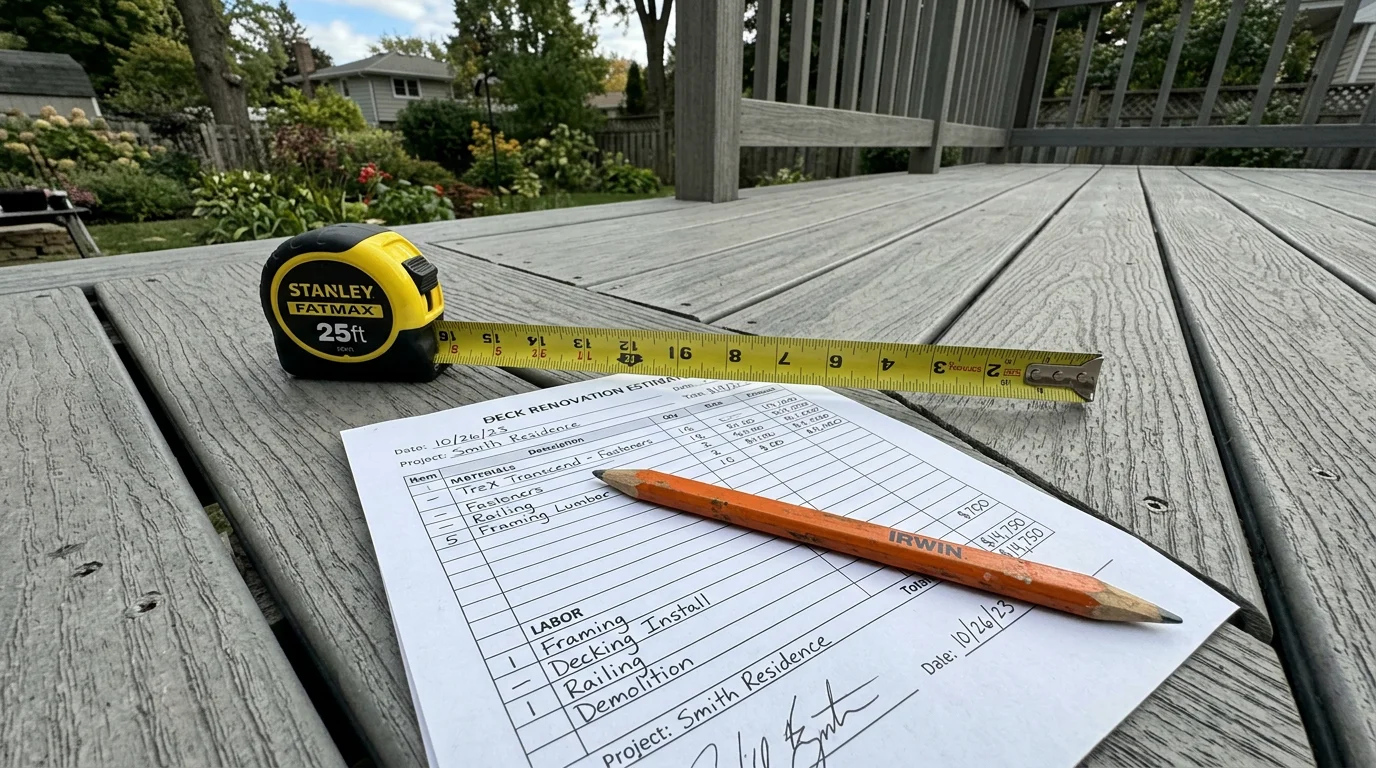
Composite decking gets significantly hotter than wood in direct summer sun, often reaching 110-150°F (43-65°C) on sunny Ontario afternoons. That's hot enough to burn bare feet and make your deck unusable during peak hours.
The heat problem varies dramatically by brand, color, and technology. Some newer composite boards with heat-reflective caps stay 20-30°F cooler than first-generation products. If you're considering composite for a south-facing deck in Kitchener-Waterloo, understanding surface temperatures isn't optional—it determines whether your deck is comfortable or sits empty all summer.
How Hot Does Composite Decking Actually Get?
Real-world testing in Southern Ontario conditions shows composite decking surface temperatures ranging from 105°F to 150°F on sunny July afternoons (air temp 85°F). For comparison:
🏗️ Planning a deck project?
Get a free manual project review, or visualize your dream deck with AI before requesting quotes.
- Pressure-treated pine: 95-110°F
- Cedar: 90-105°F
- Dark composite (brown/grey): 130-150°F
- Light composite (tan/wheat): 110-125°F
- Capped composite with cooling tech: 105-120°F
- Stone pavers: 100-115°F
The 40-50°F gap between dark composite and natural wood is substantial. At 135°F, you can't walk barefoot comfortably. Kids and pets won't use the deck. Furniture cushions become uncomfortably hot.
Why Composite Gets Hotter Than Wood
Three factors make composite decking retain more heat than traditional lumber:
Dense core material — Composite boards blend wood fiber and plastic polymers into a solid, non-porous structure. Unlike natural wood with air pockets and cellular structure, composite has nowhere for heat to dissipate. It acts like a heat sink, absorbing and holding thermal energy.
Darker pigmentation — Most composite decking comes in brown, grey, or dark earth tones that absorb more solar radiation than light-colored wood. Even "grey" composite often reads darker than natural cedar or pressure-treated pine.
Plastic cap layer — The protective shell on capped composite boards is typically made from PVC or polyethylene. Both materials have lower thermal conductivity than wood, trapping heat at the surface rather than transferring it down into the joist structure.
Wood naturally moderates temperature through moisture evaporation and its fibrous structure. Composite eliminates both mechanisms in exchange for durability and low maintenance.
Which Composite Brands Stay Coolest?
Manufacturers have responded to heat complaints with reflective cap technology and lighter color palettes. Here's how major brands available in Ontario perform:
Trex
Trex Transcend with their "cool" color collection (Rope Swing, Gravel Path, Island Mist) measures 15-20°F cooler than standard Trex colors in summer testing. The lighter tones reflect more sunlight while maintaining the protective shell layer. Expect surface temps around 110-120°F on sunny afternoons.
Standard Trex colors (Spiced Rum, Lava Rock, Tiki Torch) still reach 130-140°F in full sun. Read more about Trex performance in our complete Trex review.
TimberTech
TimberTech AZEK uses a proprietary polymer cap with heat-mitigating technology. Their lightest colors (Coastline, English Walnut, Harvest) stay in the 105-115°F range—comparable to pressure-treated wood. AZEK specifically targets heat reduction and performs measurably better than standard composite.
TimberTech PRO (their mid-tier line) doesn't include the same cooling tech and runs 10-15°F hotter than AZEK in identical colors.
Fiberon
Fiberon Paramount with PermaTech cap includes reflective pigments that reduce heat absorption. Light greys and tans measure 115-125°F in testing. Darker colors (Brownstone, Castle Grey) still reach 130-135°F.
Fiberon's budget line (Good Life, Horizon) uses standard capping and gets as hot as any composite—135-145°F in dark colors.
Made-in-Canada Options
Canadian composite manufacturers like Deckorators and Wolf don't yet match the cooling technology of premium American brands. Expect similar heat performance to standard Trex—125-140°F depending on color choice.
Color Makes a 20-30°F Difference
The single biggest factor in composite decking temperature is color selection. Testing across multiple brands shows consistent patterns:
Lightest tones (tan, wheat, light grey): 105-120°F
Medium tones (cedar, walnut, driftwood): 120-130°F
Dark tones (brown, charcoal, black): 135-150°F
A Trex Transcend Island Mist deck (light grey) will measure 25-30°F cooler than Trex Transcend Lava Rock (dark brown) under identical sun exposure. Both have the same cap technology—color is the differentiator.
If you're building a deck with southern or western exposure in Cambridge or Waterloo, choosing the lightest composite color you can tolerate isn't aesthetic compromise—it's functional necessity.
Practical Solutions to Reduce Deck Heat
You don't have to abandon composite if heat is a concern. Several proven strategies drop surface temperatures into the comfort zone:
Partial Shade Coverage
Adding a pergola with 50% shade coverage reduces composite surface temps by 15-25°F. Even partial shade during peak sun hours (11 AM - 3 PM) makes the deck usable barefoot. Pergola structures require permits in most KWC municipalities but add significant value and comfort.
Retractable awnings provide shade control without permanent structure. Expect to pay $800-2,500 for motorized awnings covering a 12×16 deck area.
Strategic Deck Orientation
If you're in the planning phase, consider deck placement. A north-facing deck receives minimal direct sun and stays 20-30°F cooler all summer. East-facing decks get morning sun when temperatures are moderate, then afternoon shade.
South and west-facing decks take full sun during the hottest part of the day—the worst case for composite heat retention.
Outdoor Rugs and Mats
High-quality outdoor rugs over high-traffic areas create a cooler walking surface. Look for rugs with heat-resistant backing designed for deck use. This works well for paths from doors to seating areas and around grills or dining tables.
Cost: $100-400 for quality outdoor rugs sized for deck use.
Cooling Foot Rinse Stations
Many Ontario homeowners with dark composite decks keep a small basin of water and towels near the door. A quick foot rinse before stepping onto hot decking makes barefoot use tolerable. Simple, but effective for families with kids running in and out.
Regular Hosing in Summer
Spraying your composite deck with a garden hose before use drops surface temperature 30-40°F instantly. The effect lasts 30-60 minutes depending on sun intensity. If you're planning afternoon deck time, a quick spray-down at 2 PM makes the space comfortable by 2:30 PM.
This doesn't damage composite decking—it's designed to handle moisture without degradation.
Wood vs. Composite: The Heat Trade-Off
The temperature difference between composite and wood decking is real and measurable, but it's not the only factor in material selection. When comparing composite vs. wood for Ontario conditions, consider:
Composite advantages:
- No annual staining or sealing
- Resistant to rot, insects, and splitting
- 25-30 year lifespan with minimal maintenance
- Better color retention than stained wood
- Lower long-term maintenance costs
Wood advantages:
- Naturally cooler surface temperature
- Lower upfront cost ($45-65/sqft installed vs. $65-95/sqft for composite)
- Easy field repairs
- Traditional aesthetic some homeowners prefer
If your deck gets partial shade or you're choosing lighter composite colors with cooling technology, the heat difference narrows to 10-15°F—often tolerable with occasional hosing or foot protection.
If you're building a large south-facing deck in full sun and want barefoot comfort without shade structures, pressure-treated or cedar remains the practical choice despite higher maintenance requirements.
Does Composite Decking Cool Down at Night?
Yes, but it holds heat longer than wood. Composite decking typically stays 10-15°F warmer than wood decking for 2-3 hours after sunset. On a warm July evening in Kitchener-Waterloo (70°F air temp), composite may still feel warm to the touch at 9 PM while cedar has returned to ambient temperature.
This extended warmth can actually be pleasant for evening deck use—the surface feels comfortable without being hot. The problem is daytime peak temperatures, not evening heat retention.
Impact on Pool Decks
Composite pool decking presents unique challenges. Pool surrounds get constant sun exposure, frequent bare feet, and water contact. Dark composite around a pool can be genuinely unsafe—kids running from pool to deck risk foot burns on 140°F surfaces.
For pool applications in full sun:
- Choose the absolute lightest composite color available
- Consider premium brands with cooling technology (TimberTech AZEK, Trex Transcend cool colors)
- Plan for partial shade structures over high-traffic areas
- Keep a spray bottle or hose nearby for pre-swim cooling
Many Ontario pool installers steer clients toward light-colored stone pavers for pool surrounds specifically because of the composite heat issue. Pavers cost more ($85-120/sqft installed) but stay significantly cooler.
Cost Implications of Heat-Resistant Composite
Premium composite lines with cooling technology cost $2-4 more per linear foot than standard composite decking:
- Standard Trex Enhance: $8-10/linear foot (material only)
- Trex Transcend cool colors: $11-13/linear foot
- TimberTech AZEK: $12-15/linear foot
- Fiberon Paramount: $10-12/linear foot
On a 300 sqft deck (roughly 12×16), upgrading from standard composite to heat-resistant product adds $600-1,200 in material costs. Total installed cost for a premium heat-resistant composite deck runs $75-95/sqft including labor, framing, and railing.
That premium buys measurable comfort improvement—the difference between a deck that's usable barefoot and one that isn't.
🎨 Not sure which material to pick?
Upload a photo of your backyard and see exactly how Trex, TimberTech, or cedar would look — free and instant.
Common Questions
Can you put ice on composite decking to cool it down?
Yes, ice works temporarily but melts quickly on 130°F+ surfaces. A better approach: spray with a garden hose 15-20 minutes before you want to use the deck. Water evaporation cools the surface more effectively than ice and doesn't create slipping hazards from rapidly melting ice.
Do deck stains or sealers reduce composite heat?
No. Composite decking doesn't require or benefit from stains or sealers—the cap layer is pre-finished. Adding any coating voids manufacturer warranties and doesn't reduce heat absorption. The only way to change composite heat characteristics is to choose lighter colors or upgrade to boards with reflective cap technology.
Is composite decking too hot for dogs?
Dark composite in full sun can burn dog paws, especially for smaller dogs with less tolerance. If you have pets that will use the deck regularly, choose light-colored composite (under 120°F in summer), provide shaded areas, or consider pressure-treated wood instead. Many dog owners keep booties available or spray the deck before letting pets out during peak sun.
Does composite decking warp or damage from heat?
No. Composite decking is engineered to withstand surface temperatures up to 170°F without warping, sagging, or structural damage. The discomfort from heat is a usability issue, not a durability concern. Your deck won't be harmed by summer temperatures—but your feet might be.
Will composite decking get cooler over time as it ages?
Slightly. First-generation composite boards often faded to lighter shades over 5-10 years, which reduced heat absorption. Modern capped composite with fade-resistant technology maintains its original color much longer, so the heat characteristics stay consistent throughout the deck's lifespan. Don't count on significant cooling as the deck ages.
Upload a backyard photo and preview real decking materials with AI — free, instant, no sign-up.
Permits, costs, material comparisons, and questions to ask before requesting quotes — delivered to your inbox.