
Pool Decking in Ontario: Composite vs Wood (Slip, Heat, Maintenance)
How composite and wood behave around pools in Ontario: traction when wet, heat in sun, drainage, and maintenance—plus smart layout ideas.
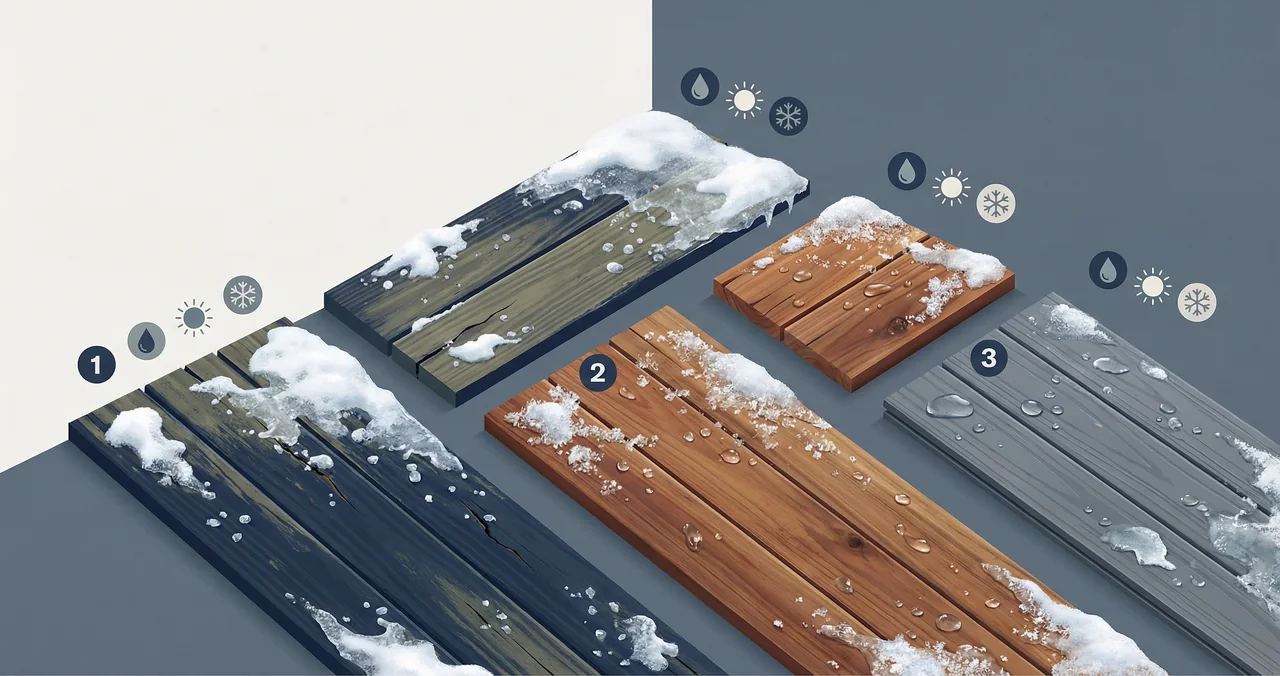
Pool decks face conditions that would ruin a standard deck in half the time. Chlorinated water splashes across the surface daily. Sunscreen, body oils, and pool chemicals sit on the boards. Bare feet demand a splinter-free, non-slip surface. And in Ontario, the whole structure still needs to survive freeze-thaw cycles, heavy snow loads, and months of ice.
Choosing the right material and layout for a pool deck in the Kitchener-Waterloo-Cambridge area is not just about looks -- it is about safety, durability, and long-term cost. This guide covers the real-world differences between composite and wood for pool use, practical layout ideas, Ontario building code requirements, and realistic budget ranges for the KWC region.
Why Pool Decks Face Harsher Conditions Than Regular Decks
A backyard deck that sits next to a barbecue and some patio furniture has it easy compared to a pool deck. The specific challenges include:
🏗️ Planning a deck project?
Get a free manual project review, or visualize your dream deck with AI before requesting quotes.
- Chemical exposure -- chlorine, bromine, and salt (from saltwater pools) are all corrosive. They break down wood fibres and can discolour or degrade certain composite formulations.
- Constant water -- regular decks get wet when it rains. Pool decks are wet every time someone gets out of the water, multiple times a day, all summer.
- UV intensity -- pool decks are typically in open, sunny areas with no shade from the house. They get more UV exposure than a typical attached deck.
- Bare foot traffic -- splinters, rough surfaces, and hot boards are not just annoyances around a pool; they are safety hazards, especially for children.
- Freeze-thaw with residual moisture -- water that pools in board gaps and under the deck surface freezes and expands through Ontario winters, stressing fasteners and joints.
Any material you choose needs to handle all of these simultaneously.
Composite vs Wood: Detailed Pool Deck Comparison
Pressure-Treated Wood Around Pools
Advantages:
- Cooler surface temperature -- wood does not absorb and radiate heat the way composite does. On a 30C July day, PT boards feel noticeably cooler underfoot.
- Lower upfront cost -- PT lumber is roughly 40 to 60 percent less expensive per square foot than mid-range composite.
- Easy to replace individual boards -- if a board warps or cracks, swapping it out is simple.
Disadvantages:
- Splinters increase with age -- UV and chemical exposure accelerate surface fibre breakdown. After 2 to 3 seasons without stain, PT boards around a pool become rough and splintery.
- High maintenance demands -- expect to clean, sand, and re-stain every 1 to 2 years (more frequently than a non-pool deck) because of the constant water and chemical exposure. See PT deck maintenance schedules for details.
- Mold and algae growth -- the consistently wet environment around pools makes wood surfaces a prime habitat for mold. Shaded sections can become slippery.
- Chemical damage -- chlorinated water gradually breaks down the wood preservatives. Saltwater pool splash is especially hard on PT lumber.
Composite Decking Around Pools
Advantages:
- No splinters, ever -- capped composite boards have a smooth, consistent surface that stays bare-foot friendly for the life of the product.
- Superior chemical resistance -- capped composite (where the wood-plastic core is wrapped in a protective polymer shell) handles chlorine and salt exposure without degradation.
- Lower maintenance -- no staining or sealing required. Seasonal cleaning with soap and water is typically enough. See composite deck maintenance in Ontario for a full guide.
- Consistent slip resistance -- most quality composite boards have textured or brushed surfaces that provide reliable wet traction. Look for products that publish their wet slip-resistance ratings.
Disadvantages:
- Heat retention -- this is the biggest concern. Composite boards, especially darker colours, absorb solar radiation and get significantly hotter than wood.
- Higher upfront cost -- composite pool decks typically cost 40 to 80 percent more than PT for materials alone.
- Colour fading -- some lower-end composites fade unevenly in high-UV pool environments. Stick with premium, capped products.
Surface Temperature: How Hot Does Composite Get?
This is the question every pool deck homeowner asks, and it deserves a direct answer.
On a sunny 30C day in Ontario, surface temperatures can reach:
- Pressure-treated wood: 35 to 45C
- Light-coloured composite: 45 to 55C
- Dark-coloured composite: 55 to 70C
At 60C+, walking barefoot is uncomfortable and potentially painful, especially for children. A few practical ways to manage heat:
- Choose lighter colours -- the temperature difference between a light gray and a dark walnut composite can be 10 to 15 degrees
- Add shade structures -- a pergola, shade sail, or large umbrella over the path from the pool to the door makes a bigger difference than material choice
- Use area rugs or mats at high-traffic transition points (the base of a slide, the pool ladder exit)
- Plan your layout so the main walking paths are on the north or east side of the pool, where afternoon shade falls earlier
For a deeper comparison of composite and wood across all use cases, see composite vs wood decking in Ontario.
Smart Pool Deck Layout Ideas
Good pool deck design is about more than choosing boards. The layout determines how practical and enjoyable the space actually is.
Drainage Zones and Grading
- Slope the deck surface away from both the pool and the house at a minimum of 1/8 inch per foot. Water should drain toward the yard, not toward your foundation or back into the pool.
- Leave adequate board gaps (3/16 to 1/4 inch) for water drainage. Around pools, water volume is higher than a standard deck, so slightly wider gaps help.
- Consider an under-deck drainage system if the pool deck is elevated -- water dripping through gaps onto a patio below creates a mess. Proper gutter channels route water to a drain point.
- Grade the surrounding landscape so that rainwater and snowmelt flow away from the pool area. Poor grading leads to standing water against the deck substructure, which accelerates rot in wood framing.
Shade and Comfort
- A pergola or shade sail over the seating area keeps the surface cooler and makes the space usable on the hottest days. If you are considering a pergola, check whether it requires a separate building permit.
- Orient lounge chairs so they face away from the afternoon sun, or position them under shade.
- Use multi-level design to separate the wet pool zone from a dry seating and dining area. A step change of even 6 to 8 inches creates a natural boundary.
Storage and Utility
- Build in a bench with hidden storage for pool noodles, floats, and cleaning tools. This keeps the deck surface clear and reduces tripping hazards.
- Plan a towel station -- a simple hooks-and-shelf setup near the pool exit saves trips into the house.
- Chemical storage should be off the deck in a ventilated shed or enclosed bench with a locking lid. Pool chemicals and composite decking in close contact is not ideal.
Lighting and Safety
- Low-voltage LED step lights on elevation changes are not optional around pools -- they prevent falls during evening swims. See deck lighting ideas for options that work in Ontario.
- Post cap lights on railings provide ambient light without glare on the water surface.
- Avoid string lights directly over the pool -- they create maintenance headaches and potential electrical hazards.
Ontario Building Code Considerations for Pool Decks
Pool Ontario deck guides must comply with both the Ontario Building Code (OBC) and municipal bylaws. Key requirements in the KWC area:
Pool Fencing and Gates
- The OBC requires a barrier (fence) at least 1.5 metres (5 feet) high around all outdoor pools. The deck itself can form part of this barrier, but only if access from the deck to the pool is gated.
- Gates must be self-closing and self-latching, with the latch on the pool side, at least 1.5 metres above grade.
- Fence design must not have horizontal rails or features that children can climb. This affects railing style choices on the deck.
Setbacks and Permits
- Pool structures (including surrounding decks) must meet your municipality's setback requirements from property lines. In Kitchener, Waterloo, and Cambridge, setbacks vary by zoning. Check setback rules for KWC for specifics.
- A deck attached to a pool area almost always requires a building permit if it is over 24 inches above grade or attached to the house. See permit requirements for details.
- Electrical work for pool pumps, heaters, and lighting near the deck requires ESA permits separate from the building permit.
Structural Requirements
- Pool decks need to handle concentrated loads around the pool edge, where people sit and push off. Joist spacing of 12 inches on centre (rather than the standard 16 inches) is common for pool deck applications.
- Footings must reach below the frost line (4 feet in the KWC area) to prevent heaving, which can crack pool coping and misalign the deck. See footing depth in Ontario for more.
Budget Ranges for Pool Decks in KWC
Pool decks typically cost more per square foot than standard decks because of tighter joist spacing, drainage requirements, and the need for higher-quality materials. These are installed prices including labour and materials for the KWC area (2025-2026 estimates):
Pressure-Treated Pool Deck
- Materials + labour: $35 to $55 per square foot
- 200 sq ft pool surround: $7,000 to $11,000
- Plus annual maintenance: $200 to $500/year for cleaning and staining
Composite Pool Deck
- Materials + labour: $55 to $85 per square foot
- 200 sq ft pool surround: $11,000 to $17,000
- Plus maintenance: $50 to $150/year for cleaning
Additional Costs to Budget For
- Railings and gates (code-compliant): $3,000 to $8,000 depending on material and length
- Lighting: $500 to $2,500 for low-voltage LED systems
- Shade structure (pergola or sail): $2,000 to $8,000
- Permits and inspections: $300 to $800
For broader cost breakdowns, see deck costs in Kitchener, deck costs in Waterloo, or our complete Ontario deck cost guide.
Key Takeaways
- Pool decks face harsher conditions than standard decks -- plan your material choice and maintenance accordingly.
- Composite is the better long-term choice for most pool decks due to splinter-free surfaces, chemical resistance, and low maintenance. Choose light colours to manage heat.
- Wood is viable if you are comfortable with more frequent staining (every 1 to 2 years) and eventual splinter management.
- Drainage, grading, and shade matter as much as material choice for a comfortable pool deck.
- Ontario building code requires 1.5-metre fencing with self-closing gates around pools -- factor this into your design and budget from the start.
---
🎨 Not sure which material to pick?
Upload a photo of your backyard and see exactly how Trex, TimberTech, or cedar would look — free and instant.
Want a fast deck quote in Kitchener-Waterloo?
If you're planning a deck and want a ballpark price + a builder-ready scope quickly, submit your details here:
- Get a deck quote: Get a deck quote
The more info you include (approx size, height, material preference, stairs/rail, photos), the more accurate the estimate.
Upload a backyard photo and preview real decking materials with AI — free, instant, no sign-up.
Permits, costs, material comparisons, and questions to ask before requesting quotes — delivered to your inbox.