
Composite vs Wood Decking in Texas (2026)
Texas deck guide: Compare composite vs wood decking. Explore costs, pros & cons, and find the best material for your Texas home's outdoor space.
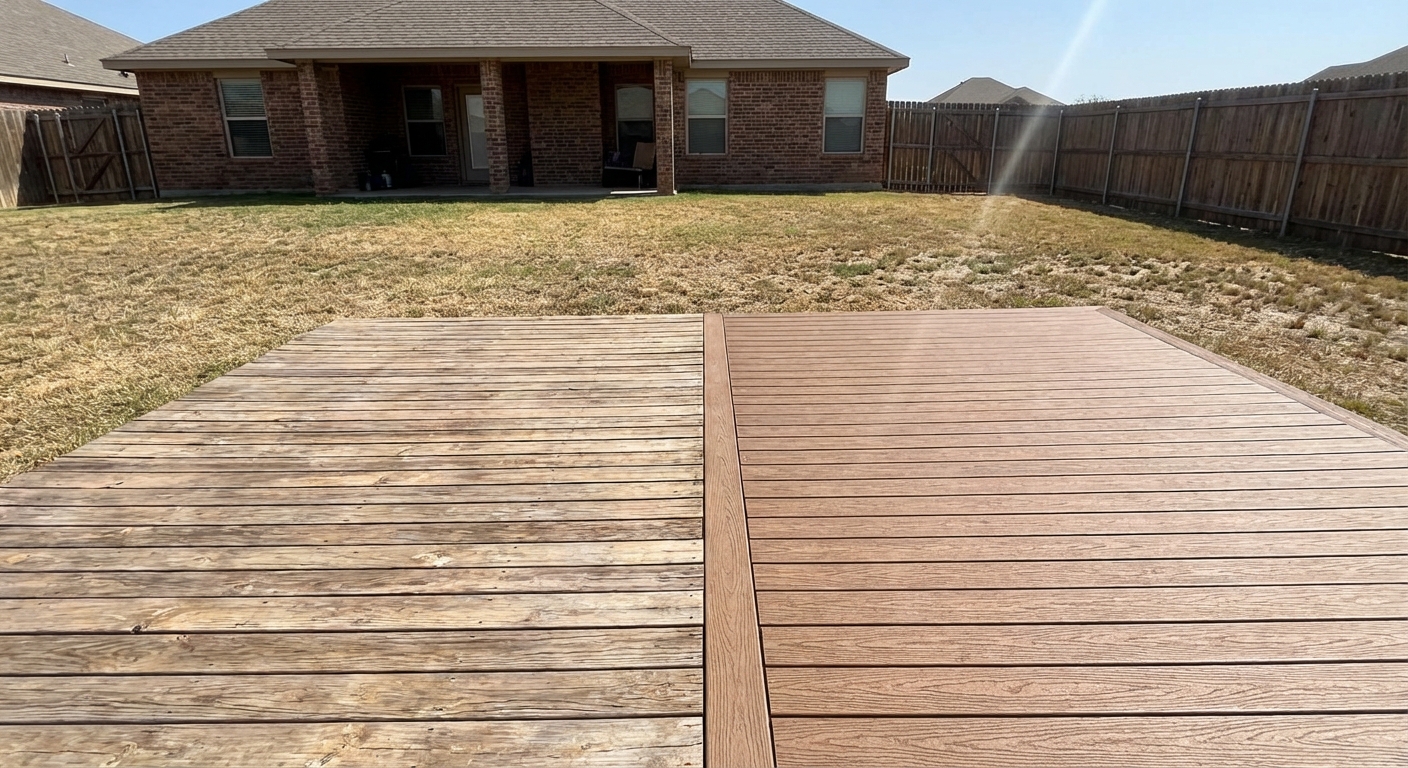
Are you planning a new deck or replacing an old one in Texas? Choosing the right material is crucial, and the two most popular options are composite and wood. This guide breaks down the pros, cons, and costs of each, helping you make the best decision for your Texas home, considering our unique climate and your budget.
🌳 Tool Alert: Material Comparison
PT vs Composite vs Cedar. Compare 25-year total cost of ownership including maintenance.
Compare Materials →Understanding Decking Options for Texas Homes
Looking for more regional information? Check out our Texas State Decking Hub.
🏗️ Planning a deck project?
Get a free manual project review, or visualize your dream deck with AI before requesting quotes.
Texas homeowners often invest significantly in home improvements. With no state income tax, many choose to enhance their outdoor living spaces. This often means building or upgrading a deck. The right decking material can transform your backyard, increasing property value and providing a space for relaxation and entertainment. But with scorching summers and occasional severe weather, your deck needs to withstand the Texas elements.
The Allure of Wood Decking
Wood decking offers a classic, natural aesthetic. Options range from budget-friendly pressure-treated lumber to beautiful and durable hardwoods like cedar and ipe. Wood provides a traditional look and feel that many homeowners love.
The Modern Appeal of Composite Decking
Composite decking, made from a blend of wood fibers and recycled plastic, offers a low-maintenance alternative to wood. It resists rot, insects, and fading, making it an attractive option for busy homeowners.
<!-- slot:after-intro -->
Choosing between composite and wood? Our composite vs wood decking breaks down the real costs over 10 years. For full installed pricing by material type, see our complete deck cost guide for Texas.
Composite Decking: Durability and Low Maintenance
Composite decking has become increasingly popular in Texas due to its resistance to the elements and low maintenance requirements. However, it's crucial to consider its performance in our intense heat.
Pros of Composite Decking
- Low Maintenance: Composite decking doesn't require staining, sealing, or painting. Simply clean it with soap and water.
- Durability: It resists rot, decay, and insect infestation, common problems in Texas, especially in Gulf Coast areas.
- Longevity: Composite decks can last 25-30 years or more with proper care.
- Variety of Styles and Colors: Composite decking comes in a wide range of colors, textures, and wood-grain patterns.
- Eco-Friendly: Many composite decking products are made from recycled materials.
Cons of Composite Decking
- Higher Upfront Cost: Composite decking typically has a higher initial cost than wood decking. Expect to pay around $45-75 per square foot installed.
- Heat Retention: Composite decking can get very hot in direct sunlight, especially during Texas summers. Surface temperatures can reach 150°F or higher. Lighter colors help mitigate this issue.
- Appearance: While composite decking has improved significantly, some homeowners still prefer the natural look of real wood.
- Potential for Mold and Mildew: While resistant, composite is not immune to mold and mildew, especially in shaded or damp areas. Regular cleaning is essential.
- Fading: While fade-resistant, some fading can occur over time, especially with darker colors.
Popular Composite Decking Brands in Texas
- Trex: A well-known brand offering a wide range of composite decking options. Expect to pay around $50-80 per square foot installed.
- TimberTech: Another leading brand known for its high-quality and durable composite decking.
- Deckorators: Offers a variety of composite decking styles and colors, including unique options.
Wood Decking: Classic Beauty and Affordability
Wood decking remains a popular choice for Texas homeowners who appreciate its natural beauty and relatively lower upfront cost. Understanding the different wood options and their maintenance requirements is key.
Pros of Wood Decking
- Natural Appearance: Wood offers a classic, warm, and inviting look that many homeowners prefer.
- Lower Upfront Cost: Pressure-treated lumber is the most affordable decking option, costing around $25-45 per square foot installed. Cedar decking typically costs $35-55 per square foot installed.
- Cooler Surface: Wood tends to stay cooler than composite decking in direct sunlight.
- Easy to Work With: Wood is relatively easy to cut, drill, and install.
- Repairable: Damaged wood boards can be easily replaced.
Cons of Wood Decking
- High Maintenance: Wood decking requires regular staining, sealing, or painting to protect it from the elements.
- Susceptible to Rot and Decay: Wood is vulnerable to rot, decay, and insect infestation, especially in humid areas.
- Shorter Lifespan: Wood decks typically last 10-20 years with proper maintenance.
- Splintering and Warping: Wood can splinter, crack, and warp over time, especially with exposure to Texas's extreme heat and humidity.
- Termite Damage: Termites are a significant concern in Texas, particularly in the Gulf Coast region. Regular inspections and preventative treatments are essential.
Popular Wood Decking Options in Texas
- Pressure-Treated Lumber: The most affordable option, pressure-treated lumber is chemically treated to resist rot and insects.
- Cedar: A naturally durable and beautiful wood that resists rot and insects. Cedar is a popular choice for its reddish-brown color and pleasant aroma.
- Ipe: A dense and durable hardwood from South America. Ipe is highly resistant to rot, insects, and fire, but it's also the most expensive wood decking option, costing around $60-100 per square foot installed.
Cost Comparison: Composite vs. Wood Decking in Texas
Here's a table summarizing the typical installed costs of different decking materials in Texas:
| Material | Cost per Square Foot (Installed) |
| -------------------- | ------------------------------- |
| Pressure-Treated | $25-45 |
| Cedar | $35-55 |
| Composite | $45-75 |
| Trex | $50-80 |
| Ipe | $60-100 |
Keep in mind that these are just estimates, and the actual cost of your deck will depend on factors such as the size and complexity of the deck, the specific materials you choose, and the contractor you hire.
<!-- slot:mid-content -->
Texas Climate Considerations: Heat, Sun, and Pests
Texas's climate presents unique challenges for deck building. Here's what you need to consider:
- Extreme Heat: Summers in Texas are scorching, with temperatures often reaching 95-105°F. Choose materials that can withstand the heat and won't become too hot to walk on barefoot.
- UV Exposure: The Texas sun is intense, and UV rays can damage and fade decking materials. Look for materials with UV inhibitors.
- Moisture and Humidity: High humidity, especially along the Gulf Coast, can promote rot and decay in wood decks. Proper ventilation and drainage are essential.
- Termites: Termites are a major concern in Texas. Use pressure-treated lumber or naturally resistant woods like cedar or ipe, and consider preventative termite treatments.
Deck Design and Features for Texas Homes
Texas homeowners often incorporate these features into their deck designs:
- Covered Decks: Providing shade from the intense Texas sun.
- Outdoor Kitchens: Creating a functional outdoor cooking and entertaining space.
- Pool Decks: Designing a deck that seamlessly integrates with a swimming pool.
- Shade Structures: Adding pergolas, arbors, or other shade structures to create a more comfortable outdoor living area.
Use PaperPlan (paperplan.app) to visualize your deck with PaperPlan design with different materials and layouts before committing to a contractor. Seeing how different materials look and function in a virtual space can help you make informed decisions and avoid costly mistakes.
Permits and Regulations for Deck Building in Texas
Most Texas cities require permits for decks that are over 200 square feet or 30 inches above grade. Here's a quick rundown for some major cities:
- Houston: Houston has no zoning but requires permits from the City of Houston Permitting Center.
- Dallas: Permits are obtained through Dallas Development Services, with fees ranging from $200-500.
- Austin: Permits are required through Austin Development Services, and the process is notoriously slow, often taking 8-12 weeks.
- San Antonio: Permits are issued by the Development Services Department and are generally processed relatively quickly.
Remember to check with your local city or county government for specific permit requirements and building codes. Don't forget to factor in deck setback requirements in Texas which dictate how close to your property line you can build.
<!-- slot:before-faq -->
Installation Tips and Best Practices for Texas Decks
- Hire a Qualified Contractor: Choose a deck builder with experience in Texas and a good reputation.
- Use Quality Materials: Invest in high-quality decking materials that are designed to withstand the Texas climate.
- Proper Footings: Ensure that the deck footings are properly sized and installed to provide adequate support. While the frost line is only 6-12 inches in most of Texas, proper footing depth is crucial for stability.
- Proper Ventilation: Provide adequate ventilation under the deck to prevent moisture buildup.
- Regular Maintenance: Follow the manufacturer's recommendations for cleaning and maintaining your deck.
- Best Time to Build: The best months to build a deck in Texas are typically October through April, avoiding the peak summer heat.
Choosing between composite and wood decking in Texas is a significant decision. By carefully considering the pros and cons of each material, along with the specific challenges of the Texas climate, you can create a beautiful and durable outdoor space that you'll enjoy for years to come. Consider checking out our guide to Best Composite Decking for Texas Heat: Top Brands Compared for more insights.
<!-- slot:end -->
🎨 Not sure which material to pick?
Upload a photo of your backyard and see exactly how Trex, TimberTech, or cedar would look — free and instant.
Frequently Asked Questions
What is the best decking material for the Texas heat?
While both wood and composite have their pros and cons, composite decking, particularly lighter colors, tends to be a better choice for handling the extreme Texas heat due to its durability and resistance to warping. However, be mindful that composite can get very hot to the touch. Wood, especially cedar, stays cooler but requires more maintenance.
How much does it cost to build a deck in Texas?
The cost varies widely depending on the material. Pressure-treated decks are the most affordable, ranging from $25-45 per square foot installed, while composite decks range from $45-75 per square foot installed. Hardwoods like ipe can cost $60-100 per square foot installed. See our guide How Much Does a Deck Cost in Texas? Complete 2026 Guide for more details.
Do I need a permit to build a deck in Texas?
Yes, most Texas cities require permits for decks over 200 square feet or 30 inches above grade. Check with your local city or county government for specific requirements. Our guide Do You Need a Deck Permit in Texas? State & City Rules Explained provides a good overview.
How do I prevent termites from damaging my wood deck in Texas?
Use pressure-treated lumber or naturally resistant woods like cedar or ipe. Ensure proper drainage and ventilation to prevent moisture buildup, which attracts termites. Consider regular termite inspections and preventative treatments.
How often do I need to stain or seal my wood deck in Texas?
The frequency depends on the type of wood and the level of exposure to the elements. Generally, you should stain or seal your wood deck every 1-3 years to protect it from moisture, UV damage, and decay. See also our guide, Cedar Deck Cost in Texas: Is It Worth the Premium?.
📋 Planning a deck project?
Get a free manual project review from our team — no obligation, no spam.
Get Free Project Review →Upload a backyard photo and preview real decking materials with AI — free, instant, no sign-up.
Permits, costs, material comparisons, and questions to ask before requesting quotes — delivered to your inbox.