
Deck Cost in Brampton (2026)
What does a deck cost in Brampton in 2026? Get real CAD pricing per square foot for composite, wood, and Trex decks plus local tips to save.
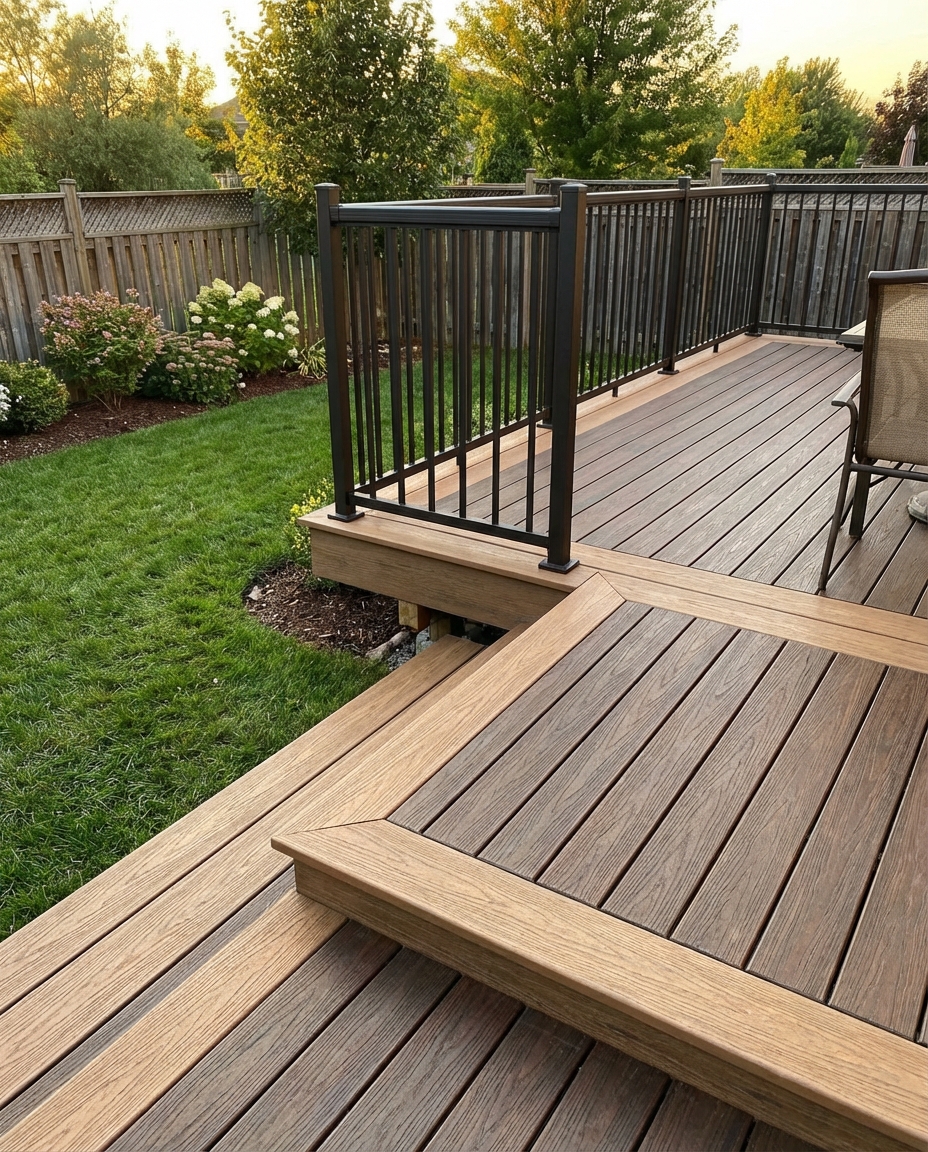
How Much Does a Deck Cost in Brampton?
A new deck in Brampton runs anywhere from $9,000 to $40,000+ CAD depending on size, material, and complexity. That's a wide range — and not particularly helpful if you're trying to set a realistic budget.
🏗️ Planning a deck project?
Get a free manual project review, or visualize your dream deck with AI before requesting quotes.
Looking for more regional information? Check out our Ontario Decking Hub.
So here's a tighter number. For a standard 12x16 pressure-treated deck (192 sq ft), most Brampton homeowners pay between $5,760 and $10,560 CAD installed. Bump that up to composite and you're looking at $9,600 to $16,320 CAD.
The real cost driver? Material choice. But Brampton's climate throws a wrench into that decision. Harsh winters, freeze-thaw cycles, road salt tracked onto boards, and heavy snow loads all take a toll. The cheapest option upfront isn't always the cheapest over ten years.
🧮 Tool Alert: Deck Cost Calculator
Estimate your project costs in seconds based on local pricing bands for your area.
Calculate My Cost →For a broader look at deck pricing across different materials and regions, see our complete deck cost guide.
Average Deck Cost in Brampton by Material
Here's what Brampton homeowners are paying in 2026 CAD, fully installed — materials, labour, footings, and basic railing included:
| Material | Cost Per Sq Ft (Installed) | 12x16 Deck (192 sq ft) | 16x20 Deck (320 sq ft) |
|---|---|---|---|
| Pressure-Treated Wood | $30–$55 | $5,760–$10,560 | $9,600–$17,600 |
| Cedar | $40–$65 | $7,680–$12,480 | $12,800–$20,800 |
| Composite | $50–$85 | $9,600–$16,320 | $16,000–$27,200 |
| Trex (Brand-Name Composite) | $55–$90 | $10,560–$17,280 | $17,600–$28,800 |
| Ipe (Hardwood) | $70–$120 | $13,440–$23,040 | $22,400–$38,400 |
The low end of each range reflects a simple, ground-level, rectangular deck. The high end accounts for elevated builds, complex layouts, stairs, and premium railing systems.
A few things worth noting for Brampton specifically:
- Pressure-treated wood is by far the most popular choice. It's affordable, readily available, and local contractors know how to work with it. But it demands annual sealing to survive Brampton's freeze-thaw cycles and winter moisture.
- Composite and PVC hold up best against the climate with almost zero maintenance. The upfront premium pays off within 5–8 years when you factor in staining, sealing, and board replacements.
- Cedar looks beautiful but softens over time in wet climates. Without consistent maintenance, it'll grey out and start splitting within a few seasons.
- Ipe is virtually indestructible but expensive and difficult to work with. Labour costs run higher because it requires pre-drilling and specialized fasteners.
For a deeper dive into how materials perform through Ontario winters, check out the best decking materials for freeze-thaw climates.
Cost Per Square Foot Breakdown
That installed price covers a lot of moving parts. Here's roughly how your dollar breaks down for a mid-range composite deck in Brampton:
| Component | % of Total | Cost Per Sq Ft (CAD) |
|---|---|---|
| Decking material | 35–40% | $18–$34 |
| Substructure (joists, beams, posts) | 15–20% | $8–$17 |
| Footings & foundation | 10–15% | $5–$13 |
| Labour | 25–35% | $13–$30 |
| Railing, stairs, hardware | 5–10% | $3–$9 |
Footings deserve special attention in Brampton. The frost line here runs 36 to 60 inches deep, and your footings need to extend below it. That's not optional — it's code, and it's the difference between a deck that stays level and one that heaves every spring. Sonotube footings or helical piles are standard. Expect to pay $150–$400 per footing depending on depth and soil conditions.
If you're planning a larger build, our guides on 16x20 deck costs in Ontario and 20x20 deck costs break down pricing at those sizes.
Labour Costs in Brampton
Labour typically accounts for $13 to $30 per square foot or roughly 25–35% of your total project cost. In Brampton, that tends to push toward the higher end of Ontario averages for a few reasons:
- Shorter building season. Most deck construction happens between May and October. That six-month window creates a crunch. Contractors who are booked solid can charge premium rates.
- Proximity to the GTA. Brampton builders compete with Toronto-area demand. Skilled tradespeople have options, and pricing reflects that.
- Footing complexity. Deep frost lines mean more excavation work, which adds labour hours.
What labour includes
A reputable Brampton deck builder's quote should cover:
- Site preparation — clearing, grading, layout
- Footing installation — excavation to frost depth, concrete pours or helical pile installation
- Framing — posts, beams, joists, blocking
- Decking installation — surface boards, hidden fasteners if applicable
- Railing and stairs — assembly and code-compliant installation
- Cleanup and debris removal
Getting the best value on labour
Book by March. Seriously. The best crews in Brampton fill their spring and summer schedules by late winter. If you wait until May to start calling, you'll either wait months or pay rush pricing.
Get three quotes minimum. Pricing varies significantly between contractors — sometimes 20–30% for identical scope. But don't just chase the lowest number. Ask about warranty, insurance, WSIB coverage, and whether they pull the permit themselves.
What Affects Your Total Price
Beyond material and labour, these factors swing your Brampton deck cost up or down:
Deck height and elevation
A ground-level deck on a flat lot is the cheapest build. Once you're more than 24 inches above grade, you need deeper posts, more structural support, stairs, and a building permit. Elevated decks can cost 30–50% more than ground-level builds of the same footprint.
Deck shape and layout
Rectangles are cheapest. L-shapes, curves, wraparounds, and multi-level designs add complexity. Every angle change means more cuts, more waste, and more labour hours. Budget an extra 10–20% for non-rectangular layouts.
Railing systems
Basic pressure-treated wood railings run $15–$30 per linear foot. Aluminum or glass railing systems jump to $40–$100+ per linear foot. On a typical 12x16 deck, railing can add $1,500 to $6,000 depending on the system. For options, see our guide to the best deck railing systems in Canada.
Stairs and access
Each set of stairs adds $500–$2,500 CAD depending on width, height, and material. Wide stairs or wraparound stairs with landings cost more. Ontario Building Code requires handrails on stairs with three or more risers.
Permits and inspections
In Brampton, deck permits are typically required for structures over 24 inches above grade or over 100 sq ft. Permit fees generally run $200–$500 CAD. Contact Brampton's Building Department directly — requirements vary and they'll confirm exactly what applies to your lot.
Building without a permit might seem tempting, but it creates real problems. Insurance claims get denied, home sales get complicated, and the city can order removal. Read more about the risks of building a deck without a permit in Ontario.
Soil and lot conditions
Sloped lots, rocky soil, poor drainage, or high water tables all increase costs. If your backyard has a significant grade change, you may need retaining walls or extra-long posts — both add to the budget.
Add-ons
These are the extras that quietly inflate your quote:
- Built-in benches: $500–$2,000
- Pergola or shade structure: $2,000–$8,000
- Deck lighting: $500–$3,000
- Privacy screens: $300–$2,000
- Skirting: $500–$1,500
- Under-deck drainage system: $1,500–$4,000
For lighting specifically, the best deck lighting kits available in Canada covers what works well in our climate.
Composite vs Wood: Cost Comparison
This is the decision most Brampton homeowners agonize over. Here's a straight comparison:
| Factor | Pressure-Treated Wood | Composite |
|---|---|---|
| Installed cost (per sq ft) | $30–$55 | $50–$85 |
| Annual maintenance | Stain/seal every 1–2 years ($300–$800) | Occasional cleaning ($50–$100) |
| Lifespan | 15–20 years with maintenance | 25–30+ years |
| 10-year maintenance cost | $2,000–$6,000 | $500–$1,000 |
| 10-year total cost (12x16) | $7,760–$16,560 | $10,100–$17,320 |
| Fade/warp resistance | Low — needs ongoing care | High — engineered for stability |
| Snow/ice performance | Can crack from freeze-thaw | Handles freeze-thaw well |
| Splinter risk | Yes, especially as it ages | No |
The gap narrows fast. Over ten years, a composite deck in Brampton often costs only $1,000–$3,000 more than a wood deck when you include maintenance — and you skip the hassle of sanding, staining, and sealing every year or two.
For Brampton specifically, composite's resistance to moisture and freeze-thaw damage is a significant advantage. Pressure-treated wood absorbs water, and when that water freezes and expands, it accelerates cracking and warping. Salt tracked from driveways and sidewalks speeds up the damage.
That said, wood still makes sense if:
- Your budget is tight and you need to minimize upfront cost
- You prefer a natural wood look and don't mind the maintenance routine
- You're building a small, simple deck where maintenance is quick
Use PaperPlan to visualize different decking materials on your own home before committing — it's easier to justify the cost difference when you can actually see what each option looks like in your backyard.
Want a detailed breakdown of composite options? Our guide to the best composite decking brands in Ontario compares Trex, TimberTech, Fiberon, and others on price, performance, and warranty.
How to Save Money on Your Brampton Deck
You don't have to slash your dream deck to hit a reasonable budget. These strategies actually work:
1. Build in the shoulder season
September and October are prime time for deals. Contractors are wrapping up their busy season and often have crew availability. The weather is still cooperative, and you may negotiate 5–15% lower than peak summer pricing. Early spring (late April/May) works too, but demand picks up fast.
2. Keep the design simple
A rectangular, ground-level deck with standard railing is the most cost-efficient build. Every curve, angle, level change, and custom feature adds cost. If budget is a concern, start simple — you can always add a pergola or built-in seating later.
3. Choose your material strategically
If you want composite but the quote is too high, consider using composite for the deck surface and pressure-treated wood for the substructure. This is actually standard practice — the substructure isn't exposed to UV or foot traffic, so treated lumber performs fine there.
Another option: use premium material on visible areas and a more affordable option for less-seen sections.
4. Get multiple quotes
Three quotes is the minimum. Five is better. Brampton has a healthy pool of deck builders, and pricing varies more than you'd expect. Just make sure you're comparing apples to apples — same materials, same scope, same permit responsibility.
5. Handle demolition and prep yourself
If you're replacing an old deck, tearing down and hauling away the existing structure yourself can save $500–$2,000. Same goes for clearing vegetation, removing obstacles, and prepping the site. Just don't touch anything structural or anything that affects the new build's foundation.
6. Bundle projects
If you also need fencing, landscaping, or a patio, bundling with the same contractor often yields a discount. Many Brampton builders handle multiple outdoor trades and will negotiate on combined projects.
7. Plan ahead for permits
Pull the permit yourself instead of having the contractor do it (and mark it up). It's straightforward — Brampton's Building Department walks you through the process. You'll need a site plan and basic drawings.
🎨 Not sure which material to pick?
Upload a photo of your backyard and see exactly how Trex, TimberTech, or cedar would look — free and instant.
Frequently Asked Questions
How much does a 12x16 deck cost in Brampton?
A 12x16 deck (192 sq ft) in Brampton costs between $5,760 and $10,560 CAD for pressure-treated wood or $9,600 to $16,320 CAD for composite, fully installed. These ranges include footings, framing, decking, basic railing, and labour. Add $500–$2,500 for stairs if your deck is elevated, plus permit fees. For a detailed breakdown at this size, see our 12x16 deck cost guide for Ontario.
Do I need a permit to build a deck in Brampton?
In most cases, yes. Brampton typically requires a building permit for decks that are over 24 inches above grade or larger than 100 sq ft. Even if your deck falls under these thresholds, it's worth confirming with Brampton's Building Department — requirements can vary based on lot-specific factors like setbacks and easements. Permit fees usually run $200–$500 CAD and the process takes a few weeks.
What is the best decking material for Brampton's climate?
Composite and PVC decking perform best in Brampton's climate. The freeze-thaw cycles, heavy snow loads, and road salt exposure are tough on natural wood. Composite doesn't absorb moisture, so it resists the cracking and warping that plague wood decks after a few Ontario winters. If you prefer wood, pressure-treated lumber is the practical choice — but budget for annual sealing and expect more maintenance. Cedar looks great initially but requires diligent upkeep to survive here.
When is the best time to build a deck in Brampton?
The building season runs May through October, but the best time to start planning is January to March. Top contractors in Brampton fill their summer schedules early. If you call in March and book for a May or June start, you'll have your pick of crews. Waiting until summer means waiting — possibly into fall. For pricing advantages, September and October often bring slightly lower labour rates as demand eases. Read more in our guide on the best time to build a deck in Ontario.
Can I build my own deck in Brampton to save money?
You can, and DIY saves roughly 25–35% on labour — but only if you know what you're doing. Footings need to reach below the frost line (36–60 inches in this region), framing must meet Ontario Building Code requirements, and you still need a permit for most builds. A poorly built deck is a safety hazard and a liability issue. If you're handy and willing to learn, our guide on building your own deck in Ontario covers what's involved, what to watch for, and where DIY makes sense versus where it doesn't.
📋 Planning a deck project?
Get a free manual project review from our team — no obligation, no spam.
Get Free Project Review →Upload a backyard photo and preview real decking materials with AI — free, instant, no sign-up.
Permits, costs, material comparisons, and questions to ask before requesting quotes — delivered to your inbox.