
Protecting Your Virginia Deck from Hurricane Season & Humidity
Learn how to protect your Virginia deck from hurricanes & humidity. Get expert tips on materials, maintenance, & local building codes for a long-lasting deck.
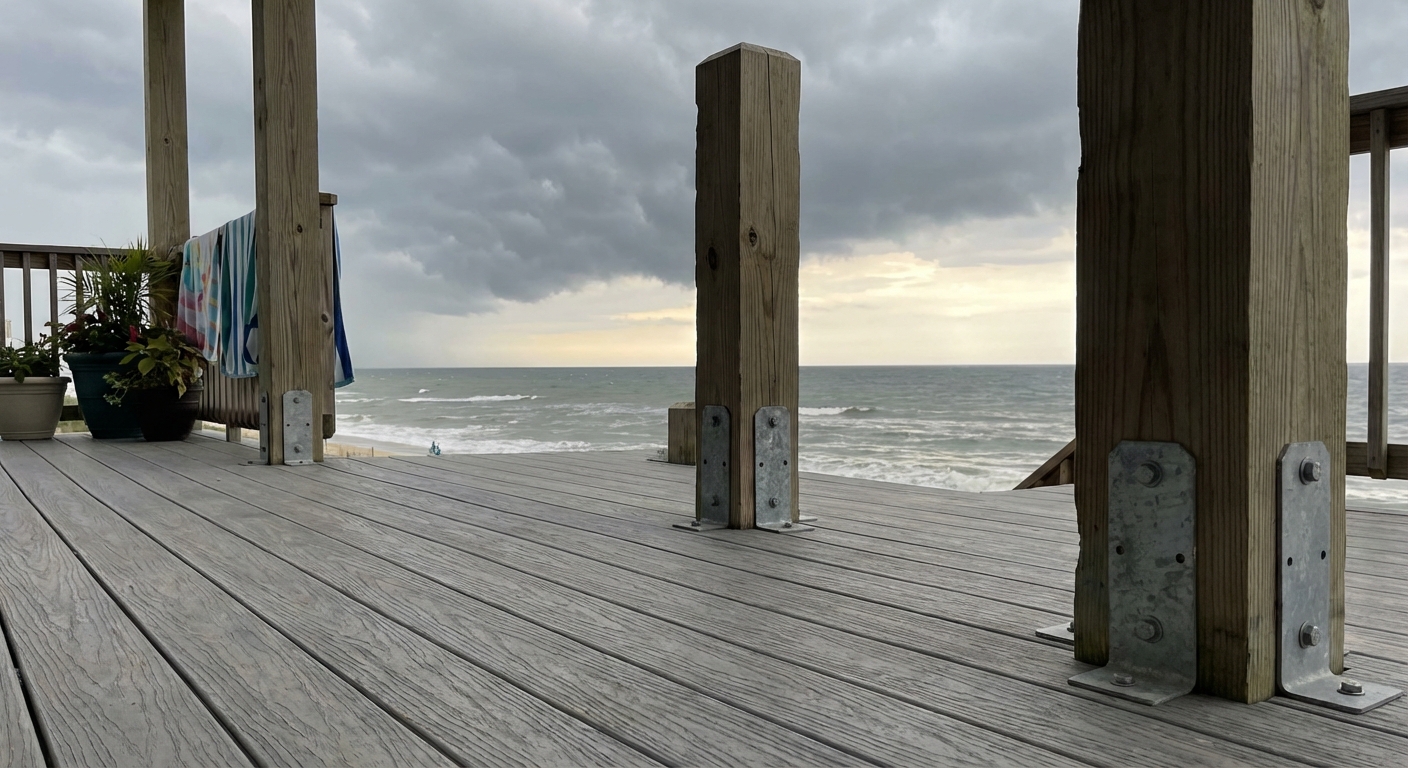
Are you worried about how Virginia's humid summers and potential hurricanes will affect your deck? Properly protecting your deck from the elements is crucial for its longevity and safety. This guide covers everything Virginia homeowners need to know, from choosing the right materials to understanding local building codes.
📅 Tool Alert: Maintenance Planner
Get a custom seasonal maintenance schedule to protect your investment for decades.
Plan Maintenance →Understanding Virginia's Climate and Its Impact on Decks
Looking for more regional information? Check out our Virginia State Decking Hub.
🏗️ Planning a deck project?
Get a free manual project review, or visualize your dream deck with AI before requesting quotes.
Virginia's humid subtropical climate presents unique challenges for deck owners. Hot, humid summers with temperatures reaching 90-95°F can promote mold and mildew growth, while the risk of hurricanes, especially in coastal areas like Hampton Roads, demands robust construction. Even winter brings freeze-thaw cycles that can damage improperly sealed wood. The Tidewater region experiences milder winters compared to the colder mountain regions of Southwest Virginia.
Here's a breakdown of key climate factors:
- Humidity: High humidity levels encourage rot and decay, especially in wood decks.
- Hurricanes: Coastal Virginia (Hampton Roads, Virginia Beach, Norfolk) is vulnerable to hurricanes and tropical storms, requiring hurricane-resistant construction.
- Temperature Fluctuations: Freeze-thaw cycles can crack and warp deck boards.
- Sun Exposure: Intense sunlight can fade and dry out deck surfaces.
- Termites: High termite pressure, especially in Tidewater and Piedmont, necessitates termite-resistant materials and preventative treatments.
<!-- slot:after-intro -->
Choosing the Right Decking Materials for Virginia
Selecting the right materials is the first line of defense against Virginia's weather. Here's a comparison of popular decking options and their suitability for the state:
| Material | Pros | Cons | Estimated Cost (Installed) | Best For |
| ---------------- | ------------------------------------------------------------------------------------------------------------------------ | ----------------------------------------------------------------------------------------------------------------------------------- | ----------------------------- | --------------------------------------------------------------------------------------- |
| Pressure-Treated | Affordable, readily available, resists rot and insects. | Susceptible to warping and cracking if not properly maintained, requires regular sealing. | $25-45/sqft | Budget-conscious homeowners, areas with moderate weather. |
| Composite | Low maintenance, durable, resists rot and insects, available in various colors and styles. | More expensive than pressure-treated wood, can get hot in direct sunlight. | $45-80/sqft | Homeowners seeking low maintenance and durability, Northern Virginia (high construction costs). |
| Cedar | Naturally beautiful, resists rot and insects, dimensionally stable. | More expensive than pressure-treated wood, requires regular staining or sealing to maintain its appearance. | $35-55/sqft | Homeowners prioritizing aesthetics and natural resistance to the elements. |
| Trex | Premium composite decking, highly durable, low maintenance, wide range of colors and styles, often made from recycled materials. | Most expensive decking option, can also get hot in direct sunlight, requires professional installation for optimal performance. | $50-85/sqft | Homeowners seeking the best in durability and low maintenance, willing to invest. |
Consider your budget, aesthetic preferences, and the level of maintenance you're willing to undertake when choosing your decking material. For waterfront properties along the Chesapeake Bay, marine-grade fasteners are essential to resist salt spray corrosion.
Virginia Building Codes and Permitting for Decks
Navigating Virginia's building codes is essential for a safe and legal deck. The Virginia Uniform Statewide Building Code (USBC) is based on the International Residential Code (IRC) and the Virginia Residential Code (VRC), but enforcement varies by locality.
Key points to remember:
- Permits: Decks over 30 inches above grade or attached to a dwelling typically require a permit.
- Frost Line: Ensure footings extend below the frost line (18 inches in Tidewater, 24 inches in mountain regions).
- Contractor Licensing: The VA DPOR (Department of Professional and Occupational Regulation) requires contractor licensing. Ensure your contractor has the appropriate Class A (over $70K), Class B ($10K-70K), or Class C (under $10K) license.
- Hurricane-Rated Hardware: Coastal zones (Hampton Roads) mandate hurricane-rated hardware. Simpson Strong-Tie hurricane ties are often required.
- Local Regulations: Check with your local building official for specific requirements in your city or county. Arlington, for example, has strict county regulations. Richmond's historic districts may have architectural guidelines.
- Permit Costs: Expect to pay between $100-500 for a deck permit, depending on your locality.
- HOA Approval: Many HOAs, especially in Northern Virginia (Fairfax, Loudoun, Prince William counties) and Virginia Beach planned communities, require approval before construction.
Failing to obtain the necessary permits can result in fines and delays. It's always best to consult with your local building department before starting any deck project.
Protecting Your Deck During Hurricane Season
If you live in coastal Virginia, hurricane preparedness is crucial. Here's how to protect your deck:
- Hurricane Straps and Ties: Ensure your deck is properly secured to the house with hurricane straps and ties. Simpson Strong-Tie is a reputable brand.
- Reinforced Connections: Strengthen all connections between posts, beams, and joists.
- Remove Loose Objects: Before a storm, remove all furniture, planters, and other loose objects from the deck.
- Trim Trees: Cut back any overhanging tree branches that could fall and damage the deck.
- Consider Elevation: If you're building a new deck in a flood zone, consider elevating it above the base flood elevation. Virginia Beach often requires elevated builds in flood zones.
- Regular Inspections: Regularly inspect your deck for signs of damage or weakness, and make repairs promptly.
Combating Humidity and Moisture Damage
Humidity is a constant threat to Virginia decks. Here's how to mitigate moisture damage:
- Proper Ventilation: Ensure adequate ventilation under the deck to prevent moisture buildup.
- Regular Cleaning: Clean your deck regularly to remove dirt, debris, and mold.
- Sealing and Staining: Apply a high-quality sealant or stain to protect the wood from moisture. Choose a product specifically designed for exterior use and follow the manufacturer's instructions. Consider using a product with mildewcides.
- Proper Drainage: Ensure proper drainage around the deck to prevent water from pooling.
- Use Pressure-Treated Lumber: Opt for pressure-treated lumber for the substructure to resist rot and decay.
- Consider Composite Decking: Composite decking is highly resistant to moisture damage and requires minimal maintenance.
<!-- slot:mid-content -->
Deck Maintenance Tips for Virginia's Four Seasons
A consistent maintenance schedule will significantly extend the life of your Virginia deck.
- Spring: Power wash the deck to remove winter grime. Inspect for damage and make necessary repairs. Apply a fresh coat of stain or sealant.
- Summer: Monitor for mold and mildew growth. Clean spills immediately. Ensure adequate ventilation under the deck.
- Fall: Remove leaves and debris. Inspect for insect damage. Prepare for winter by applying a water-repellent sealant.
- Winter: Clear snow and ice carefully to avoid damaging the deck surface. Avoid using salt, which can corrode metal fasteners and damage wood.
Consider consulting with a professional deck maintenance company for specialized services like deep cleaning and wood restoration.
Cost Considerations for Deck Construction and Maintenance in Virginia
Deck construction costs in Virginia range from moderate to high. Northern Virginia (DC metro) and Hampton Roads tend to have higher construction costs compared to the Shenandoah Valley and Southwest Virginia.
Here's a general cost breakdown:
- Pressure-Treated Deck: $25-45/sqft installed
- Composite Deck: $45-80/sqft installed
- Cedar Deck: $35-55/sqft installed
- Trex Deck: $50-85/sqft installed
Maintenance costs vary depending on the size of your deck and the materials used. Expect to spend a few hundred dollars per year on cleaning, sealing, and minor repairs.
Remember to factor in permit costs ($100-500) and potential HOA fees.
Use PaperPlan (paperplan.app) to visualize your deck with PaperPlan design with different materials and layouts before committing to a contractor. Experiment with different decking options and railing styles to find the perfect look for your Virginia home, and get a better estimate of material costs.
Finding a Reputable Deck Builder in Virginia
Choosing the right deck builder is crucial for a successful project. Here are some tips for finding a reputable contractor:
- Check Licensing: Verify that the contractor is licensed with the VA DPOR (Department of Professional and Occupational Regulation).
- Read Reviews: Check online reviews and ask for references.
- Get Multiple Bids: Obtain bids from at least three different contractors.
- Review the Contract: Carefully review the contract before signing, paying attention to the scope of work, payment schedule, and warranty.
- Ask About Insurance: Ensure the contractor has adequate insurance coverage.
- See Examples of Their Work: Ask to see examples of their previous deck projects.
<!-- slot:before-faq -->
Building a deck in Virginia requires careful planning and attention to detail. By understanding the local climate, building codes, and material options, you can create a beautiful and durable outdoor space that will last for years to come.
<!-- slot:end -->
🎨 Not sure which material to pick?
Upload a photo of your backyard and see exactly how Trex, TimberTech, or cedar would look — free and instant.
Frequently Asked Questions
What type of decking material is best for Virginia's climate?
The "best" material depends on your budget and priorities. Composite decking offers the best combination of durability and low maintenance, but it's also the most expensive. Pressure-treated lumber is a budget-friendly option, but requires more maintenance. Cedar provides a natural look and good resistance to rot, but also needs regular sealing. Consider your specific needs and preferences when making your decision. Also, consider the location of your deck. For example, a deck in Virginia Beach will require materials that are more corrosion resistant than a deck in Roanoke.
How often should I seal or stain my wood deck in Virginia?
You should seal or stain your wood deck every 1-2 years, depending on the severity of the weather exposure. Look for signs of fading, cracking, or water damage. Apply a water-repellent test: if water beads up on the surface, the sealant is still effective. If the water soaks in, it's time to reseal. Refer to Deck Staining Tips for Virginia Weather: Timing & Products for product recommendations.
Do I need a permit to build a deck in Virginia?
Yes, in most cases. Decks over 30 inches above grade or attached to a dwelling typically require a permit. Check with your local building department to confirm the specific requirements in your area.
How can I prevent termites from damaging my deck?
Use pressure-treated lumber for the substructure, as it's treated to resist termites. Consider using termite-resistant decking materials like composite or naturally resistant wood like cedar. Maintain good drainage around the deck to prevent moisture buildup, which attracts termites. Regularly inspect your deck for signs of termite damage, such as mud tubes or hollowed-out wood. You may also consider professional termite treatment for your property.
What are the best months to build a deck in Virginia?
The best months to build a deck in Virginia are March-June and September-November. These months offer milder temperatures and lower humidity, making for more comfortable working conditions. Avoid building during the peak summer months (July and August) due to the heat and humidity.
Consider these related articles:
- Deck Design Ideas for Virginia Homes: Inspiration for 2026
- Virginia Deck Maintenance by Season: Year-Round Care Guide
- Waterfront Deck Ideas for Virginia: Chesapeake Bay & River Living
📋 Planning a deck project?
Get a free manual project review from our team — no obligation, no spam.
Get Free Project Review →Upload a backyard photo and preview real decking materials with AI — free, instant, no sign-up.
Permits, costs, material comparisons, and questions to ask before requesting quotes — delivered to your inbox.