
Waterfront Deck Ideas for Virginia: Chesapeake Bay & River Living
Dreaming of a waterfront deck in Virginia? Discover design ideas, material options, costs, and regulations for Chesapeake Bay & riverfront living.
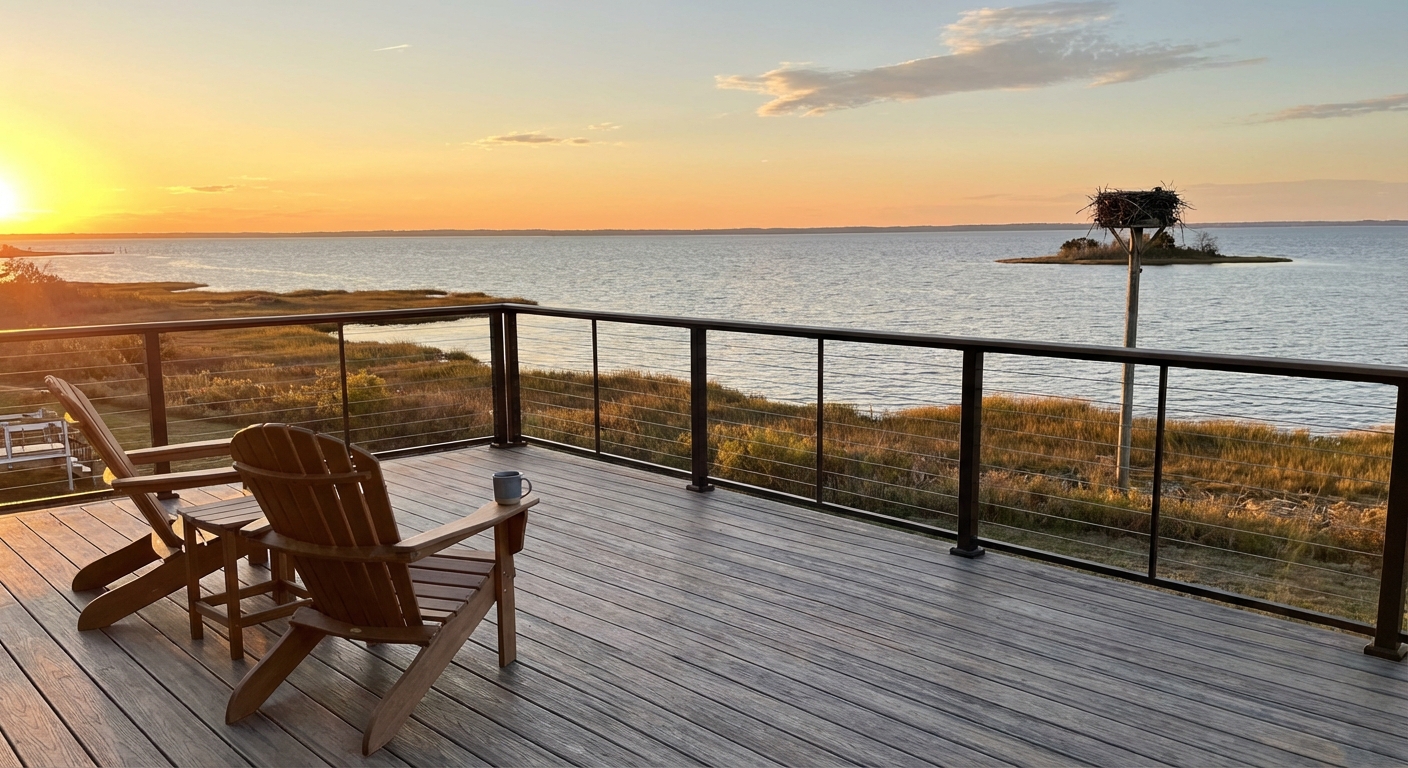
Building a deck on your waterfront property in Virginia opens up a world of possibilities for outdoor living. But with the Chesapeake Bay, numerous rivers, and varying regional climates, you need a design that's both beautiful and durable. This guide covers waterfront deck ideas tailored to Virginia, considering cost, materials, and local regulations.
Designing Your Virginia Waterfront Deck
Looking for more regional information? Check out our Virginia State Decking Hub.
🏗️ Planning a deck project?
Get a free manual project review, or visualize your dream deck with AI before requesting quotes.
Your waterfront deck design should maximize views, complement your home’s architecture, and withstand Virginia's unique environment. Consider these factors:
- View Optimization: Position your deck to capture the best possible water views. Multi-level decks or elevated platforms can provide unobstructed sightlines.
- Accessibility: Ensure easy access from your home and to the water. Consider stairs, ramps, or even a small dock extension.
- Functionality: How will you use your deck? Dining, lounging, grilling, or entertaining will influence the layout and features. Include built-in seating, outdoor kitchens, or fire pits to enhance functionality.
- Style: Match your deck’s style to your home. Coastal designs often incorporate light colors, nautical elements, and natural wood. For a modern look, consider clean lines, minimalist railings, and composite decking.
- Privacy: If privacy is a concern, think about adding screens, trellises, or strategically placed landscaping.
- Sun Exposure: Virginia summers are hot and humid. Consider shade structures like pergolas, awnings, or umbrellas to provide relief from the sun.
<!-- slot:after-intro -->
Choosing the Right Materials for Waterfront Decks in Virginia
Selecting the right materials is crucial for longevity, especially in Virginia’s coastal environments. Saltwater, humidity, and temperature fluctuations can take a toll on your deck. Here's a breakdown of common decking materials:
- Pressure-Treated Lumber: The most affordable option, pressure-treated lumber is a popular choice for framing and substructures. However, it requires regular maintenance (staining and sealing) to prevent rot and insect damage. Expect to pay between $25-$45 per square foot installed.
- Cedar: Naturally resistant to rot and insects, cedar offers a beautiful aesthetic. It's more expensive than pressure-treated lumber but requires less maintenance. Cedar decking typically costs $35-$55 per square foot installed.
- Composite Decking: Made from recycled plastic and wood fibers, composite decking is low-maintenance, durable, and resistant to rot, insects, and fading. Brands like Trex are popular choices. Composite decks range from $45-$80 per square foot installed. Trex decking will run you about $50-$85 per square foot installed.
- Tropical Hardwoods: Ipe, mahogany, and other tropical hardwoods offer exceptional durability and a rich, natural look. These materials are very expensive but can last for decades with proper care.
- Fasteners: Marine-grade stainless steel fasteners are essential for waterfront decks. They resist corrosion caused by saltwater and humidity.
Here's a quick comparison of deck material costs in Virginia:
| Material | Cost per Sq Ft (Installed) | Pros | Cons |
| ------------------ | -------------------------- | ----------------------------------------------------------------------- | ------------------------------------------------------------------------- |
| Pressure-Treated | $25 - $45 | Affordable, readily available | Requires regular maintenance, susceptible to rot and insects |
| Cedar | $35 - $55 | Naturally rot and insect-resistant, beautiful aesthetic | More expensive than pressure-treated lumber, requires some maintenance |
| Composite | $45 - $80 | Low-maintenance, durable, resistant to rot, insects, and fading | Higher upfront cost, can get hot in direct sunlight |
| Trex | $50 - $85 | Extremely durable, low maintenance, various color and style options | More expensive than standard composite, can get hot in direct sunlight |
Remember to consider the unique climate of your specific region in Virginia. Homeowners in Hampton Roads and Virginia Beach should prioritize corrosion-resistant materials due to the salt air.
Virginia Deck Building Codes and Regulations
Before starting your project, understand Virginia's building codes and regulations. The Virginia Uniform Statewide Building Code (USBC) is based on the International Residential Code (IRC) and Virginia Residential Code (VRC). Key requirements include:
- Permits: Decks over 30 inches above grade or attached to a dwelling typically require permits. Contact your local building department for specific requirements and application procedures. Expect permit costs to range from $100-$500, depending on your locality.
- Footings: Footings must extend below the frost line, which varies from 18 inches in Tidewater to 24 inches in mountain regions.
- Guardrails: Decks exceeding 30 inches in height require guardrails at least 36 inches tall.
- Handrails: Stairs with four or more risers require handrails.
- Hurricane Straps: In coastal areas like Hampton Roads, hurricane-rated hardware (Simpson Strong-Tie hurricane ties) is mandatory to withstand high winds.
- Contractor Licensing: In Virginia, contractors must be licensed by the Department of Professional and Occupational Regulation (DPOR). Class A licenses are required for projects over $70,000, Class B for projects between $10,000 and $70,000, and Class C for projects under $10,000. Always verify your contractor's license before hiring them.
Many Homeowners Associations (HOAs), especially in Northern Virginia (Fairfax, Loudoun, Prince William counties) and Virginia Beach, have strict architectural guidelines. Obtain HOA approval before starting construction.
Waterfront Deck Design Ideas for Different Virginia Regions
Virginia's diverse geography calls for tailored deck designs:
- Hampton Roads/Tidewater: Elevated decks are common due to flood zones. Use corrosion-resistant materials and hurricane-rated hardware. Consider a multi-level deck with a covered area for shade.
- Northern Virginia (DC Suburbs): Smaller lots often necessitate compact deck designs. Townhome decks are popular. Maximize vertical space with built-in planters or privacy screens.
- Richmond Metro: Blend your deck's style with the surrounding architecture. In historic districts like the Fan and Museum District, adhere to strict guidelines. For James River properties, consider a deck with river access.
- Shenandoah Valley: Embrace natural materials like cedar or redwood. A wrap-around deck can take advantage of mountain views.
- Roanoke/Southwest Virginia: Build a deck that complements the mountainous landscape. Consider a multi-level design to accommodate sloping terrain.
<!-- slot:mid-content -->
Enhancing Your Waterfront Deck Experience
Beyond the basic structure, consider these features to enhance your deck:
- Outdoor Kitchen: Install a built-in grill, countertop, and storage for a complete outdoor cooking experience.
- Fire Pit: A fire pit adds warmth and ambiance, extending your deck's usability into the cooler months.
- Hot Tub or Spa: Create a relaxing oasis with a hot tub or spa. Ensure proper structural support and electrical connections.
- Pergola or Gazebo: Provide shade and shelter with a pergola or gazebo. Consider adding climbing plants for a touch of greenery.
- Lighting: Install deck lighting for safety and ambiance. Options include string lights, recessed lighting, and post cap lights.
- Sound System: Integrate outdoor speakers for music and entertainment.
- Built-in Seating: Maximize space and comfort with built-in benches or seating areas.
Use PaperPlan (paperplan.app) to visualize your deck with PaperPlan design with different materials and layouts before committing to a contractor. Seeing your vision come to life can help you make informed decisions and avoid costly mistakes.
Cost Considerations for Virginia Waterfront Decks
Deck construction costs in Virginia vary depending on the materials, size, and complexity of the design. Northern Virginia (DC metro area) and Hampton Roads tend to have higher construction costs (30-40% above the state average) compared to the Shenandoah Valley and Southwest Virginia.
Here's a general cost breakdown:
- Permits: $100 - $500
- Pressure-Treated Deck: $25 - $45 per square foot installed
- Cedar Deck: $35 - $55 per square foot installed
- Composite Deck: $45 - $80 per square foot installed
- Trex Deck: $50 - $85 per square foot installed
- Marine-Grade Fasteners: Add 10-20% to fastener costs
- Labor: Typically 40-60% of the total project cost
Remember that these are just estimates. Get multiple quotes from qualified deck builders in your area to get a more accurate cost assessment. The best months to build are March-June and September-November to avoid the peak summer humidity.
Protecting Your Investment: Maintenance Tips
Proper maintenance is essential for extending the life of your waterfront deck. Here are some tips:
- Regular Cleaning: Clean your deck regularly with a mild soap and water solution to remove dirt, debris, and algae.
- Staining and Sealing: Apply a quality stain or sealant every 1-3 years to protect the wood from moisture and UV damage. Consider Deck Staining Tips for Virginia Weather: Timing & Products.
- Inspect for Damage: Regularly inspect your deck for signs of rot, insect damage, or loose fasteners.
- Termite Control: Given Virginia's high termite pressure, especially in Tidewater and Piedmont, consider termite treatment and use termite-resistant materials.
- Winterization: Prepare your deck for winter by removing furniture, cleaning the surface, and applying a protective sealant. Consult Virginia Deck Maintenance by Season: Year-Round Care Guide
- Hurricane Preparedness: In coastal areas, secure loose items and reinforce your deck before a hurricane. See Protecting Your Virginia Deck from Hurricane Season & Humidity.
<!-- slot:before-faq -->
Building a waterfront deck in Virginia is a significant investment. By carefully considering your design, materials, and local regulations, you can create a beautiful and durable outdoor space that enhances your waterfront living experience for years to come. Check out Deck Design Ideas for Virginia Homes: Inspiration for 2026 for more inspiration.
> 📘 Planning a deck in Virginia? Read our Complete Guide to Deck Costs in Virginia for detailed pricing, permits, and material comparisons.
🎨 Not sure which material to pick?
Upload a photo of your backyard and see exactly how Trex, TimberTech, or cedar would look — free and instant.
Frequently Asked Questions
What type of decking material is best for a waterfront deck in Virginia?
Composite decking and tropical hardwoods are generally considered the best options for waterfront decks in Virginia due to their durability and resistance to moisture, rot, and insects. While more expensive upfront, they require less maintenance and last longer than pressure-treated lumber.
How do I find a qualified deck builder in Virginia?
The Virginia DPOR requires contractor licensing. Verify their license and insurance. Ask for references and check online reviews. Look for deck builders with experience in waterfront construction and knowledge of local building codes. Sites like local.click can help you find reputable deck builders in your area. You might also consider reading "Best Deck Builders in Chesapeake, VA: Hampton Roads Guide for 2026" if you are in that area.
What permits do I need to build a deck in Virginia?
Most localities in Virginia require permits for decks over 30 inches above grade or attached to a dwelling. Contact your local building department to determine the specific requirements and application procedures for your project.
How much does it cost to build a waterfront deck in Virginia?
The cost varies depending on the size, materials, and complexity of the design. Pressure-treated decks typically cost $25-$45 per square foot installed, while composite decks range from $45-$80 per square foot. Labor costs typically account for 40-60% of the total project cost. Expect higher costs in Northern Virginia and Hampton Roads.
Are there specific considerations for decks in flood zones in Virginia?
Yes. In flood zones, especially in areas like Virginia Beach and Norfolk, decks often need to be elevated and designed to withstand floodwaters. Consult with a structural engineer and your local building department to ensure your deck meets all applicable flood zone regulations.
<!-- slot:end -->
📋 Planning a deck project?
Get a free manual project review from our team — no obligation, no spam.
Get Free Project Review →Upload a backyard photo and preview real decking materials with AI — free, instant, no sign-up.
Permits, costs, material comparisons, and questions to ask before requesting quotes — delivered to your inbox.