
Deck Permits in Woodbridge (2026)
Need a deck permit in Woodbridge, NJ? Learn requirements, fees, setback rules, and how to apply. Avoid fines and build your deck the right way in 2026.
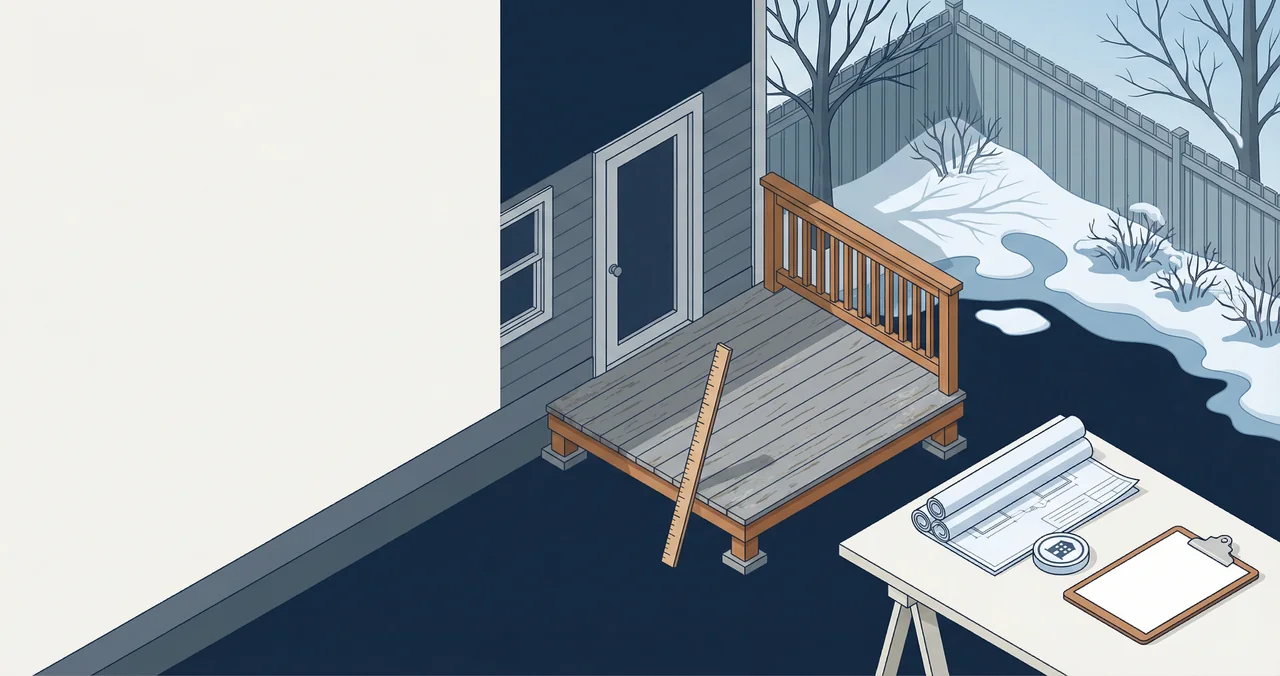
Deck Permits in Woodbridge: Requirements, Costs & How to Apply in 2026
Planning a new deck in Woodbridge Township? Before you pick materials or call a contractor, you need to answer one question first: do you need a permit? In most cases, the answer is yes — and skipping it can cost you far more than the permit fee itself.
🏗️ Planning a deck project?
Get a free manual project review, or visualize your dream deck with AI before requesting quotes.
📋 Tool Alert: Permit Checker
Do you really need a permit? Check the exact rules for your city or township.
Check Permits →Here's everything you need to know about Woodbridge deck permits in 2026, from requirements and fees to the actual application process.
<!-- slot:after-intro -->
Do You Need a Deck Permit in Woodbridge?
Yes, most deck projects in Woodbridge Township require a building permit. The township's Construction Code Office enforces New Jersey's Uniform Construction Code (UCC), which governs all residential construction — decks included.
The general rule: if your deck is over 200 square feet or more than 30 inches above grade, you need a permit. But that threshold catches the vast majority of usable decks. A standard 12×16 deck is already 192 square feet, and most decks attached to a home with a step or two easily clear the 30-inch mark.
Even smaller projects can trigger permit requirements if they involve:
- Structural attachment to your home (ledger board connection)
- Electrical work for lighting or outlets
- Proximity to property lines that falls within setback zones
- Hot tub or heavy load installations on the deck surface
A small, ground-level platform deck under 200 square feet that's freestanding and under 30 inches? That's typically the only scenario where you *might* not need a permit. But even then, call the Woodbridge Construction Code Office at (732) 602-6015 to confirm before you start building. Assumptions get expensive.
When a Permit Is Required
Let's break this down clearly. You need a permit when:
- Your deck exceeds 200 square feet in total area
- Any part of the deck surface is more than 30 inches above grade
- The deck attaches to your house via a ledger board
- You're adding stairs with more than two risers
- The project includes built-in electrical (lighting, outlets, fans)
- You're installing a roof or pergola structure over the deck
- The deck will support a hot tub, spa, or other heavy load
You may not need a permit when:
- The deck is freestanding (not attached to the house)
- Total area is under 200 square feet
- The entire surface is under 30 inches above grade
- No electrical work is involved
One important note for Woodbridge homeowners: even a permit-exempt deck still needs to comply with zoning setback requirements. You can't build right up to your property line regardless of deck size. More on that below.
Attached vs. Freestanding Decks
In New Jersey, attached decks face stricter scrutiny than freestanding ones. An attached deck ties into your home's structure through a ledger board, which means the inspector needs to verify the connection won't compromise your home's exterior wall, flashing, or structural integrity. Freestanding decks on independent footings avoid that concern — but they still need permits if they exceed the size or height thresholds.
Permit Fees & Processing Time
Woodbridge Township bases permit fees on the estimated project cost, following New Jersey's UCC fee schedule. Here's what to expect in 2026:
Typical Permit Costs
| Project Value | Estimated Permit Fee |
|---|---|
| Under $5,000 | $75–$100 |
| $5,000–$15,000 | $100–$200 |
| $15,000–$50,000 | $200–$400 |
| Over $50,000 | $400+ |
These are construction permit fees. You may also need to pay separately for:
- Zoning permit/review: $25–$75
- Electrical subcode permit: $65–$150 (if adding wiring)
- Plan review fees: Often included, but sometimes billed separately for complex projects
For a typical 300-square-foot composite deck in Woodbridge — which runs roughly $13,500–$22,500 installed — expect to pay somewhere in the range of $150–$300 total in permit fees. That's a fraction of the project cost.
How Long Does It Take?
- Standard review: 10–20 business days from submission
- Simple projects: Sometimes faster, especially if plans are complete and code-compliant on first submission
- Complex projects (multi-level decks, structural modifications): Up to 30 business days
Pro tip: submit your application in late winter or early spring — January through March. Woodbridge's building department gets significantly busier once construction season kicks in around May. The shorter building season in New Jersey means contractor schedules fill up fast, so book your contractor by March and have permits in hand before the rush.
<!-- slot:mid-content -->
Building Codes & Setback Rules
Woodbridge Township follows the New Jersey Uniform Construction Code, which aligns closely with the International Residential Code (IRC). Here are the key code requirements that affect deck construction:
Structural Requirements
- Footings must extend below the frost line: In central New Jersey, that means 36 inches minimum depth. Woodbridge's freeze-thaw cycles are brutal — shallow footings will heave and shift, cracking your deck structure over time
- Deck boards: Maximum ¼-inch gap between boards for drainage
- Joists: Typically 2×8 or 2×10 depending on span, spaced 12" or 16" on center
- Ledger board attachment: Must use ½-inch lag bolts or through-bolts with proper flashing to prevent water infiltration — this is the #1 point of failure inspectors flag in New Jersey
- Load bearing: Minimum 40 psf live load and 10 psf dead load capacity
Railing & Stair Codes
- Guardrails required when deck surface is 30 inches or more above grade
- Minimum railing height: 36 inches (42 inches for commercial or if your municipality has adopted stricter standards)
- Baluster spacing: No more than 4 inches apart (the "4-inch sphere rule" — a 4-inch ball should not pass through)
- Stair handrails: Required on at least one side; graspable profile between 1.25" and 2" diameter
- Stair risers: Maximum 7¾ inches; uniform height throughout
- Stair treads: Minimum 10 inches deep
Setback Rules
Woodbridge Township enforces zoning setbacks that vary by zone district. Typical residential setbacks:
- Rear yard setback: Usually 15–25 feet from the rear property line
- Side yard setback: Typically 5–10 feet from side property lines
- Front yard: Decks are rarely permitted in front yard setback areas
Your specific setbacks depend on your zone district. You can find your property's zoning designation through the Woodbridge Township Planning Department or check your property survey. Don't guess on setbacks — a deck built two feet into a setback zone means tearing it down or applying for a costly variance through the Zoning Board.
Climate-Specific Code Considerations
Woodbridge's climate demands extra attention to a few areas:
- Snow load: Decks must handle New Jersey's ground snow load requirements, which affect joist sizing and post spacing
- Frost heave: Footings below 36 inches aren't optional — they're survival. Frost heave can lift posts several inches, warping the entire deck structure
- Water management: Proper flashing at the ledger board is critical. New Jersey's freeze-thaw cycles drive moisture into any gap, and ice expansion does the rest
- Material choice matters: Composite and PVC decking hold up best in harsh Northeast winters. Pressure-treated wood works but needs annual sealing against moisture and road salt tracking. For a detailed comparison, check out how different materials perform through freeze-thaw cycles
How to Apply for a Deck Permit in Woodbridge
Here's the step-by-step process:
Step 1: Gather Your Documents
Before visiting the Construction Code Office, prepare:
- Property survey showing lot lines, easements, and existing structures
- Deck plans/drawings including dimensions, height above grade, footing locations, and structural details (a licensed contractor will typically provide these)
- Site plan showing where the deck sits on your lot relative to property lines
- Material specifications — what lumber or composite you're using, fastener types, joist sizing
- Contractor's license and insurance information (if hiring a contractor)
- Homeowner authorization if someone else is pulling the permit on your behalf
Step 2: Submit Your Application
You can submit your permit application through:
- In person: Woodbridge Township Municipal Building, Construction Code Office, 1 Main Street, Woodbridge, NJ 07095
- Online: Check the township's website for electronic submission options — New Jersey has been expanding online permitting through the NJ Department of Community Affairs portal
Fill out the UCC Construction Permit Application completely. Incomplete applications are the #1 cause of delays.
Step 3: Plan Review
The building department reviews your plans for:
- Code compliance (structural, railing, stairs)
- Zoning compliance (setbacks, lot coverage)
- Proper engineering for the proposed loads
If your plans need corrections, you'll receive a deficiency notice listing what needs to be fixed. Address everything before resubmitting — partial fixes just create another round of review.
Step 4: Get Your Permit & Start Building
Once approved:
- Pay your fees and receive your permit
- Post the permit card visibly at the job site — this is required by law
- Build according to the approved plans — deviations require a revised permit
Step 5: Schedule Inspections
Woodbridge typically requires two inspections for deck projects:
1. Footing/foundation inspection: Before pouring concrete — the inspector checks hole depth (below frost line) and soil conditions
2. Final inspection: After the deck is complete — structural connections, railing height, stair compliance, and overall code adherence
Some complex projects may require additional inspections (framing, electrical). Your permit will specify which inspections are needed.
Don't cover up work before it's inspected. If you pour concrete before the footing inspection, you may need to dig it up. Schedule inspections promptly — in peak season (June–August), Woodbridge inspectors can be booked a week or more out.
Use PaperPlan to visualize different decking materials on your own home before committing — it helps you nail down your material choice before finalizing permit plans.
What Happens If You Build Without a Permit
This is where things get painful. Building without a permit in Woodbridge Township carries real consequences:
Immediate Risks
- Stop-work order: A code enforcement officer can shut down your project the moment they discover unpermitted work
- Fines: New Jersey municipalities can impose fines of $500–$2,000 per violation per day the violation continues
- Forced removal: In worst cases, you may be ordered to demolish the deck entirely
Long-Term Problems
- Selling your home: Title searches and home inspections flag unpermitted structures. Buyers walk away or demand steep discounts. You may need to retroactively permit the deck — which means bringing it up to current code, often at greater expense than doing it right the first time
- Insurance issues: Your homeowner's insurance may deny claims for injuries or damage related to an unpermitted deck. If someone falls through a railing that didn't meet code, that's a liability nightmare
- Property tax complications: Unpermitted structures can trigger reassessment issues
- Neighbor complaints: It only takes one call to code enforcement. Woodbridge is a densely built township — your neighbors can see your project
Retroactive Permits
If you've already built without a permit, contact the Construction Code Office about a retroactive permit. You'll likely pay:
- The standard permit fee
- A penalty surcharge (often double the original fee)
- Costs for any required modifications to bring the deck up to code
- Potential engineering or inspection fees
It's always cheaper to permit upfront. A $200 permit versus a $5,000+ retroactive headache isn't a hard call.
<!-- slot:before-faq -->
🎨 Not sure which material to pick?
Upload a photo of your backyard and see exactly how Trex, TimberTech, or cedar would look — free and instant.
Frequently Asked Questions
How much does a deck permit cost in Woodbridge, NJ?
Most residential deck permits in Woodbridge run $100–$400, depending on your project's estimated value. A typical mid-size composite deck permit costs around $150–$300. Additional fees may apply for electrical work, zoning review, or plan review. Contact the Construction Code Office at (732) 602-6015 for a precise estimate based on your project scope.
How long does it take to get a deck permit in Woodbridge?
Plan for 10–20 business days for standard projects. Complex designs or applications that need corrections take longer. Submit in late winter or early spring to beat the rush — permit processing slows down significantly once building season hits in May. Having complete, code-compliant plans on your first submission is the single best way to speed things up.
Can I build a small deck without a permit in Woodbridge?
Possibly. If your deck is freestanding (not attached to your house), under 200 square feet, and under 30 inches above grade with no electrical work, you may be exempt from the building permit requirement. However, you still need to comply with zoning setback rules. Always verify with the township before starting — the definition of "exempt" has nuances that can trip you up.
What is the frost line depth for deck footings in Woodbridge?
Deck footings in Woodbridge must extend at least 36 inches below grade to get below the frost line. New Jersey's freeze-thaw cycles can heave shallow footings, causing structural damage to your deck over time. This is one of the most critical inspections — if your footings aren't deep enough, the inspector will fail you, and you'll need to dig deeper before proceeding.
Do I need a permit to replace an existing deck in Woodbridge?
Yes, in most cases. Replacing a deck — even on the same footprint — is considered new construction under New Jersey's Uniform Construction Code. The building department will want to verify that your new deck meets current code requirements, which may have changed since your original deck was built. The only exception might be a surface-only re-decking (replacing just the deck boards) on an existing, structurally sound frame, but even that is worth confirming with the township.
What's the best time to start the deck permit process in Woodbridge?
Start your permit application in January or February. This gives you time for plan review, any corrections, and approval well before the prime building season of May through October. Since Woodbridge's building season is compressed by harsh winters, best time to build a deck — having your permit ready by March or April puts you at the front of the line. Check out our cost guides for current Woodbridge pricing to help with budgeting.
<!-- slot:end -->
📋 Planning a deck project?
Get a free manual project review from our team — no obligation, no spam.
Get Free Project Review →Upload a backyard photo and preview real decking materials with AI — free, instant, no sign-up.
Permits, costs, material comparisons, and questions to ask before requesting quotes — delivered to your inbox.