
Composite Deck Builders in Woodbridge (2026)
Find the best composite deck builders in Woodbridge, NJ. Compare brands, costs ($45-75/sqft installed), and tips for hiring certified installers in 2026.
Composite Deck Builders in Woodbridge: Top Options for 2026
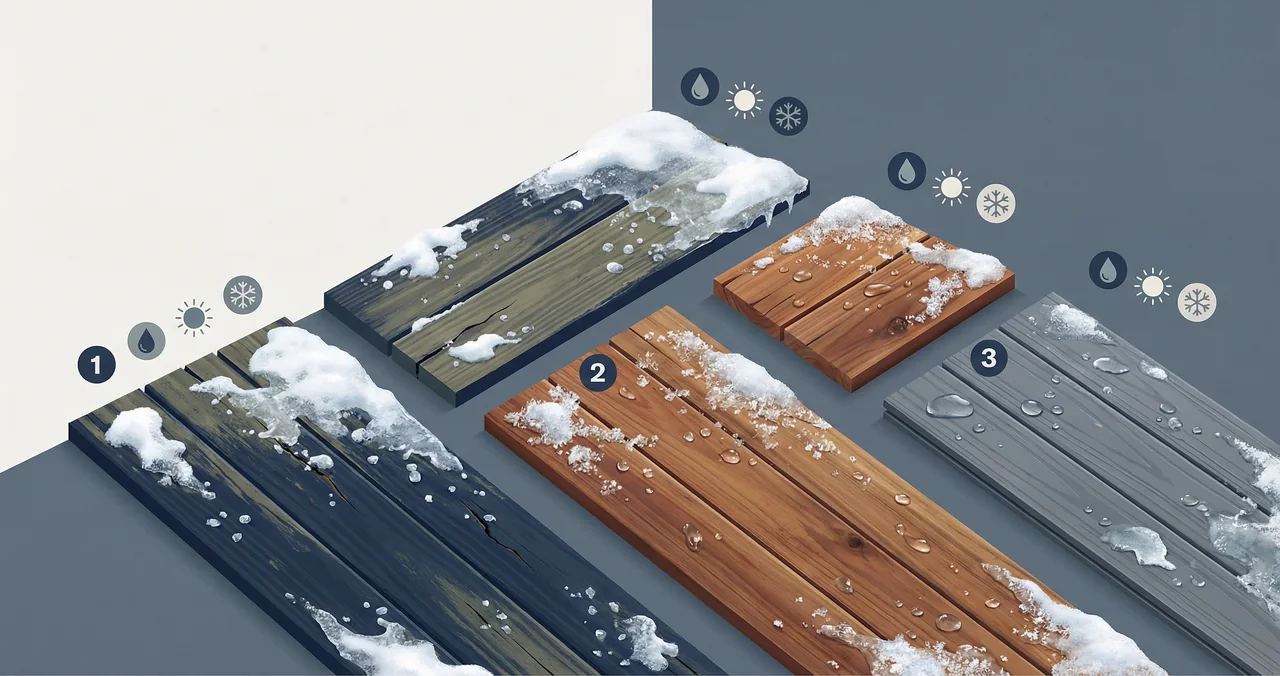
Woodbridge Township sits right in the middle of New Jersey's toughest climate zone for outdoor structures. Between heavy snow loads, freeze-thaw cycles that can buckle lesser materials, and humid summers that promote mold growth, your decking material choice matters more here than in most places. Composite decking has become the default recommendation from experienced Woodbridge contractors — and for good reason.
🏗️ Planning a deck project?
Get a free manual project review, or visualize your dream deck with AI before requesting quotes.
🌳 Tool Alert: Material Comparison
PT vs Composite vs Cedar. Compare 25-year total cost of ownership including maintenance.
Compare Materials →But finding the right builder and the right composite brand? That's where most homeowners get stuck. Here's what you actually need to know before signing a contract.
<!-- slot:after-intro -->
Choosing between composite and wood? Our composite vs wood decking breaks down the real costs over 10 years. For full installed pricing by material type, see our deck cost guide.
Why Composite Decking Makes Sense in Woodbridge
Woodbridge's climate is brutal on wood. Temperatures swing from single digits in January to the low 90s in July. That constant expansion and contraction warps pressure-treated lumber within a few seasons. Add road salt tracked onto your deck from driveways and sidewalks, and untreated wood deteriorates fast.
Composite decking handles all of this better because:
- No moisture absorption — composite boards won't swell, crack, or splinter from freeze-thaw cycles the way wood does
- Salt resistance — road salt and de-icing chemicals won't degrade the surface
- Mold and mildew resistance — Woodbridge's humid summers (especially near the Woodbridge River and Arthur Kill waterfront areas) create perfect conditions for mold on wood decks
- No annual sealing or staining — wood decks in this climate need resealing every year without exception
Neighborhoods like Sewaren, Port Reading, and Avenel — closer to the waterfront — deal with extra moisture exposure. If you're in one of these areas, composite isn't just convenient. It's the practical choice.
That said, composite has trade-offs. It gets hotter underfoot in direct sun, costs more upfront than pressure-treated lumber, and can't be refinished if deeply scratched. For most Woodbridge homeowners, though, the 15-to-30-year low-maintenance lifespan more than justifies the investment.
Top Composite Brands Available in Woodbridge
Not all composite decking is created equal. Here's what Woodbridge-area suppliers and contractors most commonly stock and install:
Trex
The biggest name in composite decking. Trex offers three tiers:
- Trex Enhance — Entry-level, good color options, 25-year limited warranty
- Trex Select — Mid-range with better fade and stain resistance
- Trex Transcend — Premium line with the most realistic wood grain and 25-year fade & stain warranty
Trex is widely available through local lumber yards and big-box stores in the Woodbridge area. Most contractors are familiar with installing it, which keeps labor costs reasonable.
TimberTech / AZEK
TimberTech (owned by AZEK) offers both composite and full PVC decking:
- TimberTech PRO — Polymer-cap composite, strong fade resistance
- TimberTech EDGE — Budget-friendly composite line
- AZEK Vintage — Full PVC, virtually indestructible in freeze-thaw conditions, 50-year warranty
AZEK's PVC boards are the top performer for Woodbridge's climate but come at a premium. If budget allows, they're worth serious consideration for waterfront properties.
Fiberon
A strong mid-market option that's gaining traction with NJ contractors:
- Fiberon Good Life — Affordable entry point
- Fiberon Concordia — Premium line with deep wood-grain textures
- 30-year stain and fade warranty on upper lines
Deckorators
Mineral-based composite (uses bamboo and recycled materials):
- Lighter weight than wood-plastic composites
- Strong scratch resistance
- Growing availability through NJ distributors
For a broader look at how these brands stack up, check out our guide on the best composite decking brands — much of the brand comparison applies regardless of region.
Composite Deck Costs in Woodbridge
Here's what Woodbridge homeowners should budget in 2026. These are fully installed prices including materials, labor, footings, and basic railing:
| Material | Installed Cost (per sq ft) | 300 sq ft Deck | 500 sq ft Deck |
|---|---|---|---|
| Pressure-treated wood | $25–$45 | $7,500–$13,500 | $12,500–$22,500 |
| Cedar | $35–$55 | $10,500–$16,500 | $17,500–$27,500 |
| Mid-range composite | $45–$75 | $13,500–$22,500 | $22,500–$37,500 |
| Trex (Transcend line) | $50–$80 | $15,000–$24,000 | $25,000–$40,000 |
| Ipe (hardwood) | $60–$100 | $18,000–$30,000 | $30,000–$50,000 |
What Drives the Price Range
The spread in composite pricing comes down to several factors specific to the Woodbridge market:
- Footing depth — New Jersey's frost line sits at 36 to 60 inches depending on your exact location. Deeper footings mean more excavation and concrete. Properties in Woodbridge Township generally require footings at 42 inches minimum per local code.
- Deck height and access — Raised decks (common in Colonia and Iselin where many homes have walkout basements) require more structural framing and typically push costs toward the upper range.
- Contractor demand — The building season runs roughly May through October. Smart homeowners book by March to lock in pricing and preferred scheduling. Wait until May and you'll pay a premium — if you can get on the schedule at all.
- Railing and extras — Composite or aluminum railing systems add $30–$60 per linear foot. Built-in lighting, stairs, and multi-level designs all increase the total.
If you're trying to estimate costs for a specific deck size, our deck cost guides break down pricing by dimension with detailed material comparisons.
<!-- slot:mid-content -->
How to Find a Certified Composite Deck Installer in Woodbridge
Composite decking requires different installation techniques than wood. Improper fastening, inadequate gapping for thermal expansion, or incorrect joist spacing can void your warranty and cause board failure within a few years. Here's how to find someone who knows what they're doing:
Check Manufacturer Certification
- TrexPro Platinum / Gold — Trex's contractor certification program. Platinum installers have completed advanced training and maintain quality standards.
- TimberTech Registered Contractor — Similar program with tiered certification levels.
- Fiberon Certified Installer — Contractors who've been trained on Fiberon-specific installation requirements.
Ask any contractor you're considering: *"Are you certified by the manufacturer of the brand you're recommending?"* If they hesitate, move on.
Verify NJ-Specific Credentials
In New Jersey, deck contractors should have:
- NJ Home Improvement Contractor (HIC) registration — This is legally required. No registration number? Don't hire them.
- General liability insurance — Minimum $500,000, though $1 million is standard for established contractors.
- Workers' compensation coverage — Protects you if a worker is injured on your property.
Get Multiple Bids (But Compare Apples to Apples)
Get at least three written estimates. Make sure each quote specifies:
- Exact composite brand and product line
- Joist material (pressure-treated vs. aluminum framing)
- Footing depth and type
- Fastener system (hidden vs. face-screw)
- Warranty coverage from both the contractor and manufacturer
- Permit responsibility (the contractor should pull the permit)
A quote that's significantly cheaper than the others is usually cutting corners on framing, footings, or using a lower-tier product than what you discussed.
Permits in Woodbridge Township
Deck permits are typically required in Woodbridge for structures over 200 square feet or elevated more than 30 inches above grade. Contact Woodbridge Township's Building/Development Services department before any work begins. Your contractor should handle the permit application, but it's your property — make sure it gets done.
Building without a permit creates real problems. It can surface during a home sale inspection and force you to retroactively prove compliance or even tear down non-conforming work. Our article on the risks of building without a permit covers this in detail.
Composite vs. Wood: Which Handles Woodbridge Winters Better?
This is the most common question Woodbridge homeowners ask, and the answer isn't even close for this climate.
How Freeze-Thaw Cycles Damage Wood Decks
Woodbridge experiences roughly 80 to 100 freeze-thaw cycles per winter. Each cycle pushes moisture into wood grain, expands it as ice, then contracts as it thaws. Over a few seasons, this causes:
- Checking and splitting along the grain
- Cupping and warping as boards absorb moisture unevenly
- Fastener popping as boards shift around screws
- Structural decay in untreated or under-sealed areas
Pressure-treated wood can last 10–15 years in Woodbridge, but only with diligent annual maintenance: power washing, re-sealing, and replacing damaged boards. Skip a year of sealing and you'll see damage by the following spring.
How Composite Handles the Same Conditions
Modern capped composite boards have a polymer shell that prevents moisture absorption entirely. The core material (wood fibers and plastic) is encapsulated, so freeze-thaw cycles have minimal effect. Expect:
- No splitting, warping, or checking
- No fastener popping (especially with hidden fastener systems)
- No sealing required — ever
- 25–50 year lifespan depending on the brand
The one caveat: composite boards do expand and contract with temperature changes. A good installer accounts for this with proper gapping (typically 1/8" to 3/16" between boards). If boards are butted too tight in summer, they'll buckle in the heat. If installed too loose in winter, gaps will be excessive in summer. This is exactly why manufacturer certification matters.
For a deeper dive into how different materials perform in freeze-thaw climates, see our comparison of the best decking materials for freeze-thaw conditions.
The Real Cost Comparison Over 10 Years
| | Pressure-Treated Wood | Mid-Range Composite |
|---|---|---|
| Initial cost (300 sq ft) | $7,500–$13,500 | $13,500–$22,500 |
| Annual maintenance | $200–$500/year | $0–$50/year |
| Board replacement (10 yrs) | $500–$2,000 | $0 |
| 10-year total | $10,000–$20,500 | $13,500–$23,000 |
| Expected remaining life | 3–7 years | 15–25+ years |
The numbers converge fast. By year 10, composite is roughly break-even on cost and still has decades of life left. Wood is approaching end-of-life.
Maintenance and Warranty: What to Expect
Composite Deck Maintenance in Woodbridge
Your annual maintenance routine is simple:
1. Spring cleaning — Sweep debris, then wash with a garden hose or composite deck cleaner. A soft-bristle brush handles any stubborn spots. Avoid pressure washing above 1,500 PSI.
2. Fall prep — Clear leaves and debris before winter. Trapped moisture under leaf piles can cause surface staining.
3. Snow removal — Use a plastic shovel or broom. Metal shovels can scratch the surface. Calcium chloride de-icers are generally safe on composite; avoid rock salt with sharp edges.
That's it. No staining, no sealing, no sanding. If you want to keep your deck looking its best with minimal effort, our guide to low-maintenance decking options covers additional tips.
Understanding Warranty Coverage
Composite warranties vary widely. Key terms to understand:
- Structural warranty — Covers material defects that cause structural failure. Usually 25–50 years.
- Fade & stain warranty — Covers color fading and surface staining. Premium lines offer 25–30 years; budget lines may offer only 10–15 years.
- Labor warranty — This comes from your installer, not the manufacturer. Get it in writing. 2–5 years is standard from reputable builders.
Critical detail: Most manufacturer warranties require installation according to their specific guidelines. If your contractor doesn't follow the manual — wrong joist spacing, improper fasteners, inadequate ventilation — the warranty is void. This is another reason to hire a certified installer.
Use PaperPlan to visualize different decking materials on your own home before committing — seeing how Trex Transcend's "Havana Gold" looks against your siding is a lot more useful than staring at a 3-inch sample chip at the lumber yard. Check it out at paperplan.app.
<!-- slot:before-faq -->
🎨 Not sure which material to pick?
Upload a photo of your backyard and see exactly how Trex, TimberTech, or cedar would look — free and instant.
Frequently Asked Questions
How much does a composite deck cost in Woodbridge, NJ?
A fully installed composite deck in Woodbridge typically runs $45–$75 per square foot in 2026, depending on the brand, deck height, and complexity. A standard 300 sq ft deck costs between $13,500 and $22,500 installed. Premium brands like Trex Transcend or AZEK PVC push that to $50–$80+ per square foot. Always get at least three detailed quotes.
Do I need a permit to build a deck in Woodbridge Township?
Yes, in most cases. Woodbridge Township generally requires a building permit for decks over 200 square feet or more than 30 inches above grade. Contact the Township's Building/Development Services department for current requirements. Your contractor should handle the permit process, but confirm this before signing any agreement.
What's the best composite decking brand for New Jersey winters?
AZEK PVC is the top performer for harsh winter climates — it's completely impervious to moisture and carries a 50-year warranty. For a more budget-friendly option, Trex Transcend and TimberTech PRO both handle freeze-thaw cycles well and offer 25-year fade & stain warranties. Avoid entry-level composite lines if your deck gets heavy snow accumulation or is in a shaded area that stays wet.
When should I book a composite deck builder in Woodbridge?
Book by March for a spring or summer build. Woodbridge's building season runs roughly May through October, and the best contractors fill their schedules early. If you're contacting builders for the first time in June, you may be looking at a late-summer or fall start date — or waiting until the following year. Early planning also gives you time to compare brands and handle permitting.
Can I install composite decking over my existing wood deck frame?
It depends on the condition of the framing. If your existing joists and ledger board are structurally sound, a qualified contractor can sometimes install composite boards over the existing substructure. However, most composite manufacturers require maximum 16-inch on-center joist spacing (some require 12-inch for diagonal patterns), and your existing frame may need reinforcement. A certified installer can assess whether your current structure meets the requirements. In many cases, especially with older wood deck framing, starting fresh is the better investment.
<!-- slot:end -->
📋 Planning a deck project?
Get a free manual project review from our team — no obligation, no spam.
Get Free Project Review →Upload a backyard photo and preview real decking materials with AI — free, instant, no sign-up.
Permits, costs, material comparisons, and questions to ask before requesting quotes — delivered to your inbox.