
Deck Staining Tips for Pennsylvania Wea (2026)
Maximize your deck's lifespan in PA! Learn the best time to stain, product choices, and Pennsylvania-specific regulations. Protect your investment.
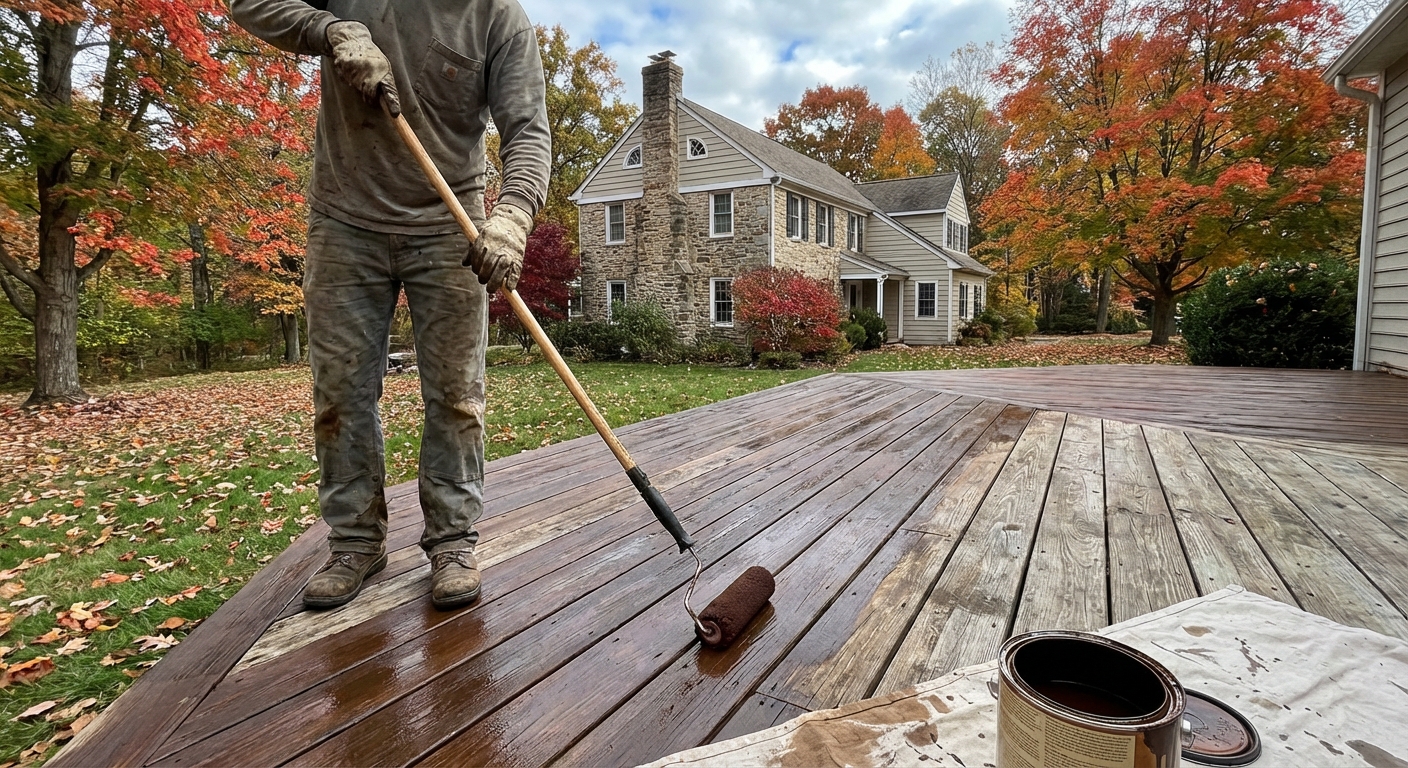
Is your Pennsylvania deck looking weathered and worn? Proper staining is crucial to protect it from the elements and keep it looking its best. But with Pennsylvania's diverse climate, knowing when and how to stain your deck can be tricky. This guide covers everything you need to know about deck staining in PA, from optimal timing to the best products for our unique weather patterns.
📐 Tool Alert: Deck Stair Calculator
Calculate rise, run, and stringer cuts while ensuring IRC/OBC code compliance.
Calculate Stairs →Understanding Pennsylvania's Climate & Its Impact on Decks
Pennsylvania experiences four distinct seasons, each presenting unique challenges for your deck. Hot, humid summers (especially in the Philadelphia metro area where temperatures can reach 85-95°F) can cause wood to expand and warp. Cold winters, particularly in western PA and the Poconos, bring heavy snow and ice, leading to cracking and moisture damage. With an average of 38-50 inches of rain per year across the state, water damage is a constant threat. Properly sealing your deck is paramount to its longevity.
🏗️ Planning a deck project?
Get a free manual project review, or visualize your dream deck with AI before requesting quotes.
<!-- slot:after-intro -->
Regional Climate Variations
- Philadelphia Metro: Hot, humid summers and moderate winters. Termite pressure is higher here, so consider termite-resistant wood or treatment.
- Pittsburgh: Hillside properties are common, which can affect drainage around your deck. Expect more snow and colder temperatures than southeastern PA.
- Lehigh Valley (Allentown, Bethlehem, Easton): A mix of suburban and rural environments. Moderate climate, but still susceptible to seasonal changes.
- Central PA: More rural, with varying microclimates. Expect colder temperatures in the higher elevations.
- Poconos: High elevation, heavy snowfall, and significant temperature fluctuations. Decks often serve as platforms for hot tubs or to maximize scenic views, requiring extra structural consideration.
When to Stain Your Pennsylvania Deck: Timing is Key
The best time to stain your deck in Pennsylvania is during the spring (April-June) or fall (September-October). These months offer moderate temperatures and lower humidity, ideal for proper stain application and drying.
Ideal Weather Conditions
- Temperature: Between 50°F and 90°F. Avoid staining in direct sunlight or when temperatures are expected to drop below freezing overnight.
- Humidity: Keep humidity levels below 70%. High humidity can prevent the stain from properly adhering to the wood.
- Dry Weather: Allow for at least 2-3 days of dry weather before and after staining. This ensures the wood is dry enough to absorb the stain and that the stain has ample time to cure.
Testing Wood Moisture
Use a moisture meter to check the moisture content of your deck boards. Aim for a moisture content of 12-15% before staining. You can purchase a moisture meter at most hardware stores for around $30-$50.
Choosing the Right Deck Stain for Pennsylvania
Selecting the right stain is crucial for protecting your deck against Pennsylvania's weather. There are two main types of deck stains: oil-based and water-based.
Oil-Based Stains
- Pros: Penetrate deeply into the wood, providing excellent protection against water damage. Offer a richer, more natural look. Often more durable than water-based stains.
- Cons: Can be more prone to mildew growth. Emit higher VOCs (volatile organic compounds). Take longer to dry.
- Best For: Older decks with dry wood that needs deep penetration.
Water-Based Stains
- Pros: Lower VOCs, making them more environmentally friendly. Easier to clean up with soap and water. Dry faster than oil-based stains.
- Cons: Don't penetrate the wood as deeply as oil-based stains. May require more frequent reapplication.
- Best For: Newer decks or decks previously treated with water-based stains.
Stain Types: Transparent, Semi-Transparent, Semi-Solid, and Solid
The opacity of the stain affects both the look and the level of protection.
- Transparent Stains: Offer the least protection but showcase the wood's natural grain. Require more frequent reapplication (every 1-2 years).
- Semi-Transparent Stains: Provide a hint of color while still allowing the wood grain to show. Offer moderate protection and require reapplication every 2-3 years.
- Semi-Solid Stains: Offer more color and hide some imperfections in the wood. Provide good protection and require reapplication every 3-5 years.
- Solid Stains: Provide the most color and hide the wood grain completely. Offer the best protection and require reapplication every 5-7 years.
Consider using PaperPlan (paperplan.app) to visualize your deck with PaperPlan design with different materials and layouts before committing to a contractor. This will help you choose a stain color that complements your home's exterior.
Recommended Stain Brands
Popular and well-regarded stain brands available in Pennsylvania include:
- Thompson's WaterSeal: Widely available, budget-friendly, water-based options.
- Behr: Available at Home Depot, offers a wide range of oil-based and water-based stains with good color selection.
- Sherwin-Williams: Offers high-quality stains with excellent durability and color retention.
- Benjamin Moore: Known for its premium quality and extensive color options.
Preparing Your Deck for Staining: A Step-by-Step Guide
Proper preparation is crucial for a long-lasting stain job.
1. Clean the Deck: Remove all furniture, plants, and debris from the deck. Sweep the deck thoroughly to remove loose dirt and leaves.
2. Wash the Deck: Use a deck cleaner to remove dirt, mildew, and old stain. You can rent a power washer, but be careful not to damage the wood. Use a wide fan tip and keep the nozzle at least 12 inches away from the surface. Alternatively, scrub the deck with a stiff brush and deck cleaner.
3. Brighten the Deck (Optional): Use a deck brightener to restore the wood's natural color and pH balance. This is especially important for older decks or decks that have been exposed to the elements for a long time.
4. Repair Any Damage: Replace any damaged or rotten boards. Tighten loose screws or nails.
5. Sand the Deck (If Necessary): If the deck is rough or has an uneven finish, sand it down to create a smooth surface. Use a 60-80 grit sandpaper for the first pass and then follow with a 100-120 grit sandpaper.
6. Allow the Deck to Dry: Allow the deck to dry completely for at least 24-48 hours before staining.
Staining Your Deck: Application Techniques
Follow these tips for a professional-looking stain job.
1. Choose the Right Tools: Use a high-quality brush, roller, or sprayer designed for deck staining. A brush is best for applying stain to edges and corners, while a roller or sprayer can be used for larger surfaces.
2. Apply the Stain Evenly: Apply the stain in thin, even coats. Avoid applying too much stain at once, as this can lead to drips and runs.
3. Work in Sections: Divide the deck into manageable sections and stain each section one at a time. This will help you maintain a wet edge and prevent lap marks.
4. Back-Brush the Stain: After applying the stain with a roller or sprayer, back-brush it with a brush to ensure it penetrates the wood evenly.
5. Apply a Second Coat (If Necessary): If you want a darker color or more protection, apply a second coat of stain after the first coat has dried completely.
6. Clean Up: Clean your tools immediately after staining with soap and water (for water-based stains) or mineral spirits (for oil-based stains).
<!-- slot:mid-content -->
Pennsylvania Deck Regulations & Permits
Before starting any deck project, it's essential to understand Pennsylvania's building codes and permit requirements. Pennsylvania uses the Uniform Construction Code (UCC), which is enforced by local municipalities.
Permit Requirements
In most Pennsylvania townships, decks that are more than 30 inches above grade or larger than 200 square feet require a building permit.
Permit Costs
Typical permit costs in PA range from $100 to $500, depending on the municipality. Expect higher fees and potentially longer processing times in the Philadelphia suburbs.
Regional Variations
- Philadelphia: The Department of Licenses and Inspections (L&I) handles permits. The process can be stricter and take longer than in other parts of the state. Row house construction also presents unique challenges.
- Pittsburgh: Hillside lots are common, requiring retaining walls and potentially structural engineering for multi-level decks.
- Lancaster County: Many historic properties exist, potentially requiring approval from a historic review board.
- Poconos: Vacation homes often feature elevated decks with hot tubs, which require careful planning and permitting.
HOA Regulations
Pennsylvania has no statewide HOA regulations. However, many suburban developments have HOA covenants that require approval for deck construction and staining. Always check with your HOA before starting any work.
Cost Considerations for Deck Projects in Pennsylvania
Deck construction and maintenance costs vary significantly across Pennsylvania.
Average Deck Costs
| Material | Cost per Square Foot (Installed) |
| ----------------- | -------------------------------- |
| Pressure-Treated | $25-$45 |
| Composite | $45-$75 |
| Cedar | $35-$55 |
| Trex | $50-$80 |
Factors Affecting Cost
- Location: Construction costs are generally higher in the Philadelphia metro area and lower in more rural areas.
- Materials: Composite decking and cedar are more expensive than pressure-treated lumber.
- Size and Complexity: Larger and more complex decks will cost more to build.
- Permits and Inspections: Permit fees and inspection costs can add to the overall cost of the project.
Protecting Your Deck from Termites in Southeastern PA
Termite pressure is moderate to high in southeastern Pennsylvania. Consider using pressure-treated lumber or applying a termite treatment to the soil around your deck. Regularly inspect your deck for signs of termite infestation, such as mud tubes or damaged wood.
<!-- slot:before-faq -->
Maintaining your deck in Pennsylvania requires understanding our climate and regional factors. By following these tips, you can ensure your deck remains beautiful and functional for years to come. Remember to factor in local regulations and HOA requirements before beginning any staining or construction project.
🎨 Not sure which material to pick?
Upload a photo of your backyard and see exactly how Trex, TimberTech, or cedar would look — free and instant.
Frequently Asked Questions
How often should I stain my deck in Pennsylvania?
The frequency depends on the type of stain you use and the amount of exposure your deck receives. Transparent stains typically need to be reapplied every 1-2 years, while solid stains can last 5-7 years. Inspect your deck annually for signs of wear and tear and re-stain as needed.
What is the best time of day to stain my deck?
The best time of day to stain your deck is in the morning or late afternoon when the temperature is moderate and the sun is not directly overhead. Avoid staining in direct sunlight, as this can cause the stain to dry too quickly and lead to uneven coverage.
How do I prevent mildew from growing on my deck?
To prevent mildew growth, clean your deck regularly with a deck cleaner that contains a mildewcide. Ensure proper ventilation under and around the deck. Choose a stain that contains mildew-resistant additives.
Can I stain a wet deck?
No, you should never stain a wet deck. The wood needs to be completely dry for the stain to properly penetrate and adhere. Use a moisture meter to ensure the wood has a moisture content of 12-15% before staining.
What are the signs that my deck needs to be re-stained?
Signs that your deck needs to be re-stained include fading color, peeling or cracking stain, water damage, and mildew growth. If you notice any of these signs, it's time to clean and re-stain your deck to protect it from further damage.
<!-- slot:end -->
Consider these related articles for further reading:
- Deck Design Ideas for Pennsylvania Homes: Inspiration for 2026
- Pennsylvania Deck Maintenance by Season: Year-Round Care Guide
- How to Build a Deck in Pennsylvania: DIY Guide with Local Rules
📋 Planning a deck project?
Get a free manual project review from our team — no obligation, no spam.
Get Free Project Review →Upload a backyard photo and preview real decking materials with AI — free, instant, no sign-up.
Permits, costs, material comparisons, and questions to ask before requesting quotes — delivered to your inbox.