
Aluminum Decking in Ontario: The $100+/sqft Option Nobody Talks About
Aluminum decking costs $100-150/sqft installed in Ontario (2026). Learn when aluminum makes sense — waterfront, rooftop, commercial — plus brands, pros/cons, and fire resistance benefits.
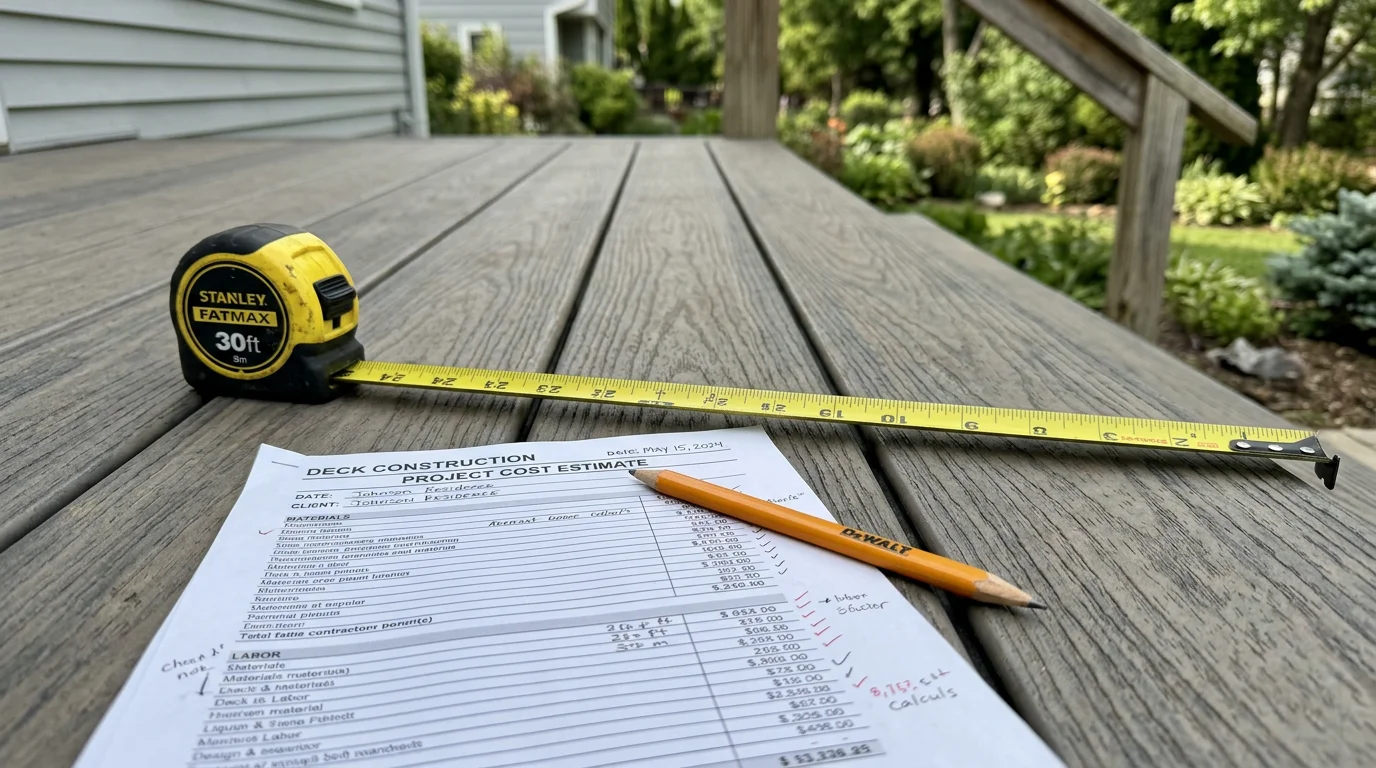
Aluminum decking is the material nobody considers — until they've replaced their wood deck for the third time. At $100-150 per square foot installed in Ontario, it's the most expensive residential decking option by a wide margin — compare that to $45-95/sqft for standard materials. But for specific situations, it's the only material that truly makes sense.
Waterfront properties. Rooftop decks. Commercial installations. Fire-prone areas. High-moisture environments where even PVC struggles with the substructure underneath.
If you're building a deck that needs to last forever with zero maintenance in the harshest conditions Ontario can throw at it, aluminum deserves a serious look. Here's everything you need to know.
What Does Aluminum Decking Cost in Ontario?
Material-Only Costs
- Aluminum decking boards: $25-45/sqft
- Aluminum substructure (joists, beams): $15-30/sqft
- Aluminum railing systems: $80-150/linear foot
🏗️ Planning a deck project?
Get a free manual project review, or visualize your dream deck with AI before requesting quotes.
Fully Installed Costs
- Standard 12x16 deck (192 sqft): $19,200-$28,800
- Mid-size 14x20 deck (280 sqft): $28,000-$42,000
- Large 16x24 deck (384 sqft): $38,400-$57,600
These are 2026 Ontario prices including all materials, labour, and building permit. Aluminum decking is a specialty product — expect fewer contractors to offer it and longer lead times for materials.
Why So Expensive?
Three reasons:
1. Raw material cost: Aluminum costs more than wood, plastic, or composite per pound
2. Specialized manufacturing: Interlocking aluminum deck boards require precision extrusion
3. Limited competition: Fewer manufacturers means less price pressure compared to the composite market
When Aluminum Decking Actually Makes Sense
Aluminum isn't for everyone. But for these situations, it's the clear winner:
Waterfront and Lakefront Properties
Ontario has thousands of waterfront properties, and decks near water face brutal conditions: constant moisture, splash zones, humidity, and marine organisms. Wood rots. Composite absorbs some moisture. PVC resists moisture but sits on a wood substructure that doesn't.
Aluminum — boards AND substructure — is completely immune to water damage. An all-aluminum deck over a lake or next to a pool will outlast every other material by decades.
Rooftop Decks and Elevated Structures
Rooftop decks in Toronto, Ottawa, and Ontario's urban centres are booming. Aluminum's advantages here:
- Lightweight: 50-60% lighter than wood or composite, reducing structural load on the building
- Water management: Interlocking aluminum boards can channel water to drainage points, protecting the roof membrane below
- Fire resistance: Non-combustible (critical for building code compliance on rooftops)
- No rot risk: No organic material to deteriorate from trapped moisture
For rooftop applications, aluminum isn't just the best choice — it may be the only code-compliant choice in many Ontario municipalities.
Commercial and Multi-Residential
Restaurants, condo common areas, boardwalks, and commercial patios benefit from aluminum's durability and minimal maintenance. When you're responsible for maintaining decking across multiple units or high-traffic areas, the math changes fast.
Commercial maintenance contracts for wood decking can cost $5,000-15,000/year. Aluminum? Sweep it occasionally.
Fire-Prone Areas
This is aluminum's underappreciated superpower. Aluminum decking is completely non-combustible. It won't ignite, spread flame, or produce toxic smoke.
Ontario's wildfire risk is increasing, particularly in Northern Ontario and cottage country. Some insurance companies are beginning to offer premium discounts for non-combustible building materials. While wood decks are a known fire pathway (embers landing on deck boards can ignite the entire structure), aluminum eliminates this risk entirely.
If you're in a WUI (Wildland-Urban Interface) zone or your insurance company has flagged fire risk, aluminum decking deserves serious consideration.
Top Aluminum Decking Brands in Ontario
Wahoo Decks
The most recognized name in aluminum decking in North America.
- Product lines: AridDek (drainage), DryJoistEZ (waterproof substructure), DryBarrier (underdeck ceiling)
- Key feature: Interlocking boards that create a waterproof surface — water drains through channels to designated points
- Warranty: Limited lifetime structural warranty
- Best for: Second-storey decks where you want dry space underneath, waterfront, rooftop
- Pricing: $30-45/sqft for boards (material only)
Wahoo's AridDek system is particularly popular in Ontario for elevated decks where homeowners want to use the space underneath. The interlocking panels create a watertight ceiling below, effectively giving you a covered patio under your deck.
Versadeck
A Canadian option with growing Ontario presence.
- Key feature: Powder-coated aluminum with woodgrain finishes
- Warranty: 50-year limited warranty
- Best for: Residential applications where you want the look of wood with aluminum performance
- Pricing: $25-38/sqft for boards (material only)
Versadeck's powder-coating process creates surprisingly realistic wood-look finishes. They won't fool you up close, but from a few feet away, they pass for premium composite.
AridDek (by Wahoo Decks)
While technically a Wahoo product line, AridDek is often referenced as its own brand due to its unique drainage system.
- Key feature: Built-in water management — boards channel water to edges and downspouts
- Best for: Above-grade decks, pool surrounds, commercial drainage applications
- No standing water: The channel design means water never pools on the surface
Nexan Building Products
A smaller manufacturer gaining traction in the Ontario market.
- Key feature: Fully interlocking system with hidden fasteners
- Best for: Clean aesthetic installations
- Pricing: $28-40/sqft for boards (material only)
Aluminum vs. Every Other Decking Material
Aluminum vs. Wood ($45-80/sqft installed)
| Factor | Aluminum | Wood |
|--------|----------|------|
| Lifespan | 50+ years | 15-25 years |
| Maintenance | Near zero | Annual staining/sealing |
| Fire resistance | Non-combustible | Combustible |
| Weight | Lighter | Heavier |
| Cost | 2-3x more upfront | Budget-friendly |
| Feel underfoot | Metallic (some models) | Natural warmth |
Aluminum vs. Composite ($65-95/sqft installed)
Composite offers excellent value for most homeowners. Choose aluminum over composite when:
- Water management is critical (rooftop, second-storey)
- Fire resistance is required
- You need a 50+ year lifespan
- The deck is in a commercial or high-traffic setting
Aluminum vs. PVC ($80-100/sqft installed)
PVC and aluminum are closer in price, but aluminum wins on:
- Full system waterproofing (boards + substructure)
- Fire resistance (PVC melts; aluminum doesn't)
- Structural capability (aluminum can be structural; PVC can't)
- Weight (aluminum is lighter)
PVC wins on:
- Warmer feel underfoot
- More residential/natural appearance
- Wider availability and contractor familiarity
- Lower cost (still 20-30% less than aluminum)
The Pros of Aluminum Decking
Virtually Indestructible
Aluminum doesn't rot, warp, crack, split, swell, or shrink. It's immune to insects, mould, mildew, and moisture. It won't fade meaningfully over decades. An aluminum deck installed today will look essentially the same in 30 years.
Lightest Decking Material
Aluminum boards weigh roughly 1.5-2 lbs/sqft compared to 3-4 lbs/sqft for composite and 3.5-5 lbs/sqft for wood. This matters for:
- Rooftop installations (structural load limits)
- DIY-friendly handling
- Elevated decks where total weight is a concern
100% Recyclable
At end of life (if that ever comes), aluminum is fully recyclable with no loss in quality. It's the most environmentally sustainable decking material from a lifecycle perspective.
Built-In Drainage Options
Many aluminum systems (Wahoo AridDek, in particular) feature interlocking boards that channel water away. This creates a dry space underneath elevated decks — essentially giving you a covered patio for free.
The Cons of Aluminum Decking
Cost
The biggest barrier. At $100-150/sqft installed, a 300 sqft deck runs $30,000-$45,000. That's nearly double a comparable composite deck.
Feel and Sound
Aluminum feels different underfoot — harder and more metallic than wood or composite. Some systems can sound hollow or "tinny" when walked on, though premium products with insulation strips have largely addressed this.
Heat Conductivity
Aluminum conducts heat efficiently. In direct Ontario sun, darker aluminium boards can get extremely hot. Most manufacturers address this with:
- Reflective coatings
- Light colour options
- Ventilated profile designs
- Heat-break technology between surface and substructure
Limited Aesthetic Options
While powder-coated woodgrain finishes have improved, aluminum still can't match the look and feel of premium composite or real wood. If aesthetics are your top priority, composite or cedar will satisfy more.
Contractor Availability
Finding an Ontario contractor experienced with aluminum decking installation takes more effort. Most residential deck builders work exclusively with wood and composite. You may need a specialized installer, which can extend timelines and limit competitive bidding.
Ontario Building Code Considerations
Aluminum decking meets Ontario Building Code requirements, but a few things to note:
- Footings: Still required to 48" below grade (frost line), whether you use aluminum or wood substructure
- Permits: Required for decks over 24" above grade or over 108 sqft, same as any material
- Fire rating: Aluminum's non-combustible rating can simplify approvals for rooftop and commercial applications
- Engineering: Some municipalities may require engineered drawings for aluminum systems they're unfamiliar with — check with your local building department
Is Aluminum Decking Right for You?
Yes, if:
- You're building a waterfront, rooftop, or commercial deck
- Fire resistance is a priority (cottage country, WUI zones)
- You want a deck that will genuinely last 50+ years
- You're building an elevated deck and want dry space underneath
- Long-term total cost matters more than upfront price
No, if:
- You're building a standard residential ground-level deck
- Budget is a primary concern
- You want the warmest, most natural wood-like feel
- You prefer wide contractor availability and competitive bidding
For most Ontario homeowners building a backyard deck, composite or PVC decking offers the best balance of performance, aesthetics, and value. Aluminum is the specialist — overkill for many, irreplaceable for some.
🎨 Not sure which material to pick?
Upload a photo of your backyard and see exactly how Trex, TimberTech, or cedar would look — free and instant.
FAQ
How long does aluminum decking last?
Aluminum decking lasts 50+ years — potentially the lifetime of your home. The aluminum itself won't degrade. The powder-coated finish may need refreshing after 20-30 years, but the structural integrity is essentially permanent.
Is aluminum decking slippery in winter?
Quality aluminum decking features textured or anti-slip surfaces. Most brands meet or exceed ASTM slip-resistance standards. However, like all surfaces, aluminum can be slippery when covered in ice. The advantage is that aluminum's drainage channels prevent standing water that could freeze into ice sheets.
Can I install aluminum decking over an existing wood frame?
Some aluminum decking boards can be installed over existing pressure-treated joists, but check manufacturer specifications. Many systems require proprietary aluminum substructures for warranty coverage. The added weight savings of aluminum boards on a wood frame can extend the life of aging framing.
Does aluminum decking dent?
High-traffic residential use won't dent quality aluminum boards. However, dropping heavy objects (like a cast-iron BBQ) from height can dent the surface. Unlike wood, dents in aluminum can't be sanded out — the powder coating would be compromised.
Is aluminum decking loud in the rain?
Modern aluminum deck boards with insulation strips and tight interlocking systems are not significantly louder than composite in rain. Older or budget systems without sound dampening can produce more noise. Ask for samples and test before committing.
How does aluminum decking handle salt (waterfront or winter salt)?
Aluminum resists corrosion, including from road salt and marine salt air. The powder-coated finish provides an additional barrier. This is a significant advantage over steel fasteners and hardware used in wood and composite decks, which can corrode in salt environments.
Can I get aluminum decking that looks like wood?
Yes. Brands like Versadeck offer powder-coated woodgrain finishes in colours mimicking cedar, walnut, and grey weathered wood. The technology has improved significantly — they look convincing from a distance, though the feel underfoot is still distinctly aluminum.
Upload a backyard photo and preview real decking materials with AI — free, instant, no sign-up.
Permits, costs, material comparisons, and questions to ask before requesting quotes — delivered to your inbox.