
Aluminum Fence Cost in Ontario: Price and Durability Guide
Aluminum fence costs $50-80/linear foot installed in Ontario. Compare prices, styles, and durability vs. wood, vinyl, and chain-link options.
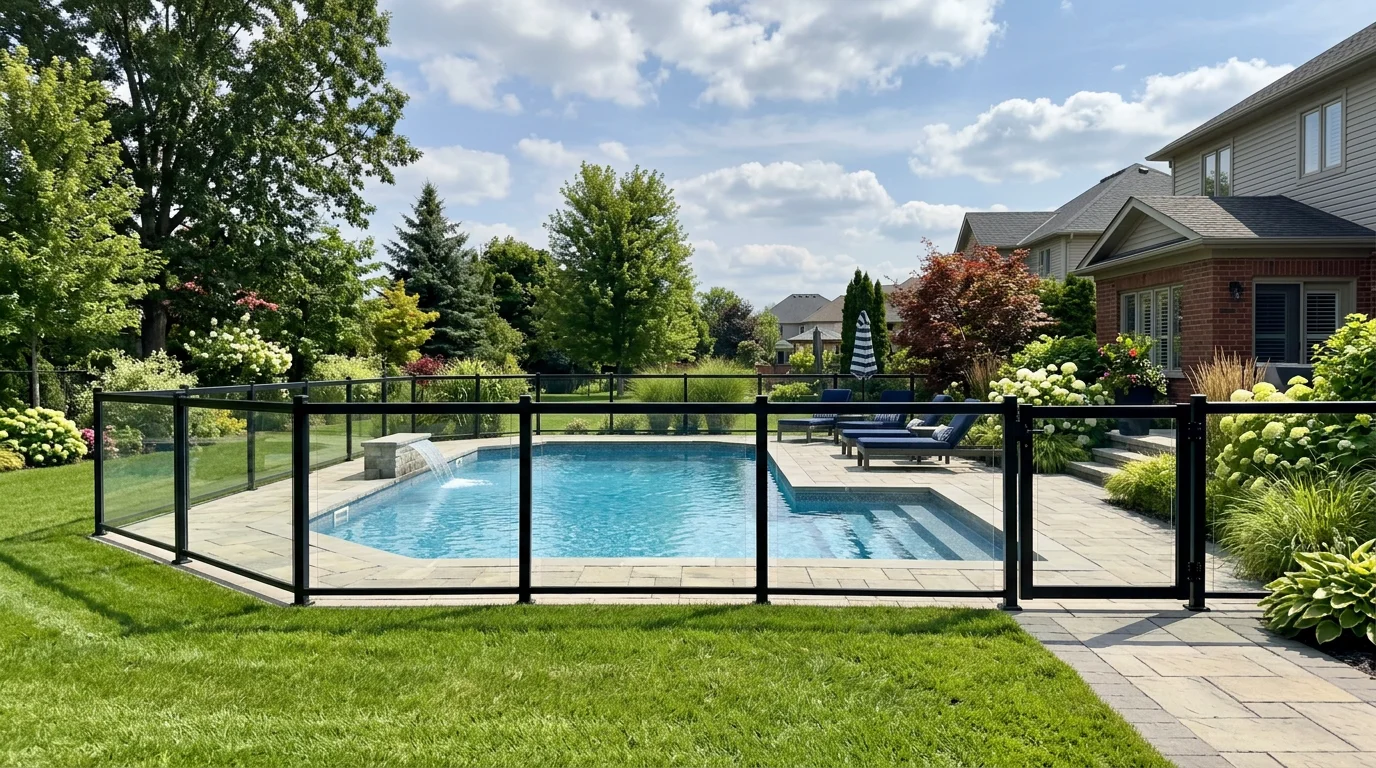
Aluminum fencing costs between $50 and $80 per linear foot installed in Ontario as of 2026. For a typical 150-foot perimeter fence, you're looking at $7,500 to $12,000 depending on height, style, and gate configurations.
That price puts aluminum in the premium category—more expensive than chain-link or basic wood, but competitive with vinyl and high-end cedar. The question is whether the durability and low maintenance justify the upfront cost.
What Drives Aluminum Fence Pricing
Material quality makes the biggest difference. Not all aluminum fencing uses the same gauge metal or coating process.
🏗️ Planning a deck project?
Get a free manual project review, or visualize your dream deck with AI before requesting quotes.
Grade and thickness:
- Residential-grade (0.050" to 0.065" wall thickness): $50-65/linear foot
- Commercial-grade (0.080" to 0.125" wall thickness): $65-80/linear foot
- Thicker aluminum resists denting and holds up better in Ontario's freeze-thaw cycles
Fence height:
- 3-4 ft (front yard or decorative): $50-60/linear foot
- 4-5 ft (semi-privacy or pool code): $60-70/linear foot
- 6 ft (maximum privacy/security): $70-80/linear foot
Style complexity:
- Flat-top picket (simplest): base pricing
- Spear-top or finial designs: add $5-10/linear foot
- Ornamental scrollwork or mid-rails: add $10-15/linear foot
- Powder-coated custom colors: add $8-12/linear foot
Gates significantly increase total cost. A single 4-foot walk gate runs $400 to $700. Double driveway gates (10-12 feet wide) cost $1,200 to $2,500 depending on automation and locking hardware.
Aluminum vs. Other Fence Materials
Here's how aluminum stacks up against other common Ontario fencing options:
| Material | Cost/Linear Foot | Lifespan | Maintenance | Rust/Rot |
|----------|------------------|----------|-------------|----------|
| Aluminum | $50-80 | 30-50 years | Minimal | Rust-proof |
| Vinyl | $45-70 | 20-30 years | Low | Rot-proof, can crack |
| Cedar | $40-60 | 15-20 years | High | Needs staining |
| Pressure-treated wood | $30-50 | 10-15 years | High | Prone to rot |
| Chain-link | $20-35 | 15-25 years | Moderate | Rust possible |
Aluminum wins on longevity and weather resistance. Ontario's wet springs and freeze-thaw cycles destroy wood fences and cause vinyl to become brittle. Aluminum expands and contracts without cracking, doesn't rust (it forms a protective oxide layer), and never needs painting or staining.
The trade-off? Aluminum provides minimal privacy unless you install privacy slats, which add $3-6 per linear foot. If you need a solid barrier for noise reduction or complete screening, wood or vinyl makes more sense.
Installation Cost Breakdown
Labor typically accounts for 40-50% of total project cost in the KWC region. Here's what you're paying for:
Site preparation ($300-800):
- Clearing vegetation and leveling ground
- Marking underground utilities (call Ontario One Call 811—always free)
- Removing old fencing if needed
Post installation ($15-25 per post):
- Digging post holes 24-36 inches deep (below frost line)
- Setting posts in concrete or gravel
- Aluminum doesn't rot, so concrete footings last as long as the fence
Panel assembly and hanging ($20-30/linear foot):
- Attaching rails and pickets
- Ensuring level installation on sloped terrain (may require stepped panels)
- Gate installation and hardware adjustment
Permits ($50-200):
- Most KWC municipalities require permits for fences over 4 feet in rear/side yards
- Front yard fences typically limited to 3-4 feet and always require permits
- Check specific requirements for Kitchener, Waterloo, or Cambridge
DIY installation can save $20-30 per linear foot, but aluminum fencing requires precise leveling and proper post spacing. Most manufacturers recommend professional installation to maintain warranty coverage.
Hidden Costs and Add-Ons
Budget for these extras that inflate initial quotes:
- Sloped terrain: Rackable panels (follow slope) add $5-8/linear foot; stepped panels (stair-step down) add $8-12/linear foot
- Rocky or clay soil: Heavy clay is common in KWC and requires oversized post holes or engineered footings—add $200-500 for equipment rental or soil augmentation
- Gate automation: Electric gate openers for driveways run $800-2,000 installed
- Decorative post caps: Aluminum or solar-powered caps cost $15-40 per post
- Privacy slats: Vertical inserts in picket gaps add $3-6/linear foot
- Upgraded locks and latches: Keyed locks, self-closing hinges, and magnetic latches add $50-150 per gate
Durability in Ontario's Climate
Aluminum excels in Canadian weather conditions:
Freeze-thaw performance: Aluminum expands and contracts without cracking or warping. Wood splits, vinyl cracks, and concrete-set posts heave in Ontario's winter frost. Aluminum fencing with properly set posts moves with ground shifts without structural damage.
Corrosion resistance: Powder-coated aluminum resists road salt, lawn chemicals, and moisture. Coastal-grade coatings (Class 1 architectural finish) add $8-12/linear foot but provide superior protection if you live near highways where salt spray is heavy.
Wind load: Commercial-grade aluminum withstands high winds better than wood or vinyl. For exposed properties, specify 0.080" minimum wall thickness and ensure posts are set in concrete at proper depth intervals (typically every 6-8 feet).
Snow load: Unlike wood horizontal rails that trap snow and moisture, aluminum picket fences shed snow easily. This reduces winter maintenance and prevents moisture-related deterioration.
Expected lifespan with proper installation: 30-50 years with virtually no maintenance beyond occasional hosing down.
Pool Code and Safety Requirements
Ontario Building Code requires fences around pools to meet specific safety standards. Aluminum is the most popular pool fence material because it's durable, compliant, and low-maintenance.
OBC pool fence requirements:
- Minimum 4 feet high (5 feet recommended)
- Picket spacing no wider than 4 inches (prevents child access)
- Self-closing, self-latching gates with locks 54 inches above ground
- No horizontal rails or footholds within 4 feet of ground level
Aluminum fencing designed for pool enclosures typically costs $60-75 per linear foot with code-compliant gates adding $600-900 each. Most municipalities in KWC enforce pool barrier requirements strictly—expect inspections.
Aluminum's non-corrosive properties make it ideal near pool water and chlorine exposure. Wood rots, steel rusts, and vinyl becomes brittle. Aluminum handles pool chemicals and moisture without degradation.
Long-Term Value vs. Other Materials
Calculate total cost of ownership over 20 years:
Aluminum fence (150 ft):
- Initial install: $9,000 average
- Maintenance over 20 years: $200 (occasional cleaning)
- Total: $9,200
Pressure-treated wood fence (150 ft):
- Initial install: $6,000 average
- Staining every 3 years: $800 × 6 = $4,800
- Replacement rotted boards: $1,200
- Full replacement at year 15: $6,000
- Total: $18,000
Vinyl fence (150 ft):
- Initial install: $8,250 average
- Panel replacement (cracking/fading): $1,500
- Total: $9,750
Aluminum becomes cheaper than wood after year 10 and remains competitive with vinyl while offering better wind resistance and a more traditional aesthetic. If you plan to stay in your home long-term, aluminum delivers the best return on investment.
Resale value impact is harder to quantify, but real estate agents report that well-maintained aluminum fencing is a neutral-to-positive feature. It doesn't add significant value like a new deck might, but it won't detract either—unlike a deteriorating wood fence.
Finding Quality Installers in KWC
Get at least three quotes and verify these contractor qualifications:
- WSIB coverage: Protects you from liability if workers are injured on your property
- Liability insurance: Minimum $2 million is standard in Ontario
- Manufacturer certifications: Many aluminum fence brands require installer training for warranty validity
- Local references: Ask for photos of completed KWC projects and contact previous clients
Compare quotes carefully. The lowest bid often means thinner aluminum, fewer posts, or shortcuts on footings. Ask these questions:
- What aluminum gauge and wall thickness are you quoting?
- How deep will posts be set, and what's the concrete mix?
- Does the price include permit application and fees?
- What warranty covers materials and labor separately?
Most reputable installers offer 10-15 year labor warranties on top of manufacturer warranties (typically 20-30 years on powder coating and lifetime on aluminum structure).
Maintenance Requirements
Aluminum fencing is virtually maintenance-free, but periodic care extends lifespan:
Annual tasks:
- Hose down with water to remove road salt, dirt, and pollen
- Check gate hinges and latches for smooth operation
- Tighten any loose hardware (posts can shift slightly during frost heave)
Every 5 years:
- Inspect powder coating for chips or scratches (rare but possible from lawn equipment impacts)
- Touch up coating with manufacturer-matched paint pens if needed
Never do this:
- Pressure wash at high PSI (damages powder coating)
- Use abrasive cleaners or steel wool (scratches finish)
- Paint over factory powder coating (voids warranty and peels)
That's it. No staining, no rot treatment, no winter covering, no board replacement.
🎨 Not sure which material to pick?
Upload a photo of your backyard and see exactly how Trex, TimberTech, or cedar would look — free and instant.
Common Questions
Is aluminum fencing worth the extra cost compared to chain-link?
Aluminum costs $30-45 per linear foot more than chain-link but offers significantly better curb appeal, longer lifespan, and rust-proof durability. Chain-link develops rust spots within 10-15 years in Ontario's climate, especially where road salt is heavy. If budget allows and aesthetics matter, aluminum is worth the premium. If you need purely functional barrier fencing for a large area, chain-link is more economical.
Can aluminum fence panels be installed on top of a concrete retaining wall?
Yes, using surface-mount posts or wall-mount brackets. This is common for pool surrounds and walkout basement perimeters. Wall-mount installations cost $10-15 per linear foot more than standard in-ground posts due to specialized hardware and the need to drill into concrete. Ensure the wall is structurally sound—aluminum fence panels catch wind, so weak retaining walls can crack or shift.
Do aluminum fences need grounding for lightning protection?
No. Aluminum conducts electricity, but residential fencing doesn't require grounding. Lightning strikes fences rarely, and when they do, the current dissipates through the ground via post footings. This is different from chain-link, which sometimes gets grounded to prevent shock hazards near electrical equipment. Standard aluminum residential fencing has no electrical safety requirements under Ontario Building Code.
How do aluminum fences perform against large dogs?
Aluminum picket fencing with 4-inch or narrower spacing contains most dogs effectively. The fence won't rot or weaken from chewing like wood, and commercial-grade aluminum (0.080" wall thickness) resists impact from large dogs running into panels. For strong dogs that jump, choose 5-6 foot heights. For diggers, install a buried wire mesh skirt along the bottom—aluminum fences don't extend below ground, so gap prevention is crucial. Gate latches should be dog-proof; many aluminum gates include interior-only release handles.
Can you install aluminum fencing yourself to save money?
DIY is possible if you're comfortable with post-hole digging, concrete mixing, and precise leveling. Expect to save $20-30 per linear foot on labor but plan for equipment rental (post-hole auger, level, concrete mixer). The biggest challenge is maintaining consistent post spacing and ensuring panels are perfectly level—even small errors compound over long runs and cause installation headaches. Most aluminum fence manufacturers offer limited or no warranty on DIY installations. If you've never installed fencing before, hire professionals for a 150+ foot project. For shorter runs (50 feet or less), DIY becomes more manageable.
Upload a backyard photo and preview real decking materials with AI — free, instant, no sign-up.
Permits, costs, material comparisons, and questions to ask before requesting quotes — delivered to your inbox.