
Composite Deck Builders in Brampton (2026)
Find the best composite deck builders in Brampton for 2026. Compare brands, costs ($50-85/sqft CAD installed), and tips for Ontario's freeze-thaw climate.
Why Brampton Homeowners Are Choosing Composite Decking
Your pressure-treated deck is splitting again. Every spring, the same routine — sanding, staining, replacing warped boards that didn't survive another Brampton winter. If you're tired of the cycle, you're not alone. Composite decking has become the default choice for Brampton homeowners who want a deck that actually handles Ontario's freeze-thaw punishment without constant upkeep.
🏗️ Planning a deck project?
Get a free manual project review, or visualize your dream deck with AI before requesting quotes.
Looking for more regional information? Check out our Ontario Decking Hub.
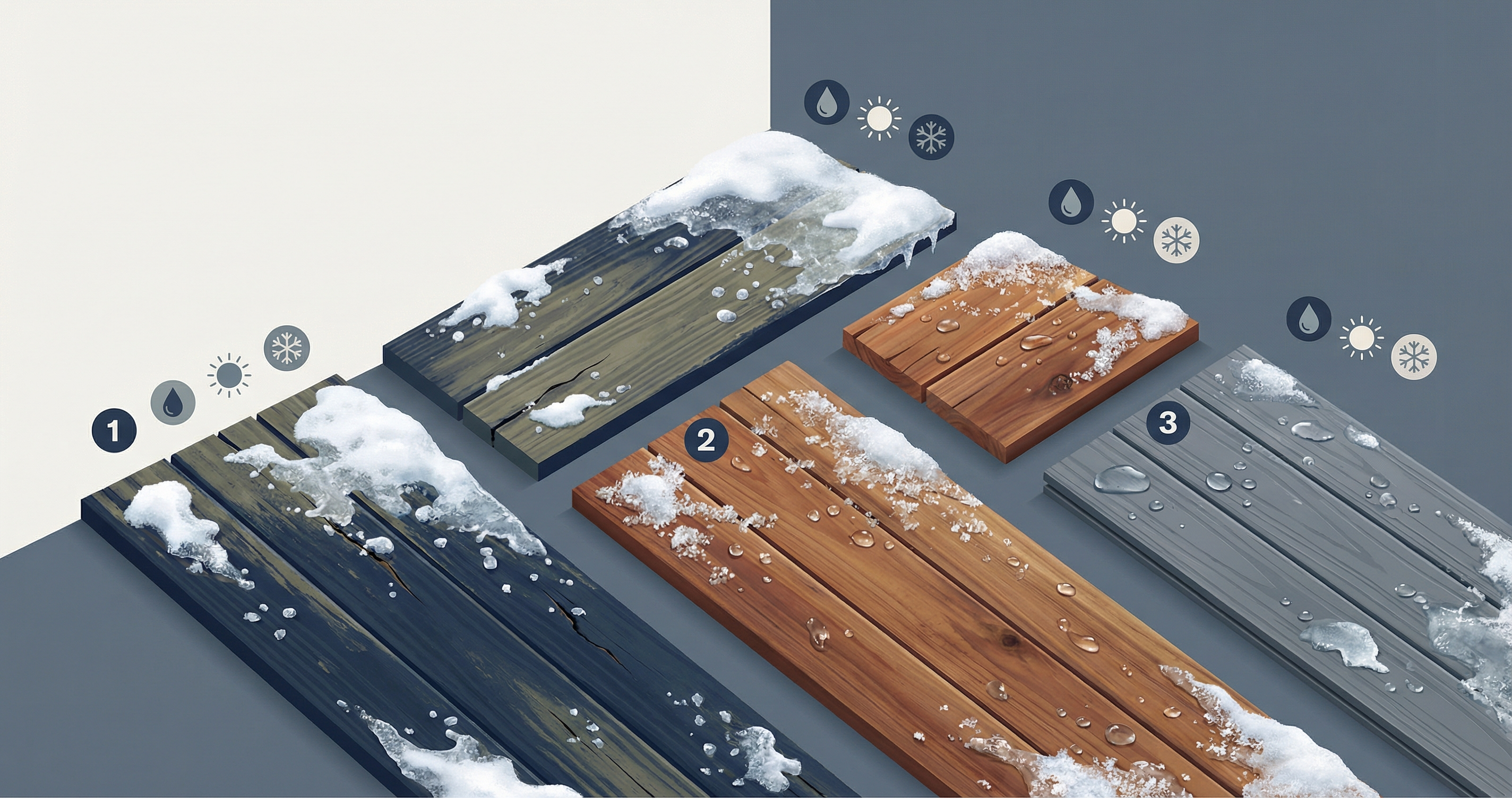
Brampton's climate is brutal on outdoor surfaces. Temperatures swing from -25°C in January to +35°C in July. Snow sits on your deck for months. Ice forms, melts, refreezes. Salt from nearby walkways gets tracked across the surface. Pressure-treated wood absorbs all of that moisture, expanding and contracting until it cracks. Composite boards are engineered to resist moisture absorption, meaning they don't split, warp, or rot the way wood does.
There's a practical financial argument too. A wood deck in Brampton needs $200–$500 in annual maintenance — stain, sealer, replacement boards. A composite deck needs a wash with soap and water. Over 10 years, the math tilts heavily in composite's favour despite the higher upfront cost.
If you're building in neighbourhoods like Springdale, Heart Lake, Mount Pleasant, or Castlemore, composite decking also adds real curb appeal. The colour and texture options available today look nothing like the plastic-y boards from a decade ago.
🌳 Tool Alert: Material Comparison
PT vs Composite vs Cedar. Compare 25-year total cost of ownership including maintenance.
Compare Materials →Choosing between composite and wood? Our composite vs wood decking comparison breaks down the real costs over 10 years. For full installed pricing by material type, see our deck cost guide.
Top Composite Brands Available in Brampton
Not all composite decking is created equal. Here's what Brampton contractors most commonly stock and install.
Trex
The biggest name in composite decking for a reason. Trex Transcend and Trex Enhance are the two lines you'll see most often. Transcend offers the most realistic wood grain patterns and comes with a 25-year fade and stain warranty. Enhance is their budget-friendly line — still solid performance, just fewer colour options.
- Cap stock technology resists staining, fading, and mould
- Made from 95% recycled materials
- Widely available through Brampton lumber yards and Home Depot locations
TimberTech / AZEK
TimberTech (owned by AZEK) offers three tiers: Prime, Edge, and Legacy. For Brampton's climate, the Legacy or Edge collections are worth the upgrade — they use a polymer cap that handles freeze-thaw better than entry-level composites.
- AZEK PVC decking (fully synthetic) is the top-tier option — zero moisture absorption
- 30-year fade and stain warranty on premium lines
- Slightly pricier than Trex but often preferred by high-end builders
Fiberon
A strong mid-range option. Fiberon's Symmetry and Concordia lines compete directly with Trex Transcend at a slightly lower price point. Their PermaTech cap layer resists staining and scratching.
Deckorators
Gaining market share in Ontario. Their Vault and Voyage lines use mineral-based composite (MBC) technology, which makes the boards denser and more resistant to moisture. Worth considering if you're concerned about winter performance from your decking materials.
For a deeper comparison across all major brands available in Ontario, check out our guide to the best composite decking brands.
Composite Deck Costs in Brampton (2026 Pricing)
Here's what Brampton homeowners are actually paying in 2026, fully installed with materials, labour, footings, and railing:
| Material | Installed Cost (CAD/sqft) | 300 sqft Deck Total |
|---|---|---|
| Pressure-treated wood | $30–$55 | $9,000–$16,500 |
| Cedar | $40–$65 | $12,000–$19,500 |
| Composite (mid-range) | $50–$85 | $15,000–$25,500 |
| Trex (Transcend) | $55–$90 | $16,500–$27,000 |
| Ipe (hardwood) | $70–$120 | $21,000–$36,000 |
Why the wide range? The low end assumes a simple, ground-level rectangular deck with basic railing. The high end reflects multi-level designs, custom railings, built-in lighting, and complex footings.
What Drives Cost Up in Brampton
- Frost-depth footings: Brampton's frost line sits at 36–60 inches depending on your specific lot. Footings must reach below this depth to prevent frost heave, which adds excavation and concrete costs compared to shallower frost-line regions.
- Short building season: Most Brampton deck builds happen May through October. That compressed window means contractor schedules fill up fast. Book your build by March or you may be waiting until the following year.
- Site access: Homes in established Brampton neighbourhoods like Bramalea or Brampton East often have narrow side yards. Difficult access for materials and equipment can add $1,000–$3,000 to your project.
- Permit fees: Budget $200–$500 for the permit itself, plus potential survey costs.
For detailed pricing on popular deck sizes, see our breakdowns for 12x16 decks, 16x20 decks, and 20x20 decks in Ontario.
How to Find a Certified Composite Deck Installer in Brampton
Composite decking requires different installation techniques than wood. Fastener spacing, gapping for thermal expansion, and joist spacing all follow manufacturer-specific guidelines. Hiring someone who "knows decks" but has only built with pressure-treated lumber is a recipe for problems.
Check Manufacturer Certifications
- TrexPro Platinum or Gold — Trex's installer certification program. Platinum-level contractors have completed the most installations and training.
- TimberTech Registered Contractor — Ensures the builder follows TimberTech's installation specs, which is also required to honour the full warranty.
- Fiberon Preferred Contractor — Similar program with training verification.
Verify the Basics
- WSIB coverage (Workplace Safety and Insurance Board — mandatory in Ontario)
- Liability insurance — minimum $2 million
- City of Brampton business licence
- References from completed composite builds — not just wood decks
Ask These Questions Before Signing
- What composite brands do you install most often?
- How do you handle thermal expansion gapping in Brampton's climate?
- What joist spacing do you use for composite boards? (Should be 12" or 16" on centre depending on the product — never 24")
- Do you install with hidden fasteners or face screws?
- How deep are your footings going? (Must exceed frost line)
Use PaperPlan (paperplan.app) to visualize different decking materials on your own home before committing — it's a useful way to compare colours and textures against your siding and landscape before you meet with installers.
Composite vs Wood: Which Handles Brampton Winters Better?
This is the question that drives most Brampton homeowners toward composite. Here's the honest comparison.
Moisture and Freeze-Thaw
Wood absorbs water. When that water freezes, it expands inside the wood fibres, causing cracking, splitting, and surface checking. This happens dozens of times per Brampton winter. Pressure-treated wood resists rot but not physical damage from freeze-thaw cycles.
Composite boards have a polymer cap that prevents moisture from penetrating the core. High-quality composites (Trex Transcend, TimberTech Legacy, AZEK PVC) show virtually zero moisture absorption in testing. That means no freeze-thaw damage.
Snow Load and Ice
Both materials handle snow load equally well — that's a structural framing concern, not a decking surface issue. Where composite wins is ice removal. You can use a plastic shovel on composite without gouging the surface. Metal shovels and ice chippers will scratch wood and tear up stain. You should never use rock salt on composite (it can stain), but calcium chloride-based de-icers are safe for most brands.
UV and Fading
Ontario gets intense summer sun. Pressure-treated wood goes grey within one season without stain. Cedar does the same. Composite decking fades slightly in the first 60–90 days and then stabilizes — most manufacturers engineer this initial fade into their colour matching. After that settling period, the colour holds for years.
The 10-Year Cost Comparison
| Factor | Pressure-Treated Wood | Composite |
|---|---|---|
| Installed cost (300 sqft) | $9,000–$16,500 | $15,000–$25,500 |
| Annual maintenance | $200–$500/year | $0–$50/year |
| 10-year maintenance total | $2,000–$5,000 | $0–$500 |
| Board replacements | Likely ($500–$1,500) | Unlikely |
| 10-year total cost | $11,500–$23,000 | $15,000–$26,000 |
| Appearance at year 10 | Weathered, grey, splitting | Near-original |
The gap narrows significantly over time. And if your time has value — weekends spent sanding and staining add up — composite becomes the clear winner.
For more on how different materials perform in Ontario's climate specifically, read our guide to low-maintenance decking options across Canada.
Maintenance and Warranty: What You Actually Need to Do
Routine Maintenance
Composite decking is low-maintenance, not no-maintenance. Here's what Brampton homeowners should do:
- Spring cleanup: Sweep debris from between boards. Leaves and organic matter trapped over winter can cause surface staining if left too long.
- Semi-annual wash: Use warm soapy water and a soft-bristle brush, or a pressure washer on a fan setting below 1,500 PSI. Never use a zero-degree nozzle — it will damage the cap layer.
- Mould prevention: Brampton's humid summers can promote mould growth in shaded areas. A solution of 1/3 cup white vinegar per gallon of water handles most surface mould. For stubborn spots, composite-specific cleaners from Trex or TimberTech work well.
- Snow removal: Use a plastic shovel. Push snow off rather than chipping ice. Calcium chloride de-icers are safe; rock salt and products containing dye are not.
Warranty Coverage
| Brand | Structural | Fade & Stain | Removal & Replacement Labour |
|---|---|---|---|
| Trex Transcend | 25 years | 25 years | Not included |
| TimberTech Legacy | 30 years | 30 years | Limited coverage |
| AZEK PVC | Lifetime (limited) | 30 years | Limited coverage |
| Fiberon Symmetry | 25 years | 25 years | Not included |
Key warranty details most people miss:
- Warranties require installation per manufacturer specs — this is why certified installers matter
- Most warranties are limited and pro-rated after the first 5–10 years
- Commercial use voids most residential warranties
- You need to register your warranty within 60–90 days of installation
Brampton Deck Permits: What You Need to Know
In Brampton, you'll likely need a building permit for your composite deck. The City of Brampton generally requires permits for:
- Decks higher than 24 inches (0.6 m) above finished grade
- Decks over 100 square feet in some cases
- Any deck attached to the house (since it affects the building envelope)
Contact Brampton's Building Division at 905-874-2400 or visit the City's Planning, Building and Growth Management office for current requirements. Permit requirements can vary by specific property zoning.
Important: Building without a permit in Ontario carries real risks — fines, forced removal, and complications when you sell your home. It's not worth it. For more on this, see our article on the risks of building a deck without a permit.
Your contractor should pull the permit on your behalf. If they suggest skipping it, find a different contractor.
🎨 Not sure which material to pick?
Upload a photo of your backyard and see exactly how Trex, TimberTech, or cedar would look — free and instant.
Frequently Asked Questions
How much does a composite deck cost in Brampton?
A composite deck in Brampton costs between $50 and $85 per square foot CAD installed in 2026. A typical 300-square-foot deck runs $15,000 to $25,500 depending on design complexity, railing choices, and the specific composite brand. Premium brands like Trex Transcend or AZEK PVC push the range to $55–$90+ per square foot. Footings in Brampton must reach 36–60 inches deep to get below the frost line, which adds to the cost compared to milder climates.
Is composite decking worth it in Brampton's climate?
Yes. Brampton's freeze-thaw cycles are the single biggest reason composite outperforms wood here. Wood absorbs moisture that expands when frozen, causing cracking and splitting every winter. Composite's polymer cap prevents moisture absorption, so it handles the cycles without damage. Over 10 years, the total cost of ownership (including maintenance) for composite and pressure-treated wood nearly converges, and the composite deck will still look good.
When should I book a composite deck build in Brampton?
Book by March for a build between May and October. Brampton's short building season means reputable contractors fill their schedules early. If you wait until May or June to start calling, you may not get on a schedule until late summer or the following year. Winter is the best time to plan — get quotes in January or February, finalize designs, and secure your spot. Read more about the best time to build a deck in Ontario.
Do I need a permit for a composite deck in Brampton?
Most likely, yes. Brampton requires building permits for decks that are over 24 inches above grade or exceed 100 square feet. Attached decks typically require permits regardless of size. The permit process involves submitting a site plan and construction drawings to Brampton's Building Division. Your contractor should handle this — budget $200–$500 for the permit fee plus any required surveys.
Can I install composite decking myself in Brampton?
You can, but there are strong reasons to hire a certified installer. Composite boards have specific requirements for thermal expansion gaps (typically 1/8" to 3/16" between boards, adjusted for installation temperature), joist spacing (12" or 16" on centre), and hidden fastener systems. Getting the footings right in Brampton — below the frost line at 36–60 inches — requires proper excavation equipment. DIY installation also typically voids or limits the manufacturer's labour warranty. If you're considering it, our guide on building your own deck in Ontario covers what's involved.
📋 Planning a deck project?
Get a free manual project review from our team — no obligation, no spam.
Get Free Project Review →Upload a backyard photo and preview real decking materials with AI — free, instant, no sign-up.
Permits, costs, material comparisons, and questions to ask before requesting quotes — delivered to your inbox.