
Covered Patio Ideas for Ontario: Year-Round Outdoor Living
Practical covered patio ideas for Ontario homeowners. Roofing options, heating solutions, permit requirements, and year-round design strategies for KWC.
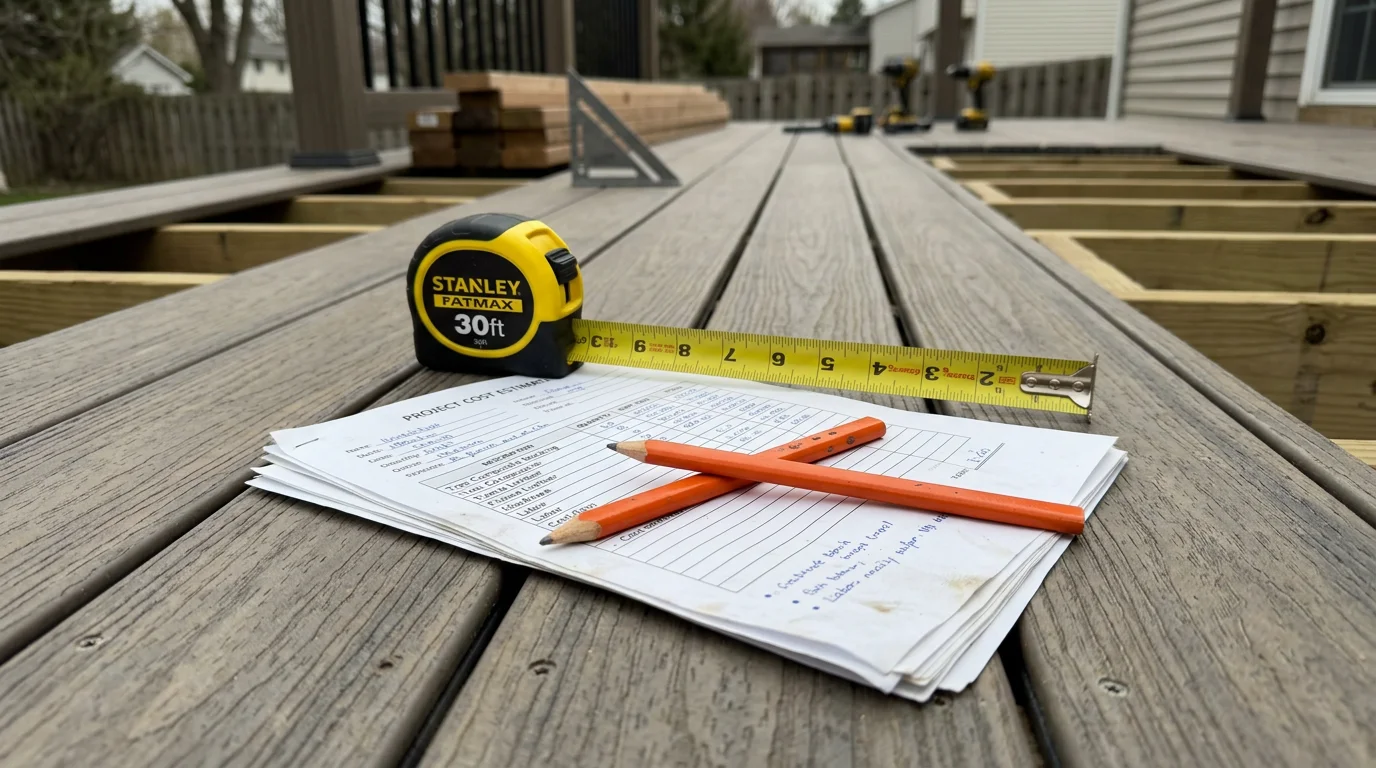
You want to use your patio more than three months a year. A covered patio extends your outdoor season in Ontario—protecting you from rain in May, providing shade in July, and keeping early snow off your furniture in October.
Here's what works in Ontario's climate, what you'll pay, and when you need permits.
Roof Structure Options for Covered Patios
Your roof choice determines how much weather protection you get and whether you need a building permit.
🏗️ Planning a deck project?
Get a free manual project review, or visualize your dream deck with AI before requesting quotes.
Pergola with Retractable Canopy
A pergola frame with fabric canopy gives you control over sun and rain. You can retract it on nice days and extend it when needed.
Cost: $3,000-$8,000 installed for a 12x14 structure
Pros:
- Adjustable coverage
- Usually doesn't require a permit if freestanding
- Can winterize by removing fabric
- Allows some natural light through
Cons:
- Fabric tears in high winds
- Won't handle snow load—must remove before winter
- Provides minimal insulation value
- Canvas degrades in 3-5 years
Check with your municipality. In Kitchener, Waterloo, and Cambridge, freestanding pergolas under 10 m² (108 sq ft) typically don't need permits. Attached pergolas almost always do.
Solid Roof (Shingles or Metal)
A permanent roof structure turns your patio into a three-season room. This is the most weather-resistant option.
Cost: $15,000-$35,000+ for a 12x16 structure with roof, posts, and basic finishing
Pros:
- Complete rain and snow protection
- Can insulate for year-round use
- Handles Ontario snow loads (design for 30-50 lb/sq ft depending on your zone)
- Adds resale value
Cons:
- Always requires a building permit
- Needs proper footings below frost line (4 feet in KWC)
- More expensive upfront
- Blocks more natural light unless you add skylights
You'll need engineered drawings if your roof attaches to your house. The structure must tie into your home's framing properly to handle lateral loads.
Polycarbonate or Clear Panels
Clear or translucent roofing panels give you weather protection while letting light through.
Cost: $8,000-$18,000 installed for a 12x16 structure
Pros:
- Blocks rain and UV while transmitting light
- Lighter than solid roofing (easier on support structure)
- Modern aesthetic
- Can angle for snow shedding
Cons:
- Shows dirt and pollen buildup
- Can create greenhouse effect in summer
- Some panels yellow over time
- Noisy during hailstorms
Polycarbonate multiwall panels (8-16mm thick) work well in Ontario. They insulate better than single-wall corrugated panels and handle snow loads properly when supported at 24-inch centers.
Heating Your Covered Patio
A roof alone extends your season to shoulder months. Add heat and you can use the space from April through October—or year-round if you commit to it.
Infrared Patio Heaters
Wall-mounted or ceiling-mounted infrared heaters warm objects and people directly, not the air. This works well in semi-enclosed spaces.
Cost: $300-$800 per heater; electrical install adds $200-$500
Coverage: One 1500W heater covers approximately 100 sq ft in moderate weather
Pros:
- Instant heat when you turn them on
- Wind doesn't affect performance much
- No combustion byproducts
- Low maintenance
Cons:
- Electric cost adds up (1.5 kW heater costs roughly $0.25/hour at Ontario rates)
- Need dedicated 15-20 amp circuit
- Creates hot/cold zones if not positioned well
Position heaters 8-10 feet above the floor and angle them toward seating areas. Don't point them at walls—you're heating people, not surfaces.
Propane Patio Heaters
Freestanding propane heaters give you flexibility to move heat where you need it.
Cost: $200-$600 per unit; propane tanks $40-$60 to fill
Heat output: 40,000-48,000 BTU (covers 200-250 sq ft)
Pros:
- No electrical work required
- Portable—move them around as needed
- High heat output
Cons:
- Open flame (fire code restrictions in some municipalities)
- Propane tanks need refilling
- Less efficient in windy conditions
- Can't use in fully enclosed spaces without ventilation
Check your municipal bylaws. Cambridge requires 3 feet of clearance from combustibles. Some condo boards prohibit propane on balconies entirely.
Built-In Gas Fireplace or Fire Table
A permanent gas fireplace becomes a focal point while providing supplemental heat.
Cost: $3,000-$8,000 for fireplace unit plus $1,500-$3,000 for gas line installation
Pros:
- Creates ambiance beyond just heat
- Natural gas line means no tank refills
- Can include as part of initial construction
- Increases property value
Cons:
- Requires gas permit and licensed installer
- Fixed location—can't reposition
- Takes up floor space
- More expensive than portable options
You'll need a gas permit for any natural gas line extension. This is separate from your building permit. Budget $500-$800 for permit fees and inspection.
Enclosure Options: Turning Three-Season into Four-Season
Once you have a roof and heat, you can add walls to create a true four-season space.
Removable Screen Panels
Screens keep bugs out while maintaining airflow. Essential for Ontario summers.
Cost: $30-$60 per linear foot installed
Use zippered screens or track systems that let you remove panels for winter. Fixed screens tear when snow builds against them.
Sliding Glass Doors or Windows
Glass walls give you wind protection and visibility while allowing you to open up on nice days.
Cost: $3,000-$8,000 for three-panel slider system (8 feet wide)
Tempered glass is code-required for any glazing below 18 inches from the floor or within 24 inches of a door. Budget accordingly.
Roll-Down Clear Vinyl Curtains
Commercial-grade vinyl curtains block wind and light rain while remaining semi-transparent.
Cost: $40-$80 per linear foot installed
These work well for shoulder-season use but aren't insulated enough for winter. Vinyl becomes brittle below -15°C, so store them indoors December through February.
Permit Requirements for Covered Patios in KWC
Whether you need a permit depends on the structure type and how it's anchored.
When You Don't Need a Permit
Generally exempt (confirm with your municipality):
- Freestanding pergola under 108 sq ft (10 m²)
- Temporary canopy or market umbrella with no footings
- Portable heaters with no permanent gas lines
When You Always Need a Permit
Requires a building permit:
- Any structure attached to your house
- Permanent roof with footings
- Enclosed structures with walls (even if removable)
- Natural gas line installation (separate gas permit)
- Electrical work for heaters or lighting (electrical permit)
Permit costs in KWC: $200-$600 depending on project scope. See deck permit cost details for comparable structures.
If your covered patio sits within 2 meters (6.5 feet) of your property line, you'll need a minor variance or setback approval. This adds 4-8 weeks to your timeline. Check setback rules for KWC properties.
Design Considerations for Ontario Climate
Snow Load Requirements
Your roof structure must handle Ontario snow loads. KWC falls into Zone 2.5-3.0 for building code purposes, which means designing for 1.5-2.0 kPa (30-40 lb/sq ft) ground snow load.
Add 25% safety margin for drifting if your roof sits below your house roofline. Snow slides off your main roof and piles onto your patio cover.
Pitch your roof at least 3:12 (14 degrees) to promote snow shedding. Flat roofs collect ice and create structural risk.
Drainage and Water Management
Your patio needs positive drainage away from your house foundation. Slope the floor 2% minimum (1/4 inch per foot).
If you're adding a solid roof, you're creating runoff that didn't exist before. Direct downspouts to:
- Municipal storm sewer (if connected)
- Drywell or soakaway pit (4+ feet from foundation)
- Rain garden or drainage swale
Don't let roof drainage pool near your foundation. Ontario's clay soils absorb water slowly, and standing water leads to foundation issues.
See deck drainage solutions for water management techniques that apply equally to patios.
Material Selection for Freeze-Thaw Cycles
Ontario's spring and fall bring daily freeze-thaw cycles—water expands in cracks overnight, then melts during the day. This destroys low-quality materials.
For patio floors, use:
- Concrete pavers (rated for freeze-thaw): $20-$35/sq ft installed
- Natural stone (granite, limestone): $30-$60/sq ft installed
- Poured concrete (properly sealed with 4000 PSI minimum): $12-$25/sq ft
Avoid thin porcelain tile or cheap concrete pavers. They crack within 2-3 years.
For roof posts and framing, use:
- Pressure-treated lumber rated for ground contact
- Aluminum posts (won't rot)
- Steel posts with powder coat or galvanized finish
Wood posts must sit on concrete footings—never bury them directly in soil, even if pressure-treated.
Lighting Your Covered Patio
Lighting extends evening use and creates ambiance.
Low-Voltage LED String Lights
Cost: $100-$400 for 25-50 feet of commercial-grade LED strings
Run them along roof beams or weave through rafters. LED bulbs don't generate heat and last 20,000+ hours.
Recessed Ceiling Lights
Cost: $75-$150 per fixture installed
Use IC-rated (insulation contact) fixtures if your roof is insulated. Non-IC fixtures overheat and fail.
Wall Sconces
Cost: $100-$300 per fixture
Mount them on posts or house walls for task lighting near doors and seating areas.
Any permanent electrical work requires an electrical permit in Ontario. Budget $150-$300 for the permit. DIY low-voltage work (under 30V) typically doesn't need permits, but check locally.
Cost Summary: What You'll Actually Pay
Here's what a covered patio costs in Ontario for 2026:
| Project Type | Size | Cost Range |
|--------------|------|------------|
| Pergola with retractable canopy | 12x14 (168 sq ft) | $3,000-$8,000 |
| Solid roof structure (basic) | 12x16 (192 sq ft) | $15,000-$25,000 |
| Solid roof structure (finished) | 12x16 (192 sq ft) | $25,000-$35,000 |
| Polycarbonate roof structure | 12x16 (192 sq ft) | $8,000-$18,000 |
| Add removable screen walls | Three sides | $1,500-$3,000 |
| Add sliding glass walls | Three sides | $10,000-$20,000 |
| Add gas fireplace with line | Single unit | $5,000-$10,000 |
These prices assume professional installation. DIY can save 30-40% on labor but you'll still pay for permits, materials, and inspections.
Compare these costs to deck building prices in KWC to decide whether a covered patio or covered deck makes more sense for your property.
🎨 Not sure which material to pick?
Upload a photo of your backyard and see exactly how Trex, TimberTech, or cedar would look — free and instant.
Common Questions
Can I build a covered patio without a permit in Ontario?
Only if it's a small freestanding structure (usually under 108 sq ft), has no permanent roof, uses no footings below grade, and doesn't attach to your house. The moment you add a solid roof, permanent posts with footings, or attach it to your home, you need a building permit. Gas lines and electrical work always require separate permits regardless of structure size.
What's the most cost-effective way to heat a covered patio in Ontario?
Infrared electric heaters offer the best balance of cost and performance for shoulder-season use (April-May, September-October). They cost $300-$800 per unit and roughly $0.25/hour to run. For year-round use, a built-in gas fireplace becomes more economical despite higher upfront cost—natural gas is cheaper per BTU than electricity, and you'll use it enough to justify the $5,000-$10,000 installation cost.
How much snow can a patio roof handle in Kitchener-Waterloo-Cambridge?
Your structure must be engineered for Ontario Building Code snow loads. KWC falls into Zone 2.5-3.0, requiring designs that handle 30-40 lb per square foot of snow. For a 200 sq ft patio, that's 6,000-8,000 lbs of potential load. Add 25% safety margin if snow can drift or slide onto your roof from your house. Pergolas with fabric canopies won't handle snow—remove the fabric by November.
Can I enclose my existing deck with a roof and walls?
Yes, but it's complex. Your existing deck structure probably wasn't engineered for roof loads—deck joists and beams handle floor loads (live/dead loads up to 50 psf), but adding a roof creates additional dead load plus snow load. You'll likely need to reinforce footings and add structural posts. Budget $15,000-$30,000+ to add a proper roof structure to an existing deck, plus permits and engineering. Often it's more cost-effective to build a covered patio from scratch.
What's the best time of year to build a covered patio in Ontario?
April through October for ideal working conditions, but late fall (November) can work if concrete footings are poured before the ground freezes. Concrete needs minimum 5°C ambient temperature to cure properly. If you're planning a spring project, book contractors in January or February—good builders fill their schedules by March. Winter quotes sometimes come with 10-15% discounts since demand is lower.
Related: Concrete vs Interlock Patio in Ontario.
You may also find Cottage Deck Ideas: Waterfront and Rustic Designs for Ontario helpful.
Upload a backyard photo and preview real decking materials with AI — free, instant, no sign-up.
Permits, costs, material comparisons, and questions to ask before requesting quotes — delivered to your inbox.