
Cottage Deck Ideas: Waterfront and Rustic Designs for Ontario
Ontario cottage deck ideas for waterfront and rustic builds. Design options, material costs, building code requirements, and contractor tips for 2026.
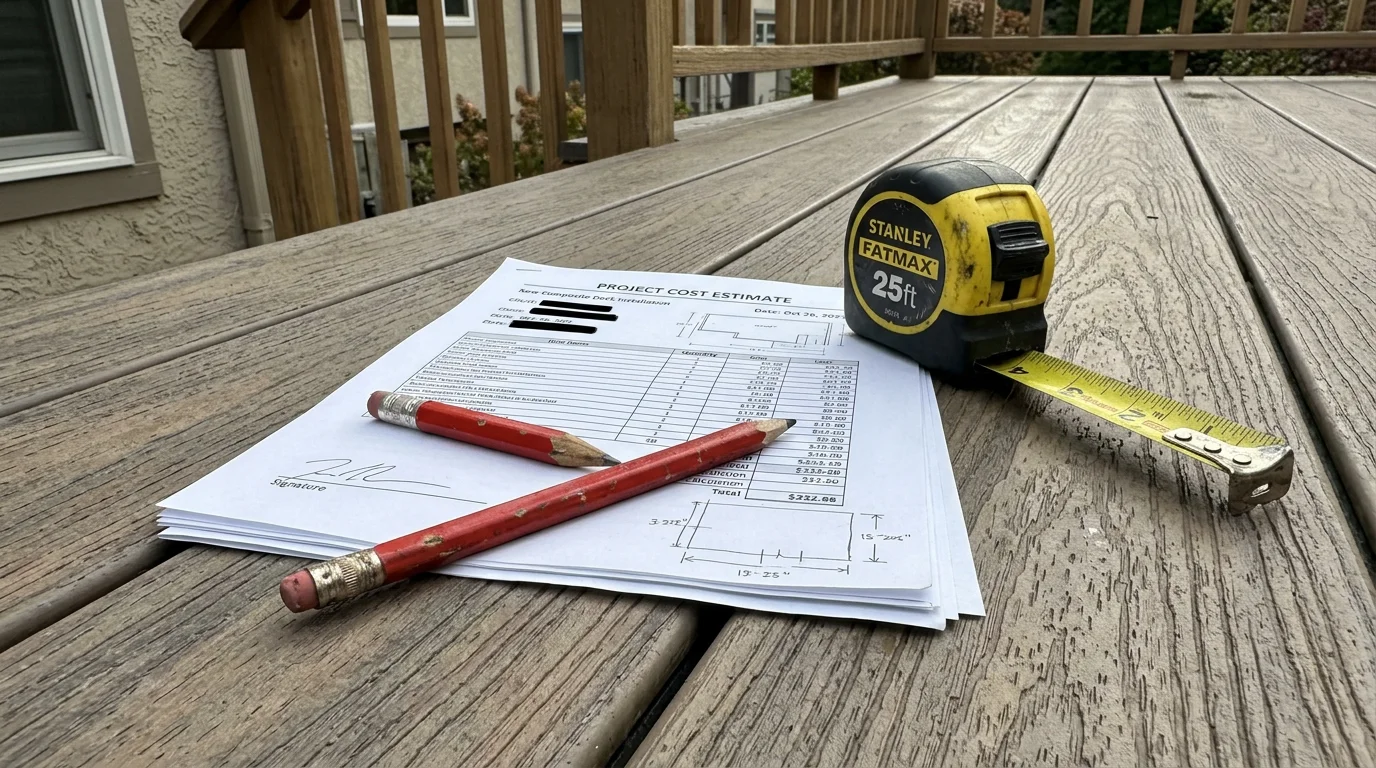
Your cottage deck needs to handle freeze-thaw cycles, high humidity, shoreline erosion, and UV exposure while blending into the natural landscape. Ontario cottage decks face unique challenges compared to urban backyards—especially if you're building near water.
Here's what works in 2026 for KWC-area cottages and beyond, with real costs, code requirements, and design ideas proven to last in Ontario's climate.
Waterfront Deck Design Considerations
Building near water adds permit complexity, environmental restrictions, and structural challenges you won't face in town.
🏗️ Planning a deck project?
Get a free manual project review, or visualize your dream deck with AI before requesting quotes.
Setback and Conservation Authority Rules
Most Ontario waterfronts require 30-metre setbacks from the high-water mark before you can build. Grand River Conservation Authority (GRCA), Muskoka, Kawartha, and other conservation authorities enforce these limits strictly.
- Setback permits: Expect $500-1,200 for conservation authority review
- Shoreline stabilization: Often required before deck approval ($3,000-8,000)
- Helical piles: Preferred over concrete footings near water—less soil disturbance, faster install ($150-300 each)
- Permit timeline: 8-12 weeks for waterfront projects (vs. 4-6 weeks for standard decks)
If your cottage predates modern setback rules, you may have legal non-conforming status—but any deck addition still triggers current code review.
Moisture-Resistant Materials for Shoreline Decks
High humidity and water spray require materials that won't rot, warp, or attract mold.
| Material | Waterfront Suitability | Installed Cost (2026) | Lifespan |
|----------|------------------------|----------------------|----------|
| Composite (capped) | Excellent—resists mold, no splinters | $65-95/sqft | 25-30 years |
| PVC decking | Best for docks and high-splash zones | $80-110/sqft | 30+ years |
| Cedar | Good if sealed annually | $55-80/sqft | 15-20 years |
| Pressure-treated | Acceptable above water line | $45-65/sqft | 10-15 years |
| Ipe/tropical hardwood | Excellent—naturally rot-resistant | $90-140/sqft | 30-40 years |
Composite and PVC decking dominate cottage builds now. They handle UV, moisture, and freeze-thaw without annual staining. Best composite decking brands in Ontario include Trex, TimberTech, and Fiberon—all tested for Canadian climates.
Floating Dock vs. Elevated Deck
If you want a deck right at the water, you have two options:
Floating dock (seasonal):
- Aluminum or composite frame with foam flotation
- $35-70/sqft installed
- Removed before ice-up (October-November in most of Ontario)
- No permit required if it's removable and under 10 sqm
Elevated deck on piles:
- Permanent structure with helical piles driven into bedrock
- $80-120/sqft installed due to engineering and pile costs
- Requires full building permit + conservation authority approval
- Handles ice heave and spring flooding
Most cottagers use a floating dock for water access and a permanent elevated deck for entertaining farther from shore.
Rustic Deck Styles That Fit Cottage Aesthetics
Cottage decks should look intentional, not suburban. Avoid cookie-cutter composite grey—choose materials and details that complement natural surroundings.
Natural Wood Options
Cedar remains the most popular rustic choice. It weathers to silver-grey if left unsealed, or holds a warm honey tone with annual oil-based stain.
- Western red cedar: $55-80/sqft installed, tight grain, minimal knots
- Eastern white cedar: $45-65/sqft installed, more rustic character
- Sealing frequency: Every 1-2 years with oil-based penetrating stain
Pressure-treated pine works for framing and substructure, but looks utilitarian for decking unless you apply a semi-transparent stain. Best deck stain for Ontario compares oil vs. water-based products—oil penetrates deeper and lasts longer in cottage environments.
Reclaimed barn wood creates a one-of-a-kind look but requires structural grading certification to meet Ontario Building Code. Expect $80-120/sqft if you source certified reclaimed material.
Earth-Tone Composite Colours
If you prefer low maintenance, choose composite boards in browns, tans, and greys that mimic weathered wood.
Top cottage-friendly composite colours (2026):
- Trex Spiced Rum (reddish-brown)
- TimberTech Coastline Driftwood (weathered grey)
- Fiberon Havana Gold (warm brown)
- Deckorators Cedar Tones (natural cedar look)
Composite decking colours trending in Canada shows what's popular—avoid stark whites and blacks unless you want a modern contrast.
Railing Choices That Don't Block the View
Glass and cable railings preserve sightlines to the water but cost more.
| Railing Type | Installed Cost per Linear Foot | Best Use Case |
|--------------|-------------------------------|---------------|
| Cedar pickets | $40-60 | Traditional cottages, screened by trees |
| Aluminum black | $60-90 | Modern rustic, powder-coated durability |
| Cable horizontal | $90-140 | Waterfront views, minimalist look |
| Tempered glass panels | $120-180 | Unobstructed views, windbreak on windy shores |
Cable railing code requirements in Ontario covers spacing rules—cables must be ≤4 inches apart to meet OBC fall-through protection.
Multi-Level Decks for Sloped Cottage Lots
Most cottage properties slope toward the water. Multi-level decks handle elevation changes without massive grading costs.
Two-Tier Design
Upper deck (main floor access):
- 12x16 ft dining and lounging area
- Cost: $9,600-15,600 for composite (12x16 deck cost in Ontario)
Lower deck (4 steps down):
- 10x12 ft fire pit zone or hot tub pad
- Closer to water or tucked into tree cover
Total cost for two-tier system: $18,000-32,000 depending on materials, railing, and stairs. For a broader look at deck building costs in Ontario, our province-wide guide breaks down every major cost factor.
Wraparound Decks
If your cottage has waterfront on two sides, a wraparound deck maximizes views and access.
- U-shaped or L-shaped layout
- Cost: $55-95/sqft for composite, $45-70/sqft for cedar
- Permit note: Wraparound decks often exceed 200 sqft, triggering engineered drawings in some municipalities
Wraparound railings add $2,400-5,600 depending on perimeter length.
Built-In Features for Cottage Decks
Integrate storage, seating, and cooking zones to avoid cluttering a small cottage interior.
Storage Benches
Built-in benches with lift-up lids store life jackets, firewood, outdoor toys, and pool floats.
- Cost: $800-1,500 per 6-foot bench (pressure-treated frame, composite seating)
- Code requirement: If bench height exceeds 24 inches and is near a deck edge, add railing behind it
Outdoor Kitchen Zones
Permanent BBQ stations, mini fridges, and countertops keep cooking outdoors.
- Concrete countertop with stone veneer base: $2,500-4,500
- Built-in gas BBQ hookup: $600-1,200 (propane or natural gas if available)
- Electrical outlet (GFCI): $150-300 per outlet
Most cottage decks run a dedicated 20A circuit for kitchen appliances.
Fire Pit Cutouts
Sunken fire pits require non-combustible materials around the perimeter and code-compliant clearances.
- Metal fire pit insert: $300-800
- Surrounding stone or tile: $600-1,400 for heat-resistant surround
- Clearance rule: 10 feet minimum from cottage walls and overhead structures
Fire pit safety on decks covers ventilation, spark screens, and insurance considerations.
Screened Deck Conversions
Bugs are relentless at Ontario cottages—especially June blackflies and July mosquitoes. Screening part of your deck makes evenings usable.
Screened Room Add-Ons
Converting a 12x12 section of deck to screened enclosure costs $8,000-16,000 including:
- Pressure-treated posts and framing
- Fiberglass or aluminum screening
- Screen door with closer
- Optional ceiling fan and lighting
Permit required: Yes—screened rooms are considered enclosed structures in Ontario, triggering building and sometimes HVAC permits.
Retractable Screens
Motorized retractable screens mount to deck posts and roll down when needed.
- Cost: $1,200-2,400 per 10-foot span
- No permit if structure remains open-air
- Lifespan: 8-12 years before fabric replacement
Best bug solutions for Ontario decks compares screens, citronella systems, and mosquito misting.
Deck Lighting for Cottages
Off-grid cottages need solar or low-voltage LED lighting. Grid-connected cottages can use standard 120V systems.
Solar Post Cap Lights
- Cost: $25-60 per post cap
- Brightness: 10-30 lumens (ambient only)
- Best for: Railing accents, pathway markers
Low-Voltage LED Kits
12V or 24V systems run from a transformer, powered by cottage electrical or solar battery bank.
- Cost: $300-900 for 10-light kit
- Installation: DIY-friendly with plug-in transformer
- Lifespan: 50,000+ hours for quality LEDs
Best deck lighting kits in Canada reviews wired and solar options tested in freeze-thaw climates.
Under-Deck Lighting for Two-Tier Builds
If you have a covered lower deck, install recessed LED pucks in the upper deck joists.
- Cost: $40-80 per fixture
- Spacing: Every 4-6 feet for even coverage
- Weatherproof rating: IP65 or higher for exposed installations
Permits and Code for Cottage Decks
Cottage decks follow the same Ontario Building Code as urban decks, but conservation authorities add extra layers.
When You Need a Permit
Building permit required if:
- Deck is ≥600 mm (24 inches) above grade
- Deck is ≥10 square metres (107 sqft)
- Deck is attached to the cottage
- Property is within a regulated floodplain or conservation area
Conservation authority permit required if:
- Deck is within 30 metres of high-water mark (varies by authority)
- Site work involves grading, fill, or shoreline alteration
Permit Costs (2026)
- Municipal building permit: $150-400 depending on township
- Conservation authority permit: $500-1,200
- Engineered drawings (if required): $800-2,000
Building a deck without a permit in Ontario outlines fines ($5,000-50,000) and insurance risks.
Inspection Timeline
Typical cottage deck inspections:
1. Footing inspection before concrete pour (or helical pile verification)
2. Framing inspection before decking installation
3. Final inspection after railing and stairs complete
Expect 2-5 business days between inspection requests and inspector arrival—longer in remote cottage areas.
Hiring a Deck Builder for Cottage Projects
Not all deck contractors service cottage country. Look for builders experienced with waterfront sites, helical piles, and conservation permits.
Questions to Ask Cottage Deck Builders
- Do you have experience with [conservation authority name] permits?
- Can you handle helical pile installation or do you subcontract?
- What's your travel fee for [cottage location]?
- Do you provide winter storage for seasonal tools and materials?
- Can you source materials locally or do you transport from your main shop?
Travel fees for KWC builders working in Muskoka, Haliburton, or Kawartha typically add $500-1,500 depending on distance and trip frequency.
Cost Comparison: DIY vs. Contractor
| Deck Size | DIY Material Cost | Contractor Installed | Time Savings |
|-----------|-------------------|---------------------|--------------|
| 12x16 composite | $4,800-7,200 | $9,600-15,600 | 20-40 hours |
| 16x20 composite | $7,500-11,000 | $16,000-28,000 | 40-60 hours |
Can I build my own deck in Ontario? covers permit requirements for owner-built decks—you still need permits and inspections, but you save on labour.
For waterfront builds, hiring a contractor is strongly recommended unless you have experience with helical piles, conservation permits, and shoreline construction.
Seasonal Maintenance for Cottage Decks
Ontario cottage decks endure harsher conditions than urban decks—more UV exposure, higher humidity, and often longer periods without maintenance.
Spring Opening Checklist
- Inspect for ice heave damage to posts and footings
- Clear debris from between deck boards
- Check railing stability—freeze-thaw can loosen fasteners
- Power wash composite or sealed wood (avoid pressure on unsealed cedar)
- Reseal wood decks if water no longer beads on surface
Fall Closing Checklist
- Remove furniture and cushions to prevent moisture trapping
- Trim back vegetation touching deck perimeter
- Clear gutters if you have an under-deck ceiling system
- Apply penetrating sealer to wood decks before freeze-up
Composite deck maintenance in Ontario covers winter snow removal and preventing salt stains from tracking.
🎨 Not sure which material to pick?
Upload a photo of your backyard and see exactly how Trex, TimberTech, or cedar would look — free and instant.
Common Questions
Do I need a permit for a small cottage deck?
Yes, if it's ≥24 inches high or ≥107 sqft, even at a cottage. Most townships and conservation authorities enforce the same Ontario Building Code rules. Waterfront properties face additional scrutiny—expect conservation authority permits if you're within 30 metres of water.
What's the best decking material for a dock or waterfront deck?
Capped composite or PVC decking for anything near water. They resist mold, don't splinter when wet, and handle freeze-thaw without cracking. Trex Transcend, TimberTech AZEK, and Fiberon Paramount are top choices. Avoid pressure-treated pine for decking surfaces—it splinters and retains moisture.
Can I use a floating deck to avoid waterfront permits?
Only if it's under 10 sqm (107 sqft), not attached to the cottage, and removable. Conservation authorities treat permanent structures within setbacks seriously—even ground-level decks trigger permits if they involve grading or fill. Floating docks (seasonal) typically don't need permits, but confirm with your local authority.
How deep do deck footings need to be at a cottage?
48 inches (1.2 m) minimum in Ontario—same as residential decks. Waterfront sites with bedrock may require helical piles instead of concrete footings. Piles cost $150-300 each but install faster and avoid shoreline soil disturbance.
Should I close in my cottage deck for winter?
Most cottagers leave decks open—composite and properly sealed wood handle snow without damage. If you're considering a screened or three-season room, you'll need a building permit and insulated foundation in freeze-thaw zones. Closing in a deck in Ontario covers permit requirements and insulation strategies.
You may also find Wraparound Deck Ideas for Ontario Homes helpful.
Upload a backyard photo and preview real decking materials with AI — free, instant, no sign-up.
Permits, costs, material comparisons, and questions to ask before requesting quotes — delivered to your inbox.