
Deck Cost in Philadelphia (2026)
What does a deck cost in Philadelphia in 2026? Get real pricing per square foot for composite, wood, and Trex decks plus local tips to save money.
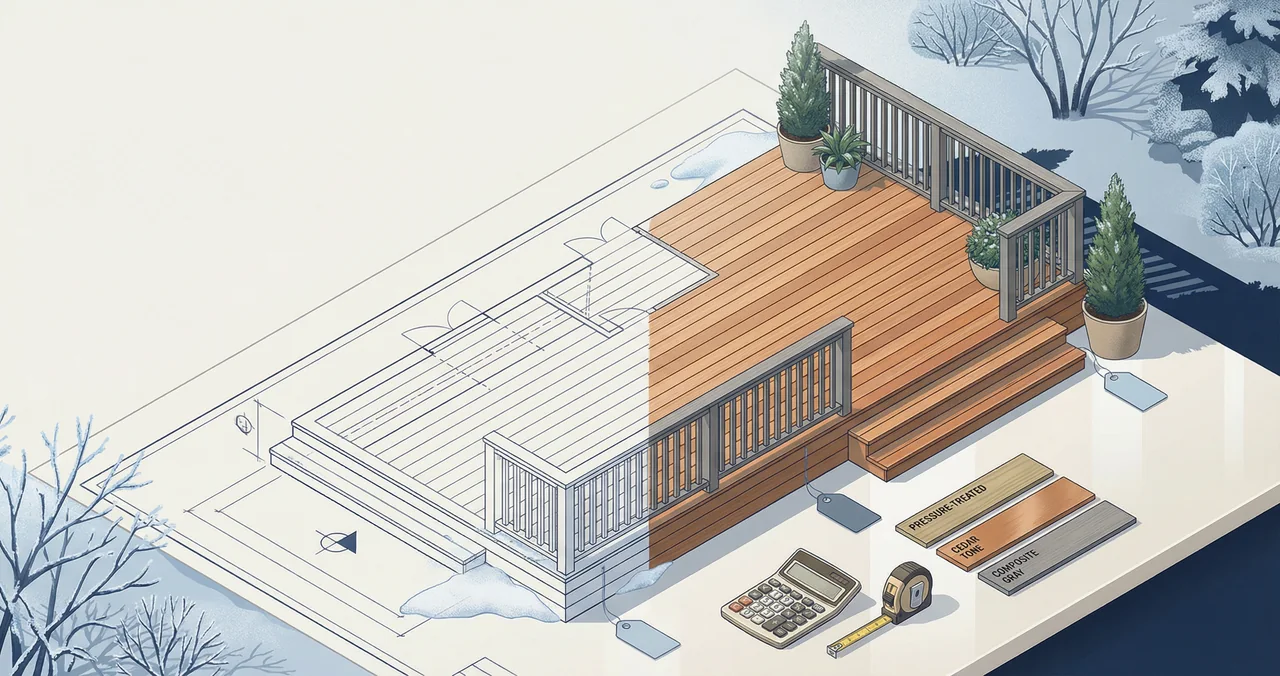
How Much Does a Deck Cost in Philadelphia Right Now?
If you're getting quotes from Philadelphia deck builders and wondering whether the numbers are reasonable, you're not alone. Deck pricing in this city sits above the national average — partly because of a compressed building season, partly because labor costs in the Philly metro have climbed steadily since 2023.
🏗️ Planning a deck project?
Get a free manual project review, or visualize your dream deck with AI before requesting quotes.
🧮 Tool Alert: Deck Cost Calculator
Estimate your project costs in seconds based on local pricing bands for your area.
Calculate My Cost →Here's the short answer: most Philadelphia homeowners pay between $15,000 and $45,000 for a professionally built deck. A basic 12×16 pressure-treated deck runs around $8,000–$12,000 installed, while a 400-square-foot composite deck with railing and stairs can push past $35,000.
The long answer depends on your material, your lot, and how much your contractor has to fight Philadelphia's clay-heavy soil and 36-inch-plus frost line to set proper footings.
<!-- slot:after-intro -->
For a broader look at deck pricing across different materials and regions, see our deck cost guide. Timing your build right can also save thousands — check our guide on the best time to build a deck.
Average Deck Cost in Philadelphia by Material
Material choice is the single biggest factor in your total price. Here's what Philadelphia contractors are charging in 2026 for a fully installed deck — framing, decking, basic railing, and stairs included:
| Material | Installed Cost Per Sq Ft | 300 Sq Ft Deck | 400 Sq Ft Deck |
|---|---|---|---|
| Pressure-Treated Pine | $25–$45 | $7,500–$13,500 | $10,000–$18,000 |
| Cedar | $35–$55 | $10,500–$16,500 | $14,000–$22,000 |
| Composite (mid-range) | $45–$75 | $13,500–$22,500 | $18,000–$30,000 |
| Trex (Transcend/Enhance) | $50–$80 | $15,000–$24,000 | $20,000–$32,000 |
| Ipe (Brazilian Hardwood) | $60–$100 | $18,000–$30,000 | $24,000–$40,000 |
These ranges reflect the Philadelphia market specifically. You'll land on the lower end with a ground-level deck, simple layout, and no custom features. The upper end accounts for elevated builds, multi-level designs, and premium railing systems.
A note on pressure-treated wood in Philly: It's still the most popular budget option, but Philadelphia's freeze-thaw cycles punish unsealed wood fast. Budget for annual sealing and staining or you'll be replacing boards within 5–7 years. Salt from winter sidewalk treatment accelerates the damage if your deck sits near walkways.
Cost Per Square Foot Breakdown
The per-square-foot number your contractor quotes includes more than just boards. Here's what's typically bundled in:
- Decking material: 35–45% of total cost
- Substructure (joists, beams, posts): 15–20%
- Footings: 10–15% (higher in Philadelphia because of deep frost lines)
- Railing and stairs: 10–20%
- Labor: 25–35%
- Permits and inspection fees: 1–3%
Why Philadelphia's Cost Per Square Foot Runs Higher
Two factors push Philly pricing above cities with milder climates:
Deep footings. Philadelphia's frost line sits at 36 to 60 inches depending on your specific location. Every footing has to go below that line to prevent frost heave — the ground literally pushing your deck posts upward as ice expands in the soil. That means more digging, more concrete, and more labor than a deck in, say, the Carolinas.
Short building season. Realistically, you're looking at May through October for comfortable deck construction. Some crews will pour footings in late March or April if the ground has thawed, but most of the building window is crammed into six months. That demand compression means top Philadelphia deck builders book out fast.
Labor Costs in Philadelphia
Labor typically accounts for $15–$30 per square foot of your total installed price, depending on complexity. Here's how that breaks down:
- Basic ground-level deck: $15–$20/sq ft labor
- Elevated deck (4+ feet): $20–$28/sq ft labor
- Multi-level or wraparound: $25–$30/sq ft labor
- Demo and removal of old deck: $3–$8/sq ft additional
Philadelphia sits in a higher labor market compared to surrounding areas in Bucks County or Delaware County. Contractors working in neighborhoods like Chestnut Hill, Manayunk, or Society Hill may charge a premium for tighter access, narrow lots, and parking logistics.
What Drives Labor Costs Up
- Elevation changes: Sloped yards in neighborhoods like Roxborough or East Falls require more engineering
- Permit complexity: Philadelphia requires permits for decks over 200 square feet or 30 inches above grade — factor in inspection scheduling time
- Old deck removal: Tearing out a rotting deck, especially one with concrete footings, adds $1,000–$3,000
- Helical piers vs. concrete footings: Some Philly builders now use helical piers to avoid deep excavation — faster install but higher material cost
<!-- slot:mid-content -->
What Affects Your Total Price
Beyond material and labor, these factors swing your Philadelphia deck project cost significantly:
Deck Size and Shape
A simple rectangle is the cheapest to build. Every angle, curve, or bump-out adds cutting waste and labor time. An L-shaped deck costs roughly 10–15% more than a rectangle of the same square footage.
Height and Access
A ground-level deck attached to a walkout basement is straightforward. A second-story deck attached to a Philadelphia rowhome? That's a different project entirely — expect 2–3x the cost per square foot once you factor in structural posts, lateral bracing, and potentially engineering plans.
Railing Systems
Basic pressure-treated wood railing runs $20–$35 per linear foot installed. Cable railing jumps to $50–$80 per linear foot. Glass panels can hit $80–$150+. On a 300-square-foot deck, railing alone can range from $1,500 to $8,000.
Stairs and Landing Pads
Each set of stairs adds $500–$2,500 depending on width, material, and height. A concrete landing pad at the bottom runs another $300–$800.
Built-In Features
- Bench seating: $500–$2,000
- Planter boxes: $200–$800 each
- Pergola or shade structure: $3,000–$10,000
- Deck lighting: $500–$3,000
- Under-deck drainage system: $1,500–$4,000
Permits and Engineering
Philadelphia's Department of Licenses & Inspections (L&I) handles deck permits. Expect to pay $200–$500 for the permit itself, plus potential costs for:
- Site plan or survey: $200–$600
- Structural engineering drawings (required for elevated decks): $500–$2,000
- Inspection delays: Not a direct cost, but they can extend your project timeline
Always confirm current requirements with Philadelphia's L&I department before your contractor breaks ground. Building without a permit creates real problems at resale — title searches catch unpermitted structures, and buyers walk.
Composite vs Wood: Cost Comparison for Philadelphia
This is the decision most Philly homeowners wrestle with. Here's an honest comparison:
| Factor | Pressure-Treated Wood | Composite (Trex, TimberTech) |
|---|---|---|
| Installed cost (per sq ft) | $25–$45 | $45–$80 |
| Annual maintenance cost | $200–$600 (sealing/staining) | $0–$50 (occasional cleaning) |
| Lifespan in Philly climate | 10–15 years (with maintenance) | 25–30+ years |
| 10-year total cost (300 sq ft) | $9,500–$19,500 | $13,500–$24,000 |
| Freeze-thaw resistance | Poor without annual sealing | Excellent |
| Snow/salt resistance | Needs protection | Built-in resistance |
| Warranty | None (material only) | 25–50 years |
The math favors composite in Philadelphia. Yes, you'll pay 40–60% more upfront. But when you factor in annual sealing costs, board replacement from moisture damage, and the reality that Philly winters with repeated freeze-thaw cycles destroy unprotected wood — composite usually costs less over a 10-year window.
Cedar sits in between. It's naturally rot-resistant and more attractive than pressure-treated pine, but it still needs annual or biannual maintenance in the Philadelphia climate. If you love the look of real wood and don't mind the upkeep, cedar is a solid middle ground at $35–$55 per square foot installed.
For a deeper look at how materials hold up against freeze-thaw, check out how decking materials perform in freeze-thaw climates. The testing applies directly to what Philadelphia decks face every winter.
Use PaperPlan to visualize different decking materials on your own home before committing — it's the fastest way to compare how composite, cedar, and pressure-treated options actually look against your siding and trim. Check it out at paperplan.app.
How to Save Money on Your Philadelphia Deck
You don't have to gut your budget. Here are the moves that actually save money without sacrificing quality:
1. Book Early — Like, January Early
Philadelphia's building season runs May through October. Contractors start booking in February and March. If you wait until May to call, you'll pay rush pricing or get pushed to August. Get quotes in January or February and lock in your spring slot.
2. Choose a Simple Layout
Every angle costs money. A straightforward 12×20 rectangle gives you 240 square feet of usable space without the premium of custom angles. If you want visual interest, add it through railing style or deck lighting instead of complex geometry.
3. Go Ground-Level If Possible
A deck that sits within 30 inches of grade in Philadelphia typically doesn't require a permit (though always verify with L&I). More importantly, it eliminates the need for tall posts, deep footings, and structural engineering — easily saving $5,000–$15,000 on an average project.
4. Use Composite for Decking, Pressure-Treated for Framing
Almost every reputable builder does this already. The substructure (joists, beams, ledger board) is hidden and doesn't need to look pretty. Pressure-treated framing with composite deck boards gives you the best durability-to-cost ratio.
5. Phase Your Project
Build the deck this year. Add the pergola next year. Install lighting the year after. Phasing lets you spread costs without financing charges, and you get to actually live with the deck before deciding what additions matter most. For project phasing strategies, this guide on backyard renovation timelines breaks down practical sequencing.
6. Get Three to Five Quotes
Pricing varies dramatically across the Philly market. One contractor might quote $22,000 for the same project another prices at $16,000. Don't just compare totals — compare what's included. Ask specifically about:
- Footing depth and method
- Joist spacing (12" vs. 16" on center)
- Railing type and material
- Whether permits and inspections are included
- Warranty on labor vs. material
7. Skip the Winter Build Premium
Some contractors offer discounts for late-fall or early-spring builds when their schedule is lighter. A November deck pour can work if the ground hasn't frozen, and you might save 5–10% on labor.
<!-- slot:before-faq -->
🎨 Not sure which material to pick?
Upload a photo of your backyard and see exactly how Trex, TimberTech, or cedar would look — free and instant.
Frequently Asked Questions
How much does a 12×16 deck cost in Philadelphia?
A 12×16 deck (192 sq ft) in Philadelphia costs $5,000–$8,600 in pressure-treated wood or $8,600–$14,400 in composite, fully installed. These numbers assume a ground-level build with basic railing. Add $1,500–$3,000 if your deck is elevated, and another $500–$2,500 for stairs. Higher-end composites like Trex Transcend push the range to $9,600–$15,400.
Do I need a permit to build a deck in Philadelphia?
Yes, in most cases. Philadelphia requires a building permit for decks over 200 square feet or more than 30 inches above grade. Even smaller decks may need a zoning permit depending on setback requirements. Contact the Philadelphia Department of Licenses & Inspections (L&I) before starting. Building without a permit isn't just a fine — it can create serious problems when you try to sell your home.
What is the best decking material for Philadelphia's climate?
Composite and PVC decking perform best in Philadelphia's climate. The city's harsh winters bring repeated freeze-thaw cycles, snow loads, and ice — all of which degrade wood quickly. Composite resists moisture absorption, won't crack from ice expansion, and handles road salt without damage. If you prefer real wood, cedar with annual sealing is your best bet, though it still requires more upkeep than composite. Pressure-treated pine is the budget option, but plan on sealing it every single year or it'll show serious wear within 3–5 Philadelphia winters. See this breakdown of low-maintenance decking options for brand-by-brand comparisons.
When is the best time to build a deck in Philadelphia?
May through October is the ideal window, but your planning should start much earlier. Contact builders in January or February and aim to have your contract signed by March. Philadelphia's building season is short, and the best contractors fill their schedules by early spring. Footing work can sometimes begin in April if the ground has thawed, with decking installation through early November. Avoid scheduling concrete pours when overnight temperatures drop below freezing.
Is building a deck worth it in Philadelphia?
A well-built deck typically recoups 65–75% of its cost at resale in the Philadelphia market, according to national remodeling surveys. But the real value is in daily use — Philly's warm summers from June through September give you four solid months of outdoor living. Neighborhoods like Fishtown, Northern Liberties, and Mount Airy see particularly strong returns because outdoor space is a premium in these denser areas. If you're staying in your home for 5+ years, the cost-per-use math makes a deck one of the better home investments you can make.
<!-- slot:end -->
📋 Planning a deck project?
Get a free manual project review from our team — no obligation, no spam.
Get Free Project Review →Upload a backyard photo and preview real decking materials with AI — free, instant, no sign-up.
Permits, costs, material comparisons, and questions to ask before requesting quotes — delivered to your inbox.