
Ontario Construction Act holdback for deck projects (Kitchener–Waterloo–Cambridge): what it means for payments
A practical, KWC-specific explanation of the Ontario Construction Act holdback: how it affects deck payment schedules, milestones, and what homeowners and contractors should put in writing.
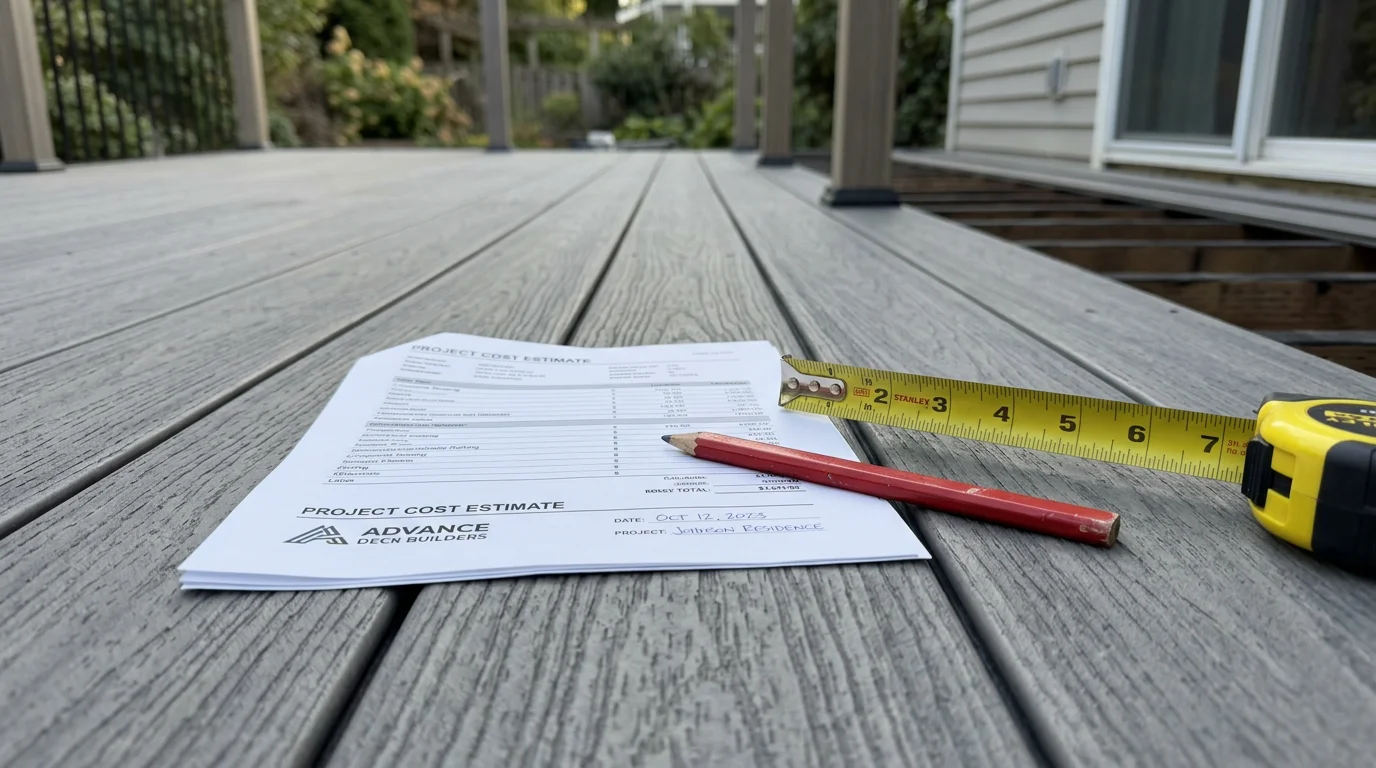
If you’re getting deck quotes in Kitchener, Waterloo, or Cambridge, you’ll often hear a builder mention “holdback” or “the Construction Act.” In Ontario, holdback is one of the reasons a *normal* deck payment schedule may not be “50% up front, 50% at the end.”
This guide explains (in plain English) what holdback generally means for a typical residential deck job, how it changes milestones, and what to put in writing so the project stays smooth. (Not legal advice—confirm details for your situation.)
The short version: what holdback usually means (for decks)
On many Ontario construction projects, the payer can keep back a portion of the contract price as holdback for a period of time. Practically, that means:
🏗️ Planning a deck project?
Get a free manual project review, or visualize your dream deck with AI before requesting quotes.
- Your contractor may not expect to receive *all* of the contract value on “final day.”
- A good payment schedule often ends with a small final chunk that’s released after the relevant period/conditions.
- You can still structure the job so the builder has enough cashflow for materials and labour—without taking unnecessary risk.
If you want a “what’s normal?” baseline, start here:
- Deck deposits in Ontario (KWC): what’s normal + payment schedule examples
- What decks actually cost in Ontario (so you can structure milestones around realistic numbers)
A deck payment schedule that works with holdback (example milestones)
Every project is different, but in KWC a clean way to structure payments is around *visible, inspectable* progress:
1) Deposit to book (admin + engineering/permit drawings if applicable)
2) Footings / helical piles installed (and inspection if required)
3) Framing complete (ledger/beam/joists; inspection stage if applicable)
4) Decking + stairs installed
5) Railing + punch list
6) Holdback release (after the applicable period / conditions)
You don’t need to use these exact steps—what matters is that:
- each milestone is easy to verify on-site (even if you’re not a builder)
- the contractor isn’t financing the whole build for weeks
- you still keep enough leverage for the last 5–10% to ensure completion
Related reading that helps you sanity-check milestones:
- Deck framing inspection (KWC): what inspectors look for
- Deck stairs code basics in Ontario: rise/run/handrails (plain-English checklist)
- Glass deck railing code + permit checklist (Ontario/KWC)
Common KWC-specific reasons “final payment” isn’t the real end
In Kitchener–Waterloo–Cambridge, the timeline between “the deck looks done” and “everything is fully wrapped” can include:
- Inspection scheduling (especially in spring/summer peaks)
- Change orders when you discover surprises (older homes, rot behind siding, drainage issues)
- Railing lead times (glass/metal can lag framing)
- Weather delays (freeze–thaw, rain, and short daylight impact crew scheduling)
If your payment schedule ignores these realities, you’re more likely to end up in the annoying zone where:
- the contractor is waiting to get paid but still needs one more inspection/punch visit, or
- the homeowner feels stuck because the only remaining items are “small” but important.
More local context on permits/inspections:
- Do I need a permit to build a deck in Kitchener/Waterloo/Cambridge?
- What happens if your deck fails inspection in Ontario?
What to put in writing (so holdback doesn’t become a fight)
Whether you’re the homeowner or the contractor, a few lines in the contract prevent 90% of payment drama:
1) Define the milestones (with photos allowed)
Write milestones as deliverables, not vibes.
Good: “Framing complete (ledger/beam/joists installed; blocking at rim; hardware per plan).”
Better: “Framing complete + homeowner walkthrough; photos provided; inspection booked if required.”
2) Put change orders on a simple form
In KWC, change orders happen for predictable reasons:
- you discover drainage issues under an old deck
- you upgrade to composite last-minute
- the stair location moves because of a door threshold detail
A simple template that says “scope + price + schedule impact” keeps everyone sane.
3) Clarify who pulls permits and books inspections
Don’t assume.
- Who is responsible for the permit application?
- Who books inspections (and attends them)?
- What happens if the inspector requests a revision?
This matters a lot in Ontario because the city process is real work—especially when you’re also doing utility locates, scheduling trades, and coordinating material deliveries.
4) Specify the holdback handling
Holdback language should answer:
- What portion is treated as holdback in the schedule?
- What triggers “substantial completion” or the equivalent milestone you’re using?
- What’s the process and date range for release?
If you’re unsure, treat this section as a “confirm with your lawyer” item—don’t freestyle legal wording.
Red flags (homeowners and contractors should both avoid)
These patterns tend to cause disputes in Ontario deck guides projects:
- Huge up-front payments with no milestone definition
- “Final payment on completion” with no clarity on what “completion” means
- No plan for inspection delays (common during peak season in Kitchener/Waterloo/Cambridge)
- No written change order process
- No mention of holdback at all (then everyone is surprised later)
If you’re choosing a builder, this checklist helps you screen:
- Deck quote checklist (Kitchener–Waterloo): questions to ask
- Deck builder WSIB in Ontario: what to ask for
Local notes: KWC deck projects that tend to trigger payment schedule tweaks
A few “very KWC” patterns that affect scope/timeline (and therefore milestones):
- Walkouts and slopes (Cambridge and parts of Waterloo) → extra stairs, taller guard requirements, and more time on framing details
- Older homes (central Kitchener) → ledger attachment and flashing details can get more complex once siding comes off
- Tight lots + neighbor constraints → hand-carry material, staged deliveries, and slower builds
- Drainage and downspout routing → changes once you demo the old structure
- Winter/spring shoulder season → frost, mud, and wet lumber change sequencing
Related guides:
- Ledger board attachment: Ontario deck safety checklist
- Deck drainage under the deck: water management in Ontario
- Covered deck snow load in Ontario (engineer + permit checklist)
Get a deck quote (Kitchener–Waterloo–Cambridge)
If you’re trying to set a clean scope and payment schedule (including holdback) with a local builder, we can help you get quotes from deck contractors who actually work in Kitchener, Waterloo, and Cambridge.
- Get deck quotes: Start here
🎨 Not sure which material to pick?
Upload a photo of your backyard and see exactly how Trex, TimberTech, or cedar would look — free and instant.
FAQ: holdback + deck payments in Ontario
Is holdback always required on a deck project?
Not always, and details vary. Holdback rules depend on the specific contract and circumstances. If holdback is relevant for your project, your contractor will usually mention it early—if not, ask and confirm in writing.
Can I still use a normal milestone schedule?
Yes. Milestone schedules are usually the cleanest way to handle a deck build because the work is easy to inspect. The main change is that the schedule may include a small “holdback release” milestone after completion.
Does a permit or inspection change holdback?
Permits and inspections mostly affect timeline. In KWC, the inspection queue can extend the gap between “done” and “fully closed out,” so it’s smart to plan your final milestone(s) around that reality.
I’m a contractor—how do I explain this without sounding sketchy?
Lead with clarity: milestones, what the homeowner will see at each step, and what the holdback release timing is expected to be. When it’s documented, it reads as professional—because it is.
Upload a backyard photo and preview real decking materials with AI — free, instant, no sign-up.
Permits, costs, material comparisons, and questions to ask before requesting quotes — delivered to your inbox.