
Deck Inspection Checklist (Ontario, KWC): Pass First Try
A practical deck inspection checklist for Ontario (Kitchener/Waterloo/Cambridge). What inspectors look for at footing, framing, and final stages — plus common fail points and a printable list.
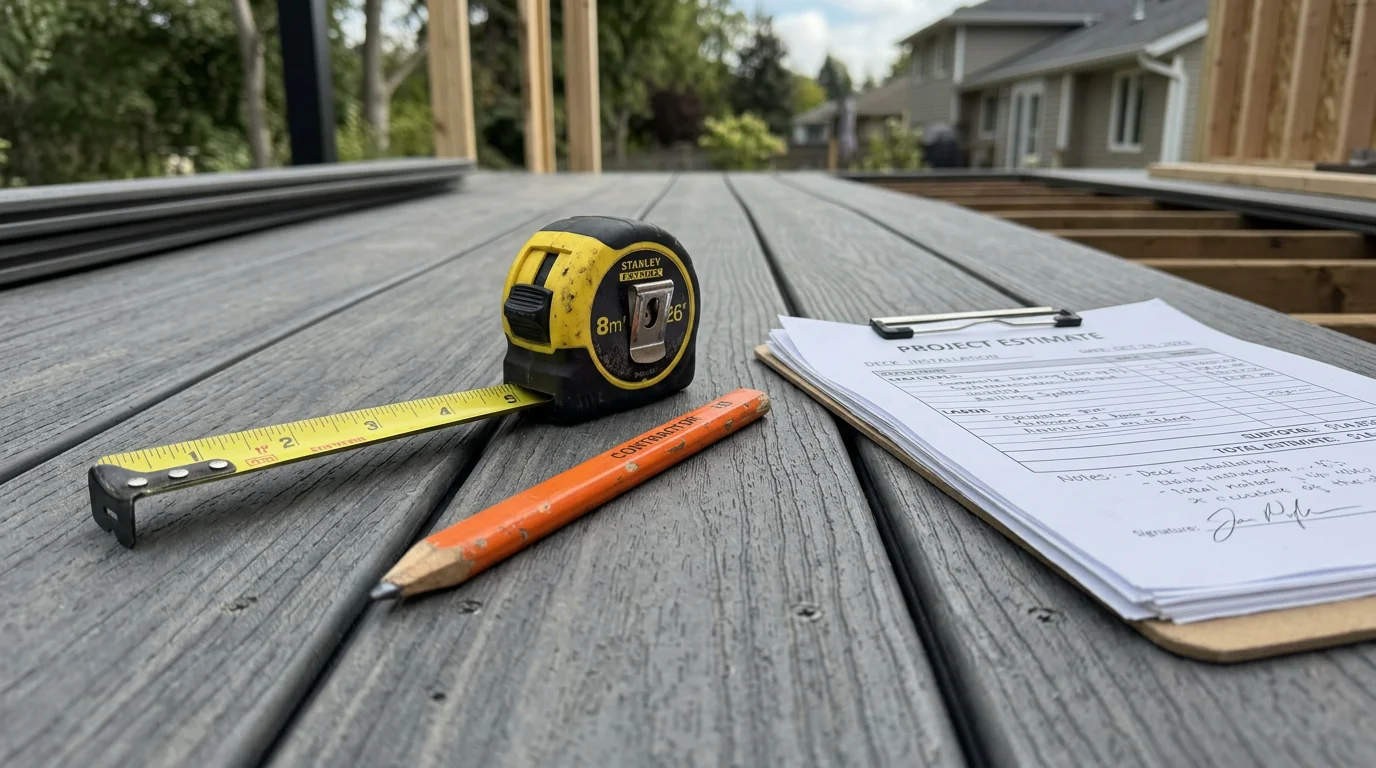
Failing a deck inspection in Ontario isn't just annoying—it stops your project cold, and re-inspections add to your overall deck project costs in Ontario. You can't pour concrete until footings pass. You can't deck until framing passes. And you can't close your permit until the final inspection passes.
In Kitchener, Waterloo, and Cambridge, inspectors will check that your work matches your approved permit drawings and meets the intent of the Ontario Building Code (OBC).
This guide is a practical checklist to reduce surprises. It is not legal or engineering advice. When in doubt, default to: *your approved drawings, manufacturer instructions, and your local inspector’s guidance.*
Need a pro to manage the inspections?
We connect you with KWC deck builders who handle the permit + inspection process end-to-end.
Get 3 Deck QuotesThe 3 common inspection stages
Most KWC deck projects involve these stages (your permit card will list what applies to your project):
🏗️ Planning a deck project?
Get a free manual project review, or visualize your dream deck with AI before requesting quotes.
1. Footing / foundation inspection: After digging (or piles installed), *before* concrete is poured or posts are set.
2. Framing inspection: After framing is built, *before* laying deck boards.
3. Final inspection: After deck surface, guards/railings, stairs, and landings are complete.
If you need a good “rules-of-thumb” by-city anchor for permits/bylaws, use this: /decks/blog/kitchener-vs-waterloo-vs-cambridge-deck-bylaws
---
1) Footing inspection checklist
Goal: Show the foundation matches the approved plans and is suitable for frost/soil conditions.
Critical checks (low-risk, inspector-aligned)
- [ ] Depth + bearing: Confirm holes/piles match the *depth and bearing details in your approved drawings* (frost depth varies by site/municipality and design). Measure and record before the inspector arrives.
- [ ] Diameter / pile size: Confirm the foundation element size matches the drawings.
- [ ] Base condition: Bottom of excavation is clean and stable (not loose fill). If you hit water/soft mud, don’t “hope it passes”—call the inspector/engineer for the remedy.
- [ ] Bell shape (if specified): If drawings call for a belled footing, confirm the bell dimensions are actually formed.
- [ ] Layout: Spacing and placement match your site plan. If anything drifted (property line constraints, utilities), pause and get it corrected *before* pouring.
Common fail points (and how to avoid them)
- Standing water / sludge: Pump out, clean to stable bearing, and document.
- Cave-in / loose debris: Re-dig and clean.
- “Close enough” depth: Don’t guess. If the drawings require a depth, hit it.
> Helical pile note: With helical piles, the “foundation inspection” is often a mix of site confirmation + paperwork (installer report/torque data) depending on the permit and municipality.
---
2) Framing inspection checklist
Goal: Show the structure is built as-approved, uses appropriate connectors, and won’t rot out at the house connection.
Critical checks (prioritize these)
- [ ] Approved drawings on-site: Inspectors will compare built conditions to the drawings.
- [ ] Ledger connection (if attached to the house):
- Uses *structural* fasteners/connectors (not generic deck screws).
- Fastener type + spacing follow the approved drawings/engineering and manufacturer specs.
- Ledger is installed on proper structure (not “sandwiched” over siding).
- [ ] Flashing + water management: Proper flashing is installed so water can’t run behind the ledger into the rim joist/wall.
- [ ] Joist hangers / connectors:
- Correct hanger model for the lumber size.
- Fasteners match the connector manufacturer’s requirements (type + length).
- Install all required fasteners (don’t mix in drywall screws / roofing nails).
- [ ] Beam-to-post bearing: Beam/post connection matches drawings (many designs require direct bearing on posts with approved caps/connectors).
- [ ] Post base detail: Wood is separated from concrete where required (approved post base / standoff detail).
- [ ] Blocking / bridging (if specified): Installed where drawings call for it (often at beam lines, mid-span, or guard post locations).
- [ ] Stair framing attachment: Stringers are attached using appropriate hardware per drawings/manufacturer instructions.
Visual fail points
- Using deck screws structurally: Swap to approved connector fasteners.
- Ledger installed over siding: Siding must be removed/managed so the ledger bears correctly and can be flashed.
- Improvised hardware: If it’s not in the drawings and not in manufacturer instructions, expect questions.
---
3) Final inspection checklist
Goal: Show the deck is safe for normal use: guards, stairs, handrails, landings, and finish hazards.
Critical checks (with safe framing)
- [ ] Guards/railings: Height, strength, and openings follow the approved drawings and OBC intent. (Rules vary with deck height and design.)
- [ ] Openings: Confirm guard openings are small enough to prevent a small child from passing through. A common rule used in many jurisdictions is the “sphere test” concept—verify the exact requirement for your project.
- [ ] Climbability: Some guard designs restrict horizontal elements that create easy “ladder” patterns. Confirm your guard design is acceptable before you build it.
- [ ] Stairs:
- Rise/run are consistent step-to-step (inspectors often fail stairs for inconsistency).
- Treads/risers/landings match the drawings.
- Any stair lighting/handrail requirements are met if applicable.
- [ ] Handrails (if required): Installed where needed, continuous where required, securely fastened, and of a graspable profile.
- [ ] Finish hazards: No protruding fasteners, sharp metal edges, trip lips, or loose boards.
Visual fail points
- Wobbly rail posts: Add proper blocking/hardware per drawings.
- Uneven top/bottom step: Fix stringers/landing details.
- “Open riser” issues: If your design requires risers or limits openings, install the required closures.
---
Printable “day-of” checklist
Copy/paste this into a doc and print it.
Pre-inspection prep
- [ ] Permit card posted as required (visible/accessible).
- [ ] Approved drawings printed and on site.
- [ ] Access unlocked (gate open); pets secured.
- [ ] Safe access for the inspector (ladder if needed).
1 hour before
- [ ] Re-measure key dimensions against the drawings (foundation depth, ledger details, guard/stair details).
- [ ] Connector fastener check: correct fasteners, correctly installed.
- [ ] Railing push test: posts feel rigid.
- [ ] Clean up: remove debris; expose items the inspector needs to see.
---
How to book your inspection (KWC)
Book ahead (municipal availability varies).
- Kitchener: 519-741-2433 or via the Kitchener building permits page
- Waterloo: 519-747-8700 or email building@waterloo.ca
- Cambridge: Cambridge Building Inspections
Need a deck builder who’s inspection-ready?
We work with top-rated KWC pros who build to plan and know what inspectors typically flag.
Get 3 Quotes From Vetted Builders🎨 Not sure which material to pick?
Upload a photo of your backyard and see exactly how Trex, TimberTech, or cedar would look — free and instant.
Related Articles
- Deck Footing Depth in Kitchener/Waterloo/Cambridge: Permit + Inspection Checklist
- Deck Framing Inspection in Kitchener-Waterloo-Cambridge: What Inspectors Look For (and How to Pass)
- Deck Quote Timeline (KWC): From First Call to Final Price
- Rebuild vs Resurface a Deck in Kitchener-Waterloo: How to Decide (With a Quick Inspection Checklist)
Upload a backyard photo and preview real decking materials with AI — free, instant, no sign-up.
Permits, costs, material comparisons, and questions to ask before requesting quotes — delivered to your inbox.