
Do You Need a Deck Permit in Michigan? Local Rules Explained
Navigating Michigan deck permits can be tricky. This guide breaks down when you need one, costs, and local rules to ensure your project is compliant.
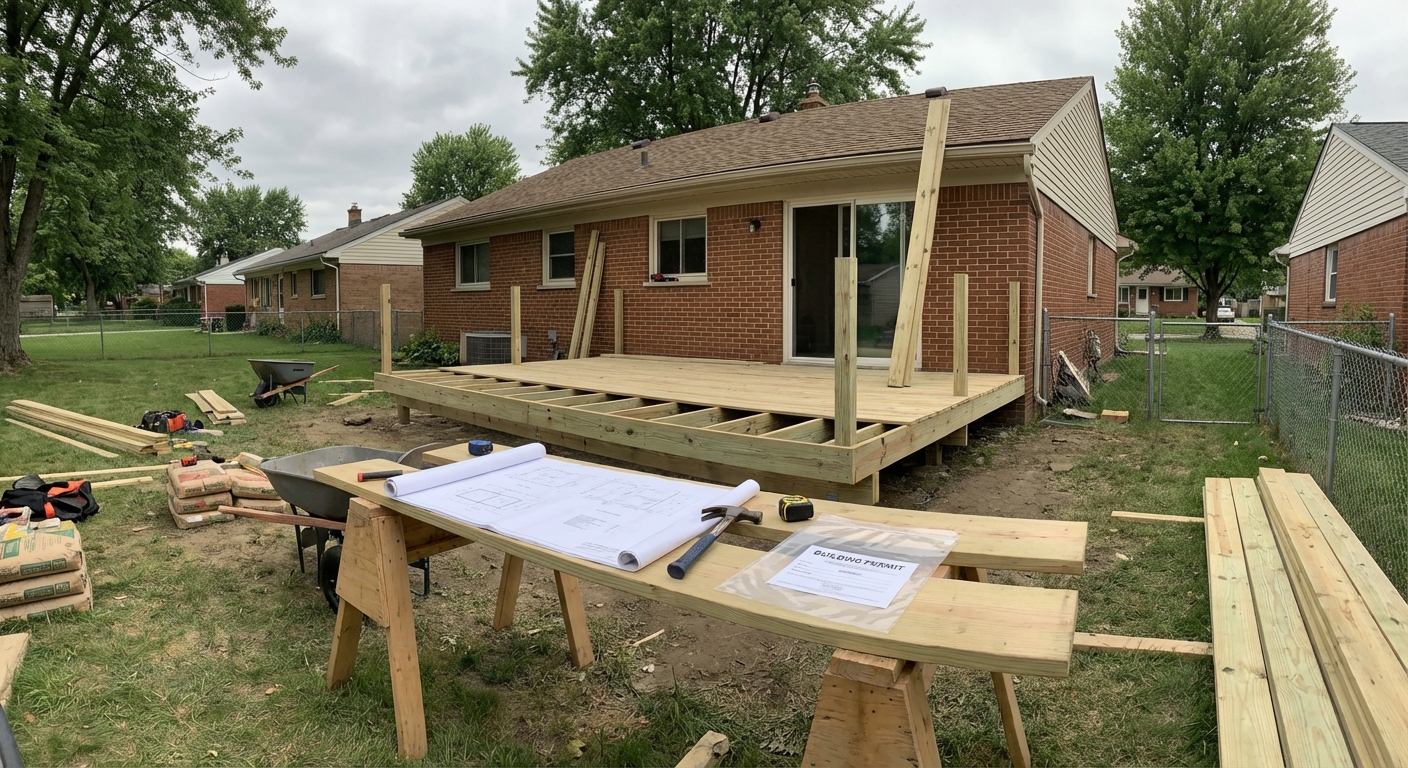
Are you planning to build a new deck in Michigan or renovate an existing one? Before you break ground, it’s crucial to understand whether you need a deck permit. Building without the proper permits can lead to fines, project delays, and even forced removal of your deck. This guide breaks down Michigan's deck permit requirements, typical costs, and local regulations to help you navigate the process smoothly.
📋 Tool Alert: Permit Checker
Do you really need a permit? Check the exact rules for your city or township.
Check Permits →When is a Deck Permit Required in Michigan?
In Michigan, the requirement for a deck permit hinges primarily on the deck's height and its attachment to your house. Most jurisdictions adhere to the Michigan Residential Code (MRC), which states that a permit is generally needed if:
🏗️ Planning a deck project?
Get a free manual project review, or visualize your dream deck with AI before requesting quotes.
- The deck is more than 30 inches above grade (ground level). This is the most common trigger for needing a permit.
- The deck is attached to your house. Even if the deck is less than 30 inches high, attachment usually necessitates a permit.
Think of it this way: if your deck is low-to-the-ground and freestanding (not connected to your house), you likely *won't* need a permit. However, any significant elevation or connection to your home will almost certainly require one.
It's important to understand that these are general guidelines. Local municipalities, like Detroit, Grand Rapids, Ann Arbor, and Traverse City, have their own specific interpretations and enforcement practices. To be absolutely sure, always check with your local building department before starting any work.
<!-- slot:after-intro -->
Michigan's Climate and Deck Building Considerations
Michigan's climate presents unique challenges for deck construction. Understanding these factors is crucial for a long-lasting and safe deck, and will influence permit considerations.
- Warm, Humid Summers: Michigan summers can be hot and humid, with temperatures reaching 80-90°F.
- Brutal Winters: Expect heavy snowfall, especially in Northern Michigan and the Upper Peninsula (UP), where annual snowfall can exceed 120 inches. Lake-effect snow significantly impacts areas like Grand Rapids, Muskegon, and Traverse City.
- Deep Frost Line: Southern Michigan has a frost line around 42 inches, while northern areas and the UP can see frost lines deeper than 48 inches. This dictates the necessary depth for deck footings.
- Moisture: The combination of high humidity and freeze-thaw cycles means deck boards will expand and contract significantly. Composite decking handles these fluctuations better than wood.
- Pests: Carpenter ants and termites are prevalent in southern Michigan. Ground-contact lumber requires proper treatment to prevent infestation.
- Lakefront Regulations: If you're building near a lake, be aware of additional setback requirements and environmental regulations from agencies like the DEQ/EGLE.
Because of Michigan's harsh winters and the potential for significant snow loads, especially in lake-effect zones, covered decks and pergolas require careful consideration during the permitting process. Structural integrity to withstand heavy snow is a key concern for building inspectors.
The Michigan Residential Code (MRC) and Deck Construction
The Michigan Residential Code (MRC) serves as the baseline for deck construction standards throughout the state. Local municipalities enforce these codes through their building departments. The MRC covers aspects such as:
- Footing Depth and Size: Ensures adequate support based on soil conditions and frost line.
- Post and Beam Sizing: Specifies minimum dimensions for structural members based on deck size and load.
- Joist Spacing and Span: Dictates how closely joists must be spaced and how far they can span without additional support.
- Guardrail Height and Spacing: Mandates minimum guardrail heights (typically 36 inches) and maximum spacing between balusters (typically 4 inches) to prevent falls.
- Stair Construction: Regulates riser height, tread depth, and handrail requirements for stairs.
When applying for a deck permit, you'll typically need to submit detailed plans that demonstrate compliance with the MRC. These plans should include dimensions, materials, and construction methods.
Deck Permit Costs in Michigan
The cost of a deck permit in Michigan varies depending on the municipality and the complexity of the project. Expect to pay anywhere from $75 to $400. Larger cities with more stringent review processes, such as Detroit, tend to have higher permit fees. Suburban areas generally have moderate costs.
Here's a general idea of what you can expect:
- Small, simple decks (under 200 sq ft): $75 - $150
- Medium-sized decks (200-400 sq ft): $150 - $300
- Large or complex decks (over 400 sq ft, with features like stairs or multiple levels): $300 - $400+
Keep in mind that this is just the permit fee itself. It doesn't include the cost of the deck materials, labor, or design services. Speaking of costs, the average deck costs in Michigan are as follows: pressure-treated $22-40/sqft, composite $40-70/sqft, cedar $30-50/sqft, and Trex $45-75/sqft installed.
Local Deck Permit Regulations: A City-by-City Look
While the MRC provides a statewide framework, each municipality in Michigan has its own building department and may have specific regulations or interpretations. Here's a brief overview of some major cities:
- Detroit: The Buildings, Safety Engineering, and Environmental Department (BSEED) handles permits. Be prepared for a potentially lengthy review process. Older homes may require structural verification. Detroit Deck Permit: BSEED Requirements, Costs & Process
- Grand Rapids: Grand Rapids is experiencing a growing housing market. The city has a strong contractor market and many craftsman-style homes. The city also has several historic West Michigan Dutch heritage neighborhoods. Best Deck Builders in Grand Rapids: West Michigan Guide for 2026
- Ann Arbor: Ann Arbor's historic districts have additional review requirements. As a university town, expect seasonal demand spikes for contractors. Ann Arbor tends to be a higher-end market. Best Deck Builders in Ann Arbor, MI: Local Guide
- Traverse City: A popular resort and vacation home destination, Traverse City often sees elevated decks with lake views. Cedar is a preferred material for its natural look. Best Deck Builders in Traverse City, MI: Northern Michigan Guide
Always contact your local building department directly to confirm the specific requirements for your project. Don't rely solely on general information found online.
Steps to Obtain a Deck Permit in Michigan
Here's a general outline of the steps involved in obtaining a deck permit in Michigan:
1. Design Your Deck: Create detailed plans showing the dimensions, materials, and construction methods. Use PaperPlan (paperplan.app) to visualize your deck with PaperPlan design with different materials and layouts before committing to a contractor.
2. Gather Required Documents: This typically includes site plans, construction drawings, and a permit application form.
3. Submit Your Application: Submit the completed application and supporting documents to your local building department.
4. Pay the Permit Fee: Pay the required fee, which varies depending on the municipality and project size.
5. Wait for Approval: The building department will review your application to ensure compliance with the MRC and local regulations. This process can take several weeks.
6. Schedule Inspections: Once your permit is approved, you'll need to schedule inspections at various stages of construction, such as after the footings are poured and after the deck is completed.
<!-- slot:mid-content -->
Potential Problems and How to Avoid Them
Navigating the deck permit process can sometimes be challenging. Here are some common pitfalls and how to avoid them:
- Incomplete or Inaccurate Plans: Ensure your plans are detailed and accurate. Errors or omissions can lead to delays or rejection of your application.
- Failure to Meet Code Requirements: Familiarize yourself with the MRC and local regulations. Non-compliance can result in costly rework.
- Starting Work Without a Permit: This can lead to fines, stop-work orders, and even forced removal of your deck. Always obtain a permit before starting any construction.
- Ignoring Setback Requirements: Be aware of property line setbacks and any easements that may affect your deck's location.
- Skipping Inspections: Schedule and pass all required inspections to ensure your deck meets safety standards.
Finding a Qualified Deck Builder in Michigan
Choosing the right contractor can significantly simplify the deck permit process. A reputable deck builder will be familiar with local regulations and can help you prepare the necessary plans and documentation. They can also handle the permit application process on your behalf.
When selecting a deck builder, consider the following:
- Licensing and Insurance: Ensure the contractor is properly licensed and insured.
- Experience: Look for a contractor with a proven track record of building decks in your area.
- References: Ask for references from previous clients and check online reviews.
- Communication: Choose a contractor who is responsive, communicative, and willing to answer your questions.
- Cost Estimates: Obtain multiple cost estimates and compare them carefully. Don't automatically choose the lowest bid, as it may indicate lower quality materials or workmanship.
Michigan experiences moderate-to-low construction costs compared to coastal states, but Metro Detroit and Ann Arbor trend higher. However, finding a licensed and insured contractor is always worth the investment.
Best Time to Build a Deck in Michigan
The best months to build a deck in Michigan are typically May through October. The ground is usually frozen from November to April in most parts of the state, making it difficult to dig footings. Starting your project in the spring allows ample time for construction before winter arrives.
Keep in mind that demand for deck builders is often highest during the spring and summer months. It's a good idea to book your contractor well in advance to secure your preferred start date.
<!-- slot:before-faq -->
Building a deck in Michigan can significantly enhance your outdoor living space. By understanding the permit requirements, building codes, and local regulations, you can ensure a smooth and successful project. Remember to always check with your local building department, hire a qualified contractor, and plan your project carefully.
<!-- slot:end -->
🎨 Not sure which material to pick?
Upload a photo of your backyard and see exactly how Trex, TimberTech, or cedar would look — free and instant.
Frequently Asked Questions
Do I need a permit to replace deck boards in Michigan?
Generally, you *don't* need a permit to simply replace deck boards, as long as you're not altering the deck's structure or increasing its size. However, if you're replacing structural components like joists or posts, or if you're making significant changes to the deck's design, a permit may be required. Always check with your local building department to be sure.
What happens if I build a deck without a permit in Michigan?
Building a deck without a permit can lead to several negative consequences. You may be subject to fines, stop-work orders, and even forced removal of the deck. Additionally, if you ever decide to sell your home, the unpermitted deck could create problems during the inspection process.
How long is a deck permit valid in Michigan?
The validity period of a deck permit varies by municipality. Typically, permits are valid for 6 months to 1 year. If your project takes longer to complete, you may need to apply for an extension.
Can I build my own deck in Michigan?
Yes, you can build your own deck in Michigan, provided you obtain the necessary permits and follow all applicable building codes. However, it's important to have the necessary skills and knowledge to ensure the deck is built safely and correctly. If you're not comfortable with the construction process, it's best to hire a qualified contractor.
What inspections are required for a deck in Michigan?
The specific inspections required for a deck may vary depending on the municipality, but typically include:
- Footing Inspection: After the footings are dug and before concrete is poured.
- Framing Inspection: After the deck framing is complete but before the decking is installed.
- Final Inspection: After the deck is fully completed.
Make sure to schedule these inspections with your local building department.
How Much Does a Deck Cost in Michigan? Complete 2026 Guide
Michigan Deck Building Codes: Key Requirements for 2026
Best Deck Builders in Detroit: How to Find the Right Contractor
📋 Planning a deck project?
Get a free manual project review from our team — no obligation, no spam.
Get Free Project Review →Upload a backyard photo and preview real decking materials with AI — free, instant, no sign-up.
Permits, costs, material comparisons, and questions to ask before requesting quotes — delivered to your inbox.