
Deck Staining Tips for Ohio Weather: Timing & Products
Ohio's weather demands tough deck stain. Learn the best time to stain your deck & the right products for Columbus, Cleveland, Cincinnati & beyond.
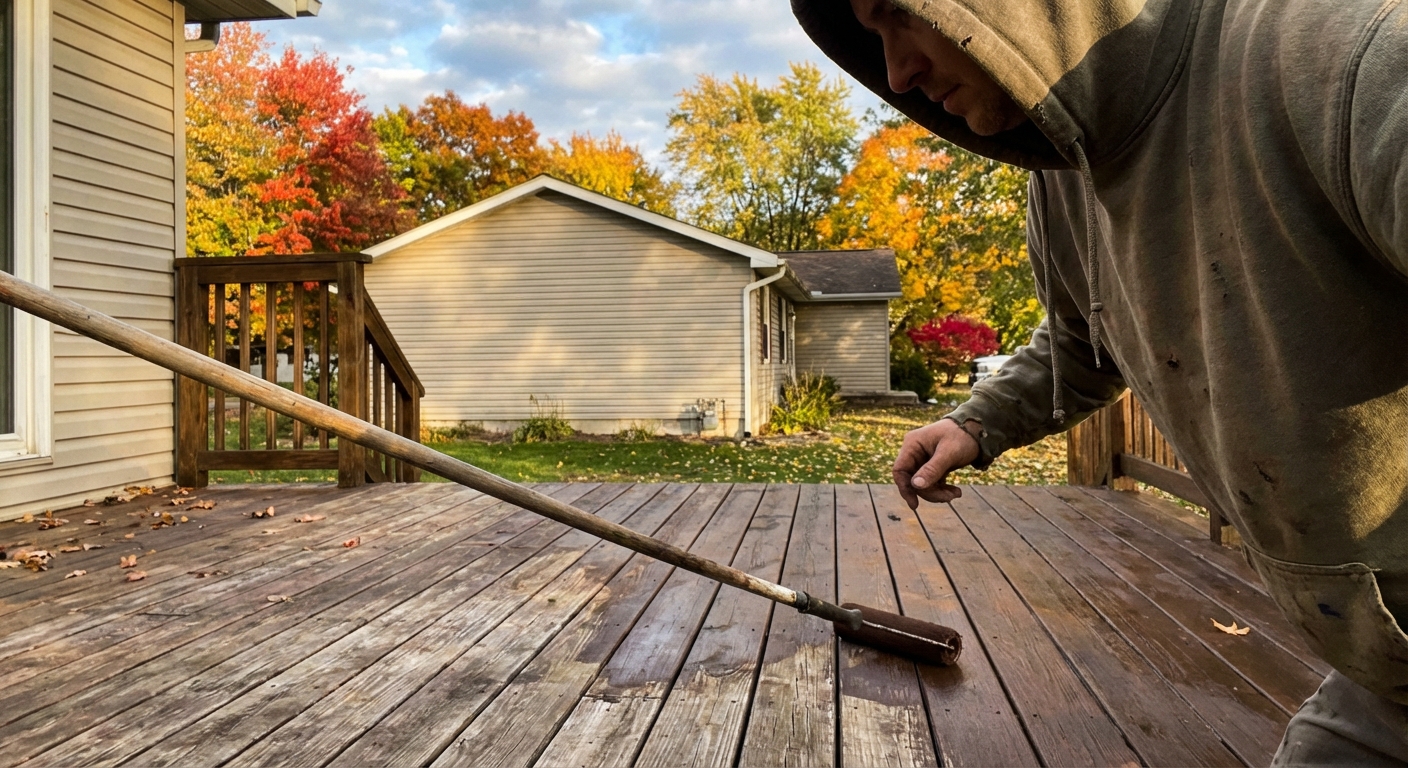
Are you tired of seeing your Ohio deck fade, crack, or warp due to the relentless weather? You're not alone. Ohio's hot, humid summers and cold, snowy winters take a toll on outdoor wood. Properly staining your deck is crucial for protecting your investment and keeping it looking its best for years to come. This guide will walk you through the best timing and products for deck staining, tailored specifically for Ohio's unique climate, whether you're in the Columbus metro area, Cleveland, Cincinnati, Dayton, or Toledo.
📐 Tool Alert: Deck Stair Calculator
Calculate rise, run, and stringer cuts while ensuring IRC/OBC code compliance.
Calculate Stairs →Timing is Everything: When to Stain Your Ohio Deck
Looking for more regional information? Check out our Ohio State Decking Hub.
🏗️ Planning a deck project?
Get a free manual project review, or visualize your dream deck with AI before requesting quotes.
Ohio's weather windows for deck staining are limited but crucial. Aim for these optimal times:
- Spring (April-June): After the last frost and before the summer heat sets in, spring offers ideal temperatures and lower humidity.
- Fall (September-October): As temperatures cool and humidity drops, fall provides another excellent opportunity.
Avoid staining during the hottest parts of summer (July and August) when the stain can dry too quickly, leading to uneven coverage and potential blistering. Also, avoid staining when temperatures are below 50°F or when rain is in the forecast within 24-48 hours.
Consider these regional nuances:
- Cleveland/NE Ohio: Lake-effect snow means shorter staining windows. Prioritize early spring or early fall.
- Cincinnati/SW Ohio: Moderate termite pressure means incorporating termite-resistant stain additives can be beneficial.
- Columbus: With rapid suburban growth, check your HOA guidelines. Many HOAs in Dublin, Westerville, and Powell have strict rules about deck colors and materials.
- Dayton/Miami Valley: With a strong DIY culture, many homeowners tackle deck staining themselves. Proper prep is key.
<!-- slot:after-intro -->
Preparing Your Deck for Staining: The Foundation for Success
Before you even think about stain, meticulous preparation is key.
1. Cleaning: Thoroughly clean your deck to remove dirt, mildew, and old stain. Use a deck cleaner specifically designed for your wood type. A pressure washer can be helpful, but be careful not to damage the wood, especially on softer woods like cedar.
2. Sanding: Sanding removes any remaining finish and opens the wood pores, allowing the stain to penetrate properly. Focus on rough spots and areas where the old finish is peeling.
3. Repairs: Now's the time to address any necessary repairs. Replace damaged boards, tighten loose screws, and ensure the deck is structurally sound. Remember that decks over 30 inches above grade or attached to your dwelling require permits in most Ohio cities, per the Ohio Residential Code (based on the IRC).
4. Drying: Allow the deck to dry completely for at least 24-48 hours after cleaning and before staining. Moisture trapped in the wood will prevent the stain from adhering correctly.
5. Taping and Protection: Protect nearby surfaces (siding, railings, plants) with painter's tape and drop cloths.
Choosing the Right Stain for Ohio's Climate
Selecting the right stain is crucial for long-lasting protection. Consider these factors:
- Type of Wood: Different wood types require different stains. Pressure-treated pine, cedar, and redwood all have unique characteristics.
- Desired Look: Do you want a transparent, semi-transparent, semi-solid, or solid stain? Transparent stains enhance the natural wood grain, while solid stains provide the most protection and color coverage.
- Climate Considerations: Ohio's climate demands a stain that can withstand moisture, UV rays, and temperature fluctuations.
Here's a breakdown of stain types:
- Oil-Based Stains: Penetrate the wood deeply, providing excellent protection against moisture. They're generally more durable than water-based stains, but can be more prone to mildew growth.
- Water-Based Stains: Easier to clean up and less prone to mildew. They also tend to be more environmentally friendly. Newer water-based formulas offer excellent durability.
- Hybrid Stains: Combine the benefits of both oil- and water-based stains, offering deep penetration, durability, and easy cleanup.
For Ohio, consider these stain recommendations based on region:
- Cleveland/NE Ohio: A high-quality, water-repellent stain is essential to combat lake-effect moisture. Consider a stain with mildewcide additives. Many homeowners in this region opt for composite decking to avoid these issues entirely.
- Cincinnati/SW Ohio: Due to moderate termite pressure, a stain with added termite resistance can provide extra protection.
- Toledo/NW Ohio: Similar to Cleveland, prioritize moisture resistance but the conditions are generally milder.
Stain Recommendations by Wood Type:
| Wood Type | Stain Type Recommendation |
| ------------------ | ------------------------------------------------------------------------------------------------- |
| Pressure-Treated | Oil-based or hybrid stain designed for pressure-treated lumber. Allow the wood to dry thoroughly before staining. |
| Cedar | Oil-based or water-based stain with UV protection to prevent fading. |
| Redwood | Oil-based or water-based stain that enhances the natural color of the wood. |
Understanding Stain Opacity:
- Transparent: Shows the most wood grain, offers the least UV protection.
- Semi-Transparent: Shows some wood grain, offers moderate UV protection. A good balance for aesthetics and protection.
- Semi-Solid: Shows minimal wood grain, offers good UV protection and color.
- Solid: Shows no wood grain, offers the best UV protection and color, similar to paint.
Popular Stain Brands for Ohio Decks:
- Thompson's WaterSeal: Widely available and affordable, but requires more frequent reapplication.
- Sherwin-Williams Deckscapes: High-quality stains with excellent color options and durability.
- Ready Seal: Oil-based stain known for its easy application and natural look.
- Benjamin Moore Arborcoat: Water-based stain with excellent color retention and durability.
<!-- slot:mid-content -->
The Staining Process: Step-by-Step Guide
1. Test the Stain: Before you start, test the stain in an inconspicuous area to ensure you like the color and finish.
2. Apply the Stain: Use a high-quality brush, roller, or sprayer to apply the stain evenly. Work in manageable sections, following the wood grain. Avoid applying too much stain, as this can lead to a sticky or uneven finish.
3. Back-Brushing: If using a sprayer, back-brush the stain immediately after application to ensure proper penetration and even coverage.
4. Second Coat (Optional): For added protection and color intensity, apply a second coat of stain after the first coat has dried completely.
5. Drying Time: Allow the stain to dry completely according to the manufacturer's instructions before using the deck. This typically takes 24-48 hours.
Cost Considerations for Your Ohio Deck
Ohio offers relatively affordable construction costs compared to coastal states. Here's a breakdown of average deck costs in Ohio:
| Material | Cost per Square Foot (Installed) |
| ----------------- | -------------------------------- |
| Pressure-Treated | $22-40 |
| Composite | $40-70 |
| Cedar | $30-50 |
| Trex | $45-75 |
Remember that these are just averages. Your actual cost will depend on the size and complexity of your deck, the materials you choose, and the contractor you hire. The cost of staining supplies will typically add another $50-200, depending on the size of your deck and the type of stain you choose. Don't forget to factor in permit costs, which typically range from $75-400 in most Ohio cities.
Use PaperPlan (paperplan.app) to visualize your deck with PaperPlan design with different materials and layouts before committing to a contractor. This can help you optimize your budget and make informed decisions about your deck project.
Finding a Qualified Deck Contractor in Ohio
If you're not comfortable staining your deck yourself, consider hiring a qualified deck contractor. Look for contractors with experience in your area and a good reputation. Get multiple quotes and check references before making a decision. Deck builders in Toledo, Akron, and Canton are readily available and competitive.
<!-- slot:before-faq -->
Maintaining Your Stained Deck: Long-Term Care
Regular maintenance is key to extending the life of your stained deck.
- Clean Regularly: Clean your deck at least twice a year to remove dirt, mildew, and debris.
- Inspect for Damage: Regularly inspect your deck for signs of damage, such as cracks, splinters, or loose boards.
- Reapply Stain: Reapply stain every 2-3 years, or as needed, to maintain protection and color.
Consider reading more about Ohio Deck Maintenance by Season: Year-Round Care Guide and Protecting Your Ohio Deck from Snow and Ice Damage. Also consider if a Screened Porch and Deck Combos in Ohio: Extended Season Living would be a good fit for your lifestyle.
<!-- slot:end -->
🎨 Not sure which material to pick?
Upload a photo of your backyard and see exactly how Trex, TimberTech, or cedar would look — free and instant.
Frequently Asked Questions
What is the best time of day to stain my deck in Ohio?
The best time to stain your deck is in the morning or late afternoon when the sun isn't directly overhead. This will help prevent the stain from drying too quickly and ensure even coverage. Avoid staining during the hottest part of the day.
How long should I wait to stain a new pressure-treated deck?
It's crucial to let pressure-treated lumber dry thoroughly before staining. This can take several weeks or even months, depending on the climate and the treatment process. A good rule of thumb is to wait until the wood is no longer releasing water when you cut into it. Check the manufacturer's recommendations for specific drying times.
Can I stain my deck if it's going to rain tomorrow?
No, you should avoid staining your deck if rain is in the forecast within 24-48 hours. Rain can wash away the stain or prevent it from adhering properly.
How do I know if my deck needs to be restained?
Signs that your deck needs to be restained include fading color, water beading poorly, cracking or peeling finish, and visible wood damage. If you notice any of these issues, it's time to restain your deck to protect it from further damage.
What about DIY vs. Hiring a Pro?
If you're comfortable with DIY projects and have the time and tools, staining a deck yourself can save money. However, if you're unsure about the process or lack the necessary equipment, hiring a professional deck contractor is a good option. They have the experience and expertise to ensure a high-quality finish and can save you time and hassle. Consider looking at How to Build a Deck in Ohio: DIY Guide with Local Rules to see if DIY deck building is something for you. Also see Deck Design Ideas for Ohio Homes: Inspiration for 2026 for design inspiration.
📋 Planning a deck project?
Get a free manual project review from our team — no obligation, no spam.
Get Free Project Review →Upload a backyard photo and preview real decking materials with AI — free, instant, no sign-up.
Permits, costs, material comparisons, and questions to ask before requesting quotes — delivered to your inbox.