
DIY Floating Deck in Texas (2026)
Build a simple, affordable floating deck in Texas! This guide covers materials, permits, and Texas-specific tips for your DIY project.
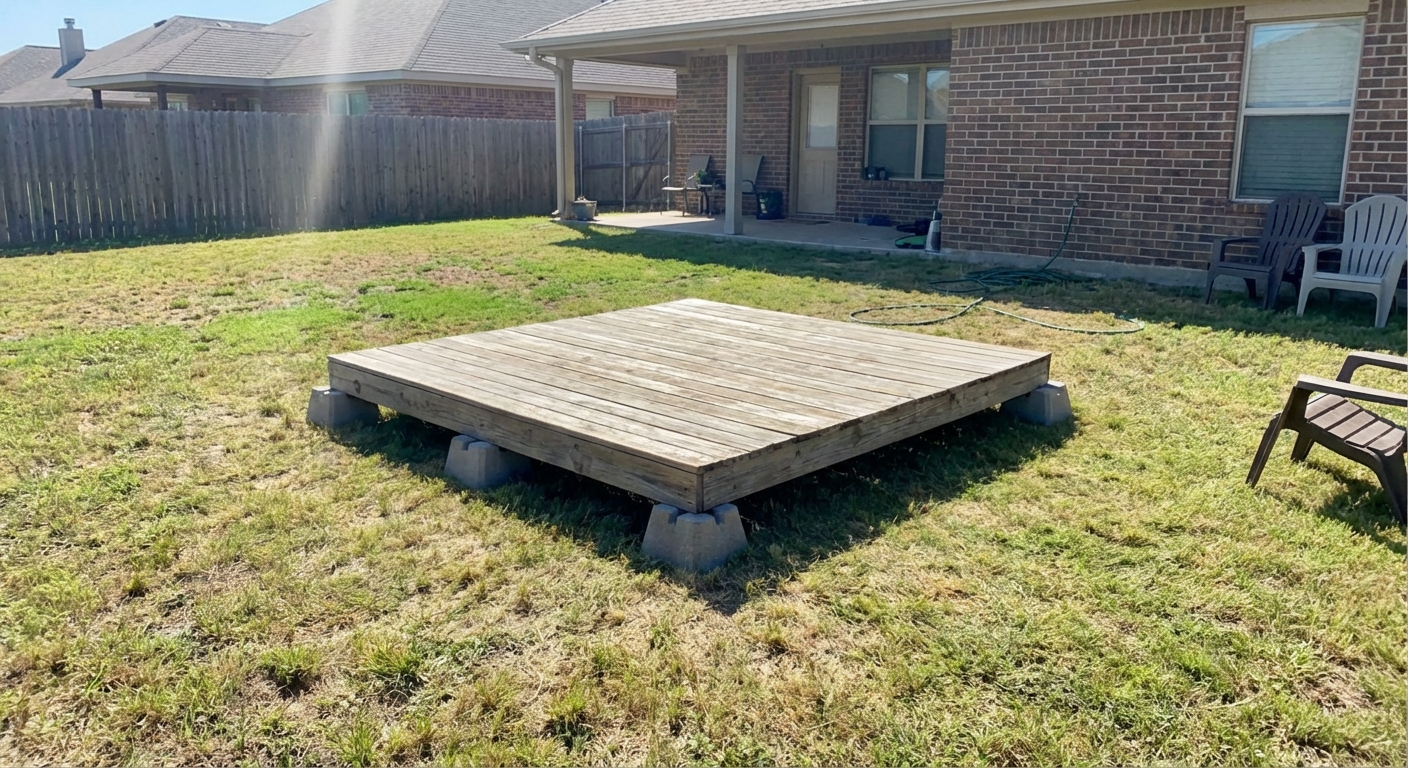
Want to add a deck to your Texas home without breaking the bank or committing to a complex construction project? A floating deck might be the perfect solution. This guide provides a step-by-step approach to building a DIY floating deck, tailored for Texas homeowners like you. Because Texas has no state income tax, you might find yourself with more funds available for home improvement projects!
📐 Tool Alert: Deck Stair Calculator
Calculate rise, run, and stringer cuts while ensuring IRC/OBC code compliance.
Calculate Stairs →What is a Floating Deck?
Looking for more regional information? Check out our Texas State Decking Hub.
🏗️ Planning a deck project?
Get a free manual project review, or visualize your dream deck with AI before requesting quotes.
A floating deck, also called a freestanding deck, isn't attached to your house. Instead, it rests on a level base, making it easier and faster to build than a traditional attached deck. This type of deck is ideal for creating a patio-like space in your backyard, especially if you're looking for a weekend project.
<!-- slot:after-intro -->
Planning Your Texas Floating Deck
Before you start buying materials and swinging a hammer, careful planning is crucial, especially considering the Texas climate.
Design and Size
Think about how you'll use your deck. Will it be for grilling, relaxing, or entertaining? This will influence the size and shape. Consider the available space in your yard and how the deck will integrate with your landscaping.
Remember, most Texas cities require permits for decks over 200 square feet or 30 inches above grade. Check your local regulations *before* starting construction. Here's a quick rundown of permit specifics in major Texas cities:
- Houston: No zoning, but you need permits from the City of Houston Permitting Center. Houston Deck Permit: Requirements, Costs & How to Apply
- Dallas: Permits are required through Dallas Development Services, costing roughly $200-500. Dallas Deck Permit Guide: What You Need Before Building
- Austin: Expect a potentially slow permitting process (8-12 weeks) through Austin Development Services. Austin Deck Permit: Everything Homeowners Need to Know
- San Antonio: Permits are processed relatively quickly through the Development Services Dept. San Antonio Deck Permit: Rules, Fees & Process
Choosing the Right Materials
Texas weather is tough. Summers can reach 95-105°F, and the UV exposure is intense. Choose materials that can withstand these conditions.
- Pressure-Treated Lumber: This is a common and affordable option. It's treated to resist rot and insects, essential in many parts of Texas, especially the Gulf Coast where termites and moisture are concerns.
- Cedar: A naturally durable wood that's also beautiful. It's more expensive than pressure-treated lumber but resists insects and decay well. Cedar Deck Cost in Texas: Is It Worth the Premium?
- Composite Decking: This is a low-maintenance option made from recycled plastic and wood fibers. It resists fading, staining, and scratching. However, be aware that composite decking can get very hot in direct sunlight. Surface temperatures can exceed 150°F in the Texas summer. Consider lighter colors to mitigate this. Best Composite Decking for Texas Heat: Top Brands Compared
- Ipe: A very dense and durable hardwood. It's expensive but offers excellent resistance to the elements and insects.
To get a better sense of how different materials and layouts will look, use PaperPlan (paperplan.app) to visualize your deck with PaperPlan design. Experimenting with different materials virtually can save you time and money in the long run.
Cost Considerations
Building a floating deck can be significantly more affordable than a traditional deck. Here's a general cost comparison for installed decks in Texas (per square foot):
| Material | Cost (Installed) |
|-------------------|-------------------|
| Pressure-Treated | $25-45 |
| Cedar | $35-55 |
| Composite | $45-75 |
| Trex | $50-80 |
| Ipe | $60-100 |
Since you're doing it yourself, you'll save on labor costs. However, don't underestimate the cost of materials, tools, and permits (if required). How Much Does a Deck Cost in Texas? Complete 2026 Guide and Deck Cost Per Square Foot in Texas: 2026 Pricing Breakdown offer detailed cost breakdowns.
Building Your Texas Floating Deck: Step-by-Step
Here's a simplified guide to constructing your floating deck. Remember to consult local building codes and adjust the steps as needed for your specific design.
1. Prepare the Site
- Clear the area: Remove any grass, rocks, or debris.
- Level the ground: This is crucial for a stable deck. Use a shovel and level to create a flat surface. Consider using a layer of compacted gravel to improve drainage and prevent weed growth.
- Weed Barrier: Lay down a weed barrier fabric to prevent weeds from growing up through your deck.
2. Create the Base
Since Texas has a relatively shallow frost line (6-12 inches in most areas compared to 36-48 inches in northern states), you can often use concrete pavers or blocks as your base.
- Position the pavers: Place the pavers or blocks according to your design, ensuring they are evenly spaced and level. These will support the deck frame.
- Adjust as needed: Use a level to check the height of each paver and add or remove soil to ensure they are all at the same level.
3. Build the Frame
The frame is the foundation of your deck.
- Cut the lumber: Cut the lumber to the required lengths for the perimeter and internal supports. Use pressure-treated lumber for the frame.
- Assemble the frame: Use screws or nails to assemble the frame. Ensure the corners are square.
- Add internal supports: Add joists (typically spaced 16 inches on center) to provide additional support for the decking.
4. Install the Decking
- Cut the decking: Cut the decking boards to the required length.
- Attach the decking: Use screws or hidden fasteners to attach the decking boards to the frame. Leave a small gap (1/8-1/4 inch) between boards to allow for expansion and contraction, especially important with temperature swings in Texas.
- Stagger the seams: Stagger the seams of the decking boards for a more visually appealing and structurally sound deck.
5. Finishing Touches
- Sand the edges: Sand any rough edges or splinters.
- Apply a sealant or stain: Protect your deck from the elements by applying a sealant or stain. Choose a product that's designed for exterior use and specifically formulated to withstand Texas's harsh climate.
<!-- slot:mid-content -->
Texas-Specific Considerations
Building a deck in Texas requires some specific considerations:
- Heat: As mentioned earlier, composite decking can get extremely hot. Consider using lighter colors or installing shade structures like pergolas.
- Sun: UV exposure is intense. Choose materials and finishes that are UV-resistant.
- Insects: Termites are a major concern, especially in coastal areas like Houston. Use pressure-treated lumber and consider soil treatments to prevent infestations.
- Moisture: High humidity can lead to mold and mildew growth. Ensure proper drainage and ventilation under your deck.
- Permits: Don't skip this step! Building without a permit can result in fines and require you to tear down your deck. Do You Need a Deck Permit in Texas? State & City Rules Explained and Texas Deck Building Codes: Key Requirements for 2026 provide more information on regulations.
Popular Texas Deck Features
Texans love to enjoy the outdoors, and their decks often reflect this:
- Covered Decks: Provide shade and protection from the elements, extending the usability of your deck.
- Outdoor Kitchens: Perfect for grilling and entertaining.
- Pool Decks: Create a seamless transition between your pool and outdoor living space.
- Shade Structures: Pergolas, awnings, and umbrellas can provide much-needed relief from the Texas sun.
When to Build
The best months to build a deck in Texas are typically October through April. This avoids the peak summer heat and allows you to enjoy your new deck during the milder months.
<!-- slot:before-faq -->
Finding Professional Help
While a floating deck is a manageable DIY project, sometimes it's best to call in the professionals. If you're unsure about any aspect of the construction process, or if you're planning a more complex deck design, consider hiring a qualified deck builder. A professional can ensure that your deck is built safely and to code.
<!-- slot:end -->
🎨 Not sure which material to pick?
Upload a photo of your backyard and see exactly how Trex, TimberTech, or cedar would look — free and instant.
Frequently Asked Questions
Do I need a permit to build a floating deck in Texas?
It depends on the size and height of your deck. Most Texas cities require permits for decks exceeding 200 square feet or 30 inches above grade. Check with your local building department to confirm the requirements in your area. Deck Height Regulations in Texas: When Permits & Railings Are Required
How long will it take to build a floating deck?
A simple floating deck can be completed in a weekend. However, larger or more complex decks may take longer. Proper planning and preparation can help speed up the process.
What's the best material for a floating deck in Texas?
The best material depends on your budget and preferences. Pressure-treated lumber is a cost-effective option, while cedar and composite decking offer greater durability and lower maintenance. Consider the Texas climate and choose a material that can withstand heat, sun, and moisture.
How do I prevent weeds from growing under my floating deck?
Lay down a weed barrier fabric before building your deck. This will prevent weeds from growing up through the gaps in the decking. You can also use gravel to create a well-draining base.
📋 Planning a deck project?
Get a free manual project review from our team — no obligation, no spam.
Get Free Project Review →Upload a backyard photo and preview real decking materials with AI — free, instant, no sign-up.
Permits, costs, material comparisons, and questions to ask before requesting quotes — delivered to your inbox.