
Deck Builders in Stanley Park (Kitchener) — Quotes + Permit Notes
Planning a deck in Stanley Park, Kitchener? Quick permit rule-of-thumb, planning checklist, and quote request.
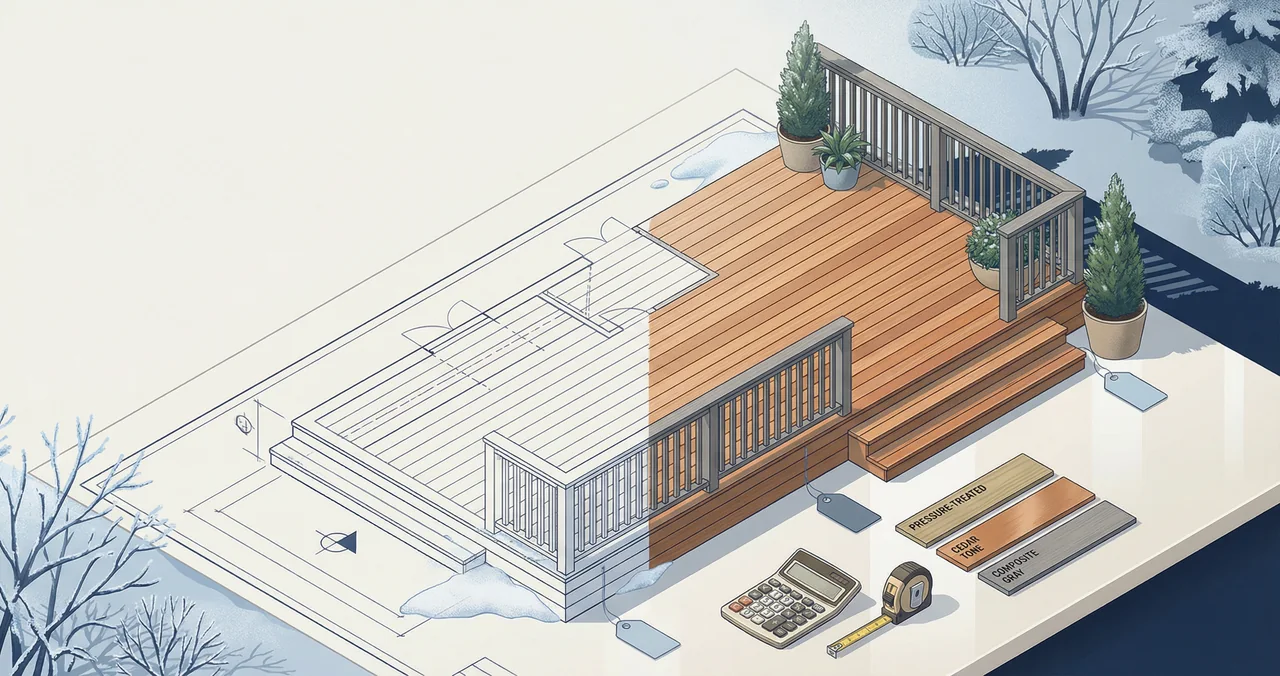
Stanley Park is a quiet, established Kitchener neighbourhood with a mix of post-war bungalows and split-level homes built primarily in the 1950s through 1970s. Many properties sit on generous lots with mature trees and relatively flat backyards, making them well-suited for ground-level or low-platform deck builds.
If you're planning a deck project here, you're likely replacing an original structure that's reached the end of its service life, or adding new outdoor space to a home that never had one. This page covers what Stanley Park homeowners should know about deck building, permits, and working with the characteristics of this mature neighbourhood.
Common Deck Projects in Stanley Park
Deck Replacements on Older Homes
Many Stanley Park homes still have their original wooden decks, now 30 to 50 years old. Rotted joists, failing ledger boards, and sagging deck boards are common issues. When replacing an existing deck, contractors often find rusted hardware, inadequate flashing, or footings that weren't installed to proper frost-line depth.
🏗️ Planning a deck project?
Get a free manual project review, or visualize your dream deck with AI before requesting quotes.
A full teardown allows you to inspect the rim joist and sill plate for water damage, install proper ledger flashing, and bring footings up to code (1.2 metres deep in Ontario). If the old deck was attached directly to brick or block without adequate fasteners, a rebuild is the time to fix it.
Ground-Level Decks and Walkouts
Bungalows and split-levels in Stanley Park often have walkout basement doors or grade-level access to the backyard. Ground-level decks—platforms less than 24 inches above grade—are popular here because they don't require railings, feel more integrated with the yard, and may avoid the permit process entirely if they're freestanding.
Even a low-profile deck benefits from proper drainage and gravel base prep to prevent settling and moisture issues. Confirm with your builder whether your specific project requires a permit, as attached decks typically do regardless of height.
Composite Conversions
Homeowners replacing old pressure-treated decks often upgrade to composite decking to eliminate annual staining and sealing. Composite materials like Trex, TimberTech, and Fiberon are widely stocked in the KWC area and handle Ontario freeze-thaw cycles well.
Expect to pay $65 to $95 per square foot installed for composite in 2026, compared to $45 to $65 for pressure-treated. The upfront premium is offset by lower maintenance over the deck's lifespan—no staining, less warping, and better colour retention.
Permit Requirements for Stanley Park
Stanley Park is part of the City of Kitchener, where most deck projects require a building permit:
- Attached decks: Always require a permit, regardless of size or height.
- Decks over 24 inches (0.6 metres) above grade: Require a permit, even if freestanding.
- Decks under 24 inches and freestanding: May not require a permit, but confirm with the city before starting work.
Permit applications are submitted through Kitchener's building department. You'll need a site plan showing setbacks (typically 1.2 metres from side lot lines), deck dimensions, and structural details for elevated or attached structures.
Most deck permits are approved within two to four weeks. The city will inspect footings before concrete is poured and conduct a final inspection before issuing completion approval. Budget $150 to $400 for permit fees depending on project scope.
Practical Considerations for Stanley Park
Lot Sizes and Setbacks
Stanley Park homes typically sit on larger lots than newer Kitchener subdivisions, giving you more flexibility for deck size and placement. You'll still need to respect setback requirements—usually 1.2 metres from side property lines—and avoid encroaching on utility easements.
Check your property survey or visit the city's planning office to confirm lot lines before finalizing your deck layout. Older properties sometimes have informal boundary markers (hedges, old fences) that don't match the legal survey.
Mature Trees and Root Zones
Many Stanley Park backyards have mature maples, oaks, and spruce trees. Digging footings near large trees can damage root systems and destabilize the tree. Most arborists recommend keeping footings at least 1.5 to 2 metres from the trunk, more for larger specimens.
If your planned deck location conflicts with tree roots, consider a freestanding deck on helical piles or adjustable deck blocks, which minimize excavation. Alternatively, shift the deck footprint or design around the tree.
Access for Materials and Equipment
Most Stanley Park streets are easily accessible for material deliveries and equipment, but narrow side yards on some lots can complicate access to the backyard. If your builder needs to carry lumber and tools through the house or navigate a tight gate, mention this when requesting quotes—it can affect labour costs and timeline.
Getting Quotes for Your Stanley Park Deck
When requesting quotes, provide details on deck size, material preference (pressure-treated, cedar, or composite), and whether you're replacing an existing structure. Ask contractors whether they'll inspect and repair the ledger attachment and rim joist if you're rebuilding.
Get at least three quotes to compare pricing and scope of work. Typical installed costs in Kitchener for 2026:
- Pressure-treated: $45–$65/sqft
- Composite: $65–$95/sqft
- Cedar: $55–$80/sqft
Quotes should include permits, materials, labour, waste removal, and any structural repairs. Clarify whether railings, stairs, and post caps are included or priced separately.
🎨 Not sure which material to pick?
Upload a photo of your backyard and see exactly how Trex, TimberTech, or cedar would look — free and instant.
Helpful Links
- Request deck quotes
- Deck Permits Kitchener 24 Inch Rule
- Deck Cost in Kitchener 2026
- Composite vs Wood Decking Ontario
- Deck Builders Kitchener
Upload a backyard photo and preview real decking materials with AI — free, instant, no sign-up.
Permits, costs, material comparisons, and questions to ask before requesting quotes — delivered to your inbox.