
Covered Deck Ideas for North Carolina (2026)
Escape the NC sun & rain with these covered deck ideas! Explore designs, costs, materials, & permits for Charlotte, Raleigh, Asheville & beyond.
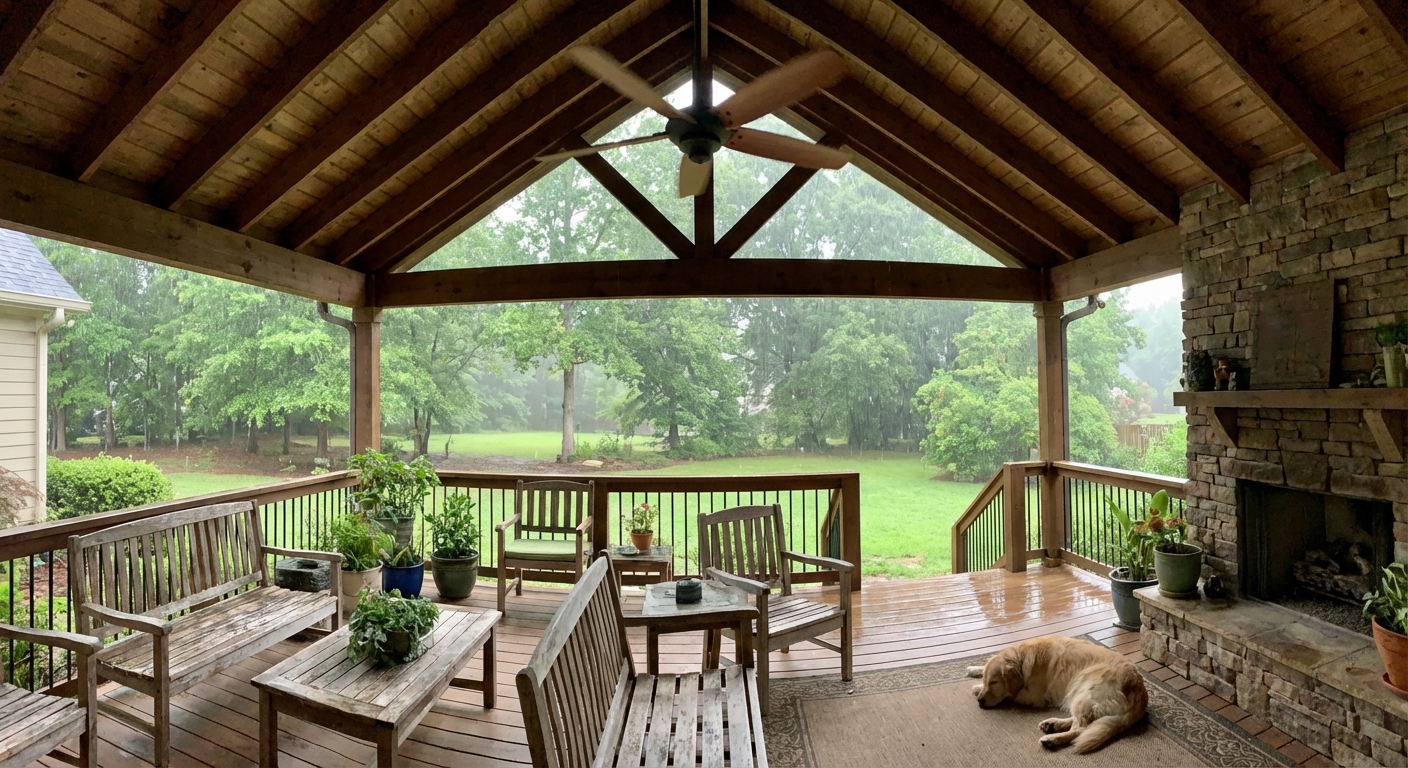
Are you dreaming of a beautiful deck in North Carolina, but worried about the scorching summer sun or those unpredictable rain showers? You're not alone. Many NC homeowners face the same challenge. A covered deck provides the perfect solution, extending your outdoor living season and protecting your investment. Here's a breakdown of covered deck ideas tailored for North Carolina, covering design, costs, materials, and important local considerations.
<!-- slot:after-intro -->
Looking for more regional information? Check out our North Carolina State Decking Hub.
Understanding North Carolina's Climate & Its Impact on Deck Design
North Carolina experiences a moderate climate, but there are regional variations that influence deck design choices. Summers are hot and humid, with temperatures often reaching between 85-95°F. Winters are generally mild.
🏗️ Planning a deck project?
Get a free manual project review, or visualize your dream deck with AI before requesting quotes.
- Mountains (Asheville): Expect cooler temperatures, steeper lots, and more frequent rainfall.
- Piedmont (Charlotte, Raleigh, Greensboro, Winston-Salem): Hot, humid summers and moderate winters. Humidity makes mold and mildew a significant concern, especially on wood decks.
- Coastal: Similar to the Piedmont but with higher humidity and the potential for coastal storms.
These factors influence your choice of materials, roofing style, and even the need for screening.
Covered Deck Design Ideas for North Carolina
Here are some popular covered deck designs that work well in North Carolina, considering both aesthetics and functionality:
1. The Simple Overhang
An extended roofline creates a simple yet effective covered area. This is the most cost-effective option, providing shade and some rain protection.
- Pros: Affordable, integrates seamlessly with existing house architecture.
- Cons: Limited protection from wind and angled rain.
2. The Gable Roof Cover
A gable roof offers more substantial protection from the elements and adds architectural interest. This style is particularly popular in traditional neighborhoods of Greensboro and Winston-Salem.
- Pros: Good rain and sun protection, allows for better ventilation.
- Cons: More expensive than a simple overhang, requires careful planning to match the house's existing roofline.
3. The Shed Roof Cover
A shed roof slopes in one direction, making it a good option for decks attached to single-story homes or those with limited headroom.
- Pros: Cost-effective, easy to construct, good for directing water runoff.
- Cons: Can look less aesthetically pleasing than a gable roof, may not provide as much shade depending on orientation.
4. The Screened-In Porch
Essential for battling North Carolina's notorious mosquito season, a screened-in porch offers complete protection from insects while still allowing you to enjoy the outdoors. This is a very popular option across the state, especially in areas with dense foliage.
- Pros: Insect-free enjoyment, increased privacy, potential for three-season use.
- Cons: More expensive than open covered decks, may require more complex framing.
5. The Pergola with Retractable Canopy
A pergola offers partial shade, which can be adjusted with a retractable canopy. This provides flexibility and style.
- Pros: Adjustable sun control, adds visual appeal, less expensive than a full roof.
- Cons: Limited rain protection when the canopy is retracted, requires maintenance.
6. Multi-Level Covered Deck
On sloped lots, like those common in Asheville and the surrounding mountains, a multi-level deck with covered sections can maximize usable outdoor space.
- Pros: Creates distinct zones for dining, lounging, and entertaining, maximizes views on sloped properties.
- Cons: More complex and expensive to build, requires careful planning and engineering.
7. The Outdoor Kitchen Under Cover
Integrate an outdoor kitchen under your covered deck for the ultimate outdoor living experience. Be sure to consider proper ventilation and fire safety.
- Pros: Extends cooking and entertaining space, adds value to your home.
- Cons: Requires careful planning for plumbing, electrical, and ventilation.
Material Choices for Covered Decks in NC
Choosing the right materials is critical for longevity and aesthetics. Here's a breakdown of common options for your deck frame, decking, and roofing.
Deck Framing
- Pressure-Treated Lumber: The most common and affordable option. Essential for ground-contact lumber due to North Carolina's termite concerns.
- Metal Framing: Offers superior durability and resistance to rot and insects but is more expensive.
Decking
- Pressure-Treated Lumber: Budget-friendly but requires regular maintenance (cleaning, staining) to prevent rot and mildew, especially in humid areas.
- Composite Decking: Low-maintenance, durable, and resistant to rot, insects, and fading. A great choice for busy homeowners. Consider brands specifically formulated to resist mold and mildew, as this is a major concern in NC. See our guide to Best Composite Decking for North Carolina: Top Brands Compared.
- Cedar: A naturally beautiful and durable wood. It's more expensive than pressure-treated lumber but less prone to rot and insects.
- Exotic Hardwoods (Ipe, Mahogany): Extremely durable and beautiful but also the most expensive option.
Roofing Materials
- Asphalt Shingles: Matches most house roofs, relatively affordable.
- Metal Roofing: Durable, long-lasting, and available in various colors.
- Wood Shakes or Shingles: Adds a rustic aesthetic, popular in mountain areas.
- Translucent Polycarbonate Panels: Allows natural light to filter through while providing rain protection.
Cost Considerations for Covered Decks in North Carolina
Deck costs vary depending on materials, size, complexity, and location. Here's a general guideline:
| Material | Cost per Square Foot (Installed) |
|------------------|-----------------------------------|
| Pressure-Treated | $22-40 |
| Composite | $40-70 |
| Cedar | $30-50 |
These figures are estimates. Expect higher labor costs in areas like Asheville, where demand is high and skilled labor is scarcer. See our guide to How Much Does a Deck Cost in North Carolina? Complete 2026 Guide for more detailed pricing.
<!-- slot:mid-content -->
Remember to factor in the cost of the roof structure, which can add significantly to the overall price. Simple overhangs are the least expensive, while complex gable roofs or screened-in enclosures will cost more.
- A basic covered deck using pressure-treated lumber and asphalt shingles could cost around $10,000-$20,000 for a 200-400 sq ft deck.
- A larger, more elaborate deck with composite decking, a gable roof, and screened enclosure could easily exceed $30,000.
Permitting Requirements in North Carolina
In North Carolina, you generally need a permit for decks larger than 200 sq ft or those that are 30 inches or more above grade. Always check with your local building department to confirm specific requirements, as cities and counties can have their own amendments to the state building code. NC building code follows the IRC with local amendments.
Here are some helpful guides for major cities:
- Charlotte Deck Permit: Requirements, Costs & How to Apply
- Raleigh Deck Permit Guide: What You Need Before Building
- Do You Need a Deck Permit in North Carolina? State & City Rules
Failure to obtain the necessary permits can result in fines and even require you to tear down your deck.
Building Code Considerations
Ensure your deck meets all local building codes. Key considerations include:
- Frost Line: The frost line in most of North Carolina is around 12 inches, but it can be deeper in the mountains (around 18 inches). Your footings must extend below the frost line to prevent movement due to freezing and thawing.
- Guardrails: Decks that are 30 inches or more above grade require guardrails at least 36 inches high.
- Stairways: Stairways must meet specific requirements for rise, run, and handrails.
Finding the Right Deck Builder in North Carolina
Choosing the right contractor is crucial for a successful project. Look for a licensed and insured contractor with experience building covered decks in your area. Get multiple quotes and check references. Here are some resources to help you find qualified professionals:
- Best Deck Builders in Charlotte: How to Find the Right Contractor
- Best Deck Builders in Durham, NC: Local Guide
Planning Your Covered Deck Project
- Start Early: The best months to build a deck in North Carolina are March-May and September-November. Plan ahead to secure your contractor and materials.
- Consider Your Needs: How will you use your deck? Do you need a dining area, a lounge area, or an outdoor kitchen?
- Think About Sun Exposure: How much sun does your deck get? This will influence your choice of roofing materials and shading options.
- Address Drainage: Ensure your deck is properly sloped to prevent water from pooling.
- Use PaperPlan (paperplan.app) to visualize your deck with PaperPlan design: Before you start construction, visualize your dream deck. PaperPlan allows you to experiment with different layouts, materials, and roofing styles to create a design that perfectly suits your needs and budget. This can save you time and money in the long run by helping you avoid costly mistakes.
<!-- slot:before-faq -->
By carefully considering these factors, you can create a covered deck that will provide years of enjoyment in North Carolina's unique climate.
<!-- slot:end -->
🎨 Not sure which material to pick?
Upload a photo of your backyard and see exactly how Trex, TimberTech, or cedar would look — free and instant.
Frequently Asked Questions
How much does it cost to add a roof to an existing deck in North Carolina?
The cost to add a roof to an existing deck varies greatly depending on the size of the deck, the type of roof, and the materials used. A simple overhang might cost $3,000-$7,000, while a more elaborate gable roof could cost $8,000-$15,000 or more. Get multiple quotes from local contractors to get an accurate estimate.
What are the best decking materials for high humidity in NC?
For high humidity areas like the Piedmont and Coastal regions of North Carolina, composite decking is an excellent choice. It's highly resistant to rot, mold, and mildew. Cedar is another good option, as it's naturally resistant to decay. However, pressure-treated lumber can be used effectively if properly maintained with regular cleaning and sealing.
Do I need a permit to rebuild an existing deck in North Carolina?
Generally, yes. If you are altering the size or structure of your deck, or if it's over 200 sq ft or 30 inches above grade, you will likely need a permit. Contact your local building department for specific requirements.
How can I prevent mold and mildew on my wood deck in North Carolina?
Regular cleaning is key. Use a deck cleaner specifically designed to remove mold and mildew. Apply a sealant or stain with mildewcide to protect the wood. Ensure proper ventilation under the deck to prevent moisture buildup. Power washing can also help, but be careful not to damage the wood. See our guide to Deck Staining Tips for North Carolina: Best Time & Products and Deck Maintenance in North Carolina: Seasonal Care Guide for more info.
What is the best direction to face my covered deck in North Carolina?
The best direction depends on your specific property and preferences. A south-facing deck will receive the most sunlight, while a north-facing deck will be shadier. East-facing decks are ideal for morning sun, and west-facing decks get the most afternoon sun. Consider the prevailing winds in your area when planning the location of your covered deck. You may also want to consider the views from your deck. North Carolina Deck Design Ideas: Inspiration for Every Budget can help.
📋 Planning a deck project?
Get a free manual project review from our team — no obligation, no spam.
Get Free Project Review →Upload a backyard photo and preview real decking materials with AI — free, instant, no sign-up.
Permits, costs, material comparisons, and questions to ask before requesting quotes — delivered to your inbox.