
Dealing with Deck Mold & Mildew in North…
Is mold and mildew taking over your deck in NC? Learn how to identify, clean, prevent, and protect your deck from humidity's effects.
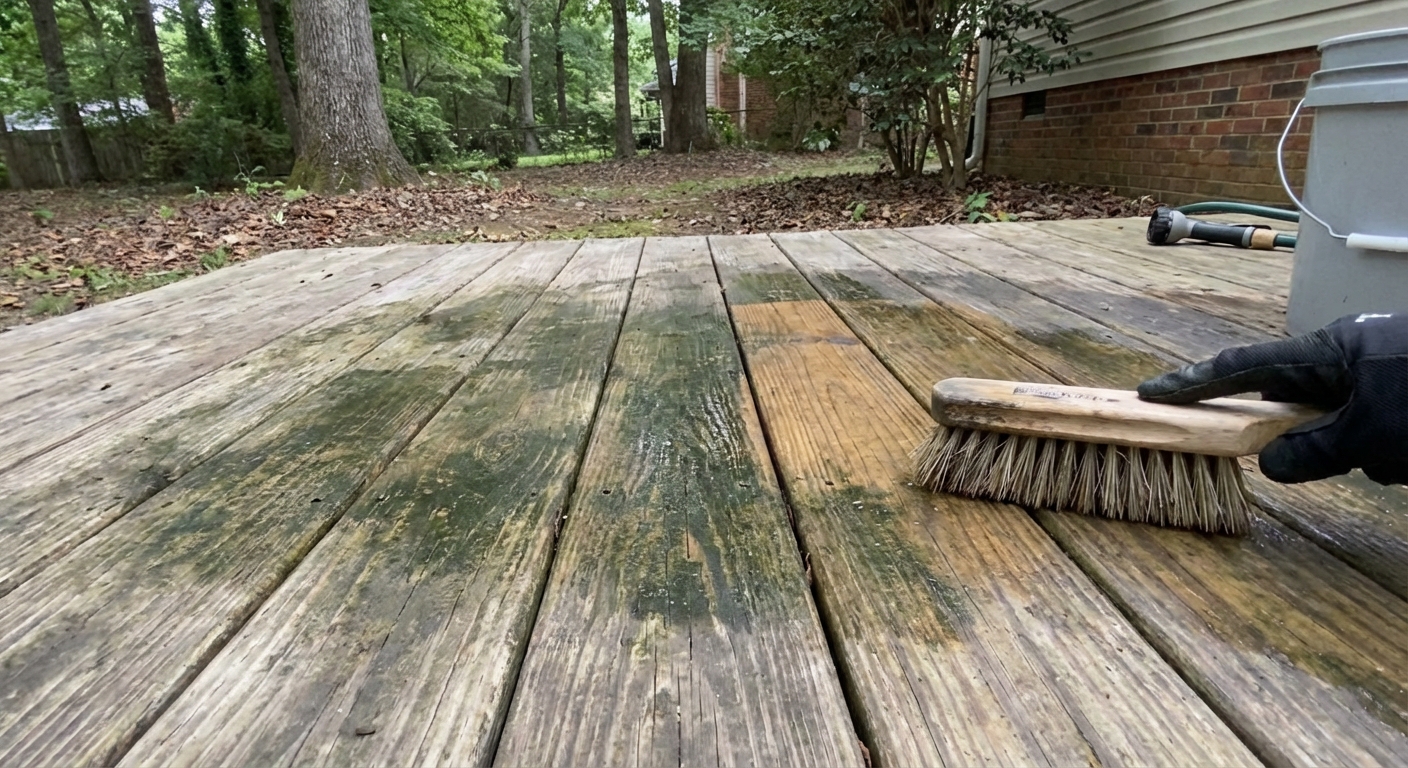
Mold and mildew are common problems for North Carolina homeowners with decks. Our state's moderate climate, with hot, humid summers (often reaching 85-95°F) and mild winters, creates ideal conditions for these unwanted growths. This is especially true in the Piedmont region (Charlotte, Raleigh, Greensboro) and along the coast, where humidity levels are consistently high. If you're noticing dark stains or a slimy texture on your deck, you're likely dealing with mold or mildew. Here's how to tackle the problem and keep your deck looking its best.
📅 Tool Alert: Maintenance Planner
Get a custom seasonal maintenance schedule to protect your investment for decades.
Plan Maintenance →Identifying Mold vs. Mildew
Looking for more regional information? Check out our North Carolina State Decking Hub.
🏗️ Planning a deck project?
Get a free manual project review, or visualize your dream deck with AI before requesting quotes.
Knowing the difference between mold and mildew is key to effective treatment.
- Mildew: Typically appears as a white or gray powdery substance on the surface of your deck. It's relatively easy to remove and doesn't penetrate the wood deeply.
- Mold: Can be black, green, brown, or even pink. It often appears as fuzzy or slimy patches and can penetrate deeper into the wood, making it more difficult to remove. Mold can also cause structural damage over time.
Both thrive in damp, shady areas with poor ventilation. Regularly inspect your deck, paying close attention to areas under furniture, near plants, and in corners.
<!-- slot:after-intro -->
Why North Carolina Decks Are Susceptible
Several factors contribute to mold and mildew growth on decks in North Carolina:
- High Humidity: North Carolina's humidity provides the moisture mold and mildew need to flourish.
- Warm Temperatures: The state's warm summers create an ideal breeding ground.
- Wood Decks: Wood, particularly untreated or poorly maintained wood, is a food source for mold and mildew.
- Shade: Decks shaded by trees or buildings dry out slower, increasing moisture levels.
- Poor Ventilation: Lack of airflow traps moisture and promotes growth. A screened porch, while great for keeping bugs away (a must-have during bug season!), can also limit airflow around the deck itself, especially if poorly designed. You can explore different Covered Deck Ideas for North Carolina: Rain & Sun Protection that balance protection and ventilation.
Cleaning Mold and Mildew from Your Deck
Before you start cleaning, gather these supplies:
- Stiff-bristled brush: A deck brush with an extension handle is ideal.
- Garden hose with a spray nozzle: For rinsing.
- Protective gear: Gloves, eye protection, and a mask to avoid inhaling spores.
- Deck cleaner: Choose a cleaner specifically designed for decks and suitable for your deck material. Options include:
* Oxygen bleach (sodium percarbonate): A gentler, environmentally friendly option.
* Sodium hypochlorite (bleach): More effective for stubborn mold but can damage wood and plants if not used carefully. *Always* dilute bleach before use.
* Commercial deck cleaners: Follow the manufacturer's instructions carefully.
Cleaning Steps:
1. Prepare the area: Remove all furniture, plants, and other items from the deck. Sweep away any loose debris.
2. Apply the cleaner: Follow the manufacturer's instructions for your chosen cleaner. Typically, you'll mix the cleaner with water and apply it to the deck surface with a sprayer or brush.
3. Scrub the deck: Use the stiff-bristled brush to scrub the affected areas. Pay extra attention to areas with heavy mold or mildew growth.
4. Rinse thoroughly: Use the garden hose to rinse the deck thoroughly, removing all traces of the cleaner.
5. Allow to dry: Let the deck dry completely before replacing furniture or applying a sealant.
Important Considerations:
- Test the cleaner: Before applying the cleaner to the entire deck, test it in an inconspicuous area to ensure it doesn't damage or discolor the wood.
- Protect plants: If using bleach, protect nearby plants by covering them with plastic sheeting or watering them thoroughly before and after cleaning.
- Work in sections: Clean the deck in small sections to prevent the cleaner from drying before you have a chance to scrub it.
- Power washing: While power washing can be effective, it can also damage wood if not done correctly. Use a wide nozzle and low pressure to avoid gouging the wood. It's best to avoid power washing older, softer wood decks.
- DIY solutions: Vinegar and baking soda can be used as natural cleaning agents, but they may not be as effective as commercial cleaners for heavy mold or mildew growth.
<!-- slot:mid-content -->
Preventing Mold and Mildew Growth
Prevention is key to keeping your deck mold-free. Here are some tips:
- Regular Cleaning: Clean your deck at least twice a year, ideally in the spring and fall.
- Improve Ventilation: Trim back trees and shrubs that block sunlight and airflow around your deck. Ensure there's adequate space between deck boards for drainage and ventilation.
- Apply a Sealant: Apply a water-repellent sealant or stain to your deck every one to two years. This will help protect the wood from moisture and prevent mold and mildew from growing. Consider products with mildewcides.
- Choose the Right Materials: When building a new deck, consider using mold-resistant materials such as:
* Composite Decking: Composite decking is made from a blend of wood fibers and plastic, making it highly resistant to moisture and mold. While more expensive upfront, it requires less maintenance than wood. Check out Best Composite Decking for North Carolina: Top Brands Compared for options that stand up to our climate.
* Cedar: Cedar is a naturally rot-resistant wood that contains oils that repel insects and fungi. However, it still requires regular sealing to prevent moisture damage.
* Pressure-Treated Wood: Pressure-treated lumber is treated with chemicals that protect it from decay and insect damage. This is a cost-effective option, especially for the substructure of your deck. Learn more in Pressure-Treated Deck Cost in NC: Budget-Friendly Guide.
- Proper Deck Design: Ensure your deck is properly sloped to allow for water runoff. Avoid creating areas where water can pool. In Asheville, where steep lots are common, proper drainage is especially important for multi-level decks.
Cost Considerations:
The cost of your deck will vary depending on the materials you choose and the complexity of the design. Here's a general idea of installed deck costs in North Carolina:
| Material | Cost per Square Foot (Installed) |
| ------------------ | -------------------------------- |
| Pressure-Treated | $22 - $40 |
| Composite | $40 - $70 |
| Cedar | $30 - $50 |
For a detailed breakdown, see How Much Does a Deck Cost in North Carolina? Complete 2026 Guide.
Building Codes and Permits:
In North Carolina, you typically need a permit for decks over 200 square feet or 30 inches above grade. Always check with your local building department for specific requirements. North Carolina building code follows the IRC (International Residential Code) with local amendments. The frost line is typically 12 inches in most of the state, but deeper in the mountains (around 18 inches). See Do You Need a Deck Permit in North Carolina? State & City Rules for more info.
Termite Considerations: Termites are a concern throughout North Carolina. Pressure treatment is essential for any lumber in contact with the ground.
Deck Design and Planning
Planning your deck carefully can minimize future mold and mildew problems. Consider these factors:
- Sun Exposure: Maximize sun exposure to help your deck dry quickly after rain.
- Drainage: Ensure proper drainage to prevent water from pooling on the deck surface.
- Material Selection: Choose mold-resistant materials that are appropriate for your climate and budget.
- Professional Design: A professional deck designer can help you create a deck that is both beautiful and functional, taking into account factors such as drainage, ventilation, and material selection. Use PaperPlan (paperplan.app) to visualize your deck with PaperPlan design. This can help you experiment with different materials, layouts, and features to find the perfect deck for your needs.
Remember, the best months to build a deck in North Carolina are March-May and September-November.
<!-- slot:before-faq -->
Finding a Reputable Deck Builder
If you're not comfortable cleaning or maintaining your deck yourself, or if you're planning a new deck build, it's important to find a reputable deck builder. Look for a contractor with experience building decks in North Carolina and a good reputation for quality workmanship. Ask for references and check online reviews. Best Deck Builders in Charlotte: How to Find the Right Contractor provides helpful tips on selecting the right professional.
<!-- slot:end -->
🎨 Not sure which material to pick?
Upload a photo of your backyard and see exactly how Trex, TimberTech, or cedar would look — free and instant.
Frequently Asked Questions
How often should I clean my deck in North Carolina?
You should clean your deck at least twice a year, ideally in the spring and fall. If you live in a particularly humid area or your deck is heavily shaded, you may need to clean it more often.
What's the best way to get rid of black mold on my deck?
For black mold, use a deck cleaner containing sodium hypochlorite (bleach). Be sure to dilute the bleach properly and follow the manufacturer's instructions carefully. Wear protective gear and protect nearby plants.
Can I use vinegar to clean mold and mildew off my deck?
Vinegar can be effective for mild mildew, but it may not be strong enough for heavy mold growth. Mix equal parts vinegar and water in a spray bottle, apply to the affected area, let it sit for 15-20 minutes, then scrub with a stiff-bristled brush and rinse thoroughly.
How can I prevent mold from growing under my deck?
Improve ventilation under your deck by trimming back vegetation and ensuring there's adequate space between the ground and the deck joists. Consider installing a vapor barrier to prevent moisture from rising from the ground.
Is composite decking completely mold-proof?
While composite decking is highly resistant to mold, it's not completely mold-proof. Mold can still grow on the surface if it's not cleaned regularly. However, composite decking is much less susceptible to mold than wood decking.
📋 Planning a deck project?
Get a free manual project review from our team — no obligation, no spam.
Get Free Project Review →Upload a backyard photo and preview real decking materials with AI — free, instant, no sign-up.
Permits, costs, material comparisons, and questions to ask before requesting quotes — delivered to your inbox.