
Deck Staining Tips for Texas Heat (2026)
Don't let the Texas sun destroy your deck! Learn the best time to stain, how to prep, and which products hold up to extreme heat & UV in TX.
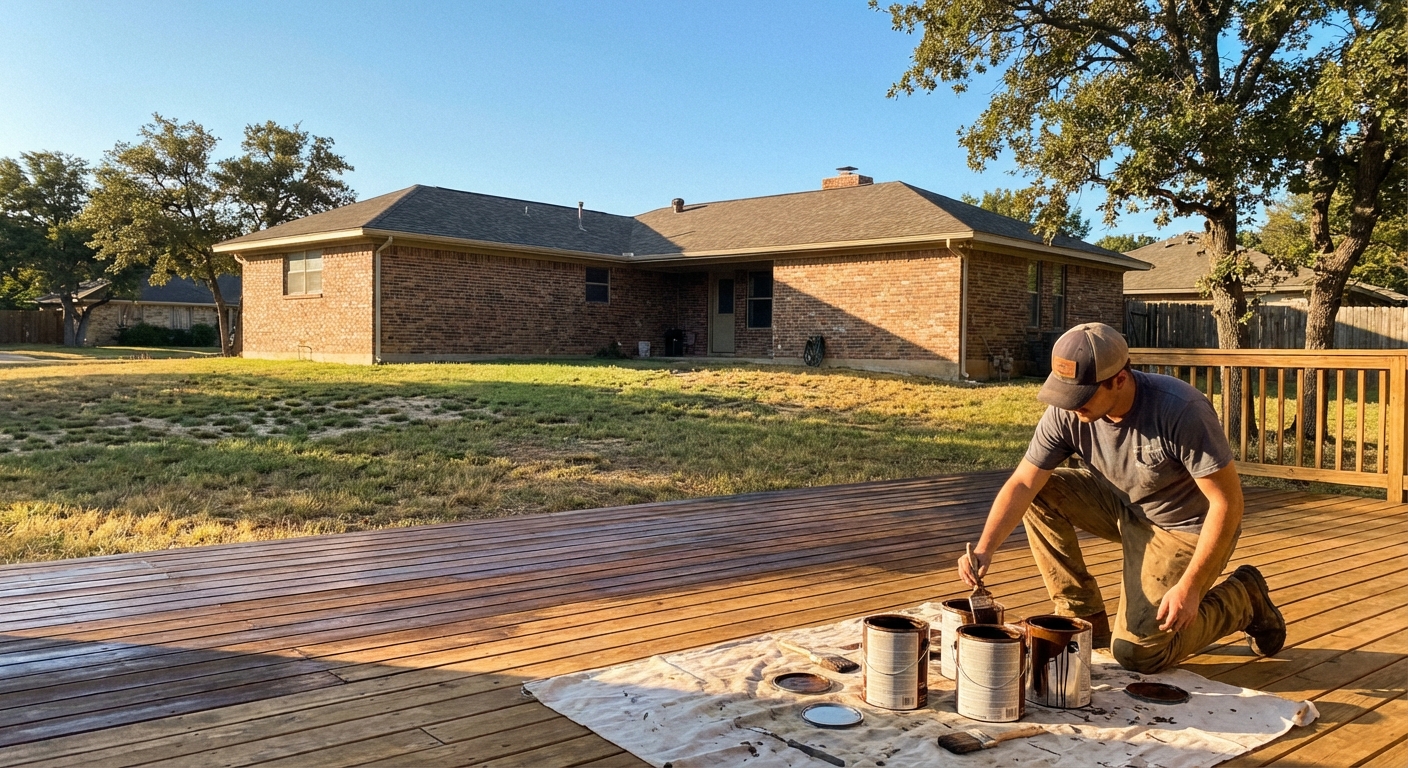
Are you tired of seeing your deck fade, crack, or warp under the relentless Texas sun? Staining your deck is crucial for protecting it from the elements and extending its lifespan. But in Texas, with its scorching summers and intense UV radiation, staining your deck correctly is essential. This guide provides Texas-specific advice on when and how to stain your deck for optimal results.
📐 Tool Alert: Deck Stair Calculator
Calculate rise, run, and stringer cuts while ensuring IRC/OBC code compliance.
Calculate Stairs →Understanding the Texas Deck Challenge
Looking for more regional information? Check out our Texas State Decking Hub.
🏗️ Planning a deck project?
Get a free manual project review, or visualize your dream deck with AI before requesting quotes.
Texas decks face unique challenges. The intense heat, often reaching 95-105°F in summer, coupled with brutal UV exposure, can quickly degrade wood and even some composite materials. Composite deck surface temperatures can soar to 150°F+ in direct sunlight. Proper staining acts as a shield, preventing moisture damage, fading, and cracking. Choosing the right stain and applying it correctly can save you significant money in the long run. Texas homeowners often invest more in home improvements because the state has no state income tax.
<!-- slot:after-intro -->
Choosing the Right Stain for Texas
Not all stains are created equal, especially for the Texas climate. Consider these factors:
- Type of Wood: Pressure-treated pine, cedar, and redwood are common choices. Each reacts differently to stains. Pressure-treated lumber needs time to dry before staining.
- Oil-Based vs. Water-Based: Oil-based stains penetrate deeply and offer excellent water resistance, but can be more susceptible to UV degradation. Water-based stains are more environmentally friendly and resist fading better, but may require more frequent reapplication. In Texas, a hybrid stain that offers the benefits of both can be a good option.
- Opacity: Transparent stains showcase the wood's natural grain, while solid stains offer maximum protection and color. Semi-transparent and semi-solid stains strike a balance. For older decks or those with imperfections, a semi-solid or solid stain might be preferable.
- UV Resistance: Look for stains specifically formulated with UV inhibitors to combat fading. This is crucial in Texas.
- Mold and Mildew Resistance: Especially important in humid areas like Houston and along the Gulf Coast.
Pro Tip: Always test a small, inconspicuous area of your deck before applying stain to the entire surface. This allows you to assess the color and how the stain interacts with the wood.
When to Stain Your Deck in Texas
Timing is everything when it comes to staining your deck. The ideal conditions are:
- Temperature: Between 50°F and 90°F. Avoid staining in direct sunlight, as the stain will dry too quickly and may not penetrate properly.
- Weather: No rain in the forecast for at least 24-48 hours after application. Humidity should be low.
- Time of Year: The best months for deck staining in Texas are typically October through April, avoiding the intense summer heat. This also aligns with the off-season for deck building, when you might find better deals on professional staining services.
Staining Schedule by Region:
- Houston: Aim for late fall or early spring to avoid humidity and extreme heat.
- Dallas: Spring and fall offer the most consistent temperatures.
- Austin: Similar to Dallas, but be mindful of unpredictable spring showers.
- San Antonio: Fall is generally ideal, with mild temperatures and lower humidity.
Step-by-Step Guide to Staining Your Deck
1. Preparation is Key: This is the most crucial step.
* Clean the Deck: Use a deck cleaner to remove dirt, mildew, and old stain. Power washing can be effective, but be careful not to damage the wood. A pressure of 500-1200 PSI is usually sufficient.
* Repair Damage: Replace any damaged or rotting boards. Tighten loose screws or nails.
* Sand the Deck: Sanding smooths the surface, removes splinters, and helps the stain adhere properly. Use a coarse-grit sandpaper (60-80 grit) for initial sanding, followed by a medium-grit sandpaper (100-120 grit) for smoothing.
* Allow to Dry: Let the deck dry completely for at least 24-48 hours before staining. Moisture can prevent the stain from penetrating properly.
2. Apply the Stain:
* Choose Your Tools: Use a high-quality brush, roller, or sprayer. A brush is best for detailed work, while a roller is faster for large areas. Sprayers can be efficient but require more masking and back-brushing.
* Apply Evenly: Work in small sections, following the grain of the wood. Avoid applying too much stain, as this can lead to drips and uneven drying.
* Back-Brush or Back-Roll: This helps the stain penetrate the wood and ensures an even finish.
* Apply a Second Coat (Optional): If desired, apply a second coat after the first coat has dried completely. This will provide extra protection and color.
3. Drying and Curing:
* Allow Adequate Drying Time: Let the stain dry completely before walking on the deck or placing furniture on it. This usually takes 24-48 hours, depending on the weather and the type of stain.
* Avoid Heavy Use: Avoid heavy use of the deck for the first few days after staining to allow the stain to fully cure.
Deck Material Considerations in Texas
The type of decking material you have impacts the staining process and frequency. Here's a quick rundown of common Texas decking materials and staining advice:
| Material | Average Installed Cost (per sqft) | Staining Needs | Notes |
|-------------------|------------------------------------|----------------------------------------------------|---------------------------------------------------------------------------------------------------------------------------------------------------------------------|
| Pressure-Treated | $25-$45 | Requires staining/sealing for protection | Most affordable; needs time to dry after treatment before staining; prone to warping/cracking if not maintained. Consider our Pressure-Treated [Deck Cost in Texas: Budget-Friendly Guide](/decks/blog/pressure-treated-deck-cost-texas) for more information. |
| Cedar | $35-$55 | Staining enhances color and extends lifespan | Naturally rot-resistant; beautiful grain; can be left unstained but will weather to gray. Learn more in our guide: Cedar Deck Cost in Texas: Is It Worth the Premium?. |
| Composite | $45-$75 | Generally doesn't require staining | Low-maintenance; resists fading and staining; can get very hot in direct sun. See Composite Deck Cost in Texas: What to Expect in 2026. |
| Trex | $50-$80 | Generally doesn't require staining | A popular composite brand; offers various colors and textures. Compare against alternatives with Trex vs TimberTech in Texas: Which Composite Deck Is Better?. |
| Ipe (Brazilian Walnut) | $60-$100 | Sealing recommended to maintain color & prevent cracking | Extremely durable and beautiful; requires specialized fasteners; can be oiled for a rich look. |
Use PaperPlan (paperplan.app) to visualize your deck with PaperPlan design with different materials and layouts before committing to a contractor. Seeing how different wood types or composite decking looks with various stain colors can help you make the best choice for your Texas home.
<!-- slot:mid-content -->
Dealing with Common Texas Deck Problems
- Fading: Combat fading by choosing a stain with UV inhibitors and applying it regularly (every 1-3 years).
- Cracking: Prevent cracking by keeping the wood properly sealed and avoiding exposure to extreme temperature fluctuations.
- Mold and Mildew: Clean your deck regularly with a deck cleaner that contains mold and mildew inhibitors. Consider a stain with added mildewcides, especially in humid areas.
- Termites: Especially prevalent in Gulf Coast regions. Ensure your deck is properly treated for termites and inspect it regularly for signs of infestation. Proper construction with appropriate ground clearance helps.
Permit Considerations
Before you build or significantly alter your deck, check local permit requirements. Most Texas cities require permits for decks over 200 sqft or 30 inches above grade. Here's a quick look at permit offices in major cities:
- Houston: No zoning but need permits from City of Houston Permitting Center. See our Houston Deck Permit: Requirements, Costs & How to Apply.
- Dallas: Permits through Dallas Development Services, cost approximately $200-500. Read our Dallas Deck Permit Guide: What You Need Before Building.
- Austin: Permits through Austin Development Services, notoriously slow (8-12 weeks). Our Austin Deck Permit: Everything Homeowners Need to Know can help.
- San Antonio: Permits through Development Services Dept, relatively fast. Refer to our San Antonio Deck Permit: Rules, Fees & Process.
Don't skip this step! Building without a permit can result in fines and even require you to tear down your deck. For a broader overview, see Do You Need a Deck Permit in Texas? State & City Rules Explained.
Popular Deck Features in Texas
Many Texas homeowners are adding features to enhance their outdoor living spaces. Consider these popular options:
- Covered Decks: Provide shade and protection from the elements.
- Outdoor Kitchens: Perfect for grilling and entertaining.
- Pool Decks: Create a seamless transition from your pool to your outdoor living area.
- Shade Structures: Pergolas, pavilions, and awnings offer respite from the Texas sun.
<!-- slot:before-faq -->
Staining your deck is an investment in its longevity and appearance. By following these Texas-specific tips, you can protect your deck from the harsh elements and enjoy it for years to come.
🎨 Not sure which material to pick?
Upload a photo of your backyard and see exactly how Trex, TimberTech, or cedar would look — free and instant.
Frequently Asked Questions
How often should I stain my deck in Texas?
The frequency depends on the type of stain and the amount of exposure to the sun and weather. Generally, you should stain your deck every 1-3 years. Watch for signs of fading, water damage, or cracking.
What is the best time of day to stain my deck in Texas?
Avoid staining in direct sunlight. The best time is early morning or late afternoon when the temperatures are cooler and the sun is less intense.
Can I stain a wet deck?
No, you should never stain a wet deck. Moisture can prevent the stain from penetrating properly and can lead to peeling and blistering.
What happens if it rains after I stain my deck?
If it rains within 24-48 hours after staining, the stain may wash away or become diluted. This can result in an uneven finish and reduced protection. If rain is in the forecast, postpone staining.
How do I choose the right color stain for my deck?
Consider the style of your home and the surrounding landscape. Lighter colors reflect more heat and can help keep your deck cooler, while darker colors can provide a richer, more dramatic look. Test stain samples in an inconspicuous area before committing to a color.
<!-- slot:end -->
📋 Planning a deck project?
Get a free manual project review from our team — no obligation, no spam.
Get Free Project Review →Upload a backyard photo and preview real decking materials with AI — free, instant, no sign-up.
Permits, costs, material comparisons, and questions to ask before requesting quotes — delivered to your inbox.