
Deck Builders in Hespeler (Cambridge) — Get 1–3 Quotes
A quick guide to planning a deck in Hespeler: quote checklist, permit notes, and next steps.
Hespeler is a historic neighbourhood in southeast Cambridge, with a mix of older homes near the downtown core and newer subdivisions stretching toward the 401. Many properties here have mature trees, varied lot sizes, and backyards that back onto ravines or greenspace. If you're planning a deck in Hespeler, you're likely working with an older foundation, sloped terrain, or limited side-yard access.
This page covers what Hespeler homeowners need to know about deck projects, permits, and working with the neighbourhood's unique characteristics.
Common Deck Projects in Hespeler
Deck Replacements for Older Homes
Many homes in central Hespeler were built in the 1970s and 1980s with original pressure-treated decks. After 30 to 40 years, these structures often show rot in the ledger board, sagging joists, and failing footings. Replacing the entire structure is common, and it's an opportunity to bring everything up to current code: proper flashing, deeper footings below the frost line (1.2 metres in Ontario), and galvanized hardware.
🏗️ Planning a deck project?
Get a free manual project review, or visualize your dream deck with AI before requesting quotes.
When tearing down an old deck, builders often find water damage to the house siding or rim joist. Plan for potential repairs to the home's exterior as part of your budget.
Composite Decks for Low Maintenance
Homeowners replacing wood decks in Hespeler frequently upgrade to composite materials. Composite decking eliminates annual staining and handles Ontario winters well without splintering or cracking. Expect to pay $65 to $95 per square foot installed for composite in 2026, compared to $45 to $65 per square foot for pressure-treated.
If you're choosing composite, ask your builder about hidden fasteners for a cleaner look, picture framing for a finished border, and board orientation (running parallel or perpendicular to the house affects the visual and structural layout).
Raised Decks for Sloped Lots
Many Hespeler properties back onto the Speed River corridor or ravine systems, creating significant grade changes. Raised decks with stairs down to grade level are a common solution. These projects require deeper footings, taller posts, and code-compliant railings (minimum 42 inches for elevated decks).
Raised decks cost more due to additional materials and labour, but they create usable outdoor space without expensive grading work.
Permit Requirements in Hespeler
Hespeler is part of the City of Cambridge, which enforces Ontario Building Code requirements for decks:
- Decks attached to your house: Always require a permit, regardless of height.
- Decks over 24 inches (0.6 metres) above grade: Require a permit, even if freestanding.
- Decks under 24 inches and detached from the house: May not need a permit, but confirm with Cambridge building services before starting.
Permit applications are submitted to the City of Cambridge. You'll need a site plan showing property lines, setbacks, and deck dimensions, plus structural details if the deck is elevated or attached. Most Cambridge deck permits are approved within two to four weeks, though timelines can extend during peak construction season (May to July).
Your builder should handle the permit, but if you're DIYing, budget $150 to $400 for permit fees depending on deck size and complexity. For more detail, see Deck Permits Kitchener 24 Inch Rule (applies across KWC).
Practical Considerations for Hespeler
Lot Access and Material Delivery
Older Hespeler streets have narrow driveways and limited side-yard access. If your backyard isn't accessible from the front, builders may need to carry materials through your house or negotiate access with neighbours. Discuss this upfront—tight access can add labour time and cost.
Mature Trees and Root Systems
Many Hespeler backyards have large maples, oaks, or pines. Avoid placing deck footings within the tree's drip line (the outer edge of the canopy), as digging can damage roots and destabilize the tree. If your deck must be near a tree, consider adjustable footing systems or a freestanding design that minimizes ground disturbance.
Drainage and Grading
Properties near the Speed River or ravine edges often have natural drainage slopes. Make sure your deck design doesn't block water flow or create pooling against your foundation. Proper grading, eavestroughs, and downspout placement are essential to prevent water damage.
Getting Quotes in Hespeler
When requesting deck quotes, ask for:
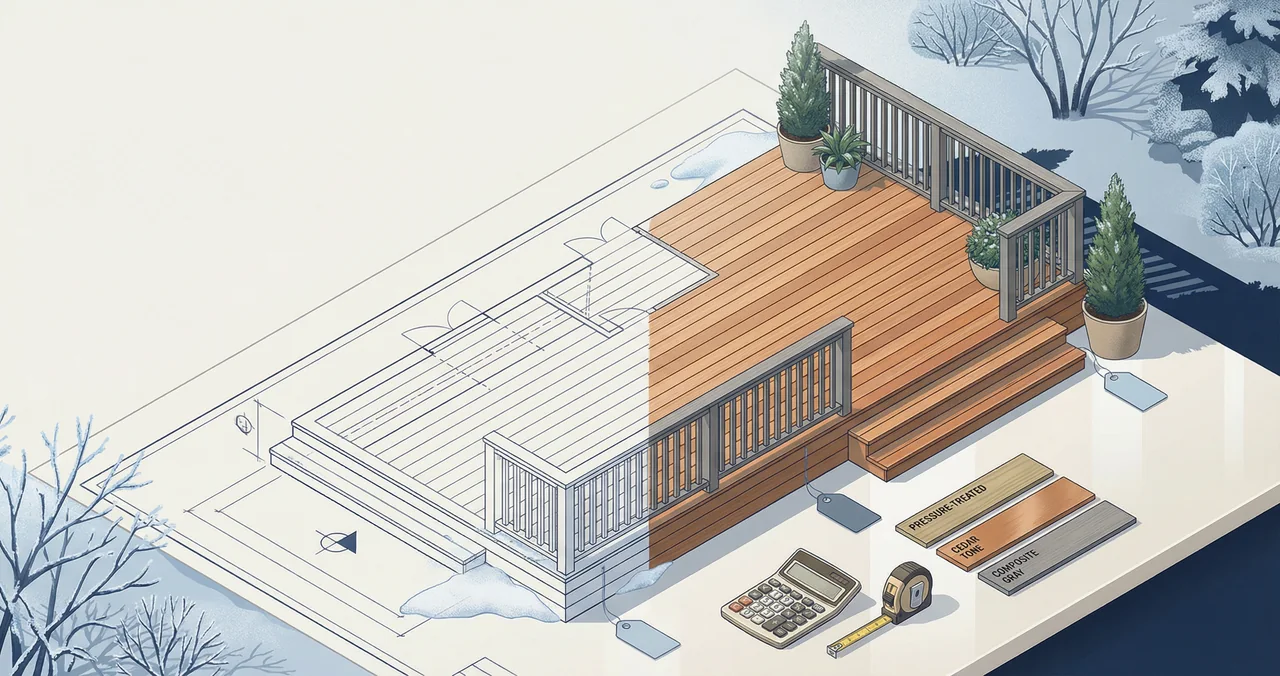
- Material options: Pressure-treated, cedar, or composite, with brand names and warranty details.
- Permit handling: Will the builder pull the permit, or is that on you?
- Site-specific details: How will they handle access, tree placement, or grade changes?
- Timeline: When can they start, and how long will the project take?
Get at least two to three quotes to compare pricing, material choices, and builder experience. For a full checklist, see Deck Quote Checklist Kitchener Waterloo.
🎨 Not sure which material to pick?
Upload a photo of your backyard and see exactly how Trex, TimberTech, or cedar would look — free and instant.
Helpful Links
- Get Deck Quotes
- Deck Builders Cambridge
- Composite vs Wood Decking Ontario
- How Deep Should Deck Footings Be Ontario
- Best Time to Build a Deck Ontario
Upload a backyard photo and preview real decking materials with AI — free, instant, no sign-up.
Permits, costs, material comparisons, and questions to ask before requesting quotes — delivered to your inbox.