
Deck Cost in Cambridge (2026)
What does a deck cost in Cambridge, Ontario in 2026? Get real per-square-foot pricing for composite, wood, and Trex — plus tips to save on your build.
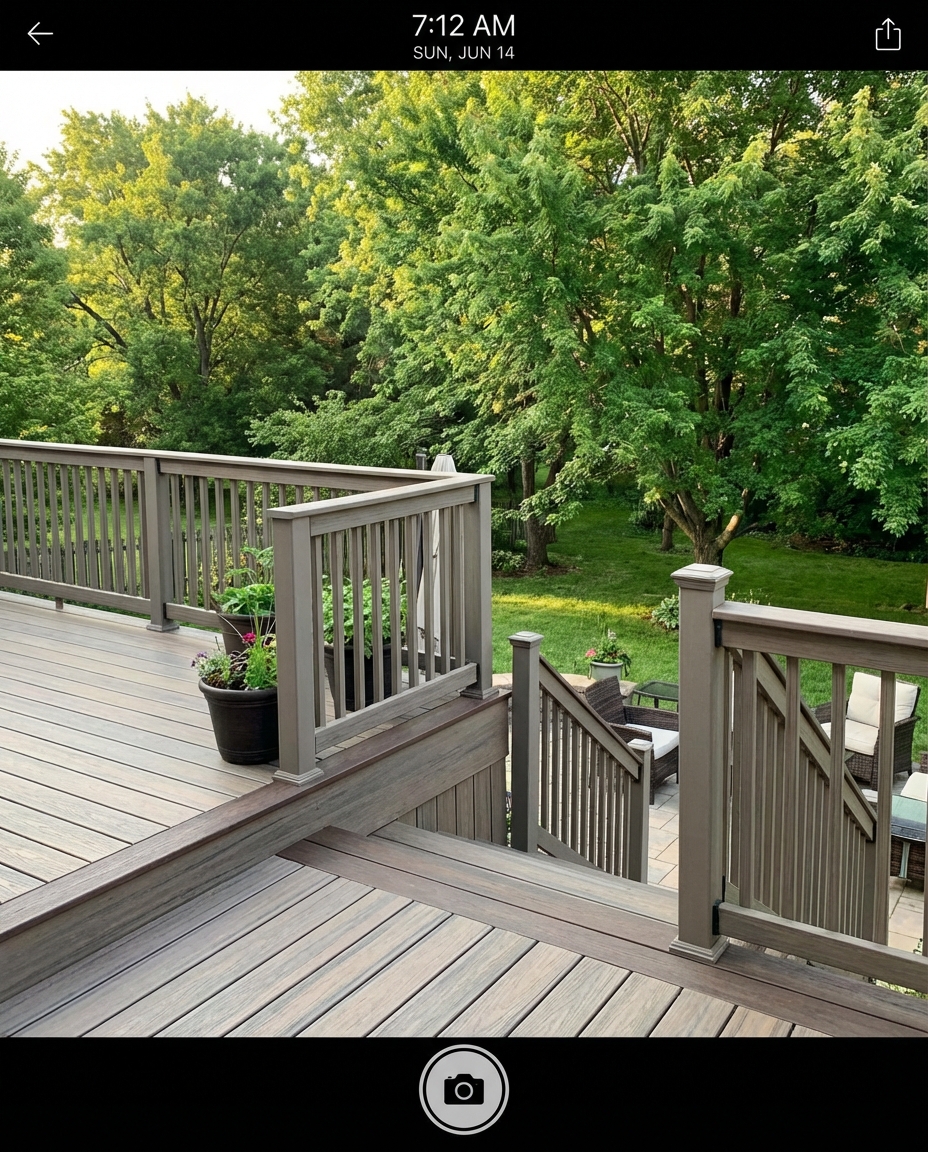
How Much Does a Deck Cost in Cambridge, Ontario?
You're probably here because you got a quote that seemed high — or you haven't called anyone yet and want to know what to expect before you do. Either way, here's the short answer: most Cambridge homeowners pay between $15,000 and $45,000 for a standard deck build in 2026, depending on size, material, and complexity.
🏗️ Planning a deck project?
Get a free manual project review, or visualize your dream deck with AI before requesting quotes.
Looking for more regional information? Check out our Ontario Decking Hub.
That's a wide range. A basic 12×16 pressure-treated deck sits at the low end. A 20×20 composite deck with built-in lighting and stairs pushes toward the top. Your actual number depends on choices you haven't made yet — which is exactly why this breakdown exists.
Cambridge sits in a climate that punishes cheap materials. Freeze-thaw cycles, snow load, road salt tracked onto boards, and moisture that works into every unsealed grain of wood. What you spend upfront on materials directly affects what you spend on maintenance for the next 20 years.
🧮 Tool Alert: Deck Cost Calculator
Estimate your project costs in seconds based on local pricing bands for your area.
Calculate My Cost →For a broader look at deck pricing across different materials and regions, see our complete deck cost guide.
Average Deck Cost in Cambridge by Material
Here's what Cambridge homeowners are paying per square foot in 2026, fully installed (materials + labor):
| Material | Cost Per Sq Ft (CAD, Installed) | Best For |
|---|---|---|
| Pressure-Treated Wood | $30–$55 | Budget builds, large decks |
| Cedar | $40–$65 | Natural look, moderate budgets |
| Composite | $50–$85 | Low maintenance, long-term value |
| Trex (brand-name composite) | $55–$90 | Premium composite with warranty |
| Ipe (tropical hardwood) | $70–$120 | Maximum durability, high-end projects |
These prices include standard railings, footings to code, and basic stairs. They don't include permits, design fees, or extras like built-in benches or lighting.
For a typical 300 sq ft deck in Cambridge, expect:
- Pressure-treated: $9,000–$16,500
- Cedar: $12,000–$19,500
- Composite: $15,000–$25,500
- Trex: $16,500–$27,000
- Ipe: $21,000–$36,000
If you're planning a larger build, our guides on 12×16 deck costs in Ontario and 20×20 deck costs break down specific size-based pricing in detail.
Cost Per Square Foot Breakdown
That installed price per square foot isn't just materials and a day's work. Here's roughly where your money goes:
Materials (40–50% of total cost)
The decking boards themselves are the obvious expense, but don't forget:
- Framing lumber (pressure-treated, regardless of your deck surface material)
- Fasteners and hardware — hidden fastener systems for composite add $1–$3/sq ft
- Concrete for footings — Cambridge's frost line sits at 36 to 60 inches deep, so your footings need serious depth
- Railings — aluminum railings run $40–$80/linear foot; wood railings cost less but need regular maintenance
Labor (35–45% of total cost)
Cambridge labor rates for deck building typically run $20–$40/sq ft depending on complexity. A simple rectangular deck on flat ground costs less to build than a multi-level wraparound with angles.
Permits, Design, and Overhead (10–15%)
Permits in Cambridge typically cost $200–$500 depending on the scope of work. You'll need one for any deck over 24 inches above grade or over 100 sq ft — which covers most builds. The Cambridge deck permit application process has its own timeline, so factor that in.
Labor Costs in Cambridge
Labor is where your total price can swing by thousands, and Cambridge has some specific dynamics worth understanding.
Cambridge's building season runs May through October. That's a compressed window compared to regions farther south, and it means contractor schedules fill up fast. If you want a summer build, book your contractor by March. Waiting until May means you're competing with every other homeowner who had the same idea over winter.
What drives labor costs up
- Sloped lots — common in areas near the Grand River and throughout Hespeler. Sloped terrain requires more complex framing and sometimes retaining work.
- Multi-level decks — each level transition adds framing, stairs, and railing complexity.
- Elevated decks — anything over 4 feet off the ground needs beefier structural support and guardrails to Ontario Building Code specs.
- Access issues — narrow side yards or no rear lane access means materials get carried by hand, not delivered by truck.
What keeps labor costs reasonable
- Simple rectangular designs on flat ground
- Ground-level or low-profile decks (under 24 inches may not even require a permit)
- Building in shoulder season — September and October bookings sometimes come at a slight discount since demand drops
- Choosing materials that install quickly — composite with hidden fasteners can actually be faster than wood with traditional screwing
A good Cambridge deck builder will walk your site before quoting. If someone gives you a price over the phone without seeing the yard, that's a red flag.
What Affects Your Total Price
Beyond material and labor, several factors specific to Cambridge can push your costs up or down.
Deck Size and Shape
This is the biggest variable. Doubling your square footage doesn't quite double your cost (footings and permits stay similar), but it gets close. Our 16×20 deck cost guide shows how mid-size builds typically price out in Ontario.
Frost Line and Footing Requirements
Cambridge's frost line depth of 36–60 inches means your footings need to go deep. This isn't optional — footings that don't reach below the frost line will heave, and your deck will shift, crack, and eventually become unsafe. Helical piles are increasingly popular here as an alternative to traditional concrete sono tubes, but they cost more upfront.
Railings and Stairs
Railings can account for 15–25% of your total deck cost. Options range widely:
- Pressure-treated wood railings: $20–$40/linear foot
- Aluminum railings: $40–$80/linear foot
- Glass panel railings: $80–$150/linear foot
- Cable railings: $60–$100/linear foot (check Ontario cable railing code requirements first)
Stairs add $1,000–$3,000+ per run depending on height and material.
Extras That Add Up
- Built-in lighting: $500–$2,500
- Pergola or shade structure: $3,000–$10,000
- Built-in seating: $1,000–$3,000
- Privacy screens: $500–$2,000 per section
- Skirting: $500–$1,500
Use PaperPlan to visualize different decking materials on your own home before committing — it helps you see whether that dark composite actually works with your siding colour before you've spent a dollar.
Composite vs Wood: Cost Comparison
This is the decision most Cambridge homeowners wrestle with. Here's an honest comparison.
| Factor | Pressure-Treated Wood | Composite |
|---|---|---|
| Installed cost (per sq ft) | $30–$55 | $50–$85 |
| Annual maintenance | Staining/sealing every 1–2 years ($500–$1,200) | Occasional soap-and-water wash |
| Lifespan | 15–20 years with maintenance | 25–30+ years |
| 10-year total cost (300 sq ft) | $14,000–$28,500 | $15,000–$25,500 |
| Freeze-thaw resistance | Moderate (needs sealing) | Excellent |
| Snow/salt resistance | Poor without annual sealing | Excellent |
| Splinter risk | Yes, increases with age | None |
The math tells a clear story for Cambridge specifically. Over 10 years, composite often costs the same or less than wood when you factor in annual staining and sealing. And in a climate with harsh freeze-thaw cycles, road salt, and heavy snow, wood takes a beating that composite shrugs off.
That said, wood still makes sense in some cases:
- You're on a tight budget and need the lowest upfront cost
- You enjoy maintenance as a weekend project
- You want a natural wood appearance that composite can't quite replicate
- You're building a very large deck where the per-square-foot savings add up significantly
If you go the wood route, choosing the right sealer makes all the difference in how your deck survives Cambridge winters. And for the composite route, our guide to the best composite decking brands in Ontario ranks them by durability, warranty, and value.
What About Cedar?
Cedar falls in the middle — more naturally rot-resistant than pressure-treated, more affordable than composite. At $40–$65/sq ft installed, it's a solid compromise. But it still needs sealing every 1–2 years in Cambridge's climate, and it won't last as long as composite. Cedar works best when the natural aesthetic matters more than minimal maintenance.
How to Save Money on Your Cambridge Deck
Smart savings don't mean cutting corners. Here's where experienced Cambridge homeowners find real value.
1. Time Your Build Strategically
Book in late winter (February–March) for a spring start. Contractors setting their season schedules sometimes offer better rates to lock in early work. Avoid calling in June expecting a July build — you'll pay premium rates if you can even find availability.
2. Keep the Design Simple
Every angle, curve, and level change adds labor cost. A rectangular deck with one set of stairs costs significantly less per square foot than an L-shaped multi-level design. If you want visual interest, invest in railing style or lighting instead of complex geometry.
3. Mix Materials Strategically
Use composite for the deck surface (where you'll walk, sit, and maintain) and pressure-treated wood for the substructure (which is hidden and doesn't need maintenance). This is actually standard practice — even high-end builds use PT framing underneath composite boards.
For railing savings, aluminum framing offers durability without the premium of full aluminum rail systems.
4. Right-Size Your Deck
A 12×16 deck (192 sq ft) comfortably fits a dining table and four chairs plus a small seating area. Many homeowners oversize their decks and then rarely use the extra space. Figure out your actual furniture layout before deciding on dimensions.
5. Get Multiple Quotes — But Compare Apples to Apples
Get at least three quotes from Cambridge-area deck builders. Make sure each quote specifies:
- Exact material brands and grades
- Footing type and depth
- Railing material and style
- Whether permits are included
- Warranty terms
- Payment schedule
The cheapest quote isn't always the best value. A contractor who skimps on footing depth will cost you far more when your deck shifts after two winters.
6. Handle Permits Yourself
Pulling your own permit saves the markup contractors add (typically $100–$300 on top of the actual permit fee). The Cambridge permit application process is manageable for homeowners, especially if your contractor provides the required site plan.
7. DIY Where You Can
Not the structural work — leave footings, framing, and anything involving the building code to a professional. But demolishing an old deck, staining a wood deck, or installing deck lighting are legitimate DIY tasks that save you labor dollars.
If you're considering building the entire deck yourself, read our guide on building your own deck in Ontario first — it covers what's realistic and where most DIYers run into trouble.
🎨 Not sure which material to pick?
Upload a photo of your backyard and see exactly how Trex, TimberTech, or cedar would look — free and instant.
Frequently Asked Questions
How much does it cost to build a 12×16 deck in Cambridge?
A 12×16 deck (192 sq ft) in Cambridge typically costs $5,800–$10,600 for pressure-treated wood and $9,600–$16,300 for composite, fully installed. These estimates include standard railings, stairs, and footings dug to Cambridge's frost line depth. Add 10–15% for design complexity like angles, multiple levels, or elevated builds.
Do I need a permit to build a deck in Cambridge, Ontario?
Yes, in most cases. Cambridge requires building permits for decks that are over 24 inches above grade or exceed 100 sq ft in area. Even if your deck falls below these thresholds, it's worth calling Cambridge's Building Department to confirm — requirements can vary by specific property and zoning. Building without a required permit carries real risks, including fines and being forced to tear down non-compliant work.
What is the best decking material for Cambridge's climate?
Composite and PVC decking hold up best against Cambridge's freeze-thaw cycles, heavy snow loads, and road salt exposure. Pressure-treated wood is the most affordable option but requires annual sealing to prevent moisture damage — skip a year and you'll see cracking and warping fast. Cedar offers moderate natural resistance but still needs regular maintenance. For a deep comparison, our guide to the best materials for Ontario's freeze-thaw climate ranks every option.
When is the best time to build a deck in Cambridge?
The building season runs May through October, but the best time to start planning is January through March. Contractor schedules in the Region of Waterloo fill quickly because the season is short. Booking early — ideally by March — gets you the best selection of contractors and sometimes better pricing. Our seasonal building guide breaks down the pros and cons of each month.
Is composite decking worth the extra cost in Cambridge?
For most Cambridge homeowners, yes. Composite costs 40–60% more upfront than pressure-treated wood, but it eliminates annual staining and sealing costs ($500–$1,200/year), lasts 25–30+ years versus 15–20 for wood, and handles freeze-thaw and salt far better. Over a 10-year span, the total cost of ownership is often comparable — and you never spend a weekend sanding and staining. The main exception is if you're on a strict budget and need the largest possible deck for the lowest upfront price.
📋 Planning a deck project?
Get a free manual project review from our team — no obligation, no spam.
Get Free Project Review →Upload a backyard photo and preview real decking materials with AI — free, instant, no sign-up.
Permits, costs, material comparisons, and questions to ask before requesting quotes — delivered to your inbox.