
Best Deck Stains for Ontario: Tested and Reviewed
The best deck stains for Ontario's freeze-thaw climate. Oil vs. water-based, top brands tested, coverage rates, and real costs for KWC homeowners.
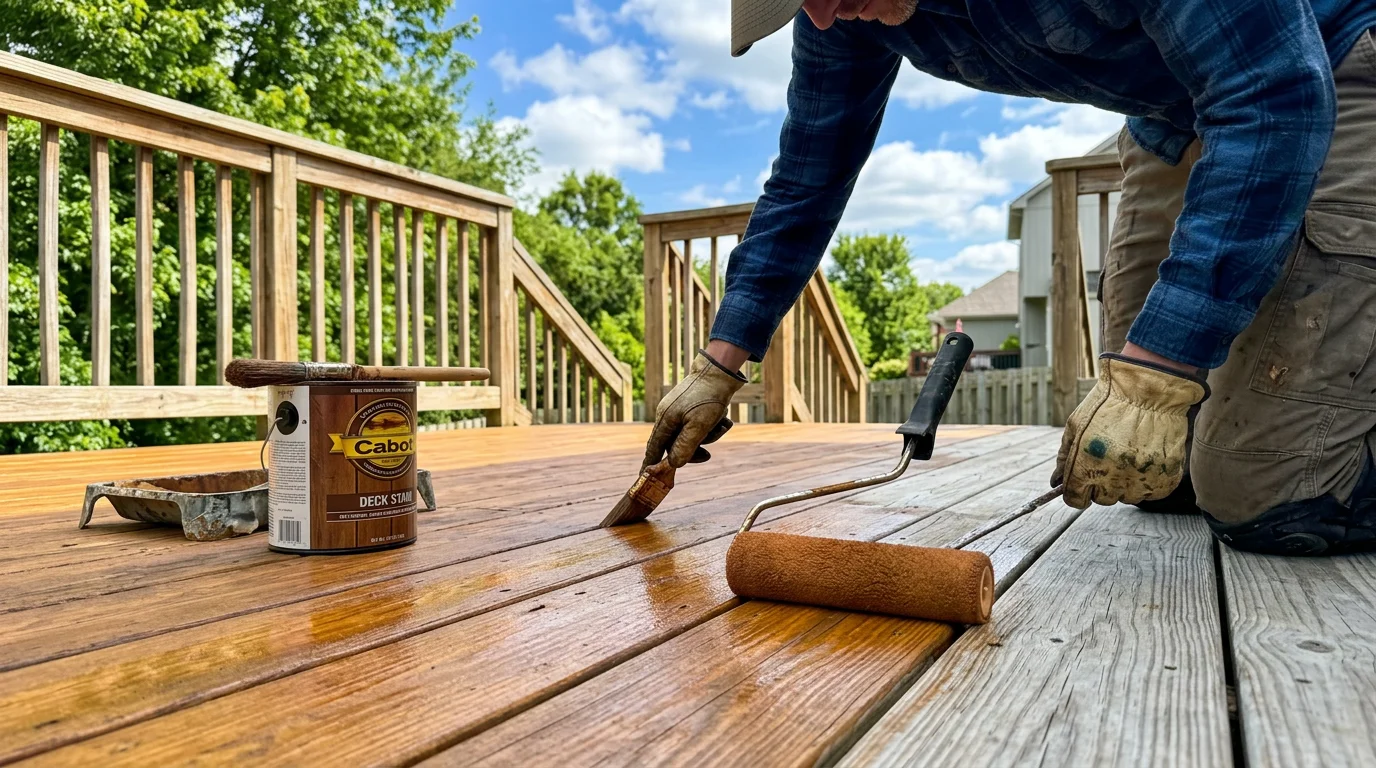
Your pressure-treated deck costs $8,000-15,000 to build (see our Ontario deck pricing guide for exact numbers), but it'll turn grey and start cracking within two years if you don't protect it. Ontario's freeze-thaw cycles are brutal on bare wood. You need a stain that can handle -30°C winters and +35°C summers without peeling, fading, or letting moisture in.
Here's what actually works in our climate, tested on decks across Kitchener-Waterloo-Cambridge.
Best Overall: Cabot Australian Timber Oil
Price: $85-110/gallon (covers 150-250 sqft per coat)
🏗️ Planning a deck project?
Get a free manual project review, or visualize your dream deck with AI before requesting quotes.
Type: Penetrating oil-based
Recoat: Every 1-2 years
This is the go-to for deck builders in KWC. It penetrates deep into pressure-treated lumber instead of sitting on the surface like film-forming stains. That means it won't peel when ice and snow do their worst.
Why it works in Ontario:
- No film to crack during freeze-thaw cycles
- Lets wood breathe — moisture can escape instead of getting trapped
- Easy touch-ups without stripping the whole deck
- Resists mold and mildew in humid Ontario summers
The catch: You'll need to recoat every 1-2 years. Horizontal surfaces (deck boards) wear faster than vertical railings. Budget $350-650 in stain costs for a typical 300 sqft deck per application.
Application tip: Wait at least 60 days after your deck is built before staining new pressure-treated wood. The wood needs to dry below 15% moisture content or the stain won't penetrate properly.
Best Budget Option: Olympic Maximum Semi-Transparent
Price: $45-65/gallon (covers 200-350 sqft per coat)
Type: Water-based acrylic
Recoat: Every 2-3 years
Available at most hardware stores in KWC, this water-based stain offers decent protection at half the price of premium oils. It's a semi-transparent formula, so you'll still see the wood grain.
Pros:
- Easy cleanup with soap and water
- Low VOC — can stain even with windows open
- Fast dry time (4-6 hours between coats)
- Better UV protection than most oil-based stains
Cons:
- Forms a thin film that can eventually peel in high-traffic areas
- Less moisture resistance than penetrating oils
- Requires more surface prep — won't hide imperfections
Use this if you're staining a low deck with good drainage underneath. Avoid it on horizontal surfaces that pool water.
Best for Cedar: Sansin Enviro Stain
Price: $95-135/gallon (covers 150-200 sqft per coat)
Type: Water-based penetrating hybrid
Recoat: Every 3-4 years on cedar, 2-3 on pressure-treated
This Canadian-made stain is engineered specifically for our climate. It combines the deep penetration of oil stains with the easy cleanup and durability of water-based formulas.
What makes it different:
- Water-based but penetrates like an oil
- No lap marks or blotchiness on cedar
- Self-priming on most softwoods
- Won't darken or "over-stain" cedar's natural color
Cedar decks cost $55-80/sqft installed in KWC, so protecting that investment matters. Sansin keeps cedar looking natural longer than most stains. For pricing context, see our composite vs wood comparison.
Best Longevity: Sikkens DEK Finish
Price: $105-140/gallon (covers 125-175 sqft per coat)
Type: Translucent alkyd
Recoat: Every 3-5 years
This is expensive, but it lasts. Sikkens uses translucent alkyd technology — it's not quite a solid stain, not quite transparent. You get strong UV protection while still seeing wood grain.
Performance notes:
- Excellent adhesion to weathered wood
- Resists cracking and peeling in freeze-thaw
- Available in 16 semi-transparent colors
- Requires two coats for best results
The upfront cost is 30-40% higher than budget options, but if you're keeping your deck for 15+ years, you'll do fewer recoats. That saves labour time and mess.
Solid Stain for Older Decks: Benjamin Moore Arborcoat Solid
Price: $75-95/gallon (covers 300-400 sqft per coat)
Type: Solid acrylic
Recoat: Every 4-7 years
If your deck is 10+ years old with greying, cracking, or mismatched boards, solid stain is your best option. It completely hides the wood grain and gives you a uniform painted look.
Best uses:
- Covering weathered or grey wood
- Hiding repairs or replacement boards
- Matching deck to house trim color
- Maximum UV and moisture protection
Downside: Once you go solid, you can't go back to transparent or semi-transparent without stripping. It's also more likely to peel if applied over failing stain, so surface prep is critical.
Solid stain works well on decks that are structurally sound but cosmetically tired. If your framing is rotted, no stain will fix that — you need a rebuild.
Oil-Based vs. Water-Based: What Works in Ontario
Oil-based stains:
- Penetrate deeper into wood
- Better moisture resistance
- Won't peel or blister
- Require mineral spirits for cleanup
- Longer dry times (24-48 hours)
- Higher VOCs
Water-based stains:
- Easier cleanup
- Faster dry times
- Better UV protection
- Less penetration (forms a film)
- Can peel if moisture gets underneath
- Lower odor
For pressure-treated decks in Ontario's freeze-thaw climate, oil-based penetrating stains outperform water-based films. The exception: if you're maintaining a deck every 1-2 years and want fast dry times, water-based works fine.
For cedar or exotic hardwoods, high-quality water-based hybrids like Sansin give you the best of both worlds.
Coverage Rates and Real Costs
Here's what you'll actually spend to stain a 300 sqft deck (typical 12' × 25') with railings:
| Stain Type | Gallons Needed | Cost Per Application | Recoat Frequency | 10-Year Cost |
|------------|----------------|---------------------|------------------|--------------|
| Cabot Australian Timber Oil | 2-3 gallons | $220-330 | Every 1-2 years | $1,100-2,000 |
| Olympic Maximum | 1-2 gallons | $90-130 | Every 2-3 years | $300-520 |
| Sansin Enviro Stain | 2-3 gallons | $285-405 | Every 3-4 years | $570-1,080 |
| Sikkens DEK | 3-4 gallons | $420-560 | Every 3-5 years | $840-1,400 |
| Arborcoat Solid | 1-2 gallons | $150-190 | Every 4-7 years | $300-475 |
These numbers assume two coats on bare wood, then one maintenance coat at recoat intervals. Horizontal surfaces wear faster than railings — you might need to touch up deck boards annually even if railings look fine.
Application Tips for Ontario Decks
Timing: Stain when temperatures are between 10-30°C with no rain in the forecast for 24-48 hours. Late spring (May-June) and early fall (September) are ideal in KWC. Avoid staining in direct summer sun — the stain will dry too fast and you'll get lap marks.
Prep work:
1. Clean with a deck cleaner or brightener
2. Strip old failing stain if it's peeling
3. Sand rough spots and splinters
4. Test moisture — should be under 15% before staining
Skip the pressure washer if possible. It fuzzes up the wood grain and can force water deep into the boards. A stiff brush and garden hose works better for most cleaning.
Application:
- Use a pad applicator on deck boards (faster than brushing)
- Brush railings and stairs
- Apply in the direction of the wood grain
- Wipe off excess after 10-15 minutes to avoid tackiness
- Backbrush to ensure penetration
For detailed Ontario deck maintenance schedules, including when to clean, stain, and inspect, we have a full guide.
What About Composite Decking?
Composite decks don't need staining — the color is mixed into the material. But they're not maintenance-free. You'll still need to clean mold, snow, and salt buildup annually.
Composite costs $65-95/sqft installed versus $45-65/sqft for pressure-treated. The premium pays for zero staining over the deck's lifetime. See our full composite deck cost breakdown for KWC pricing.
Red Flags: When Your Deck Stain Is Failing
Peeling or flaking: The stain has lost adhesion. You'll need to strip and recoat — spot-treating won't work.
Grey patches: UV degradation. The stain has worn through and wood is exposed. Recoat within 6 months or you'll have moisture damage.
Sticky or tacky surface: Over-application or staining over wet wood. Strip and start over.
Black mold or mildew: The stain isn't preventing moisture penetration. Clean with a mildew remover and recoat with a stain containing mildewcide.
Water soaking in instead of beading: The stain is spent. Time to recoat before freeze-thaw damage starts.
If your deck boards are warped or rotting, stain won't fix structural issues. You're looking at a repair or rebuild.
DIY vs. Hiring a Contractor
DIY costs for a 300 sqft deck:
- Stain: $90-560
- Cleaner/brightener: $25-40
- Brushes/pads/rollers: $30-60
- Total: $145-660
Time: 6-12 hours spread over 2-3 days (cleaning, drying, two coats)
Professional staining: $1.50-3.50/sqft including labour, materials, and prep. For a 300 sqft deck, expect $450-1,050.
Contractors bring commercial sprayers, know how to handle weathered wood, and warranty their work. If your deck has failing stain that needs stripping, hiring out makes more sense — stripping is slow, messy work.
For new decks or simple recoats, DIY is straightforward if you have a weekend and decent weather.
🎨 Not sure which material to pick?
Upload a photo of your backyard and see exactly how Trex, TimberTech, or cedar would look — free and instant.
Common Questions
How long should I wait to stain a new deck in Ontario?
Wait 60-90 days minimum for new pressure-treated lumber. The wood is saturated with preservatives and needs to dry to under 15% moisture content before stain will penetrate. Test with a moisture meter or sprinkle water on the wood — if it beads up, it's still too wet. If it soaks in, you're ready. Many builders recommend waiting until the following spring after a summer/fall build.
Can I stain my deck in cold weather?
Only if temperatures stay above 10°C during application and for 24-48 hours after. Most stains won't cure properly in cold weather, leading to poor adhesion and early failure. In Ontario, this limits you to May through September for most products. Some "cold-weather" formulas claim to work down to 2°C, but performance is worse than ideal-condition applications.
Do I need to strip old stain before recoating?
Only if the old stain is peeling, flaking, or forming a thick film. Penetrating oil-based stains can usually be recoated without stripping — just clean and apply a fresh coat. Solid stains or failing semi-transparent stains need to be removed or they'll trap moisture underneath. Use a stain stripper and pressure washer (carefully), or rent an orbital deck sander for badly failing stain.
What's the best stain color for hiding dirt?
Medium-tone semi-transparent browns and greys hide dirt, pollen, and leaf stains better than light tones or clear stains. Solid stains hide everything but show dirt more obviously than textured wood grain. Very dark stains (black, dark walnut) show every speck of dust and pollen — fine for low-traffic areas, annoying on deck boards.
How do I stain around deck joists and ledger boards?
You can't easily stain the underside of a deck after it's built. Focus on visible surfaces: deck boards, stairs, railings, fascia, and skirting. The ledger board attached to your house should have flashing and proper water management to prevent rot — stain alone won't save a poorly detailed ledger. Some builders apply joist tape or membrane during construction to protect framing from moisture.
Upload a backyard photo and preview real decking materials with AI — free, instant, no sign-up.
Permits, costs, material comparisons, and questions to ask before requesting quotes — delivered to your inbox.