
Composite Decking Scratches: How to Repair and Prevent
Learn how to repair composite decking scratches and prevent damage. Ontario homeowner's guide to fixing scuffs, gouges, and surface damage on composite boards.
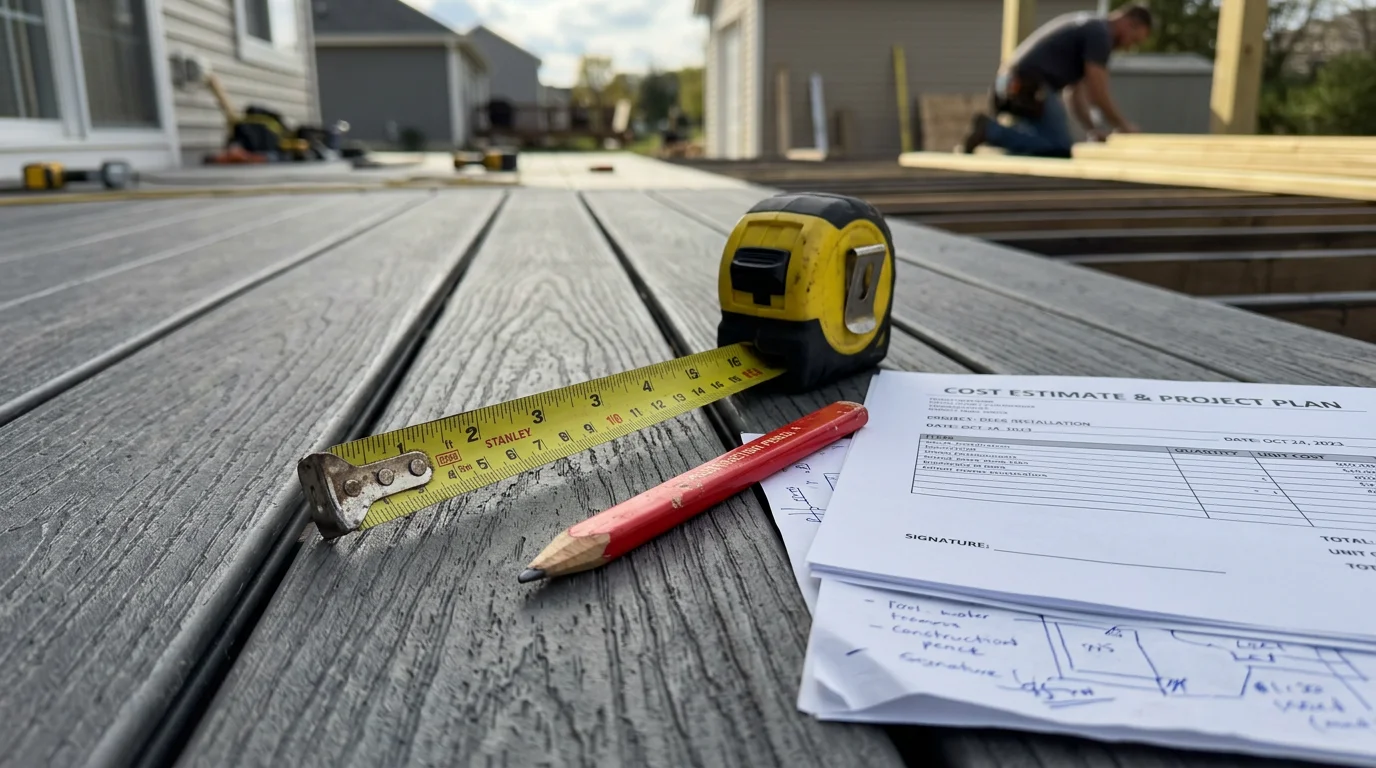
You dropped a metal lawn chair during setup. Dragged the barbecue across the boards without lifting. The dog's claws left white marks running the length of the deck. Now you're staring at scratches on composite decking you thought was "maintenance-free."
Composite boards resist rot and insects, but they're not scratch-proof. The good news: most surface scratches can be minimized or repaired without replacing entire boards. The bad news: deep gouges in capped composite may expose the core material, and those are harder to fix invisibly.
Here's how to assess damage, repair what you can, and prevent scratches from happening in the first place.
Types of Composite Decking and Scratch Resistance
Not all composite boards scratch the same way. Your repair approach depends on what you're working with.
🏗️ Planning a deck project?
Get a free manual project review, or visualize your dream deck with AI before requesting quotes.
Uncapped composite (older generation boards) are wood fiber and plastic blended throughout. They scratch more easily than modern boards, but they're also easier to repair because the material is consistent from surface to core. Sand the scratch, and you're sanding the same material all the way down.
Capped composite (modern standard on brands like Trex, TimberTech, and Fiberon) has a plastic polymer cap bonded over a wood-plastic composite core. The cap resists scratches, stains, and fading better than uncapped boards. But if you gouge through the cap, you expose a lighter core that stands out visually. Repairing capped composite scratches requires blending the repair into the surrounding cap material, which is trickier.
Co-extruded boards (premium category) have a thicker cap layer than standard capped boards—often 2-3 times thicker. They're the most scratch-resistant option on the market. If you're shopping for new decking and scratch resistance matters, co-extruded boards from top composite brands are worth the extra $2-4 per linear foot.
Ontario's freeze-thaw cycles don't directly affect scratch resistance, but they do affect how composite expands and contracts. Boards that shift seasonally are more likely to rub against furniture legs or deck fixtures, creating friction marks. Proper deck board spacing reduces this movement.
Assessing Scratch Depth: Surface vs. Deep Gouges
Before you start repairs, figure out what you're dealing with.
Surface scratches sit in the cap layer (or surface layer on uncapped boards). They appear as light scuffs, white marks, or shallow lines. Run your fingernail across the scratch—if you can't feel a groove, it's surface-level. These are the easiest to fix.
Moderate scratches penetrate the cap but don't fully expose the core. You'll feel a groove, and the scratch may appear lighter than the surrounding board. These require more work but are still repairable.
Deep gouges go through the cap entirely, exposing the wood-plastic core. The core is usually tan, gray, or brown regardless of the board's surface color. If you see a completely different color inside the scratch, it's a deep gouge. These are the hardest to repair invisibly, and in some cases, board replacement makes more sense.
Check the scratch in bright daylight. Shadows and artificial light can make damage look worse than it is.
How to Repair Surface Scratches on Composite Decking
Most scratches homeowners worry about are surface-level. Here's the fix.
Clean the Area First
Use a deck cleaner or warm soapy water to remove dirt, pollen, and grime from the scratched board. Let it dry completely. Dirt trapped in the scratch will interfere with repairs.
Heat Method (Works on Many Surface Scratches)
Composite contains plastic, and plastic responds to heat. For light scratches:
1. Use a heat gun on low setting (not a propane torch—too hot, too fast)
2. Hold the heat gun 6-8 inches away from the scratch
3. Move it slowly back and forth over the damaged area for 20-30 seconds
4. Watch for the scratch to soften and blend into the surrounding surface
5. Stop immediately if the board starts to shine, warp, or discolor
The heat melts the plastic cap slightly, allowing it to flow back into the scratch. This works best on shallow scuffs and white marks from furniture legs or pet claws.
Ontario winter note: Don't attempt heat repairs when boards are wet, frozen, or below 10°C (50°F). The moisture and cold interfere with plastic flow, and you risk cracking the cap layer.
Abrasive Method (For Stubborn Surface Marks)
If heat doesn't work, try gentle abrasion:
1. Use fine-grit sandpaper (220-grit or higher) or a Scotch-Brite pad
2. Sand with the grain of the wood texture, not across it
3. Use light pressure—don't grind into the board
4. Wipe clean and check progress frequently
5. Stop when the scratch blends in
This removes a microscopic layer of the cap, leveling the scratch with the surrounding surface. It works on uncapped boards too, though you'll need to sand a slightly larger area to blend the repair.
Don't use coarse sandpaper or power sanders. You'll remove too much material and create a visible divot.
Repairing Moderate to Deep Scratches
When the scratch goes deeper than the cap layer, you need a different approach.
Color-Matched Filler or Wax
Composite deck manufacturers sell repair kits with color-matched wax or putty. Trex, TimberTech, and Fiberon all offer these for their product lines. You can also use furniture repair wax sticks in a matching color (available at hardware stores).
1. Clean and dry the scratched area
2. Apply wax or filler directly into the scratch using a putty knife or the wax stick itself
3. Overfill slightly—the material will compress
4. Smooth with a plastic scraper or your finger
5. Wipe away excess with a soft cloth
6. Let it cure (check product instructions)
The repair won't be invisible up close, but from normal viewing distance (standing on the deck), it blends well. This method works for gouges up to 1/8 inch deep.
Epoxy or Composite Repair Compound
For deeper gouges (more than 1/8 inch), epoxy-based fillers provide a more durable repair:
1. Clean the gouge thoroughly—use rubbing alcohol if needed
2. Mix epoxy according to package directions (two-part epoxies bond strongest)
3. Add colorant or sawdust from a scrap composite board to match the color
4. Press epoxy into the gouge with a putty knife
5. Overfill slightly, then level it flush with the board surface
6. Let it cure fully (usually 24 hours)
7. Sand lightly with 220-grit sandpaper to blend edges
Epoxy is harder than composite, so it won't flex with temperature changes. Use it only for stationary damage, not for scratches near board ends where expansion occurs.
When to Replace the Board Instead
If the gouge is longer than 12 inches, wider than 1/4 inch, or located in a high-traffic area (like the top of stairs), replacement often looks better than a large visible repair.
Composite boards aren't structural—you can replace individual boards without affecting the deck's integrity. If your deck is less than five years old, contact the installer or manufacturer. Many composite warranties cover defects but not accidental damage, though some installers will replace a board at cost as a goodwill gesture.
Expect to pay $8-15 per linear foot for replacement material plus $50-150 in labor if you hire it out. If your deck is already due for maintenance work, replacing a scratched board during that visit saves a separate trip charge.
Preventing Scratches on Composite Decking
Repairs work, but prevention is easier.
Use Furniture Pads and Protective Glides
Metal and hard plastic furniture legs are the most common scratch culprits. Add felt pads, rubber caps, or composite-safe glides to the bottom of chairs, tables, and planters. Replace them annually—they compress and wear out.
For heavy items like grills and hot tubs, use rubber mats or composite deck tiles underneath. These distribute weight and prevent point-load scratches when you shift the item.
Lift, Don't Drag
Sounds obvious, but dragging furniture across composite boards is the fastest way to create scratches. If something's too heavy to lift comfortably, slide a moving blanket or cardboard underneath before dragging.
Trim Pet Nails Regularly
Dog claws don't usually gouge composite, but they do leave light surface scratches that accumulate over time. Keep nails trimmed, especially on large breeds. If your dog sprints across the deck daily, expect some wear—it's unavoidable, but regular deck cleaning minimizes the visibility.
Avoid Metal Shovels and Sharp Tools
In winter, use a plastic snow shovel on composite decks, not metal. Metal edges scrape the cap layer. Similarly, never use metal scrapers or wire brushes for cleaning—they'll scratch the surface you're trying to protect.
Ontario winters mean snow and ice, but composite decking handles freeze-thaw better than wood. Just treat it gently during removal. See our full guide on winter deck care for seasonal precautions.
Choose Scratch-Resistant Boards for New Builds
If you're planning a new deck, scratch resistance should factor into material choice. Co-extruded composite boards with thick cap layers (like Trex Transcend, TimberTech AZEK, or Fiberon Paramount) resist scratches better than standard capped boards.
You'll pay more upfront—composite deck costs in Ontario run $65-95 per square foot installed, with premium co-extruded boards at the higher end. But if you have kids, pets, or heavy furniture, the durability pays off.
Still deciding between composite and wood? Read our comparison on composite vs. wood decking to see how scratch resistance stacks up against other factors.
What Not to Do When Repairing Composite Scratches
Bad repair attempts make scratches worse. Avoid these mistakes.
Don't use harsh chemicals. Acetone, paint thinner, and strong solvents can discolor or damage the cap layer. Stick to mild soap, water, and manufacturer-approved cleaners.
Don't overheat the board. Excessive heat warps composite, creates shiny spots, or melts the cap layer entirely. If you smell burning plastic, you've gone too far.
Don't paint or stain composite decking. Unlike wood, composite doesn't absorb stain. Paint sits on the surface, peels within a season, and looks worse than the original scratch. Manufacturers void warranties if you paint their boards.
Don't use coarse sandpaper or power tools. Aggressive sanding removes too much material, creates low spots, and changes the board's texture. If you can see a visible patch after sanding, you went too deep.
Don't ignore deep gouges. Exposed core material absorbs moisture, dirt, and mold more readily than the cap layer. Fix or replace damaged boards before Ontario's wet spring and fall seasons allow water infiltration.
How Long Do Repairs Last?
Surface scratch repairs (heat method or light sanding) are permanent if done correctly. The cap layer re-fuses or blends, and the repair doesn't separate over time.
Wax and filler repairs last 1-3 years before they need touch-ups. Freeze-thaw cycles, UV exposure, and foot traffic gradually wear down the filler. Keep the original repair kit on hand for maintenance.
Epoxy repairs are the most durable, often lasting 5-10 years or longer. They're harder than composite, so they don't compress or wear down easily. The main drawback is color matching—epoxy may fade differently than the surrounding board over time, making the repair more visible after several years.
If your deck is more than 10 years old and you're making multiple repairs, it might be time to consider a full deck rebuild vs. resurface evaluation.
🎨 Not sure which material to pick?
Upload a photo of your backyard and see exactly how Trex, TimberTech, or cedar would look — free and instant.
Common Questions
Can you sand out scratches on composite decking?
Yes, but only light surface scratches. Use 220-grit or finer sandpaper and sand gently with the grain. This works best on uncapped composite or very shallow scratches in capped boards. Don't sand deep gouges—you'll remove too much cap material and expose the core. For anything deeper than surface-level, use heat repair or filler instead.
Will scratches on composite decking get worse over time?
Surface scratches usually stay the same unless you continue damaging the area. Deep gouges that expose the core can worsen because the core material is porous and absorbs moisture, dirt, and mold. Once the core is exposed, water infiltration during Ontario's freeze-thaw cycles can cause the scratch to widen or the surrounding cap to lift. Fix deep scratches promptly to prevent secondary damage.
Does composite decking scratch easier than wood?
No. Composite is more scratch-resistant than softwoods like pressure-treated pine or cedar. However, hardwoods like ipe or cumaru are harder than composite and resist deep gouges better. The trade-off is that wood scratches are easier to sand and refinish, while composite scratches require specialty repairs. Capped composite with a thick cap layer is the most scratch-resistant option among mid-priced materials.
Can scratches void my composite decking warranty?
No. Accidental damage like scratches, gouges, or pet damage isn't covered under composite decking warranties, but it also doesn't void the warranty. Manufacturers like Trex, TimberTech, and Fiberon cover defects in materials (fading, staining, structural issues), not wear and tear or physical damage. However, if you paint, stain, or use unapproved cleaning chemicals on composite boards, that can void the warranty. Always follow manufacturer care guidelines.
Are some composite decking colors more scratch-resistant than others?
No, color doesn't affect scratch resistance—cap thickness does. However, lighter colors show scratches less visibly than dark colors. White marks from furniture legs or pet claws stand out starkly on chocolate brown or charcoal gray boards but blend in on tan or light gray boards. If scratch visibility is a concern, choose lighter tones when selecting composite decking colors for your Ontario deck guides.
Related: Fence Post Rot Repair in Ontario: When to Fix vs Replace.
You may also find Power Washing Your Deck in Ontario: PSI Guide and Tips helpful.
Upload a backyard photo and preview real decking materials with AI — free, instant, no sign-up.
Permits, costs, material comparisons, and questions to ask before requesting quotes — delivered to your inbox.