
Custom Deck Builders in Cambridge (2026)
Find trusted custom deck builders in Cambridge, Ontario. Compare 2026 costs, design options, and tips for building a deck that handles harsh winters.
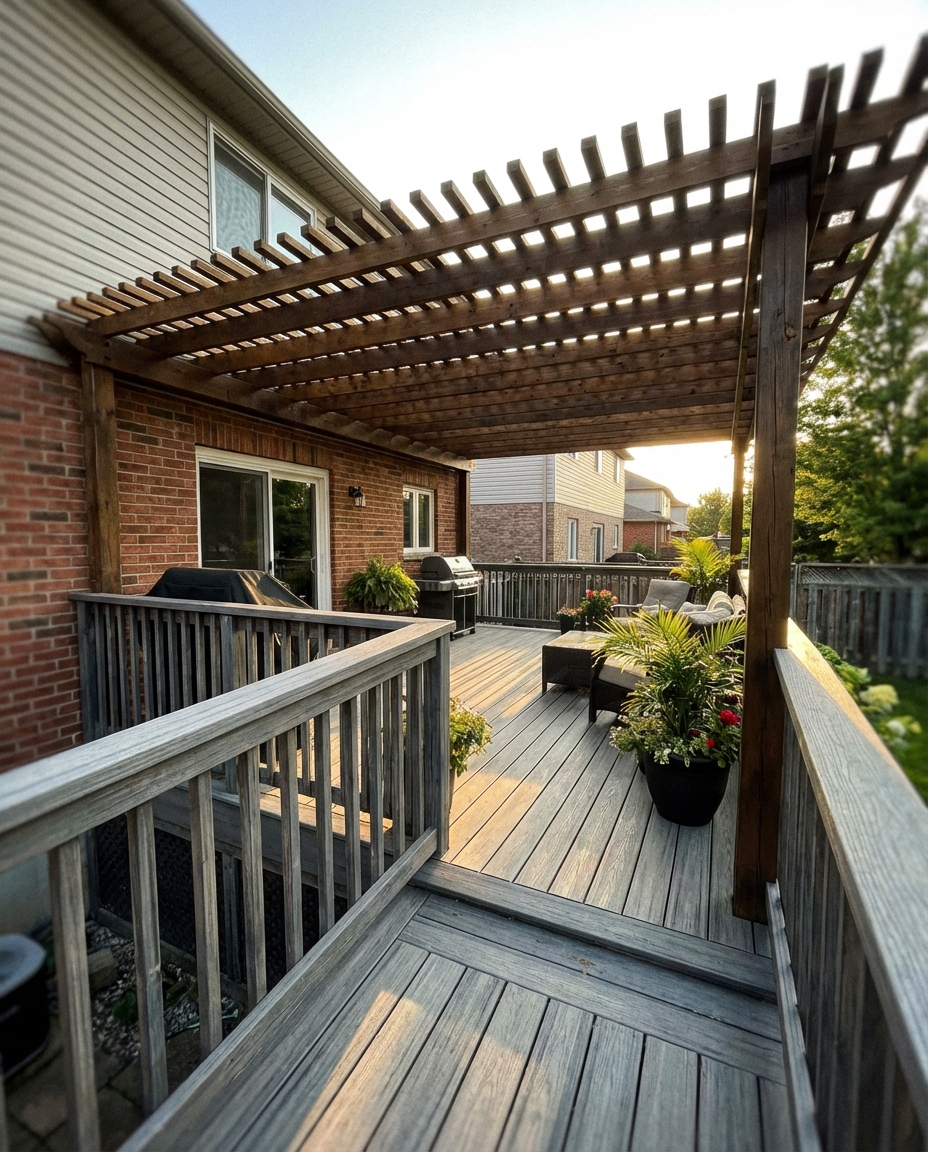
You've got a backyard that doesn't work the way you want it to. Maybe the grade slopes awkwardly. Maybe you need distinct zones for cooking, lounging, and the kids. Maybe you've browsed enough cookie-cutter deck photos to know that a standard rectangle bolted to the back of your house isn't going to cut it.
Looking for more regional information? Check out our Ontario Decking Hub.
That's where custom deck builders come in — and in Cambridge, Ontario, "custom" means more than just picking a board colour. It means engineering a structure that survives freeze-thaw cycles, heavy snow loads, and five months of winter while still looking like something you'd see in a design magazine.
Here's what you actually need to know before hiring one.
For a broader look at deck pricing across different materials and regions, see our complete deck cost guide.
What Makes a Deck 'Custom' in Cambridge
Every deck is technically built to order. So what separates a custom build from a standard one?
🏗️ Planning a deck project?
Get a free manual project review, or visualize your dream deck with AI before requesting quotes.
A standard deck uses a basic rectangular footprint, stock railing, and whatever pressure-treated lumber the builder has on hand. A custom deck starts with your property, your lifestyle, and your budget — then works backward into a design.
In Cambridge specifically, custom means accounting for:
- Frost line depth of 36–60 inches — footings must extend below this or your deck will heave and shift within a couple winters
- Snow load ratings — Ontario Building Code requires decks to handle ground snow loads typical for the Region of Waterloo, which means beefier joists and closer spacing than builders in milder climates would use
- Drainage and grading — Cambridge has plenty of properties with uneven terrain, especially in areas like Blair, Hespeler, and the older neighbourhoods near Galt. Custom builders work with that grade instead of fighting it
- Frost heave on footings — helical piles or Sonotubes poured below the frost line are non-negotiable here
A builder who hands you a quote without visiting your property or asking about your soil conditions isn't building custom. They're building a template.
If you're still weighing whether to hire a pro or tackle it yourself, read Can I Build My Own Deck in Ontario? for a realistic breakdown of what DIY actually involves.
Custom Deck Features Worth Paying For
Not every upgrade delivers equal value. Some features genuinely improve how you use your deck for years. Others are expensive novelties. Here's where your money goes furthest in Cambridge's climate.
Features That Earn Their Cost
- Multi-level transitions — If your yard slopes, stepping the deck down in tiers looks better and costs less than building one massive elevated platform with extensive framing
- Built-in seating with storage — Benches along the perimeter double as storage for cushions, toys, and winter covers. In Cambridge, you're storing outdoor gear for six months of the year
- Composite or PVC decking — Wood looks great in June. By March, after salt, snow, and freeze-thaw cycles, it tells a different story. Composite and PVC hold up dramatically better with almost zero annual maintenance
- Glass or cable railing — Opens up sightlines and handles ice better than wood spindles, which trap moisture and rot from the inside out
- LED deck lighting — Post caps, stair risers, and under-rail strips extend your usable hours from May through October. With Cambridge's shorter evenings by September, lighting makes a real difference
- Under-deck drainage systems — If your deck is elevated, capturing water underneath gives you dry storage or even a second living area below
Features to Think Twice About
- Exotic hardwood decking (like Ipe) in high-traffic areas — stunning but brutal to maintain in Ontario winters
- Elaborate pergola structures that aren't engineered for snow load — a decorative pergola that collapses under wet snow is a liability
- Hot tub platforms without proper structural reinforcement — a filled hot tub weighs 3,000–4,000 lbs, and your framing needs to reflect that
For a deeper look at materials that handle our winters, check out Best Decking Materials for Ontario's Freeze-Thaw Climate.
Custom Deck Costs in Cambridge: What to Budget
Let's talk real numbers. These are 2026 installed prices in CAD, including materials, labour, footings, and basic railing. Permits and design fees are extra.
| Material | Cost Per Sq Ft (CAD, Installed) | Best For |
|---|---|---|
| Pressure-treated wood | $30–$55 | Budget builds, large footprints |
| Cedar | $40–$65 | Natural look, moderate budgets |
| Composite | $50–$85 | Low maintenance, long-term value |
| Trex (premium composite) | $55–$90 | Brand reliability, colour selection |
| Ipe (hardwood) | $70–$120 | High-end aesthetics, extreme durability |
What Does That Look Like for a Real Project?
For a typical 12x16 custom deck (192 sq ft) in composite:
- Materials and labour: $9,600–$16,320
- Footings (helical piles or Sonotubes): $1,200–$3,000
- Railing (aluminum or glass): $2,000–$5,000
- Permit fees: $200–$500
- Design/engineering (if required): $500–$1,500
Total range: $13,500–$26,300 CAD
For a larger build, see our detailed breakdowns for 16x20 deck costs in Ontario and 20x20 deck costs in Ontario.
Why Custom Costs More (and When It's Worth It)
A standard 12x16 rectangle in pressure-treated wood might run $6,000–$10,000 installed. So why pay double or more for custom?
Because custom builders are solving problems:
- Sloped lots require engineered framing, sometimes with posts over 8 feet tall
- L-shaped or wraparound designs need more complex joist layouts and additional footings
- Built-in features (benches, planters, lighting, privacy screens) add labour hours but eliminate the need to buy and install these separately later
- Material upgrades cost more upfront but save hundreds per year in maintenance — no annual staining, sealing, or board replacement
The short Cambridge building season also plays a role. Contractor schedules fill up fast between May and October. Book by March if you want your deck built before summer.
How to Find a Custom Deck Builder in Cambridge
Cambridge sits in the Region of Waterloo, and most custom deck builders here serve Kitchener, Waterloo, Guelph, and surrounding areas. That's actually an advantage — a larger service area means more completed projects you can visit and verify.
What to Look For
- Portfolio of custom work — not just photos of standard rectangles. Ask to see multi-level builds, curved elements, or projects on challenging lots
- Engineering capability — can they produce stamped drawings if your project requires them? For elevated decks or anything attached to the house, this matters
- Knowledge of Cambridge building codes — deck permits are typically required for structures over 24 inches above grade or over 100 sq ft in Cambridge. A builder who doesn't mention permits upfront is a red flag. Read our Cambridge deck permit application guide for the full process
- Warranty details — workmanship warranty (typically 2–5 years) separate from manufacturer material warranties
- WSIB coverage and liability insurance — non-negotiable. If a worker gets injured on your property and the builder isn't covered, that's your problem
Red Flags
- Won't provide references or show completed local projects
- Quotes without a site visit
- Pressure to sign immediately or pay large deposits upfront (more than 10–15% is unusual for reputable builders)
- No written contract with scope, timeline, and payment schedule
We've compiled a list of best deck builders in Cambridge for 2026 if you want a starting point. Also worth checking builders in Kitchener and Waterloo, since many serve all three cities.
Getting Quotes
Get three quotes minimum. But don't just compare bottom-line prices. Compare:
- Footing method (helical piles vs. Sonotubes vs. deck blocks — deck blocks are not code-compliant for most custom builds)
- Joist spacing (12" vs. 16" on centre — tighter spacing means a stiffer, more durable deck)
- Fastening system (hidden fasteners vs. face-screwed)
- What's included vs. what's extra (railing, stairs, lighting, permit handling)
Use PaperPlan to visualize different decking materials on your own home before committing — it helps narrow your material choices before you even call a builder.
Design Process: From Concept to Build
A proper custom deck build follows a clear sequence. Knowing what to expect keeps you from getting surprised by timelines or costs.
Step 1: Consultation and Site Assessment
The builder visits your property, takes measurements, checks grade and drainage, identifies the frost line situation, and discusses how you want to use the space. This usually takes 1–2 hours.
Step 2: Concept Design
You'll receive a preliminary design — sometimes a 3D rendering, sometimes detailed drawings. This is where you finalize:
- Overall footprint and shape
- Number of levels
- Material selections
- Railing style
- Built-in features (benches, planters, lighting, privacy screens)
- Stair placement and landing areas
Step 3: Engineering and Permits
For decks that are attached to the house or elevated significantly, Cambridge's Building Department may require engineered drawings. Your builder handles the permit application, but expect 2–4 weeks for approval during peak season.
Step 4: Build
A typical custom deck takes 1–3 weeks to build depending on complexity. The sequence:
- Footing installation (helical piles go in fast; poured Sonotubes need curing time)
- Framing — posts, beams, joists, blocking
- Decking installation
- Railing and stairs
- Lighting, trim, and finishing details
Step 5: Inspection and Handoff
Cambridge requires a final inspection for permitted decks. The inspector checks footing depth, structural connections, railing height (minimum 42 inches in Ontario), and guardrail spacing (maximum 4 inches between balusters).
For a broader look at timelines, see Backyard Renovation Timeline in Ontario.
Multi-Level, Curved & Specialty Decks
This is where custom builders really differentiate themselves from standard contractors.
Multi-Level Decks
Perfect for Cambridge properties with grade changes — and there are plenty, especially along the Grand River corridor and in the hills around Preston and Blair. Instead of one massive elevated platform, a multi-level design:
- Follows the natural terrain
- Creates distinct zones (dining up top, lounging below, fire pit at grade level)
- Reduces the need for tall posts and extensive lateral bracing
- Often costs less in framing than a single large elevated deck
Curved and Radius Decks
Curved edges, radiused corners, and flowing shapes are possible with both wood and composite. Composite boards bend more predictably with heat, making curves cleaner. Expect to pay a 15–25% premium over straight-edged designs for curved sections due to the additional labour and waste.
Specialty Builds
- Rooftop decks — rare in Cambridge but possible on flat-roof extensions. Requires waterproof membrane and structural assessment
- Pool surrounds — pool deck materials need to be slip-resistant, UV-stable, and handle chlorine splash
- Wraparound decks — continuous decking that wraps two or more sides of the house. Complex flashing details where the deck meets different wall materials
- Screened-in sections — extend your usable season by a month on each end, keeping mosquitoes and blackflies out during peak Cambridge bug season
🎨 Not sure which material to pick?
Upload a photo of your backyard and see exactly how Trex, TimberTech, or cedar would look — free and instant.
Frequently Asked Questions
How much does a custom deck cost in Cambridge, Ontario?
A custom composite deck in Cambridge typically runs $50–$85 per square foot installed in 2026. For a standard 12x16 build with railing, stairs, and footings, expect $13,500–$26,300 CAD all-in. Pressure-treated wood is cheaper at $30–$55/sq ft, but annual maintenance costs add up. Your total depends on materials, complexity, elevation, and built-in features.
Do I need a permit to build a custom deck in Cambridge?
In most cases, yes. Cambridge typically requires a building permit for decks that are over 24 inches above grade or exceed 100 square feet. Attached decks almost always need a permit. Freestanding decks close to grade may be exempt, but always confirm with Cambridge's Building Department. Building without a permit risks fines, forced removal, and complications when you sell your home — see the risks of building without a permit.
What is the best decking material for Cambridge's climate?
Composite and PVC decking perform best in Cambridge's freeze-thaw climate. They resist moisture absorption, won't crack from ice expansion, and don't need annual sealing or staining. Pressure-treated wood is the budget option but requires yearly maintenance to prevent rot and warping. Cedar falls in between — naturally resistant to decay but still needs sealing every 1–2 years. Check our comparison of the best low-maintenance decking in Canada for detailed brand recommendations.
When should I book a custom deck builder in Cambridge?
Book by March for a summer build. Cambridge's building season runs May through October, and reputable custom builders fill their schedules early. If you wait until May to start calling, you may not get on the calendar until August or September. The design and permit process alone takes 4–8 weeks, so starting conversations in January or February gives you the best shot at a June start date. Read more about the best time to build a deck in Ontario.
Can a custom deck increase my home's value in Cambridge?
A well-built custom deck typically recoups 60–75% of its cost at resale in the Ontario market. But the real value is in usability — a deck that fits your property and lifestyle gets used regularly, which matters more to most homeowners than ROI calculations. Buyers in Cambridge specifically look for outdoor living spaces that are ready to enjoy without modification, and a custom build signals quality over a basic builder-grade platform.
📋 Planning a deck project?
Get a free manual project review from our team — no obligation, no spam.
Get Free Project Review →Upload a backyard photo and preview real decking materials with AI — free, instant, no sign-up.
Permits, costs, material comparisons, and questions to ask before requesting quotes — delivered to your inbox.