
Deck Cost in Oshawa: What Homeowners Are…
What does a deck cost in Oshawa in 2026? Get real CAD pricing per square foot for composite, wood, and Trex — plus local tips to save on your build.
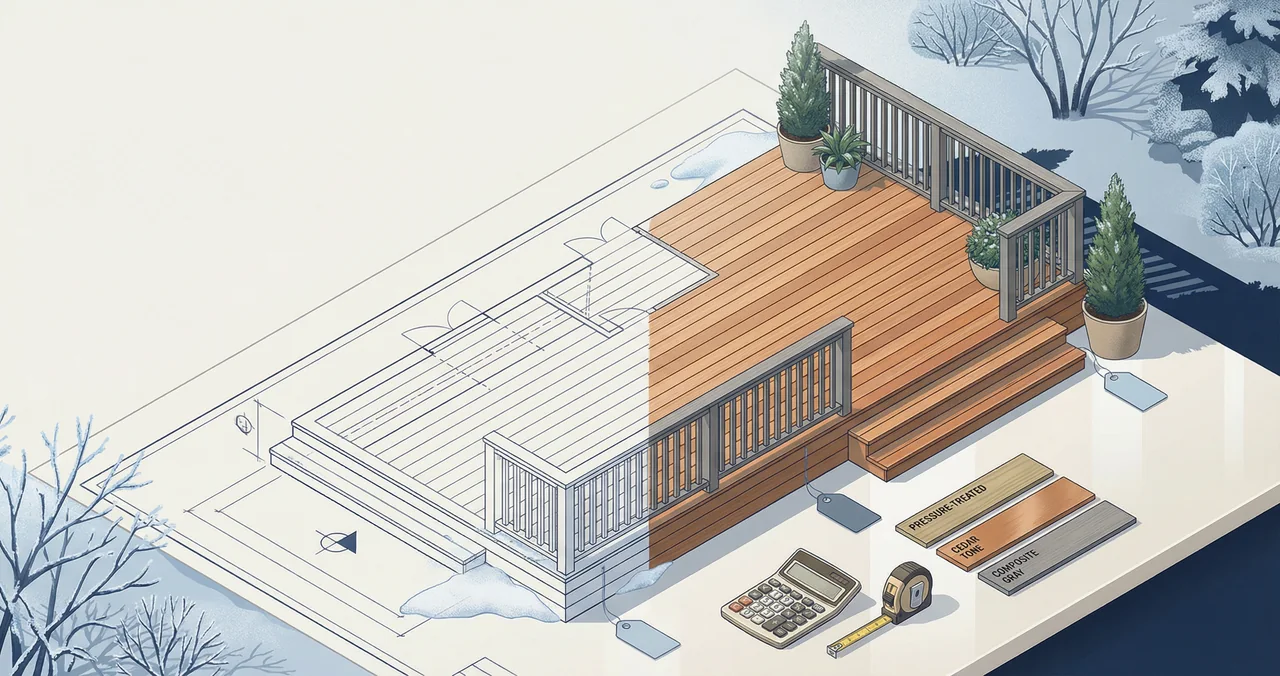
How Much Does a Deck Cost in Oshawa?
A standard 300 sq ft deck in Oshawa runs between $9,000 and $25,500 CAD installed, depending on the material you choose. That's a wide range — and the final number depends on everything from your decking material to your lot's grading to whether you're building in peak season or squeezing into a late-fall slot.
🏗️ Planning a deck project?
Get a free manual project review, or visualize your dream deck with AI before requesting quotes.
Looking for more regional information? Check out our Ontario Decking Hub.
Oshawa homeowners deal with some of the harshest freeze-thaw cycling in the GTA. That matters more than most people think when choosing materials and setting a budget. A deck that costs less upfront but needs resealing every spring and replacement boards every few years isn't actually cheaper.
Here's what Oshawa residents are actually paying in 2026 — with real numbers, not vague national averages.
🧮 Tool Alert: Deck Cost Calculator
Estimate your project costs in seconds based on local pricing bands for your area.
Calculate My Cost →For a broader look at deck pricing across different materials and regions, see our complete deck cost guide.
Average Deck Cost in Oshawa by Material
These are fully installed prices — materials, labour, fasteners, and basic railing included. All figures are in CAD for 2026.
| Material | Installed Cost per Sq Ft | 300 Sq Ft Deck Total |
|---|---|---|
| Pressure-Treated Wood | $30–$55 | $9,000–$16,500 |
| Cedar | $40–$65 | $12,000–$19,500 |
| Composite | $50–$85 | $15,000–$25,500 |
| Trex (brand-name composite) | $55–$90 | $16,500–$27,000 |
| Ipe (tropical hardwood) | $70–$120 | $21,000–$36,000 |
Pressure-treated is still the most common choice in Oshawa. It's affordable and readily available from local lumber yards. But if you're looking at the 10-year cost picture — factoring in annual staining, board replacement from moisture damage, and the time you spend maintaining it — composite decking closes the gap fast.
Ipe is rare in Oshawa residential builds. It's a premium product that makes more sense for commercial applications or homeowners with no budget ceiling. For most Durham Region families, the sweet spot sits between pressure-treated and mid-range composite.
Cost Per Square Foot Breakdown
That per-square-foot number breaks down into two chunks: materials and labour.
Materials Only (Per Square Foot)
- Pressure-treated lumber: $8–$18/sqft
- Cedar decking boards: $14–$25/sqft
- Composite boards: $18–$35/sqft
- Trex Select/Enhance: $22–$38/sqft
- Ipe decking: $30–$55/sqft
These are board costs only — they don't include framing lumber, joist hangers, screws, concrete for footings, or railing systems. Framing alone (typically pressure-treated regardless of your decking surface) adds $5–$12/sqft to the material bill.
What the "Extras" Actually Cost
People forget about the stuff that isn't deck boards:
- Concrete footings (Sonotubes): $80–$150 each, and you'll need 6–12 for a typical deck
- Railing system: $30–$80 per linear foot installed (aluminum and glass cost more than wood)
- Stairs: $75–$200 per step, depending on width and material
- Fascia and trim: $500–$1,500 for a standard deck
- Post bases and hardware: $300–$600 total
A 16x20 deck in Ontario will have higher absolute costs but a slightly lower per-square-foot rate than a small 10x12 — that's the economy of scale at work.
Labour Costs in Oshawa
Labour typically accounts for 40–60% of your total deck cost in Oshawa. That's higher than the national average, and there are a few reasons why.
Oshawa labour rates for deck installation run $20–$40 per square foot, depending on the complexity of the build. A simple, ground-level rectangular deck sits at the low end. A second-storey deck with wrap-around stairs, custom railing, and built-in benches pushes well past $40/sqft in labour alone.
Why Oshawa Labour Costs Run Higher
- Shorter building season. Most Oshawa deck contractors work a compressed May-through-October window. That's six months to fit in a full year's worth of projects. Demand outstrips supply from May through July.
- Footing depth requirements. Oshawa sits in a frost zone requiring footings at 48 inches minimum — some areas closer to 60 inches. Digging those footings takes more time and equipment than shallower frost zones.
- Proximity to the GTA. Oshawa contractors compete with Toronto-area wages. Skilled framers and deck builders can commute to higher-paying GTA jobs, which keeps local rates competitive.
- Code compliance. Durham Region enforces building codes actively. Contractors factor in the time for permit applications, inspections, and any required engineering drawings.
Pro tip: Book your contractor by March at the latest if you want a spring or early summer build. Oshawa builders' schedules fill fast, and waiting until May often means you're looking at an August or September start date.
What Affects Your Total Price
Two decks on the same Oshawa street can cost dramatically different amounts. Here's what moves the needle.
Deck Size and Shape
Straightforward math: bigger deck, bigger bill. But shape matters too. An L-shaped or wraparound deck requires more cuts, more waste, and more framing complexity. Angled corners and curves add 10–20% to labour costs compared to a simple rectangle.
For detailed pricing on popular sizes, check out the 12x16 deck cost guide or the 20x20 deck cost breakdown.
Height and Access
A deck that sits 24 inches or more above grade requires a building permit in Oshawa (more on that below). It also requires more structural support — taller posts, cross-bracing, and possibly beam upgrades. Second-storey decks can cost 50–100% more than ground-level builds because of the engineering, safety requirements, and scaffolding involved.
Site Conditions
Sloped lots, rocky soil, mature tree roots, or difficult access (like a narrow side yard with no gate wide enough for equipment) all add cost. If your yard in Taunton or Northwood slopes significantly, expect additional grading or retaining work.
Homes in older Oshawa neighbourhoods like Central Oshawa or Lakeview sometimes have smaller lots with tight setbacks, which limits equipment access and adds hand-digging time for footings.
Railings, Stairs, and Features
The deck surface is only part of the project:
- Glass railing panels: $150–$300 per linear foot installed — stunning but expensive
- Aluminum railing: $60–$120 per linear foot — popular across Ontario for its zero-maintenance appeal
- Wood railing: $40–$80 per linear foot — affordable but needs regular refinishing
- Built-in seating: $1,500–$4,000
- Pergola addition: $3,000–$10,000+
- Deck lighting: $500–$2,500 for a full lighting kit
Permits and Inspections
In Oshawa, a deck permit is typically required for any structure over 24 inches above grade or over 100 sq ft. The permit fee itself is modest — usually a few hundred dollars — but the process adds time and potentially costs for site plans or engineering drawings.
Contact Oshawa's Building Department directly for current requirements. Your contractor should handle the application, but understand what happens if you skip the permit — it can create serious problems when you sell your home.
Composite vs Wood: Cost Comparison
This is the biggest decision most Oshawa homeowners face. Here's the honest comparison.
| Factor | Pressure-Treated Wood | Composite |
|---|---|---|
| Upfront cost (installed, 300 sqft) | $9,000–$16,500 | $15,000–$25,500 |
| Annual maintenance | $200–$600 (stain + sealer) | $0–$50 (soap and water) |
| Lifespan | 10–15 years | 25–30+ years |
| 10-year maintenance cost | $2,000–$6,000 | $0–$500 |
| 10-year total cost | $11,000–$22,500 | $15,000–$26,000 |
| Warranty | None typical | 25–50 years |
The numbers tell the story. Over 10 years, the gap between wood and composite shrinks dramatically. Over 20 years, composite often wins outright.
Oshawa's Climate Tips the Scale
This is where local conditions matter. Oshawa gets hammered by freeze-thaw cycles — temperatures swinging above and below zero repeatedly through November to March. That cycling is brutal on wood. Water seeps into grain, freezes, expands, and splits the fibres. Road salt tracked onto a wood deck accelerates the damage.
Composite and PVC decking hold up significantly better against freeze-thaw. They don't absorb moisture the way wood does, so they resist the expansion-contraction cycle that destroys pressure-treated boards. If you go with wood, commit to annual sealing — ideally in early fall before the first freeze. The best deck sealers for Ontario are worth researching before you buy the cheapest can at the hardware store.
For a deeper dive into what survives Ontario winters, read our guide on the best decking materials for freeze-thaw conditions.
Use PaperPlan (paperplan.app) to visualize different decking materials on your own home before committing — seeing composite versus cedar on your actual house helps more than any showroom sample.
How to Save Money on Your Oshawa Deck
You don't have to blow your budget. Here are real strategies that Oshawa homeowners use to bring costs down — without cutting corners on quality.
1. Build in the Off-Season
Most Oshawa contractors offer 5–15% discounts for fall builds (September–October) when their schedules start to open up. Some will even do late-October installations if the weather cooperates. You lose nothing on quality — the concrete for footings just needs to cure before hard frost.
2. Keep the Design Simple
A rectangular deck with a single set of stairs is the most cost-efficient layout. Every angle, curve, notch, and custom feature adds labour. If you love the look of a multi-level deck, consider whether a single level with strategic furniture placement gives you a similar feel for thousands less.
3. Use Pressure-Treated Framing with Composite on Top
Almost every deck — even high-end builds — uses pressure-treated lumber for the substructure. You only see the surface and railing. Spending on composite or cedar for the decking boards while keeping the framing in pressure-treated is standard practice and the smartest way to allocate your budget.
For extra durability on the substructure, some Oshawa builders now offer aluminum deck framing — it costs more upfront but will never rot, even with Oshawa's moisture levels.
4. Get Three Quotes (Minimum)
Pricing varies significantly between Oshawa contractors. A $15,000 quote from one builder might come in at $20,000 from another for the identical scope. Get at least three written quotes that break out materials and labour separately so you can compare apples to apples.
5. DIY What You Can
If you're handy, consider doing demolition of an old deck yourself, or handling the staining and sealing on a new wood deck. Even basic landscaping around the finished deck (gravel, garden beds, sod) can save $1,000+ over having your contractor handle it. Just know your limits — the structural work should be left to licensed builders, especially given permit requirements and code compliance.
6. Time Your Material Purchases
Lumber prices fluctuate seasonally. Pressure-treated wood tends to peak in spring when demand spikes. If you can buy materials in late winter (February–March) and store them, you may save 10–15% on boards. Your contractor may handle this for you — ask.
🎨 Not sure which material to pick?
Upload a photo of your backyard and see exactly how Trex, TimberTech, or cedar would look — free and instant.
Frequently Asked Questions
How much does a 12x16 deck cost in Oshawa?
A 12x16 deck (192 sq ft) in Oshawa costs approximately $5,760–$10,560 in pressure-treated wood or $9,600–$16,320 in composite, fully installed. These ranges include standard railing and a single set of stairs. Complex designs, premium railings, or difficult site conditions push you toward the higher end. See our full 12x16 deck cost breakdown for more detail.
Do I need a permit to build a deck in Oshawa?
Yes, in most cases. Oshawa typically requires a building permit for decks that are over 24 inches above grade or exceed 100 sq ft in area. Requirements can vary, so contact Oshawa's Building Department before starting your project. Skipping the permit can result in fines, forced removal, and complications when selling your home.
What is the best decking material for Oshawa's climate?
Composite and PVC decking perform best in Oshawa's freeze-thaw climate. They resist moisture absorption, won't split from ice expansion, and handle road salt without damage. Pressure-treated wood is a solid budget option if you commit to annual staining and sealing before winter. Cedar looks beautiful but requires even more maintenance to survive Oshawa winters without greying and cracking.
When is the best time to build a deck in Oshawa?
The best building window is May through October, with June and September being the sweet spot — warm enough for concrete curing, not as booked-solid as July. Contact contractors by March to secure a spring or early summer start date. Fall builds (September–October) often come with contractor discounts since demand drops. Read our guide on the best time to build a deck in Ontario for a month-by-month breakdown.
How deep do deck footings need to be in Oshawa?
Deck footings in Oshawa must extend below the frost line, which sits at approximately 48 inches in the Durham Region — though some areas require up to 60 inches depending on soil conditions. Footings that don't reach below the frost line will heave during winter, causing your deck to shift, crack, and become structurally unsafe. This is non-negotiable and one of the first things a building inspector checks.
📋 Planning a deck project?
Get a free manual project review from our team — no obligation, no spam.
Get Free Project Review →Upload a backyard photo and preview real decking materials with AI — free, instant, no sign-up.
Permits, costs, material comparisons, and questions to ask before requesting quotes — delivered to your inbox.