
Deck Cost in Vaughan (2026)
What does a deck cost in Vaughan in 2026? Get real CAD pricing per square foot for composite, wood, and Trex — plus tips to save on your build.
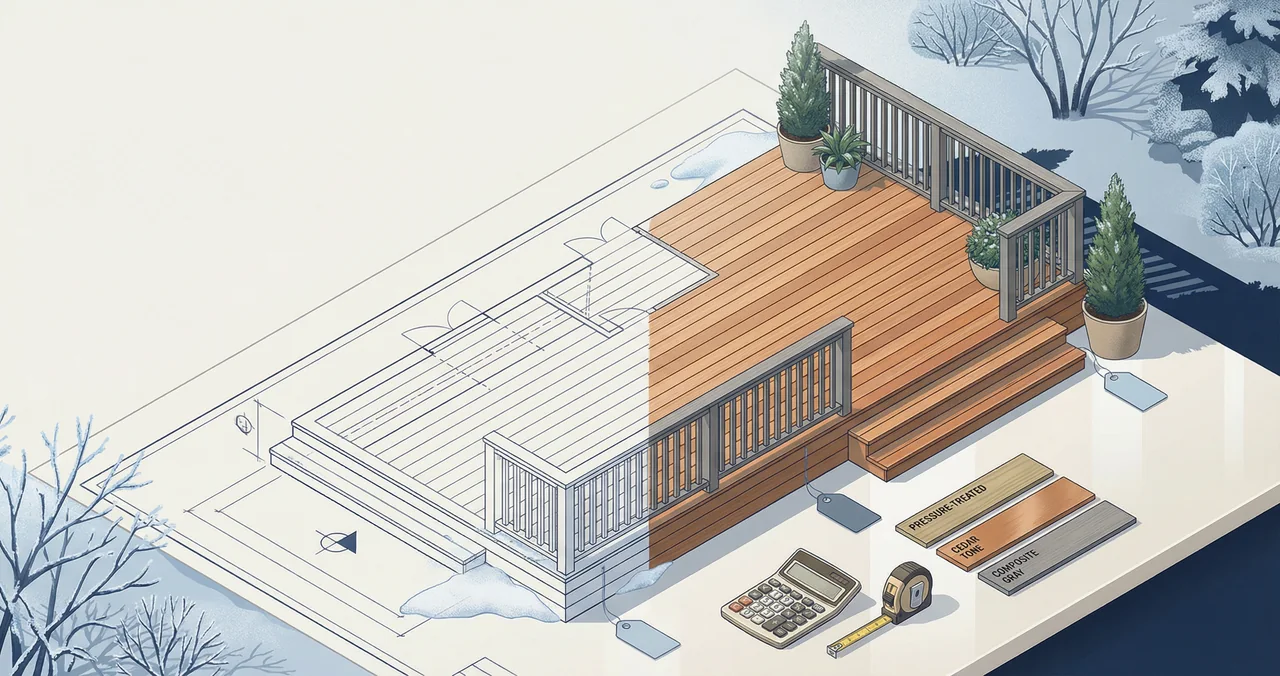
How Much Does a Deck Cost in Vaughan?
You're probably here because you got a quote that made you blink. Or maybe you haven't called anyone yet and want to know what you're walking into. Either way, here's the short answer: most Vaughan homeowners pay between $15,000 and $45,000 CAD for a standard backyard deck in 2026, with the final number depending heavily on material choice, deck size, and site conditions.
🏗️ Planning a deck project?
Get a free manual project review, or visualize your dream deck with AI before requesting quotes.
Looking for more regional information? Check out our Ontario Decking Hub.
That's a wide range. So let's break it down until the numbers actually mean something for your project.
🧮 Tool Alert: Deck Cost Calculator
Estimate your project costs in seconds based on local pricing bands for your area.
Calculate My Cost →For a broader look at deck pricing across different materials and regions, see our complete deck cost guide.
Average Deck Cost in Vaughan by Material
Material is the single biggest variable in your budget. Here's what Vaughan homeowners are paying right now, fully installed:
| Material | Cost Per Sq Ft (CAD, Installed) | 12×16 Deck (192 sq ft) | 16×20 Deck (320 sq ft) |
|---|---|---|---|
| Pressure-Treated Wood | $30–$55 | $5,760–$10,560 | $9,600–$17,600 |
| Cedar | $40–$65 | $7,680–$12,480 | $12,800–$20,800 |
| Composite | $50–$85 | $9,600–$16,320 | $16,000–$27,200 |
| Trex (brand-name composite) | $55–$90 | $10,560–$17,280 | $17,600–$28,800 |
| Ipe (tropical hardwood) | $70–$120 | $13,440–$23,040 | $22,400–$38,400 |
These are 2026 numbers for the Greater Vaughan area, including labour and materials. Your actual quote will vary based on the factors we cover below — but this table gives you a realistic starting point.
Pressure-treated is still the most common choice in subdivisions across Maple and Woodbridge, largely because of the upfront savings. But if you talk to any experienced local builder, they'll tell you composite is gaining ground fast in Vaughan. The maintenance math just works out better over time, especially here.
For a deeper dive into popular sizes, check out our 12×16 deck cost guide for Ontario or the 16×20 breakdown.
Cost Per Square Foot Breakdown
Those installed prices above include everything — but it helps to understand where your money actually goes.
A typical deck cost per square foot in Vaughan breaks down roughly like this:
- Decking boards (materials only): 35–45% of total cost
- Substructure (joists, beams, posts, hardware): 15–20%
- Footings and foundation: 10–15%
- Labour: 25–35%
- Permits and inspections: 1–3%
Footings deserve special attention in Vaughan. The frost line here ranges from 36 to 60 inches deep, depending on the exact location and soil conditions. That means your footings need to be dug well below the frost line to prevent heaving — and deeper footings cost more. Don't let anyone talk you into shallow piers. A deck that shifts after the first winter is an expensive mistake.
What About Just the Materials?
If you're pricing out a DIY approach, materials-only costs look roughly like:
- Pressure-treated lumber: $8–$18/sq ft CAD
- Cedar boards: $14–$25/sq ft CAD
- Composite decking: $22–$40/sq ft CAD
- Trex boards: $25–$45/sq ft CAD
These don't include substructure, fasteners, or footings — just the deck boards themselves. Read our guide on building your own deck in Ontario before committing to the DIY route.
Labor Costs in Vaughan
Labour rates in Vaughan typically run $20–$40 per square foot in 2026, depending on the complexity of the build and the contractor's experience. Straightforward, ground-level rectangular decks sit at the lower end. Multi-level builds with custom railings, built-in seating, or curved edges push toward the upper range.
A few things drive labour costs higher in Vaughan specifically:
- Short building season. Realistically, outdoor construction runs May through October. That compressed window means contractors are booked solid through summer. If you want a June start, call by March — not April.
- Soil and grading challenges. Parts of Kleinburg and the Thornhill border sit on clay-heavy soils that complicate excavation. If your yard slopes significantly, expect added labour for grading and retaining.
- Access issues. Homes in established Woodbridge neighborhoods often have narrow side yards. If a crew can't get equipment through easily, that adds time and labour cost.
One more thing: don't automatically go with the cheapest quote. In the GTA, there's no shortage of contractors, but quality varies enormously. Ask for references from recent Vaughan projects. Check that they're pulling permits. A $5,000 savings upfront means nothing if the deck needs rebuilding in five years. Our list of the best deck builders in Toronto covers the broader GTA and is a good starting point for your search.
What Affects Your Total Price
Beyond material and labour, several factors can swing your total deck cost by thousands of dollars:
Deck Size and Shape
This one's obvious, but worth quantifying. Going from a 12×16 deck to a 20×20 deck doesn't just double the square footage — it often requires beefed-up substructure and additional footings, pushing the per-square-foot cost slightly higher.
Irregular shapes (L-shaped decks, wraparounds, curves) add 10–20% to labour costs due to additional cuts, waste, and framing complexity.
Height and Multi-Level Designs
A ground-level deck on a flat lot is the most affordable build. Once your deck height exceeds 24 inches above grade, you're into more substantial posts, bracing, railings (required by the Ontario Building Code above 24 inches), and in most cases, a building permit from Vaughan's Building Department.
Second-story or walkout-basement decks in areas like Vellore Woods can run 30–50% more than a comparable ground-level build.
Railings and Stairs
Railings alone can add $50–$150+ per linear foot depending on the system:
- Pressure-treated wood railings: $50–$80/linear ft
- Composite railings: $70–$110/linear ft
- Aluminum or glass railings: $100–$150+/linear ft
- Cable railing systems: $90–$140/linear ft
If you're considering cable railing, review the Ontario code requirements for cable railing first — there are specific spacing rules.
Permits in Vaughan
In Vaughan, deck permits are typically required for structures over 24 inches above grade or exceeding 100 square feet. The exact requirements can vary, so contact Vaughan's Building Department directly for your specific situation.
Permit costs generally run $300–$800 CAD depending on the scope. The bigger cost isn't the permit fee itself — it's the potential delay if your application needs revisions. Factor in 2–6 weeks for permit processing, and submit early to avoid losing your contractor's preferred start date.
Building without a permit carries real risks. It can complicate your home insurance, create problems at resale, and result in fines or forced removal. Read more about the risks of building a deck without a permit in Ontario.
Extras That Add Up
- Built-in benches: $1,500–$4,000
- Pergola or shade structure: $3,000–$10,000+
- Deck lighting: $500–$2,500 (check out the best deck lighting kits in Canada)
- Under-deck drainage system: $1,500–$4,000
- Hot tub reinforcement: $1,000–$3,000 in additional structural support
Composite vs Wood: Cost Comparison
This is the decision most Vaughan homeowners wrestle with. Here's an honest comparison:
| Factor | Pressure-Treated Wood | Composite |
|---|---|---|
| Upfront cost (installed) | $30–$55/sq ft | $50–$85/sq ft |
| Annual maintenance | $200–$600 (staining, sealing) | $0–$100 (occasional cleaning) |
| Lifespan | 15–20 years with maintenance | 25–30+ years |
| 10-year total cost (320 sq ft deck) | $13,600–$23,600 | $16,000–$27,200 |
| Warranty | Limited or none on boards | 25–50 year manufacturer warranty |
| Freeze-thaw performance | Prone to cracking, warping | Excellent — won't absorb moisture |
The Vaughan Climate Factor
This is where composite pulls ahead for most homeowners here. Vaughan's harsh winters with repeated freeze-thaw cycles are brutal on wood. Moisture gets into the grain, freezes, expands, and cracks the fibres. Even with annual sealing, pressure-treated wood in Vaughan typically shows significant wear within 5–7 years. Road salt tracked onto a wood deck accelerates the damage.
Composite and PVC decking won't absorb moisture, so freeze-thaw simply isn't a factor. If you're looking at this purely from a "what survives a Vaughan winter" perspective, composite wins. Our guide to the best decking materials for Ontario's freeze-thaw climate goes deeper on this.
When Wood Still Makes Sense
Wood isn't a bad choice for everyone. If you're building a smaller deck on a tight budget, pressure-treated lumber gets you outside this summer for significantly less upfront money. Cedar is a middle ground — naturally rot-resistant with a warmer aesthetic that many homeowners in Kleinburg and Thornhill prefer.
Just go in with your eyes open about the maintenance commitment. Budget for annual staining and sealing, and understand that you'll likely need board replacements within 10–12 years.
Use PaperPlan to visualize different decking materials on your own home before committing — it's genuinely helpful when you're trying to decide between a cedar look and a grey composite.
How to Save Money on Your Vaughan Deck
Saving money doesn't mean cutting corners. Here are legitimate ways to bring your deck cost down:
1. Build in the Off-Season
Most Vaughan contractors are slammed from May through August. If you can schedule your build for late September or October — or even a late-fall start for the foundation work — you may negotiate 5–15% lower rates. Some builders will also offer early-bird pricing if you sign a contract in winter for a spring build.
2. Keep the Design Simple
A rectangular deck with standard railings is dramatically cheaper than a multi-level custom build. Every angle, curve, and built-in feature adds labour. If your budget is tight, start with a clean rectangle and add features later.
3. Choose Your Splurges Wisely
You don't need premium everything. A common strategy: use composite decking on the surface (where you'll see and touch it daily) but pressure-treated lumber for the substructure (where it's hidden). Almost every composite deck in Vaughan is built this way — the substructure doesn't need to be composite.
4. Get Multiple Quotes
Three quotes minimum. Five is better. Make sure you're comparing the same scope — some contractors include demolition of an old deck, permit fees, and cleanup in their quote, while others don't. Ask for itemized breakdowns.
5. Handle Demo and Cleanup Yourself
If you're replacing an existing deck, tearing out the old one yourself can save $500–$2,000 depending on size. It's hard work but straightforward. Rent a dumpster bin, grab a pry bar, and put a weekend into it.
6. Consider Phased Construction
Build the deck now, add the pergola next year. Install basic lighting this season, upgrade to a full system later. Spreading costs across two seasons makes a bigger project manageable without financing charges.
🎨 Not sure which material to pick?
Upload a photo of your backyard and see exactly how Trex, TimberTech, or cedar would look — free and instant.
Frequently Asked Questions
How much does a 12×12 deck cost in Vaughan?
A 12×12 deck (144 sq ft) in Vaughan costs approximately $4,300–$7,900 CAD for pressure-treated wood or $7,200–$12,200 CAD for composite, fully installed. These estimates include footings, substructure, decking boards, and basic railings if needed. Actual costs depend on your specific site conditions, height above grade, and any extras like stairs or built-in features.
Do I need a permit to build a deck in Vaughan?
In most cases, yes. Vaughan typically requires a building permit for decks that exceed 24 inches above grade or are over 100 square feet. Even smaller decks may require permits depending on proximity to property lines or easements. Contact Vaughan's Building Department directly — requirements change, and it's worth confirming before you start.
What is the best decking material for Vaughan's climate?
Composite or PVC decking handles Vaughan's freeze-thaw cycles best. These materials don't absorb water, so they resist the cracking and warping that plagues wood decks through Ontario winters. If you prefer natural wood, cedar holds up better than pressure-treated, but still requires annual sealing. Check out our comparison of the best composite decking brands available in Ontario for specific product recommendations.
When is the best time to build a deck in Vaughan?
The ideal window is May through October, but the planning starts much earlier. Contact contractors in January or February, aim to have permits submitted by March, and target a May or early June start date. Waiting until April to begin the process often means your build gets pushed to late summer or fall. For a detailed seasonal breakdown, see our guide on the best time to build a deck in Ontario.
How long does it take to build a deck in Vaughan?
A straightforward ground-level deck (200–300 sq ft) typically takes 3–5 days of actual construction time. Larger or more complex builds can run 1–3 weeks. The real timeline factor is everything before construction: permit approval (2–6 weeks), material ordering (1–3 weeks for specialty products), and getting on your contractor's schedule. From first phone call to finished deck, plan for 6–12 weeks total.
📋 Planning a deck project?
Get a free manual project review from our team — no obligation, no spam.
Get Free Project Review →Upload a backyard photo and preview real decking materials with AI — free, instant, no sign-up.
Permits, costs, material comparisons, and questions to ask before requesting quotes — delivered to your inbox.