
Deck Permits in Brampton (2026)
Need a deck permit in Brampton? Learn requirements, fees, setback rules, and how to apply. Avoid fines and delays with this 2026 guide for Brampton homeowners.
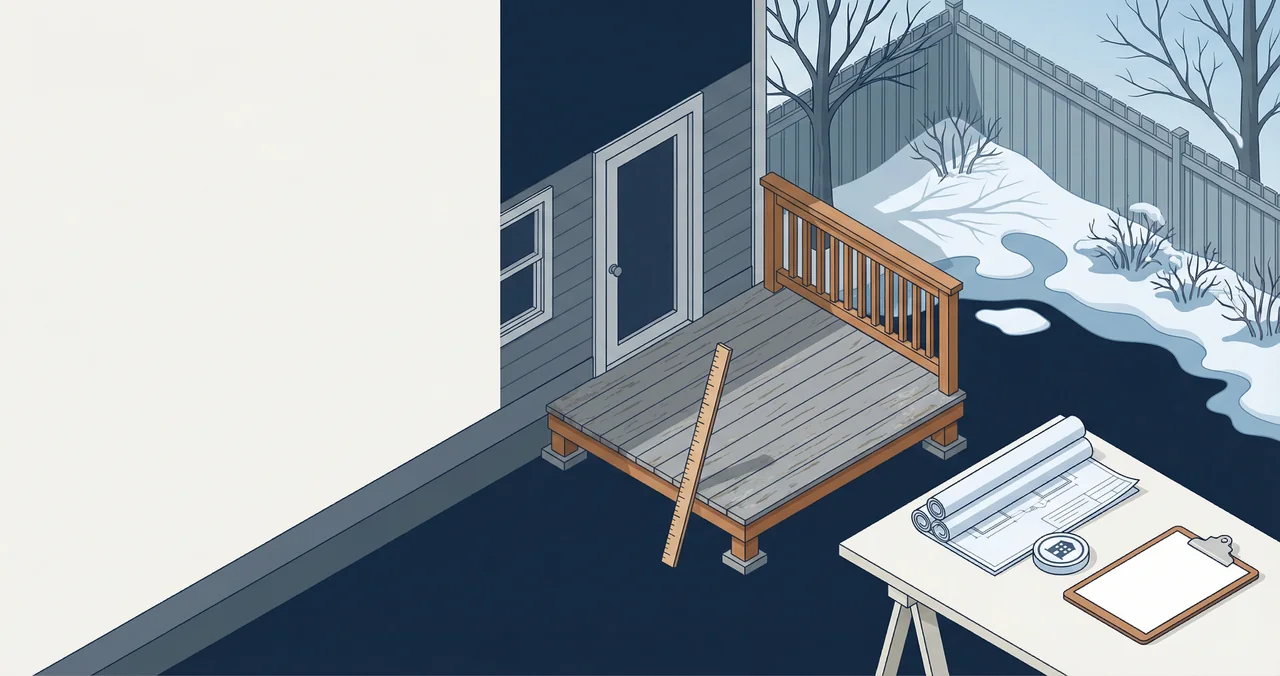
Planning a new deck in Brampton? Before you pick out materials or call a contractor, there's one step you can't skip: figuring out whether you need a building permit. Get it wrong, and you could face fines, forced removal, or serious headaches when you try to sell your home.
Looking for more regional information? Check out our Ontario Decking Hub.
Here's exactly what Brampton homeowners need to know about deck permits in 2026 — the rules, the costs, and how to get through the process without wasting time or money.
Do You Need a Deck Permit in Brampton?
Yes, most deck projects in Brampton require a building permit. The City of Brampton's Building Division follows the Ontario Building Code (OBC), and the rules are straightforward:
🏗️ Planning a deck project?
Get a free manual project review, or visualize your dream deck with AI before requesting quotes.
- Decks higher than 24 inches (0.6 m) above finished grade require a permit
- Decks over 100 square feet (approximately 10 m²) require a permit, even if they're low to the ground
- Attached decks — any deck structurally connected to your house — almost always need a permit because they affect the building envelope
A small, ground-level platform under 100 sq ft and under 24 inches high? You're likely exempt. But that covers very few real-world deck projects. The average Brampton backyard deck runs 200 to 400 square feet, which puts it firmly in permit territory.
Bottom line: If your deck is big enough to actually use for entertaining, dining, or lounging, you almost certainly need a permit.
Not sure whether your project qualifies? Call the City of Brampton's Building Division at 905-874-2400 before you start. A five-minute phone call can save you thousands.
📋 Tool Alert: Permit Checker
Do you really need a permit? Check the exact rules for your city or township.
Check Permits →When a Permit Is Required
Let's break this down further, because the specifics matter.
Projects That Require a Permit
- Any deck over 24 inches above grade at any point
- Decks over 100 sq ft in total area
- Decks attached to the house (bolted to the ledger board)
- Covered decks, roofed decks, or decks with pergola structures
- Second-storey decks or walkout basement decks
- Any deck that includes electrical work (lighting, outlets) — this also needs a separate electrical permit
- Decks with hot tub installations (additional structural load requirements)
Projects That Typically Don't Need a Permit
- Freestanding ground-level decks under 100 sq ft and under 24 inches high
- Temporary or seasonal platforms that aren't permanently fastened
- Simple patio stones or pavers at grade (these aren't decks)
Even if your project is technically exempt, building it to code is still smart. Brampton's freeze-thaw cycles are brutal — footings that aren't deep enough will heave, and a deck that shifts even slightly can become a safety hazard. For a deeper look at the difference between attached and freestanding deck permit requirements, check out attached vs. freestanding deck permits in Ontario.
Permit Fees & Processing Time
How Much Does a Deck Permit Cost in Brampton?
Deck permit fees in Brampton are based on the project's construction value. As of 2026, expect:
| Project Value | Approximate Permit Fee |
|---|---|
| Under $5,000 CAD | $150–$250 |
| $5,000–$15,000 CAD | $250–$450 |
| $15,000–$50,000 CAD | $450–$750 |
| Over $50,000 CAD | $750+ (calculated as a percentage) |
The City of Brampton uses a fee schedule based on a per-$1,000 of construction value formula. The exact rate changes periodically, so confirm current fees with the Building Division when you apply.
Additional costs to budget for:
- Site plan or survey: $200–$500 if you don't already have one
- Engineering drawings: $500–$2,000 for complex builds (second-storey, cantilevered, or large decks)
- Zoning compliance review: Sometimes bundled with the permit fee, sometimes separate
For a typical 300 sq ft pressure-treated deck valued around $12,000–$16,000 CAD, your permit will likely run $300–$500.
How Long Does It Take?
- Standard residential deck permits: 10 to 20 business days
- Complex projects (second-storey, structural modifications): 4 to 8 weeks
- Incomplete applications: Add weeks. This is the biggest cause of delays.
Brampton's Building Division processes applications faster in the off-season (November through March). If you submit in January or February, you'll likely have your permit in hand before contractor schedules fill up in spring. Smart Brampton homeowners apply in winter to build in May.
To understand how deck permits fit into your overall project timeline, see the backyard renovation timeline for Ontario.
Building Codes & Setback Rules in Brampton
The Ontario Building Code sets the foundation, but Brampton's zoning bylaws add local requirements on top. You need to comply with both.
Key OBC Requirements for Decks
- Guard rails (railings): Required on any deck surface more than 24 inches above grade. Minimum height of 42 inches (1,070 mm) for residential.
- Baluster spacing: Maximum 4 inches (100 mm) between balusters — a 4-inch sphere cannot pass through
- Stair requirements: Minimum 36 inches wide, with risers between 5 and 7-7/8 inches and treads at least 10 inches deep
- Structural loads: Decks must support a minimum live load of 40 psf (1.9 kPa) plus dead loads
- Footing depth: Footings must extend below the frost line. In Brampton, that means a minimum of 48 inches deep — and some areas require up to 60 inches
Brampton Zoning Setbacks
These are the typical setback requirements for residential decks in Brampton:
| Setback Type | Minimum Distance |
|---|---|
| Rear yard setback | 7.5 m (approximately 25 ft) from rear lot line |
| Interior side yard | 1.2 m (approximately 4 ft) from side lot line |
| Exterior side yard | 4.5 m (approximately 15 ft) from side lot line on corner lots |
| Lot coverage | Deck area counts toward maximum lot coverage (typically 40–55% depending on zone) |
Important: These are general figures. Brampton has multiple residential zones (R1, R2, R3, etc.), and each has slightly different requirements. Your specific lot may also have easements, right-of-ways, or site-specific conditions. Always confirm with a zoning review before finalizing your design.
Frost and Climate Considerations
Brampton sits in a climate zone where winter temperatures regularly hit -20°C or colder. This isn't just uncomfortable — it directly affects how your deck must be built:
- Frost heave is the biggest structural threat. Footings that don't reach below the frost line will shift, crack, and eventually destabilize your entire deck.
- Snow load must be factored into structural calculations. Brampton typically sees cumulative snow loads that require decks to handle additional weight well beyond the standard 40 psf live load.
- Ice and meltwater pool on flat or poorly-sloped deck surfaces, accelerating material degradation. A slight slope away from the house (1/8 inch per foot minimum) is essential.
For material selection that holds up to Brampton winters, read our guide on the best decking materials for Ontario's freeze-thaw cycles.
How to Apply for a Deck Permit in Brampton
Step 1: Gather Your Documents
Before you visit or apply online, you'll need:
- Completed application form — available from the City of Brampton's website or the Building Division office
- Site plan / lot survey showing your property boundaries, the house footprint, and the proposed deck location with dimensions and setback measurements
- Construction drawings including:
- Plan view (top-down) with dimensions
- Cross-section showing footing depth, post heights, beam sizes, and joist spacing
- Elevation views (front/side)
- Details of railing design, stair layout, and ledger board connection (if attached)
- Structural specifications — lumber sizes, joist spans, post spacing, footing diameter, and hardware
- Proof of property ownership or authorization from the owner
For complex builds — anything elevated, cantilevered, or multi-level — you may need stamped engineering drawings from a licensed professional engineer.
Step 2: Submit Your Application
You can submit your deck permit application:
- Online through the City of Brampton's building permit portal
- In person at the Brampton City Hall Building Division (2 Wellington Street West)
Online submissions are faster and let you track your application status. Pay the permit fee at the time of submission.
Step 3: Wait for Review
The Building Division reviews your application for OBC compliance and zoning conformity. If anything's missing or doesn't meet code, they'll issue a deficiency notice — you'll need to correct and resubmit those portions.
This is where most delays happen. Double-check every measurement and every detail before submitting. A complete, accurate application on the first try can save you 2–4 weeks.
Step 4: Receive Your Permit and Build
Once approved, you'll receive your building permit. Post it visibly at the job site — this is required by law.
Step 5: Schedule Inspections
Brampton typically requires two inspections for deck projects:
- Footing inspection — before pouring concrete. The inspector verifies depth, diameter, and soil conditions.
- Final inspection — after the deck is complete. The inspector checks structural integrity, railing height, baluster spacing, stair compliance, and overall code adherence.
Do not backfill footings or close up any structural work before the footing inspection. If you do, the inspector can require you to dig them up.
Use PaperPlan to visualize different decking materials on your own home before committing — it's easier to finalize your design details before the permit application than to revise drawings after submission.
What Happens If You Build Without a Permit
Skip the permit and you're gambling. Here's what's actually at stake:
Fines and Penalties
The City of Brampton can issue fines under the Ontario Building Code Act. Penalties for building without a required permit can reach up to $50,000 for individuals and up to $100,000 for corporations per offence. In practice, most fines for residential deck violations range from $500 to $5,000, but repeat offences escalate quickly.
Stop Work Orders
If a bylaw officer or building inspector discovers unpermitted construction in progress, they'll issue a stop work order. All work halts immediately until you obtain the proper permit — which now costs more because you'll likely need a retroactive permit with additional review fees.
Forced Removal
In the worst case, the city can order you to tear down the deck entirely. If the structure can't be brought up to code — or if it encroaches on setbacks — removal is the only option. You eat the full construction cost plus demolition.
Problems When Selling
This is the one that catches most homeowners off guard. When you sell your home, the buyer's lawyer or home inspector will check for permits on any visible structures. An unpermitted deck:
- Can delay or kill a sale
- Gives the buyer leverage to negotiate a lower price
- May require you to obtain a retroactive permit (with inspections) before closing
- Could void your home insurance coverage if someone is injured on the deck
For a full breakdown of the risks, read building a deck without a permit in Ontario.
Can a Neighbour Report You?
Absolutely. If a neighbour files a complaint, bylaw enforcement will investigate. Brampton actively follows up on complaints, and unpermitted structures are easy to flag.
🎨 Not sure which material to pick?
Upload a photo of your backyard and see exactly how Trex, TimberTech, or cedar would look — free and instant.
Frequently Asked Questions
How much does a deck permit cost in Brampton?
Most residential deck permits in Brampton cost between $250 and $500 CAD, depending on your project's construction value. A standard 300 sq ft pressure-treated deck in the $12,000–$16,000 range typically falls around $300–$500. Larger or more complex projects can push fees to $750 or more. Confirm exact fees with the Building Division, as rates are updated periodically.
How long does it take to get a deck permit in Brampton?
Plan for 10 to 20 business days for a straightforward residential deck. Complex projects involving structural engineering or second-storey builds can take 4 to 8 weeks. Submitting a complete, accurate application is the single best thing you can do to speed up the process. Applying during the winter off-season also helps — fewer applications in the queue means faster turnaround.
Can I build a small deck without a permit in Brampton?
Possibly. If your deck is freestanding (not attached to the house), under 24 inches above grade, and under 100 sq ft, you may be exempt. But "may" is doing heavy lifting in that sentence. Always verify with the City of Brampton Building Division before starting. Even exempt structures should be built to code — Brampton's freeze-thaw conditions will punish sloppy construction. For more on DIY deck building rules in Ontario, we've got a detailed guide.
Do I need a survey to get a deck permit?
In most cases, yes. The City of Brampton requires a site plan showing your property boundaries, existing structures, and the proposed deck location with setback measurements. If you have a recent survey from when you purchased your home, that may work as a base. If not, hiring an Ontario Land Surveyor typically costs $200–$500 for a residential property.
What is the frost line depth in Brampton?
Brampton's frost line depth is generally 48 to 60 inches (4 to 5 feet). All deck footings must extend below this depth to prevent frost heave — a non-negotiable requirement in this climate. Footings that are too shallow will shift during freeze-thaw cycles, causing your deck to become uneven, unstable, and potentially dangerous. Your building inspector will verify footing depth during the mandatory footing inspection.
📋 Planning a deck project?
Get a free manual project review from our team — no obligation, no spam.
Get Free Project Review →Upload a backyard photo and preview real decking materials with AI — free, instant, no sign-up.
Permits, costs, material comparisons, and questions to ask before requesting quotes — delivered to your inbox.