
Accessibility Ramp and Deck in Ontario: Funding and Code
Ontario accessibility ramp code, funding programs, and deck integration costs. OBC requirements, ODSP grants, March of Dimes support, and ramp-deck building permits.
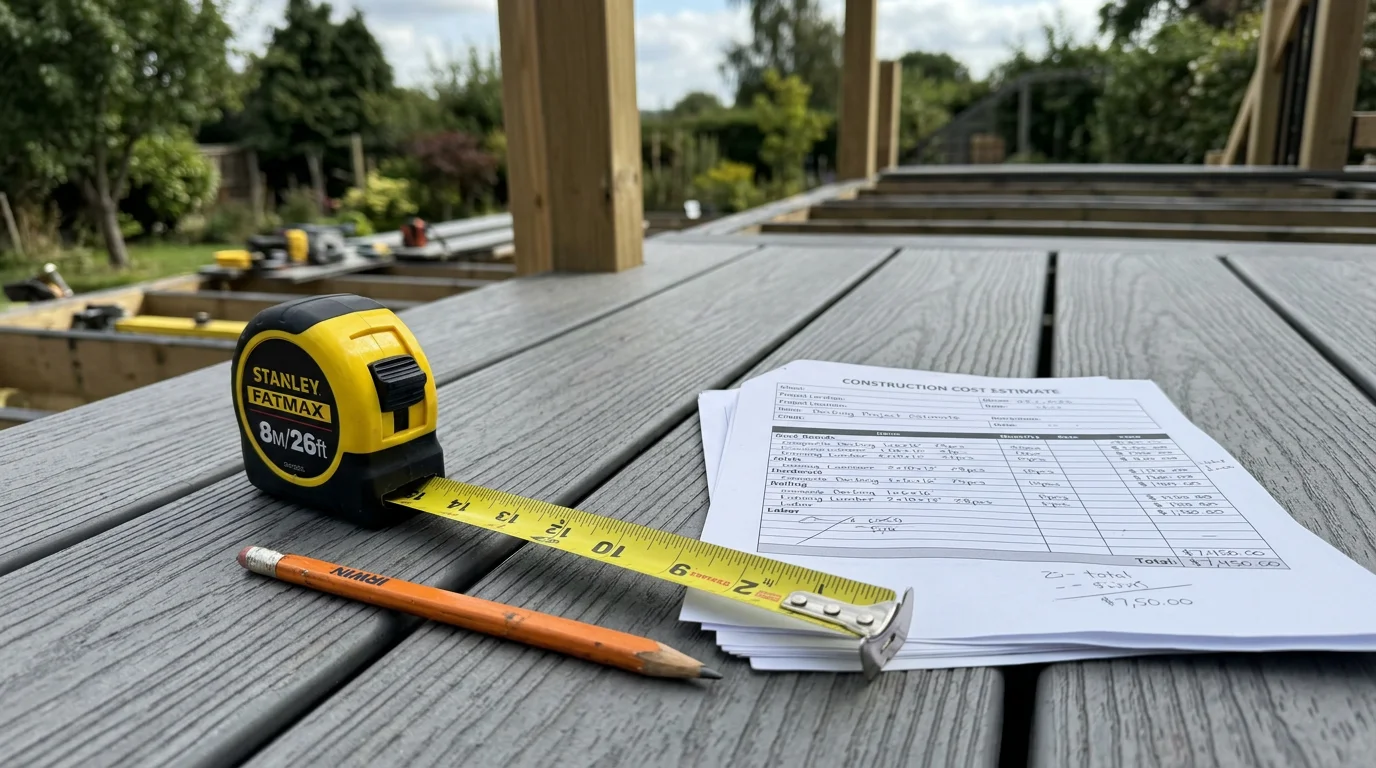
Building an accessibility ramp to connect with your deck in Ontario involves navigating building code requirements, exploring funding programs, and understanding how ramps integrate with existing or new deck structures. Whether you're planning for aging-in-place, accommodating a family member with mobility challenges, or adding universal design features, here's what you need to know about ramp specifications, costs, and financial assistance available to Ontario residents.
Ontario Building Code Requirements for Accessibility Ramps
The Ontario Building Code (OBC) Section 3.8 governs accessibility ramp design. Unlike deck construction where some ground-level structures might avoid permits, accessibility ramps typically require building permits regardless of height because they're considered barrier-free design elements.
🏗️ Planning a deck project?
Get a free manual project review, or visualize your dream deck with AI before requesting quotes.
Slope Requirements
OBC mandates a maximum slope of 1:12 for accessibility ramps. This means for every 1 inch of rise, you need 12 inches of ramp length. For a deck that's 24 inches above grade, you need a minimum 24-foot ramp run (not including landings).
- Residential ramps: 1:12 slope (8.33% grade)
- Steeper slopes (up to 1:8): Only permitted for very short runs under 3 inches of rise
- Gentler slopes (1:16 or 1:20): Recommended for wheelchair users who self-propel
Width and Landing Specifications
Minimum clear width: 36 inches between handrails. Many builders recommend 42-48 inches for easier wheelchair maneuvering and two-way traffic.
Landing requirements:
- Top and bottom landings: Minimum 60 inches × 60 inches
- Intermediate landings: Required every 30 feet of horizontal run, minimum 60 inches × 60 inches
- Directional changes: 60 inches × 60 inches platform required at any turn
- Door landings: If ramp leads to a door, landing must extend 18 inches beyond the latch side of the door
Handrail and Edge Protection
Handrails required on both sides when ramp rise exceeds 6 inches:
- Height: 34-38 inches above ramp surface
- Extension: Extend 12 inches beyond top and bottom of ramp
- Graspable diameter: 1¼ to 2 inches
- Clearance: Minimum 2¼ inches from wall or post
Edge protection required:
- Minimum 2-inch curb or barrier along both edges
- Prevents wheelchair wheels from slipping off
- Can be integrated into railing posts
Integrating Ramps with Existing Decks
If you're adding a ramp to an existing deck, structural evaluation is critical. The ramp connection point creates lateral forces and additional live loads.
Attachment Methods
Deck-mounted ramps: Attach directly to deck framing using through-bolted connections to rim joists or blocking. Your deck must be structurally sound enough to handle the lateral loads. Decks showing rot or sagging should be evaluated before ramp installation.
Freestanding ramps: Built with independent support structure (helical piles or concrete footings) and connected to deck with a floating joint. This approach avoids loading the existing deck but requires permits for both the ramp structure and the connection detail. See helical piles vs concrete footings for foundation options.
Grade-level transitions: For low decks (under 24 inches), consider a freestanding ramp starting from grade rather than attaching to the deck. This simplifies permitting and structural concerns.
Footing Depth for Ramp Posts
Like deck footings, ramp support posts require frost-protected foundations in Ontario:
- Minimum depth: 4 feet below grade in KWC region (frost line requirements)
- Sonotube footings: Common for residential ramps, 10-12 inch diameter
- Helical piles: Faster installation, especially for retrofits where excavation is difficult
Materials for Ontario Climate
Accessibility ramps must withstand freeze-thaw cycles, snow loads, and year-round exposure while maintaining a safe, slip-resistant surface.
Decking Surface Options
Pressure-treated lumber:
- Cost: $8-12/sqft installed
- Pros: Affordable, easy to source, accepts traction strips
- Cons: Requires annual staining/sealing, can warp, splinters
Composite decking:
- Cost: $15-25/sqft installed
- Pros: Low maintenance, no rot, consistent surface, some products rated for non-slip performance
- Cons: Can be slippery when wet or icy without traction treatment
- See composite vs wood comparison
Aluminum ramp systems:
- Cost: $120-180/linear foot installed (modular kits)
- Pros: Zero maintenance, rust-proof, built-in slip-resistant surface, modular/relocatable
- Cons: Higher upfront cost, industrial appearance, limited customization
Concrete ramps:
- Cost: $25-40/sqft for formed and finished concrete ramp
- Pros: Extremely durable, integral non-slip surface options (broom finish, aggregate)
- Cons: Requires formwork and curing time, difficult to modify, subject to salt damage
Winter Performance
Ontario winters demand traction enhancement:
- Grit strips: Adhesive aluminum oxide strips, replace annually ($2-5/linear foot)
- Heated cable systems: Embedded snow-melting cables ($15-30/sqft installed + electrical costs)
- Textured coatings: Roll-on elastomeric coatings with grit ($4-8/sqft applied)
Avoid over-salting composite or wood ramps. Use calcium magnesium acetate (CMA) or sand for traction instead of rock salt, which accelerates material degradation.
Permit Process in Kitchener-Waterloo-Cambridge
All accessibility ramps require building permits in KWC municipalities, regardless of height or attachment to existing structures.
Application Requirements
Kitchener, Waterloo, and Cambridge all require:
- Site plan showing ramp location relative to property lines, setbacks, and existing structures
- Elevation drawings with slope calculations and rise/run dimensions
- Landing dimensions and locations
- Handrail and edge protection details
- Structural detail showing attachment method (if connecting to deck) or footing details (if freestanding)
- Snow load calculations (typically 2.0-2.4 kPa ground snow load in KWC region)
Permit fees:
- $150-250 for residential accessibility ramp permit in KWC
- See deck permit costs for related fee structures
Timeline:
- Plan review typically 2-4 weeks
- Inspection required after footing installation (before backfill) and final inspection upon completion
- Full process: how long do deck permits take
Setback Exemptions
Some municipalities offer zoning variances for accessibility ramps that would otherwise violate setback requirements. If your ramp would encroach into the required side or rear yard setback, apply for a minor variance through the Committee of Adjustment.
Typical setback requirements:
- Front yard: 6-7.5 meters (varies by zoning)
- Side yard: 1.2-1.5 meters
- Rear yard: 7.5 meters
Variance approval rates: High for accessibility features when neighbors don't object. Application fee: $500-800 in KWC municipalities.
Funding Programs for Accessibility Ramps in Ontario
Several provincial and federal programs provide grants or forgivable loans for accessibility home modifications.
Ontario Renovates Program (Municipal)
Administered by Region of Waterloo and City of Cambridge, Ontario Renovates provides grants and forgivable loans for low-income homeowners and landlords to make accessibility modifications.
Eligibility:
- Must be homeowner or landlord
- Household income below program thresholds (varies by household size, typically under $60,000 for family of 4)
- Home requires health and safety or accessibility repairs
Funding amount:
- Up to $10,000 grant for accessibility modifications
- Up to $25,000 forgivable loan (forgiven after 5 years if you remain in home)
Contact: Region of Waterloo Housing Services (519-575-4757) or Cambridge Community Services
Canada Mortgage and Housing Corporation (CMHC) Home Accessibility Tax Credit
Federal non-refundable tax credit worth 15% of eligible expenses up to $20,000 per year ($3,000 max credit).
Eligible expenses:
- Wheelchair ramps and associated platforms
- Deck modifications to accommodate ramp installation
- Handrails and grab bars
- Widening doorways or hallways
Eligibility:
- You or a qualifying relation (spouse, dependent) must be 65+ or eligible for the Disability Tax Credit
How to claim: File Schedule 12 with your annual tax return. Keep all receipts and contractor invoices.
Ontario Disability Support Program (ODSP) Disability-Related Health Supports
ODSP recipients can access Health-Related Goods and Services funding for accessibility equipment and home modifications.
Coverage:
- May cover ramp materials and installation (assessed case-by-case)
- Pre-approval required from ODSP caseworker
- Occupational therapist assessment may be needed
Funding limits: Vary by individual case, typically $5,000-15,000 for major home modifications
Application: Contact your ODSP caseworker to initiate request
March of Dimes Canada – Home and Vehicle Modification Program
National program providing interest-free loans for home accessibility modifications.
Loan amounts:
- Up to $30,000 (repayment term: 5-10 years)
- No credit check required
- No down payment
Eligibility:
- Person with disability living in home (any age)
- Canadian resident
- Own or be purchasing the home
- Must have financial capacity to repay loan (employment income, ODSP, CPP-D, etc.)
Application: Online through March of Dimes website (www.marchofdimes.ca) or call 1-800-263-3463
Veterans Affairs Canada – Veterans Independence Program
For veterans only: Grants covering 100% of accessibility modification costs, including ramps, platform lifts, and deck modifications.
Eligibility:
- Canadian Armed Forces veteran receiving VAC disability benefits
- Modification must be recommended by occupational therapist
Coverage: No maximum dollar limit for approved modifications
Cost Breakdown: Ramp + Deck Integration Projects
Real-world pricing for Ontario homeowners adding accessibility ramps to existing or new deck projects (for a complete cost breakdown for Ontario decks, see our full guide):
Scenario 1: Wood Ramp Added to Existing Deck
Deck height: 30 inches
Ramp run needed: 30 feet + 5×5 top landing + 5×5 bottom landing
Material: Pressure-treated lumber, slip-resistant coating, aluminum handrails
| Item | Cost |
|------|------|
| Pressure-treated decking & framing | $1,200-1,600 |
| Concrete footings (4 locations) | $400-600 |
| Aluminum handrail system (60 linear feet) | $900-1,400 |
| Slip-resistant coating | $300-450 |
| Permit fees | $200 |
| Labour (2-3 days) | $2,500-3,500 |
| Total | $5,500-7,750 |
Scenario 2: Modular Aluminum Ramp System
Deck height: 24 inches
Ramp run: 24 feet + landings
Material: Pre-fabricated aluminum modular ramp (e.g., EZ-ACCESS, National Ramp)
| Item | Cost |
|------|------|
| Modular ramp kit (30 linear feet) | $3,600-5,400 |
| Installation labour | $800-1,200 |
| Concrete pads for landing support | $300-500 |
| Permit fees | $200 |
| Total | $4,900-7,300 |
Advantages: Fast installation (often 1-2 days), relocatable if you move, minimal maintenance.
Scenario 3: New Deck + Integrated Composite Ramp
Deck size: 12×16 feet (192 sqft)
Deck height: 36 inches
Ramp run: 36 feet + landings
Material: Composite decking for both deck and ramp
| Item | Cost |
|------|------|
| Deck structure & composite surface | $9,600-14,400 (see composite deck cost) |
| Ramp framing & composite decking | $2,800-4,200 |
| Helical piles (deck + ramp) | $2,400-3,600 |
| Composite railing (deck + ramp) | $2,500-3,800 |
| Slip-resistant strips | $400-600 |
| Permit fees (combined deck + ramp) | $350-450 |
| Labour (5-7 days) | $5,500-7,500 |
| Total | $23,550-34,550 |
Design Considerations Beyond Code Minimums
Meeting OBC is baseline. Consider these enhancements for better usability:
Wider ramps: 48-60 inches allows side-by-side assistance and easier maneuvering for power wheelchairs.
Gentler slopes: 1:16 or 1:20 slope reduces effort for manual wheelchair users and makes walker use easier (increases ramp length significantly).
Covered ramps: Roof or canopy over ramp reduces snow accumulation and ice formation. Adds cost ($3,500-8,000) but dramatically improves winter safety. May trigger additional permit requirements: pergola and covered deck permits.
Lighting: Low-voltage LED strip lighting along ramp edges improves night visibility ($400-900 installed). See deck lighting ideas.
Contrasting edge strips: High-contrast yellow or white edge marking helps users with visual impairments identify ramp boundaries.
Combining Ramp and Deck Projects
If you're building a new deck and know you'll need ramp access, design them together:
Advantages:
- Single permit application and inspection process
- Coordinated materials and finish for visual consistency
- Optimized structural design (shared footings where possible)
- Potentially lower labour costs (one mobilization, same crew)
Planning tips:
- Position deck door/entrance where ramp can run parallel to property line (avoids setback conflicts)
- For multi-level yards, consider a deck-to-grade transition at natural slope to minimize ramp length
- If future ramp addition is likely, design deck framing with reinforced rim joists and blocking at anticipated attachment points
- Check zoning for lot coverage limits — deck + ramp combined square footage counts toward maximum impervious surface allowance
Choosing a Contractor for Ramp Projects
Not all deck builders specialize in accessibility ramps. Look for:
Experience with OBC accessibility requirements: Ask for examples of previous ramp projects and code compliance knowledge.
Occupational therapist collaboration: Best contractors work with OTs to ensure ramp meets user's specific mobility needs, not just code minimums.
WSIB coverage: Required for all contractors in Ontario. Verify current certificate.
References from accessibility projects: Speak with previous clients about usability, winter performance, and build quality.
See deck builder contract requirements and questions to ask when getting quotes.
🎨 Not sure which material to pick?
Upload a photo of your backyard and see exactly how Trex, TimberTech, or cedar would look — free and instant.
Common Questions
Can I build an accessibility ramp myself without a contractor?
Yes, if you're comfortable with construction and pull the required permit. You'll need to submit drawings showing compliance with OBC Section 3.8, and your work will be inspected. DIY saves labour costs ($2,500-5,000) but takes significantly longer (most homeowners need 5-10 days vs. 2-3 days for professionals). Ramp construction requires precision for slope calculations and structural connections. If connecting to an existing deck, improper attachment can compromise both structures.
Do I need a permit if I'm using a temporary modular ramp?
In KWC municipalities, temporary ramps (defined as installed for less than 6 months and not attached to permanent structures) may not require permits, but policies vary. Kitchener and Waterloo generally allow temporary modular ramps without permits if they're freestanding and will be removed. Cambridge requires permits even for temporary installations. Call your municipal building department before installation. Even without a permit requirement, temporary ramps should still meet OBC slope and handrail standards for safety.
Will an accessibility ramp affect my property value or resale?
Impact varies by buyer demographics. Professionally built, attractive ramps integrated with quality deck construction are increasingly seen as universal design features that appeal to aging-in-place buyers and multi-generational households. Poorly designed or visually intrusive ramps may deter some buyers. Composite or aluminum ramps with clean design lines tend to impact value neutrally or positively (0-3% increase in markets with aging demographics). Modular aluminum ramps have the advantage of being removable if needed for resale.
Can I claim ramp construction costs on my taxes even if I don't qualify for ODSP or DTC?
The Medical Expense Tax Credit (METC) allows you to claim eligible accessibility renovations even without Disability Tax Credit eligibility, if you have a letter from a medical practitioner stating the ramp is medically necessary for you or a dependent. You can claim renovation expenses exceeding 3% of your net income or $2,635 (2026 threshold), whichever is less. This is separate from the Home Accessibility Tax Credit. Consult a tax professional to maximize claims, especially if combining multiple accessibility modifications in one year.
What's the minimum temperature for building a wood or composite ramp in Ontario winter?
Pressure-treated lumber can be installed year-round, but concrete footings require ambient temperatures above 5°C for 48 hours after pour unless using cold-weather concrete mix with accelerators. Composite decking becomes brittle below -5°C — manufacturers recommend installation when temperatures are consistently above 5-10°C to avoid cracking during cutting and fastening. Best practice: pour footings and frame the ramp structure in late fall, then install decking surface in early spring. Aluminum modular ramps can be installed any time of year since they don't require concrete curing. See best time to build for seasonal considerations.
Upload a backyard photo and preview real decking materials with AI — free, instant, no sign-up.
Permits, costs, material comparisons, and questions to ask before requesting quotes — delivered to your inbox.