
Cedar vs Composite Fence in Ontario
Cedar vs composite fence in Ontario: real costs, durability, maintenance, and which handles freeze-thaw cycles better. Side-by-side comparison for 2026.
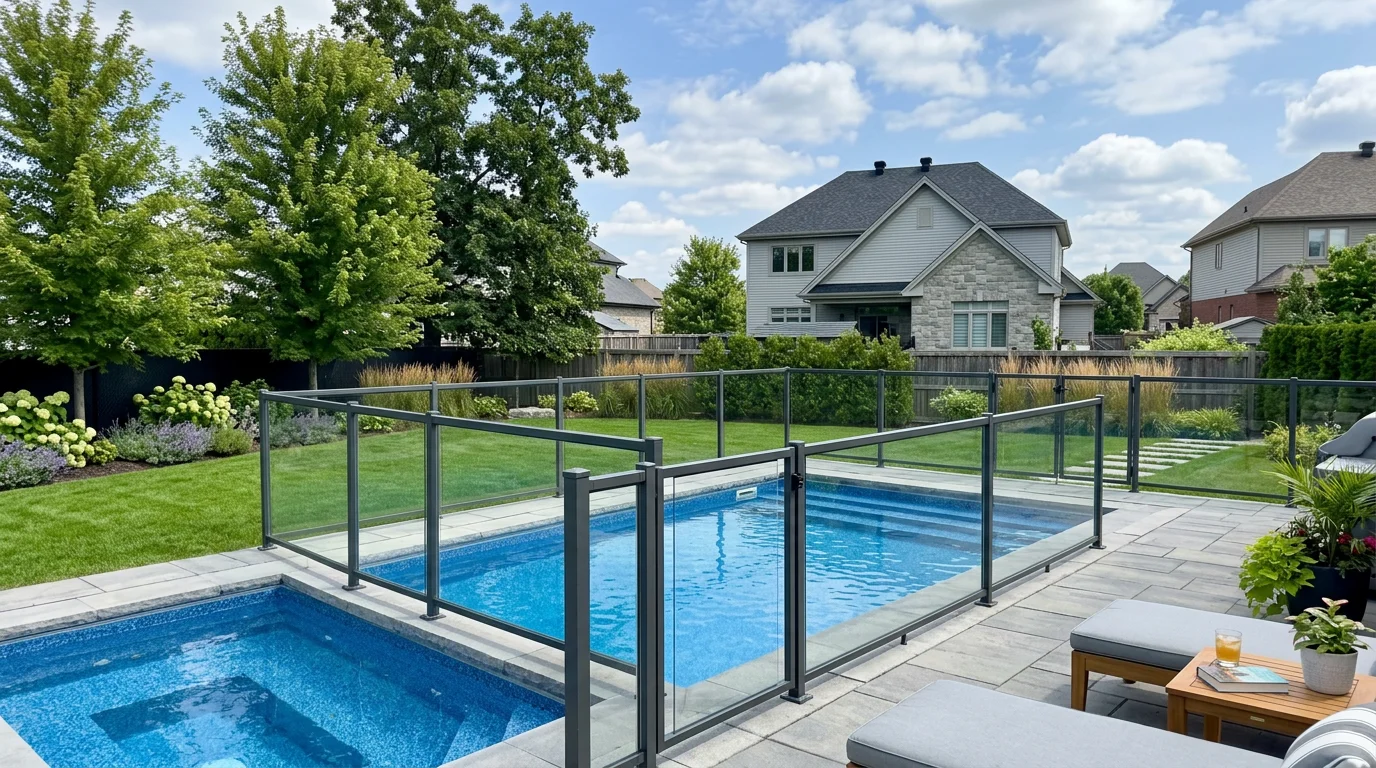
You're standing in your backyard trying to decide between a cedar fence and composite. Cedar looks natural and smells amazing. Composite promises no maintenance. Both cost more than pressure-treated, and you need to know which one actually delivers value in Ontario's climate.
Here's what matters: cedar fences cost $40-60/linear foot installed and need staining every 2-3 years. Composite fences run $55-75/linear foot and require almost no upkeep. But there's more to consider than just price and maintenance.
Material Cost Breakdown
Cedar Fence Materials
For a 100-linear-foot privacy fence (6 ft high):
🏗️ Planning a deck project?
Get a free manual project review, or visualize your dream deck with AI before requesting quotes.
- Cedar fence boards: $1,800-2,400
- Cedar posts (4x4): $600-800
- Rails and hardware: $300-400
- Concrete for posts: $150-200
- Total materials: $2,850-3,800
Composite Fence Materials
Same 100-linear-foot section:
- Composite fence panels: $3,200-4,200
- Aluminum or composite posts: $900-1,200
- Rail system and clips: $500-700
- Post sleeves and caps: $200-300
- Total materials: $4,800-6,400
Composite materials cost 40-70% more upfront than cedar. The gap narrows when you factor in labour—composite installs faster because panels snap together instead of requiring individual board attachment.
Installation Cost Comparison
Cedar fence installed: $40-60/linear foot
Composite fence installed: $55-75/linear foot
For that 100-foot run:
- Cedar: $4,000-6,000
- Composite: $5,500-7,500
The $1,500-2,500 premium for composite represents roughly 3-5 years of cedar maintenance costs. If you plan to stay in your home longer than that, composite starts making financial sense.
Durability in Ontario Climate
How Cedar Performs
Cedar contains natural oils that resist rot and insect damage. It's legitimately durable—historic cedar structures in Ontario have lasted 50+ years.
But fence boards face harsher conditions than siding:
- Ground contact accelerates rot despite cedar's resistance
- Freeze-thaw cycles crack boards when moisture penetrates
- UV exposure breaks down wood fibers, turning silver-grey without stain
- Posts rot first, typically at the ground line where moisture collects
Realistic lifespan for cedar fence in Ontario: 15-25 years with proper maintenance. Posts may need replacement at 12-15 years even if boards look decent.
How Composite Performs
Quality composite fencing (brands like Trex, TimberTech, Fiberon) uses a polymer shell around a wood-composite core. This matters in Ontario:
- No moisture absorption means freeze-thaw cycles don't cause cracks
- UV inhibitors prevent fading (though some colour shift happens)
- No rot even with ground contact or constant shade
- Posts don't deteriorate at grade level
Expected lifespan: 25-40 years with minimal maintenance.
The catch: cheaper composite products (hollow extrusions without polymer caps) can crack in severe cold. Stick with capped composite rated for Canadian climates.
Maintenance Requirements
Cedar Fence Maintenance
Year 1-2: Let new cedar weather naturally or stain immediately. Most people wait 6-12 months for wood to dry before first stain application.
Every 2-3 years:
- Power wash (low pressure to avoid damaging wood)
- Apply semi-transparent stain: $3-5/linear foot DIY, $8-12/linear foot professionally
- Inspect and replace damaged boards: $15-25 per board installed
Every 5-8 years:
- Reattach loose boards
- Replace gate hardware
- Check post stability
Total maintenance over 20 years: $2,000-4,000 for a 100-foot fence if you DIY, $4,000-8,000 if you hire professionals.
Composite Fence Maintenance
Annually:
- Hose off dirt and pollen (15 minutes)
- Optional: mild soap and water for stubborn stains
Every 3-5 years:
- Check post caps and panel clips (rarely need replacement)
Total maintenance over 20 years: $0-200 unless you hit panels with equipment or need to replace damaged sections from impact.
See our guide on pressure-treated deck maintenance for similar wood care principles that apply to cedar fencing.
Aesthetic Differences
Cedar wins on natural appearance. Nothing replicates real wood grain, colour variation, and the way cedar weathers to silver-grey patina. If you stain cedar, you can choose from hundreds of colours and transparencies.
Composite looks manufactured. Even premium composites with realistic grain patterns don't fool anyone up close. The uniform colour and texture signal "synthetic material" from 10 feet away.
But composite consistency has advantages:
- No knots, splits, or board warping
- Uniform spacing and height
- Stays looking new instead of weathering
Consider your home's style. Cedar suits heritage homes, craftsman architecture, and properties with natural landscaping. Composite fits modern designs, maintenance-free exteriors, and homes where clean lines matter more than organic texture.
Environmental Impact
Cedar's Environmental Profile
- Renewable resource when sourced from managed forests
- Carbon storage throughout fence lifespan
- Biodegradable at end of life
- Processing requires less energy than composite manufacturing
But:
- Shorter lifespan means more frequent replacement
- Stains and sealers contain VOCs and chemicals
- Old fence boards often go to landfill rather than being composted
Composite's Environmental Profile
- Recycled content: Most quality composite contains 60-95% recycled wood and plastic
- No chemical treatments needed for preservation
- Longer lifespan reduces replacement frequency
But:
- Manufacturing is energy-intensive
- Not biodegradable at end of life
- Recycling composite fencing isn't widely available
Neither option is perfect environmentally. Cedar edges ahead if you prioritize renewability; composite wins on longevity and lack of chemical treatments.
Wind and Structural Performance
Ontario gets significant wind, especially in open areas around KWC. Both materials handle this differently.
Cedar fences:
- Individual boards allow some wind flow between gaps
- Natural flexibility reduces stress on posts
- Damaged boards are easy to replace individually
- 4x4 posts on 8-foot centres handle most exposures
Composite fences:
- Solid panels catch more wind (higher wind load)
- Less flexibility means greater force transferred to posts
- Damaged panels require full section replacement
- Often require posts on 6-foot centres or heavier post systems
If you're in a high-wind area, discuss post size and spacing with your installer. Some composite systems need 6x6 posts or aluminum I-beam posts to meet structural requirements.
Check KWC deck setback rules for fence placement regulations that also affect wind exposure.
Privacy and Noise Reduction
Both materials create effective privacy screens at 6 feet high. Differences are minimal:
Cedar: Natural acoustic properties absorb slightly more sound. Gaps between boards (if not tongue-and-groove style) reduce total privacy.
Composite: Solid panels with no gaps maximize privacy. Dense material provides modest sound dampening.
For serious noise reduction, neither fence type does much. Traffic and neighbour noise require acoustic fence designs with specialized materials—that's a different conversation.
Permit and Code Requirements
Fence permits in Kitchener, Waterloo, and Cambridge generally aren't required for residential fences under 2 metres (6.5 feet). But check your municipality:
- Front yard fences: Often limited to 3-4 feet (may need permit or variance)
- Corner lots: Special setback rules apply
- Pool enclosures: Must meet Ontario Building Code barrier requirements regardless of material
Material choice doesn't affect permit requirements. Cedar and composite follow the same rules.
Post installation requirements are identical: concrete footings below frost line (typically 4 feet deep in Ontario). See our deck footing depth guide for frost line considerations that also apply to fences.
Repair and Replacement
Cedar Fence Repairs
Easy repairs:
- Replace individual boards: $15-25 per board
- Reattach loose boards with new screws: DIY-friendly
- Cut out rotted sections and splice in new wood
Common issues:
- Post rot at grade level (requires digging out and replacing)
- Gate sagging (rehang or reinforce)
- Board warping (replace affected boards)
Composite Fence Repairs
Difficult repairs:
- Panel damage often requires replacing entire section: $200-400
- No way to splice or patch damaged areas convincingly
- Colour-matched replacement panels may not exist if manufacturer discontinues your style
Rare issues:
- Panel-to-post connection loosening (retighten clips)
- Post cap displacement from wind
- Expansion/contraction causing panel binding (adjust spacing)
Cedar is significantly easier and cheaper to repair. Composite's durability means fewer repairs, but when damage occurs, fixes cost more.
Which Should You Choose?
Choose cedar if:
- You love natural wood aesthetics
- You don't mind staining every 2-3 years
- You want easier future repairs
- You're working with a tighter budget
- Your home has traditional or heritage architecture
Choose composite if:
- You want minimal maintenance
- You plan to stay in your home 15+ years
- You prioritize longevity over natural appearance
- You have the budget for higher upfront cost
- You want consistent colour without weathering
The math: If you're hiring for maintenance, composite pays for itself in 8-12 years through saved staining costs. If you DIY cedar maintenance, it takes 15-20 years for composite to break even financially.
For most Ontario homeowners staying in their homes long-term, composite delivers better value despite the higher initial price. But if you genuinely prefer cedar's look and don't mind the upkeep, it's still an excellent choice that will last 20+ years with care.
🎨 Not sure which material to pick?
Upload a photo of your backyard and see exactly how Trex, TimberTech, or cedar would look — free and instant.
Common Questions
Can you install composite fencing yourself?
Yes, but it's harder than cedar. Composite panels weigh 40-60 lbs each and require precise post spacing—posts must be exactly on-centre or panels won't fit. Cedar fences are more forgiving since you attach individual boards. Most DIYers can build a cedar fence with basic tools; composite systems often require specialized brackets and levelling. Budget 50% more time for DIY composite installation.
Does composite fencing get hot in summer?
Yes, significantly hotter than wood. Dark composite colours can reach 50-60°C (120-140°F) in direct Ontario summer sun—uncomfortable to touch and potentially too hot for pets walking alongside. Lighter colours stay cooler but still warmer than cedar. This rarely matters for fences (unlike composite decking heat concerns), but consider if you have dogs that run the fence line.
Will cedar fence boards shrink and create gaps?
Yes, cedar shrinks across the width as it dries. New cedar fence boards installed tight will develop 3-8mm gaps within the first year. Install boards with a finger-width gap (6-10mm) when building to account for shrinkage—gaps will close slightly. For maximum privacy, use tongue-and-groove cedar boards or overlapping board-on-board style. Composite maintains consistent spacing year-round.
Can you stain composite fencing to change the colour?
No. Composite's polymer shell won't accept stain or paint. The colour you buy is permanent. Some fading occurs over 5-10 years (greys and tans show less fading than reds and browns), but you can't refinish or change colours. Cedar gives you unlimited refinishing options throughout its life. Choose composite colours carefully—you're committed.
How do the warranties compare?
Cedar has no warranty—it's a natural material. Composite fencing carries 20-25 year warranties from major manufacturers covering material defects, structural integrity, and often fade/stain resistance. Read warranty terms carefully: most cover 50% replacement cost after year 10, require proof of proper installation, and exclude wind damage or impact. Warranties add value but don't guarantee zero issues—just manufacturer support if problems occur.
Related: Composite Decking Calculator: How Much Material Do I Need?.
You may also find Board-on-Board Fence in Ontario: Privacy Without Gaps helpful.
Upload a backyard photo and preview real decking materials with AI — free, instant, no sign-up.
Permits, costs, material comparisons, and questions to ask before requesting quotes — delivered to your inbox.