
Composite Fence Panels in Ontario: Cost and Performance
Composite fence panels cost $50-85/linear foot installed in Ontario. Compare durability, maintenance, and winter performance vs wood and vinyl.
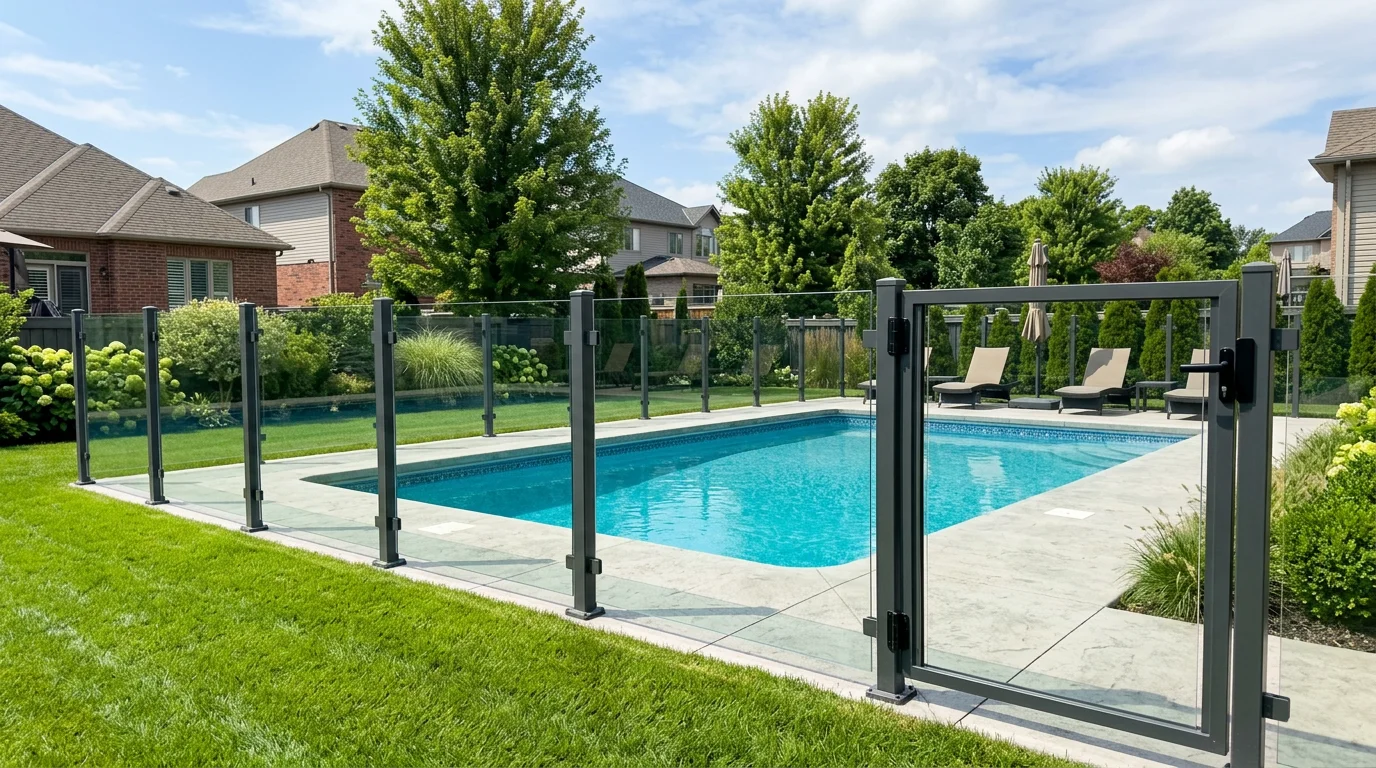
You're weighing composite fence panels against wood, vinyl, or aluminum for your Ontario property. Composite promises low maintenance and long life, but it costs more upfront—$50-85 per linear foot installed compared to $30-50 for pressure-treated wood. The question is whether that premium pays off in our freeze-thaw climate.
What Are Composite Fence Panels?
Composite fence panels combine wood fiber and plastic polymers—similar construction to composite decking. You get a wood-grain texture without the rot, splinters, or annual staining. Most panels are 6 feet high for privacy and come in 6 or 8-foot widths between posts.
🏗️ Planning a deck project?
Get a free manual project review, or visualize your dream deck with AI before requesting quotes.
Unlike vinyl (which is 100% plastic), composite has wood content that makes it heavier and more rigid. Unlike wood, the plastic coating resists moisture intrusion and insect damage.
Composite Fence Cost in Ontario (2026)
Material only: $35-60/linear foot for 6-foot privacy panels
Installed: $50-85/linear foot
That's for a standard 6-foot privacy fence with aluminum or composite posts. Add $5-10/linear foot for:
- Decorative post caps
- Aluminum or steel inserts for strength
- Horizontal slat designs instead of vertical pickets
- Gates (typically $400-800 each installed)
Cost Comparison: 100-Foot Fence Line
| Material | Installed Cost | 10-Year Maintenance | Total 10-Year Cost |
|----------|----------------|---------------------|---------------------|
| Pressure-treated wood | $3,000-5,000 | $1,200-2,500 (stain, repairs) | $4,200-7,500 |
| Cedar | $4,000-6,000 | $800-1,500 (stain, minor repairs) | $4,800-7,500 |
| Composite | $5,000-8,500 | $100-300 (cleaning only) | $5,100-8,800 |
| Vinyl | $4,500-7,000 | $50-150 (cleaning only) | $4,550-7,150 |
| Aluminum | $5,000-8,000 | $50-100 (cleaning only) | $5,050-8,100 |
Composite sits in the middle of the long-term cost spectrum. Vinyl is cheaper upfront and comparable over time. Wood can match composite's total cost once you factor in staining every 2-3 years.
Performance in Ontario's Climate
Freeze-Thaw Cycles
Ontario swings from -25°C winters to +30°C summers. Composite handles this better than vinyl but not as well as aluminum.
Expansion/contraction: Composite expands and contracts with temperature—about 1/4 inch over 8 feet of panel width. Installers leave 1/8-inch gaps between panels and use rail systems that allow movement. If panels are locked too tightly, they'll buckle in summer heat.
Cracking: Quality composite (like Trex Fencing or TimberTech) resists cracking better than vinyl in extreme cold. Cheaper composite with less plastic content can become brittle below -15°C.
Moisture and Rot
Composite won't rot, but it's not 100% waterproof. The wood fiber inside can absorb moisture if the plastic coating is scratched or if cut ends aren't properly sealed. Look for:
- Capped composite: A full plastic shell over the wood-plastic core (same tech as capped composite decking)
- End caps: Plastic caps for cut ends of panels and posts
- Aluminum channels: Metal framing that prevents ground contact
Avoid letting snow pile against composite panels all winter—constant wet-dry cycles can cause surface swelling over 5-10 years.
Wind Load
Composite is heavier than vinyl but lighter than wood. A 6-foot privacy panel weighs 40-60 pounds vs 25-35 pounds for vinyl and 50-80 pounds for cedar.
For exposed properties in Kitchener-Waterloo-Cambridge, reinforce with:
- Aluminum or steel post inserts (adds $10-15/post)
- Metal rail reinforcement bars inside horizontal rails
- Deeper post footings: 42 inches instead of the standard 36 inches for frost protection
Wind isn't usually a fence permit issue in KWC, but if you're in a high-wind zone, inspectors may ask for engineered drawings. Budget $500-1,200 if required.
Maintenance Requirements
Composite needs far less work than wood but isn't zero-maintenance.
Annually:
- Hose down panels to remove dirt, pollen, and salt residue
- Scrub mold or mildew with a deck cleaner (same products work for composite deck maintenance)
- Check post stability—tighten hardware if rails have loosened
Every 3-5 years:
- Inspect for panel fading (most warranties cover excessive fading)
- Re-seal cut ends if end caps have fallen off
You'll never stain or paint composite. No splinter repairs. No board replacements due to rot.
Durability and Lifespan
Expected life: 25-30 years for quality composite (Trex, TimberTech, Fiberon)
Warranty: 25 years on materials (fading, staining, structural integrity)
Compare to:
- Pressure-treated wood: 15-20 years with regular maintenance
- Cedar: 20-25 years with staining every 2-3 years
- Vinyl: 20-30 years (can become brittle after 15-20 in Ontario's climate)
- Aluminum: 30+ years (longest-lasting option)
Composite holds color better than wood but not as well as vinyl or aluminum. Expect 10-15% fading over the first 10 years, especially on south-facing panels. Dark colors (browns, grays) fade more than lighter tans.
Permit Requirements in Kitchener-Waterloo-Cambridge
Most residential fences under 2 meters (6.6 feet) don't require a building permit in KWC, but you still need to follow zoning bylaws:
Height limits:
- Rear and side yards: 2 m (6.6 ft) max
- Front yard: 1.2 m (4 ft) max
- Corner lots: 1.2 m within the sight triangle (triangular area near street intersection)
Setbacks:
- Fences on the property line are allowed if both neighbors agree
- If your neighbor objects, you may need to set back 0.1-0.3 m (check your municipality)
Pool barriers: If your fence encloses a pool, it must meet pool barrier requirements—1.2 m minimum height, no climbable horizontal rails, self-closing/latching gate. This often triggers a permit even if the fence height is under 2 m.
Call your city's building department:
- Kitchener: 519-741-2345
- Waterloo: 519-886-1550
- Cambridge: 519-740-4680
If you do need a permit, budget $50-200 depending on the municipality.
Composite vs Vinyl Fence
Vinyl often beats composite on cost and maintenance. Here's when composite wins:
Choose composite if:
- You want a wood-grain look (vinyl looks plasticky)
- You're in a high-wind area (composite is heavier and more rigid)
- You need custom cuts or curves (composite is easier to work with than vinyl)
Choose vinyl if:
- Budget is tight (vinyl is $45-70/linear foot vs $50-85 for composite)
- You want the whitest possible fence (vinyl stays brighter than light-tan composite)
- Low maintenance is the top priority (vinyl needs even less care than composite)
Both resist rot and insects. Both handle freeze-thaw reasonably well. Vinyl cracks more easily in extreme cold; composite fades more in direct sun.
Composite vs Wood Fence
Wood is cheaper upfront but composite usually wins over 15+ years.
Choose composite if:
- You don't want to stain every 2-3 years
- You're keeping the house long-term (15+ years to break even on cost)
- You live near a busy road (composite doesn't absorb road salt like wood)
Choose wood if:
- Budget is tight and you're handy with a roller (you'll save $2,000-3,500 on a 100-foot fence)
- You want a specific custom design (wood is easier to modify on-site)
- You prefer natural wood aging (some homeowners like the silver-gray patina of weathered cedar)
For detailed wood costs, see the best fence materials in Ontario guide.
Installation Tips for Contractors and DIYers
Composite fence installation is similar to vinyl but with a few key differences:
Post Installation
- Use 4x4 composite or aluminum posts (some systems use wood posts with composite sleeves—avoid these, the wood will rot eventually)
- Dig 42 inches deep for frost protection (Ontario frost line is 36-48 inches depending on region)
- Set posts in concrete with 8-10 inches of diameter
- Plumb and brace posts carefully—composite rail systems are less forgiving than wood if posts aren't perfectly aligned
Panel and Rail Installation
- Leave expansion gaps: 1/8 inch between panels, 1/4 inch at ends
- Use stainless steel or coated screws—regular steel will rust and stain
- Seal cut ends with silicone or provided end caps
- Don't overtighten screws—composite can crack if you compress it too much
Special Conditions
- Slopes: Step the fence in sections rather than racking panels (composite doesn't rack well)
- Gates: Use heavy-duty hinges rated for composite weight (40-60 lbs per panel)
- Ground contact: Keep bottom of panels 2-3 inches above grade to prevent moisture wicking
If you're DIYing, budget 2-3x longer than a wood fence—composite systems are finicky about alignment and spacing.
Best Composite Fence Brands in Canada
The same companies that make composite decking in Canada also produce fencing:
Trex Fencing
- Most widely available in Ontario
- 25-year warranty
- Capped composite with good fade resistance
- $40-55/linear foot materials only
TimberTech Fencing
- Premium option with aluminum rail reinforcement
- 25-year warranty
- Available in 6 colors
- $45-60/linear foot materials only
Fiberon Fencing
- Mid-range pricing
- Good color selection
- 25-year warranty
- $35-50/linear foot materials only
Veranda (Home Depot house brand)
- Budget option
- 20-year warranty
- Fewer color choices
- $30-45/linear foot materials only
All of these perform well in Ontario's climate. Trex and TimberTech have the longest track record, but Fiberon and Veranda offer solid value.
Where to Buy Composite Fence in KWC
- Home Depot (Kitchener, Waterloo, Cambridge): Carries Trex, Veranda
- Lowe's (Kitchener): Carries Fiberon, own brands
- Fence-All (Kitchener): Specialty fencing supplier, multiple brands
- Rona (Waterloo, Cambridge): TimberTech, other brands
Expect 2-4 weeks lead time for special orders (colors, custom panel widths). Stock items (standard brown or gray, 6-foot panels) are usually available within a few days.
When Composite Fence Makes Sense
Composite is the right call if:
- You're staying in the home 10+ years (break-even point vs wood)
- You want a privacy fence that looks like wood but never needs staining
- You don't want to deal with board replacements from rot or insect damage
- You're okay with 10-15% color fading over time (not as color-stable as vinyl or aluminum)
Skip composite if:
- You're flipping the house in 5 years (wood is cheaper and you won't see the maintenance savings)
- You want the absolute lowest maintenance (vinyl or aluminum are better)
- You need a 4-foot decorative fence (aluminum picket is cheaper and looks better)
- Budget is extremely tight (pressure-treated wood at $30-50/linear foot wins)
For most Ontario homeowners planning to stay put, composite lands in the sweet spot—better than wood, more natural-looking than vinyl, and cheaper than aluminum.
🎨 Not sure which material to pick?
Upload a photo of your backyard and see exactly how Trex, TimberTech, or cedar would look — free and instant.
Common Questions
Does composite fencing warp in the heat?
Quality composite won't warp if installed correctly with proper expansion gaps. Cheaper brands or improperly installed panels (locked too tight) can bow in summer heat. Expect up to 1/4 inch of expansion on 8-foot panels when temperature swings from -20°C to +30°C.
Can you paint or stain composite fence panels?
No. Composite has a plastic coating that won't accept paint or stain. If you want to change the color, you'll need to replace the panels. This is why color choice matters—you're locked in for 25+ years.
How do you clean mold off composite fencing?
Use the same composite deck cleaner you'd use for composite deck maintenance. Mix oxygen bleach (not chlorine) with water, scrub with a soft brush, rinse. For stubborn mold, let the cleaner sit for 10-15 minutes before scrubbing. You'll typically see mold on north-facing panels that don't get much sun.
Is composite fencing strong enough for large dogs?
Yes, if installed properly. Use aluminum or steel post inserts and make sure posts are set 42 inches deep in concrete. A 100-pound dog can't push through composite panels, but they can loosen poorly anchored posts over time. Reinforce gate posts especially—they take the most stress.
Do composite fences need concrete posts?
No, but posts must be set in concrete. You can use composite posts, aluminum posts, or wood posts with composite sleeves. Avoid plain wood posts—they'll rot long before the panels fail. Composite or aluminum posts last 25+ years. Budget an extra $10-20 per post for aluminum over composite.
Related: Composite Decking Calculator: How Much Material Do I Need?.
You may also find Cedar vs Composite Fence in Ontario helpful.
Upload a backyard photo and preview real decking materials with AI — free, instant, no sign-up.
Permits, costs, material comparisons, and questions to ask before requesting quotes — delivered to your inbox.