
Deck Builder Red Flags: Warning Signs in Ontario
Learn to spot red flags when hiring deck builders in Ontario. Avoid unlicensed contractors, lowball quotes, and permit shortcuts that could cost you thousands.
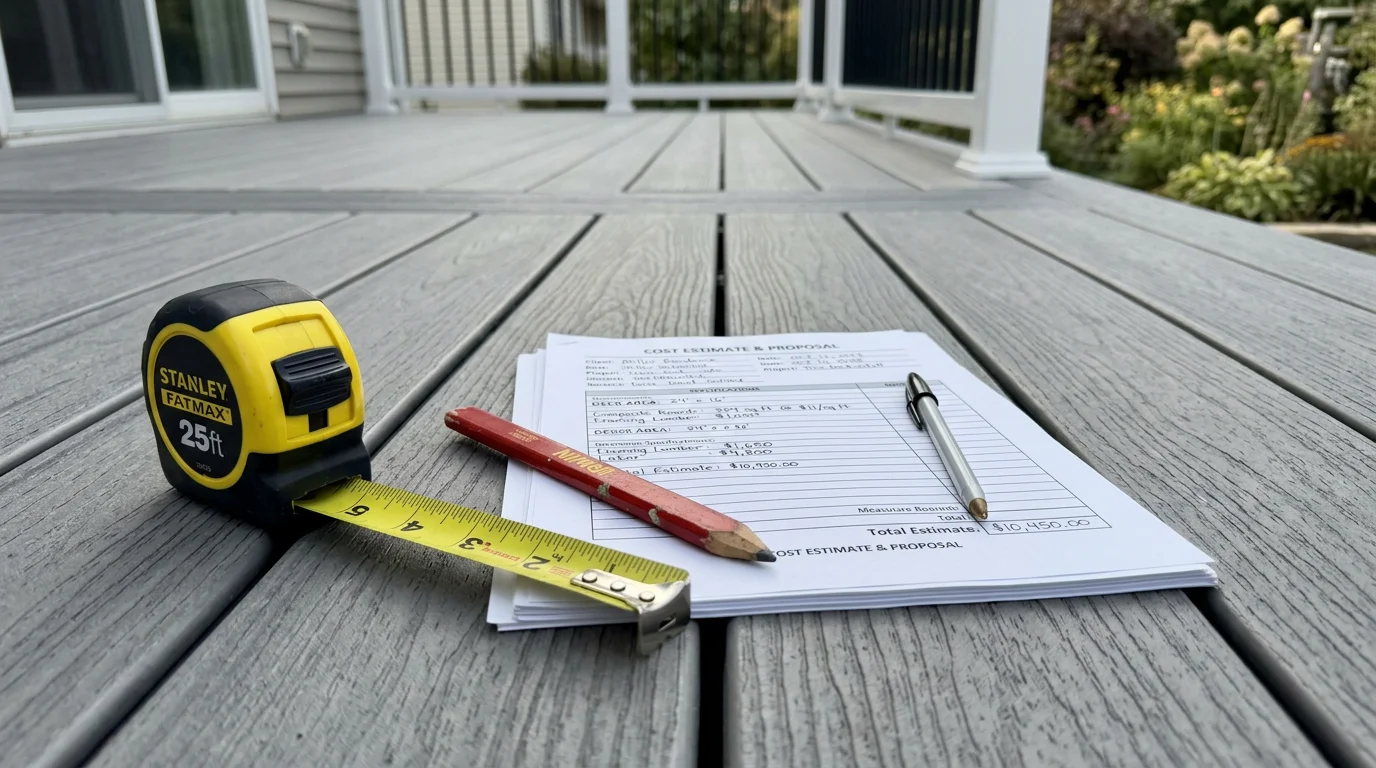
Hiring the wrong deck builder in Ontario can cost you thousands in repairs, failed inspections, or complete rebuilds. Here's what to watch for.
No WSIB or Liability Insurance
A legitimate deck builder carries workplace safety insurance (WSIB) and commercial liability insurance of at least $2 million. If someone gets hurt on your property or causes damage to your home, you're liable without these protections.
🏗️ Planning a deck project?
Get a free manual project review, or visualize your dream deck with AI before requesting quotes.
Ask for proof upfront. Call their insurance provider to verify coverage is active. If a builder says "I'm careful, I don't need insurance" or "it's too expensive," walk away immediately.
Many Ontario homeowners have faced lawsuits after uninsured contractors fell from their decks or damaged siding during installation. Your homeowner's insurance won't cover this.
They Don't Mention Permits
Any deck higher than 24 inches (60 cm) above grade in Kitchener, Waterloo, or Cambridge requires a building permit. If your builder doesn't bring this up during the quote, they're either inexperienced or planning to skip the permit entirely.
No permit means:
- No inspections to catch structural failures
- Liability remains with you if something collapses
- You can be fined $500-5,000 by the municipality
- You'll pay to tear it down and rebuild when selling your home
A proper builder includes permit fees ($150-400) in their quote and handles the application. Learn the process in our guides for Kitchener, Waterloo, and Cambridge.
The Quote Is Suspiciously Low
If one quote comes in at $35/sqft and others are $55-65/sqft for pressure-treated, there's a reason.
Common corners cut on lowball quotes:
- No concrete footings (using deck blocks that shift and sink)
- Shallow footings above Ontario's 48-inch frost line
- Undersized joists that sag or bounce
- No joist tape (wood rot starts within 5 years)
- Cheaper fasteners (deck screws instead of structural screws or joist hangers)
- No flashing at the ledger board (water damage to your house)
Get itemized quotes. If materials and labour aren't broken down, you can't verify what you're actually paying for. See what should be in a proper quote.
They Want Large Upfront Payments
Ontario's construction industry norm is 10-25% deposit to order materials, with staged payments tied to milestones:
- 25% when materials arrive
- 50% when framing passes inspection
- 25% when project is complete
A builder demanding 50% or more upfront is either desperate for cash flow or planning to disappear. This happens frequently with unlicensed contractors who take deposits from multiple homeowners, then vanish.
Never pay the full amount until the final inspection passes and you've walked the deck yourself. Document everything in a proper contract.
No Written Contract or Warranty
"Let's just do a handshake deal" saves nobody money. You need a contract that specifies:
- Exact materials (brand, grade, dimensions)
- Footing depth (48 inches minimum in Ontario)
- Timeline with weather delay clauses
- Permit responsibility (who applies, who pays fees)
- Warranty terms (labour and materials)
- Payment schedule
- Cleanup and disposal
If a builder says contracts are "too formal" or "slow things down," they don't want accountability when problems surface. Standard warranties are 1-2 years on labour, 10-25 years on composite materials (if manufacturer terms are met).
They Can't Provide References
Ask for three recent projects within the last year. Call those homeowners. Ask:
- Did they finish on time?
- Did they stay within budget?
- How did they handle problems?
- Did the deck pass inspection on the first try?
- Would you hire them again?
Drive by completed projects if possible. Look for sagging joists, uneven railings, or staining that suggests poor flashing.
If a builder says "all my work is word-of-mouth, I don't keep a list" or only provides references from 5+ years ago, they likely don't have happy recent customers.
They Don't Know the Ontario Building Code
Ask specific questions during the quote:
- "What's the maximum joist span for 2x8s at 16-inch spacing?" (11 feet 10 inches for SPF #2 or better)
- "How deep will the footings go?" (48 inches minimum)
- "What height does the railing need to be?" (36 inches minimum for residential decks, 42 inches if more than 6 feet above grade)
- "Do we need a ledger connection or freestanding?" (depends on deck height and attachment to house)
A qualified builder answers these immediately. Hesitation or vague responses like "we'll figure it out" means they're guessing. Check our Ontario Building Code deck requirements guide for more details.
They Pressure You to Decide Immediately
"This price is only good if you sign today" or "I have materials left over from another job" are classic pressure tactics. Legitimate builders understand you need time to compare quotes and check references.
Good builders are booked 4-8 weeks in advance during peak season (May-September in Ontario). If someone can start tomorrow with no notice, they're either desperate for work or new to the business.
Take at least a week to review three quotes. Compare materials, timelines, and what's included. Use our deck quote checklist to evaluate properly.
No Business Address or Landline
A cell phone number and "I'll meet you at your place" isn't a business. Check:
- Business registration (Ontario business registry lookup)
- Physical address (not a P.O. box)
- Website or social media showing past projects
- Google reviews or HomeStars presence
You need to be able to contact them after the project is complete. Contractors who operate entirely off Facebook Marketplace or Kijiji often disappear when warranty claims arise.
They Won't Involve You in Inspections
Ontario's building inspection process includes:
- Footing inspection before concrete is poured
- Framing inspection before decking boards go down
- Final inspection when complete
Your builder should notify you when inspectors are coming and encourage you to be present. If they say "don't worry about it, I'll handle everything," they may be hiding substandard work.
Failed inspections mean delays and extra costs. A builder confident in their work welcomes inspector scrutiny. Learn what framing inspectors look for in KWC.
They Suggest Skipping the Ledger Flashing
The ledger board connects your deck to your house. Without proper flashing, water runs down behind the siding and rots the rim joist, floor joists, and potentially your entire wall cavity.
Fixing water damage from missing ledger flashing costs $3,000-8,000 once you factor in structural repairs, mold remediation, and new siding.
Proper installation requires:
- Removing siding behind the ledger
- Installing metal flashing behind the house wrap
- Caulking at the top edge
- Through-bolts (not lag screws) every 16 inches
If your builder says "we'll just caulk it" or "the siding will keep water out," you'll have rot within 3-5 years. Read our full guide on ledger board flashing in Ontario.
They Don't Use Joist Tape or Membrane
Joist tape costs $40-80 per roll and adds about $150-300 to a typical deck project. It prevents water from sitting on top of joists and beams, which causes rot and structural failure.
Pressure-treated lumber lasts 15-20 years untaped in Ontario's freeze-thaw climate. Taped joists last 25-30+ years. The cost is minimal compared to rebuilding a failed frame.
If your builder says joist tape is "optional" or "overkill," they're prioritizing profit over longevity. See whether joist tape is worth it in Ontario conditions.
They Don't Discuss Drainage
Water pooling on your deck or under it causes:
- Premature rot in framing lumber
- Mold and mildew on composite decking
- Foundation damage if water accumulates against your house
- Ice buildup in winter
Proper decks have:
- 1-2% slope away from the house (1/8 inch per foot minimum)
- Gaps between deck boards for drainage (5/32 to 1/4 inch)
- Gravel or drainage solutions under low decks
A builder who doesn't mention drainage during the quote hasn't thought through long-term performance. Learn about under-deck water management in Ontario.
They Don't Call Ontario One Call
Before digging any footings, your builder must call Ontario One Call (811) to mark underground utilities. This is free and legally required.
Hitting a gas line, electrical conduit, or water main causes:
- Immediate danger (explosion, electrocution, flooding)
- Service disruption to your neighbourhood
- Fines of $50,000+ for the contractor (and you as property owner)
- Repair costs of $10,000-30,000
If your builder says "I know where the lines are" or "I'll be careful," they're gambling with your safety and wallet. Learn the full Ontario One Call process.
🎨 Not sure which material to pick?
Upload a photo of your backyard and see exactly how Trex, TimberTech, or cedar would look — free and instant.
Common Questions
How do I verify a deck builder's license in Ontario?
Ontario doesn't require a specific deck builder license, but legitimate contractors carry WSIB coverage and liability insurance. Ask for their WSIB clearance certificate and call the insurance company to verify active coverage. Check the Ontario business registry to confirm they're a registered business.
What should I do if my builder wants to skip the permit?
Walk away. No permit means you're liable for any structural failures, injuries, or code violations. Municipalities in KWC fine homeowners $500-5,000 for unpermitted decks, and you may be forced to tear it down. Permits cost $150-400 and ensure inspections catch problems before they become expensive disasters.
Is a really low quote always a red flag?
Yes, if it's significantly below market rates. Pressure-treated decks cost $45-65/sqft installed in KWC, as detailed in our Ontario deck pricing guide. If someone quotes $35/sqft, they're cutting corners on materials, footings, or labour. Ask for an itemized breakdown showing exactly what's included. Missing items like joist tape, proper flashing, or permit fees indicate future problems.
How much deposit should I pay a deck builder?
Standard practice in Ontario is 10-25% upfront, then staged payments: 25% when materials arrive, 50% when framing passes inspection, and final 25% when complete. Never pay more than 30% upfront or full payment before the final inspection. Large upfront demands often signal cash flow problems or potential fraud.
Can I hire an unlicensed contractor to save money?
Legally yes, but financially risky. Unlicensed builders often lack insurance, skip permits, and disappear when problems arise. You're personally liable for injuries on your property and code violations. Saving $2,000 upfront often costs $10,000+ in repairs, legal fees, or rebuilds when the deck fails inspection or collapses.
Upload a backyard photo and preview real decking materials with AI — free, instant, no sign-up.
Permits, costs, material comparisons, and questions to ask before requesting quotes — delivered to your inbox.