
Deck Permit Exemptions in Ontario (Kitchener–Waterloo–Cambridge): Repairs vs. Rebuilds
Not every deck project needs a permit — but the line between ‘repair’ and ‘rebuild’ is where homeowners get burned. Here’s how KWC building departments typically think about it, what triggers permits, and how to stay safe.
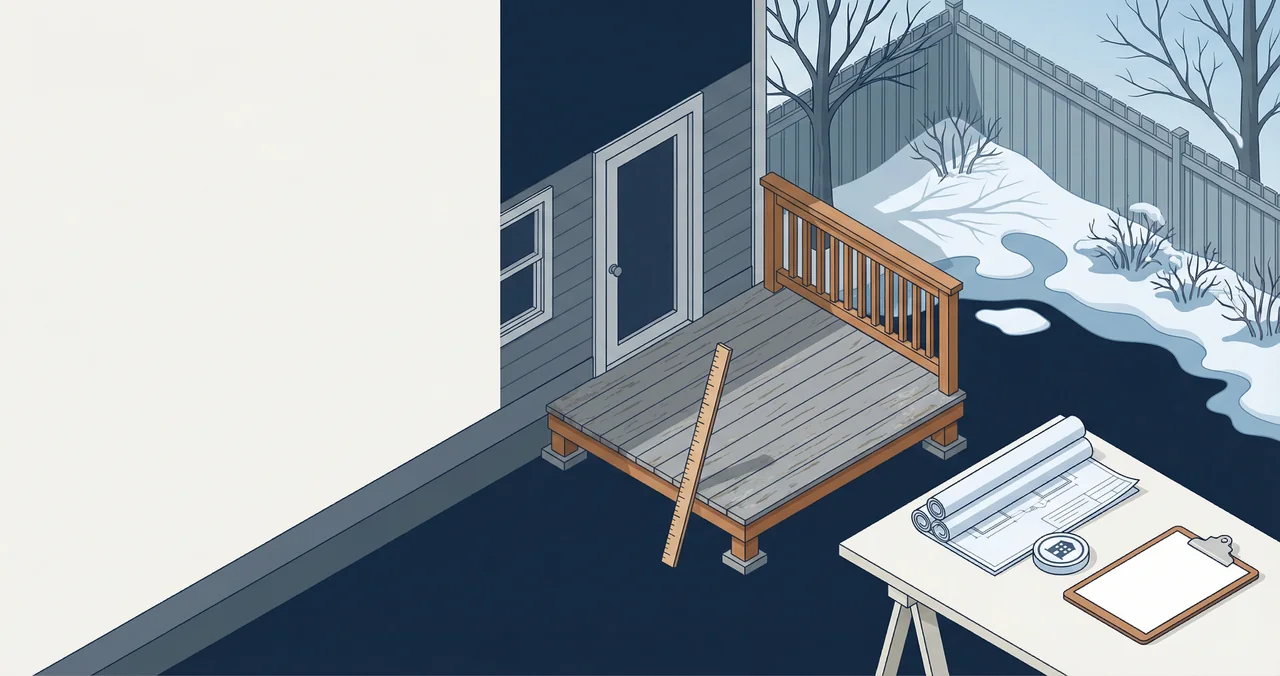
If your deck is getting soft boards, wobbly stairs, or a railing that’s seen better days, the obvious question is: do I need a permit to fix this — or can I just repair it?
In Kitchener, Waterloo, and Cambridge, the answer is usually: small like-for-like repairs often don’t need a building permit, but the moment you change *structure, size, height, stairs, or attachment*, you’re effectively doing a rebuild — and that can trigger permits, inspections, and (sometimes) engineering.
This guide explains how Ontario/KWC building departments typically draw the line, the common “permit trap” scenarios, and the safest way to move fast without getting shut down mid-project.
Quick rule of thumb: maintenance vs. structural work
Think in two buckets:
🏗️ Planning a deck project?
Get a free manual project review, or visualize your dream deck with AI before requesting quotes.
- Maintenance / like-for-like repairs: replacing a few deck boards, swapping a broken stair tread, fixing a loose handrail, replacing a single rotted rim board *without changing the design*.
- Structural changes / rebuilds: changing the framing layout, replacing beams/posts/footings, altering stairs, raising the deck, expanding the footprint, changing how it connects to the house, or converting it to a roofed/covered structure.
Ontario rules are ultimately enforced locally, so always confirm with your City’s building department if you’re near the boundary — especially if you’re in an older Kitchener/Waterloo neighborhood where grades, drainage, and ledger attachment can be quirky.
If you’re still deciding whether this is a repair or rebuild, start here:
- Permit baseline: Kitchener vs Waterloo vs Cambridge deck bylaws
- Planning docs: Deck permit drawings checklist (KWC)
Examples that are *often* permit-exempt (but confirm locally)
These are the types of projects that are commonly treated as maintenance in Ontario:
1) Replacing deck boards (same material thickness, same layout)
If you’re swapping out weathered boards for new ones (PT → PT, composite → composite) and you’re not changing framing, this is usually maintenance.
Local tip for KWC: freeze–thaw + de-icing salts can accelerate surface checking and fastener corrosion. If you’re seeing popped screws everywhere, consider whether the joists are also compromised before you assume it’s “just boards.”
Related:
2) Replacing a few stair treads or a broken step
Fixing a squeaky or cracked tread is typically maintenance.
But if you’re changing the stair geometry (rise/run), adding a landing, or rebuilding the stringers, you’re moving toward structural territory.
Related:
3) Re-fastening a loose railing (no height change)
If the railing is loose because posts are shifting or fasteners have rusted out, you may be able to tighten it up and replace hardware.
If you’re changing the guard height, spacing, or post layout, or if the deck is more than ~24" above grade and guard requirements apply, treat it as a code-sensitive change and confirm with your City.
Related:
Examples that *often* trigger permits (the common traps)
Even if your intention is “just repairs,” these scenarios often cross the line into permit + inspection in Kitchener/Waterloo/Cambridge.
1) Replacing posts, beams, or footings
If the deck is settling, heaving, or visibly sagging, the fix is rarely cosmetic. Replacing posts/footings can change load paths and frost performance — and that’s usually treated as structural work.
KWC reality: the frost + clay soil mix can make footings and helical piles perform very differently across neighborhoods.
Related:
2) Changing how the deck attaches to the house (ledger work)
Ledger attachment is one of the biggest safety issues inspectors care about. If you’re altering the ledger, adding a ledger where there wasn’t one, or reworking flashing/waterproofing, you may need a permit.
Related:
3) Expanding the footprint (even “just a little”)
Adding a bump-out, widening stairs, extending a platform, or pushing the deck closer to a property line can trigger:
- zoning/setback review
- permit drawings
- inspection requirements
Related:
4) Raising the deck or rebuilding the stairs
As soon as the deck height changes, guard requirements, stair layout, and sometimes engineering assumptions change too.
If you’re rebuilding stairs, treat it like a code-sensitive project:
- rise/run consistency
- landings
- handrail/guard details
Related:
5) “Resurfacing” when the framing is rotten
A classic permit trap: you plan to resurface, then you pull boards and discover joist rot. At that point, you’re no longer doing a surface repair — you’re rebuilding structure.
If you suspect framing issues, read:
- Rebuild vs resurface (Kitchener–Waterloo)
- Deck repair cost (Kitchener–Waterloo)
- Deck pricing across Ontario — helpful for comparing repair vs. new-build costs
KWC/Ontario-specific checks to do before you start demo
Before you start ripping boards out, do a 15-minute pre-check that fits how local inspections actually go.
1) Measure height above grade and identify “guard zones"
In Ontario, guardrails become a big deal once you’re above the typical threshold (commonly discussed as ~24"), but the safest move is: measure and treat any elevated deck as guard-critical.
If your repair involves guard posts or rails, assume an inspector will focus there.
2) Look for ledger flashing and moisture paths
Kitchener/Waterloo/Cambridge decks often fail where water gets trapped at the ledger. If you see:
- staining on the band board
- spongy ledger area
- missing flashing
…you’re in “structure” territory and should confirm the right approach with a pro.
3) Check footings for heave and posts for rot at grade
Freeze–thaw and de-icing salts can destroy post bases and fasteners. If posts are rotted at grade or the deck has shifted over a couple winters, a “simple repair” becomes structural quickly.
4) Confirm zoning/setbacks before changing the footprint
Even if you’re sure you can rebuild “the same deck,” older lots and fences in KWC can make property lines ambiguous.
Do a basic sanity check:
- confirm where the lot line is
- confirm where the deck sits relative to it
- if you’re near a boundary: call your City before you change anything
What to say when you call Kitchener/Waterloo/Cambridge (so you get a clear answer)
When you call or email the building department, don’t ask “do I need a permit?” generically. Ask in a way that forces a yes/no decision:
1) “I’m replacing deck boards only (no framing changes). Is a permit required?”
2) “I may need to replace joists/beam/posts due to rot. At what point does this become a permit-required rebuild?”
3) “The deck is approximately X inches above grade. If I replace guard posts/rails, do you want it inspected?”
4) “I’m keeping the same footprint, but I’m replacing stairs/stringers. Permit?”
If you want to speed up a permit-required rebuild, this helps:
Get a deck quote (and avoid permit surprises)
If you’re in Kitchener, Waterloo, or Cambridge and you’re not sure whether you’re looking at a repair or a full rebuild, a good contractor can usually tell from a quick site visit.
Get a quote (and a sanity check on permits/inspections) here:
Get deck quotes → /#quote-form
For more planning guides, start here:
- Decks blog hub
- City pages: Kitchener, Waterloo, Cambridge
🎨 Not sure which material to pick?
Upload a photo of your backyard and see exactly how Trex, TimberTech, or cedar would look — free and instant.
FAQ: deck permit exemptions in Ontario
Do I need a permit to replace deck boards in Ontario?
Often no, if it’s truly like-for-like maintenance with no structural changes. If you discover rot in joists or beams once boards are removed, confirm the next steps with your City.
Do I need a permit to replace deck stairs in Kitchener/Waterloo/Cambridge?
Small tread repairs are often maintenance. Rebuilding stringers, changing stair geometry, or adding landings can trigger permit/inspection requirements. Confirm with your local building department.
What if my contractor says no permit is needed?
Ultimately, the local building department decides. A reputable contractor will be willing to document what’s changing (and what’s not) and tell you when to call the City.
For upkeep tips, read Deck Repair vs. Replace ROI Calculator (KWC Edition).
Upload a backyard photo and preview real decking materials with AI — free, instant, no sign-up.
Permits, costs, material comparisons, and questions to ask before requesting quotes — delivered to your inbox.