
Helical Piles vs Concrete Footings for Decks in Ontario
Helical piles vs concrete footings for Ontario decks: cost, installation speed, frost heave resistance, permits, and which foundation works best in KWC clay soil.
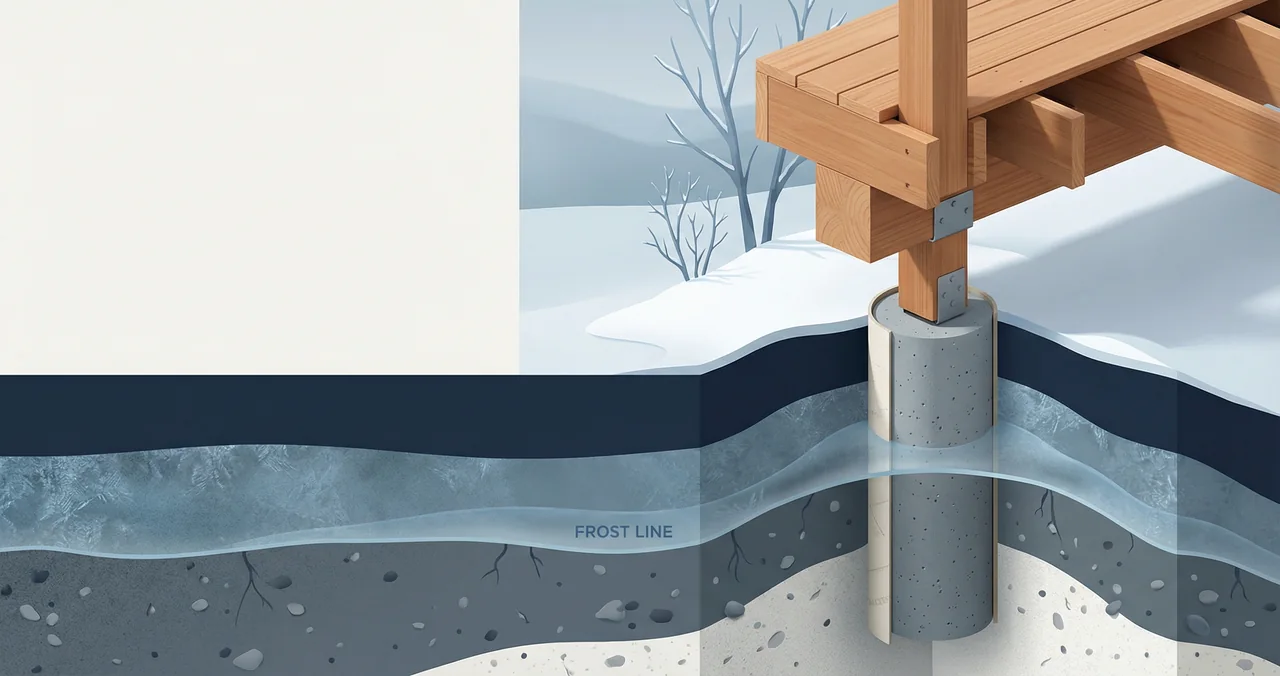
You're planning a deck and your builder just gave you two options: helical piles or concrete footings. The helical piles cost more upfront, but they'll be done in a day. The concrete footings are cheaper, but you need to dig below the 48-inch frost line and wait for inspections.
Which one actually makes sense for your project?
What Are Helical Piles and Concrete Footings?
Concrete footings (also called sonotubes or poured piers) are the traditional method. You dig holes below Ontario's frost line, pour concrete, and wait 7-14 days for curing before building. The concrete sits on undisturbed soil and supports your deck posts.
🏗️ Planning a deck project?
Get a free manual project review, or visualize your dream deck with AI before requesting quotes.
Helical piles are galvanized steel shafts with spiral blades that screw into the ground like a giant corkscrew. An installer uses hydraulic equipment to drive them 10-20 feet deep until they hit load-bearing soil. They're ready to build on immediately—no curing time.
Both methods work. The right choice depends on your timeline, budget, soil conditions, and whether you're dealing with complicated site access.
Cost Comparison: Materials and Installation
Here's what you'll actually pay in the KWC market (2026 pricing):
| Foundation Type | Cost Per Post | Typical 12x16 Deck (8 posts) | Installation Time |
|-----------------|---------------|------------------------------|-------------------|
| Concrete footings (DIY) | $40-80 | $320-640 | 2-3 days + curing |
| Concrete footings (installed) | $100-180 | $800-1,440 | 1 day + curing |
| Helical piles (installed) | $150-300 | $1,200-2,400 | 1 day (instant) |
Concrete footings are cheaper if you're willing to rent an auger ($80-120/day) and do the digging yourself. Professional installation adds labour but still comes in below helical piles.
Helical piles cost 50-100% more than concrete, but that premium buys speed and eliminates weather risk. If you're building in spring when rain delays concrete work, or if you're racing a deadline, the price gap shrinks when you factor in lost time.
Most deck builders in Kitchener-Waterloo will quote both options if you ask. The total project cost difference is usually $500-1,500 on a typical residential deck—not nothing, but not a deal-breaker if helical piles solve a specific problem.
Installation Speed and Weather Resistance
Concrete footings require:
- Digging 48+ inches deep (Ontario frost line requirement)
- Setting sonotube forms and rebar
- Inspection before pouring concrete
- 7-14 day cure time before framing starts
- Dry weather for pouring and curing
Rain during the cure period can weaken concrete. Cold temperatures slow curing or stop it entirely (you can't pour below 5°C without heated blankets and admixtures). If you're building in April or October, weather delays add risk.
Helical piles go in the same day:
- Installer drives piles with hydraulic equipment
- Reaches design depth in 15-30 minutes per pile
- Zero cure time—start framing immediately
- Works in rain, cold, or mud
- Minimal site disturbance
If you're building in summer or early fall, concrete footings work fine. If you're squeezing a project into spring mud season or late fall before freeze-up, helical piles keep you on schedule.
The speed advantage matters most when you're coordinating multiple trades. If your deck builder can frame while the gas fitter installs a BBQ line and the electrician runs power, helical piles let everyone work in parallel instead of waiting two weeks for concrete to cure.
Frost Heave and Soil Performance in Ontario
Ontario's freeze-thaw cycles cause frost heave—when moisture in soil freezes, it expands and pushes upward. That's why the Ontario Building Code requires footings below the 48-inch frost line.
Concrete footings resist frost heave by sitting on undisturbed soil below the frost line. They work well in most KWC soil conditions, but they can still move in:
- Heavy clay soil (common in Waterloo and Cambridge) that holds moisture and expands when frozen
- Poorly drained areas where water pools around footings
- Sites with seasonal water tables that rise in spring
Helical piles penetrate 10-20 feet deep—well below frost action and surface soil movement. The spiral blades lock into stable soil layers that don't experience freeze-thaw cycles. In problem soils, this deep anchoring prevents seasonal heaving that can crack deck frames or pull ledger boards away from houses.
If your yard has clay soil that stays wet, or if you're building near a slope where drainage is poor, helical piles eliminate frost heave risk. You'll see fewer seasonal adjustments and longer frame life.
For standard well-drained lots with typical soil conditions, properly installed concrete footings handle frost heave just fine. The Ontario Building Code exists because concrete footings work—they just need correct depth and drainage.
Permit Requirements and Engineering in KWC
Both foundation types require the same deck permit process in Kitchener, Waterloo, and Cambridge. You'll submit:
- Site plan showing setbacks and footing locations
- Framing plan with joist spans and beam sizes
- Foundation detail (concrete or helical)
Concrete footings rarely require engineering on standard residential decks. Municipal building departments accept footings that meet OBC minimums:
- Minimum 48-inch depth
- Minimum 16-inch diameter (sonotube size)
- Placed on undisturbed soil or engineered fill
Helical piles trigger engineering requirements more often because they're a newer technology and municipal inspectors want load calculations. Expect:
- Engineer's design specifying pile depth and torque values: $500-1,200
- Installation report from certified installer documenting achieved torque
- Load testing (rare, but possible on large decks or problem soils)
The engineering adds cost and timeline (2-4 weeks for drawings), but it also provides certainty. You'll know your foundation meets design loads, which matters if you're building a hot tub deck or adding a heavy roof structure later.
Some KWC builders have standard helical pile designs pre-approved by local municipalities. Ask if your builder has engineered drawings ready to go—it can save you the engineering fee.
Site Access and Installation Challenges
Concrete footings need:
- Hand digging or auger access to each footing location
- Clear path for concrete truck or wheelbarrows
- Space to stage sonotubes, rebar, and concrete bags
- Spoil pile location (you'll have 3-5 cubic yards of excavated soil)
If you have tight side-yard access or landscaping in the way, hand digging 48-inch holes is brutal work. Renting a two-man auger helps, but you still need to get it to each hole location.
Helical piles need:
- Mini-excavator or skid-steer access (4-foot width minimum)
- Hydraulic pile driver attachment
- Professional installer with certified equipment
The equipment is larger than an auger, but installation is faster and creates almost no spoil. The real advantage: you can install piles in locations where digging is impossible—next to existing structures, under low overhangs, or on slopes where concrete trucks can't reach.
If your backyard has a narrow gate or existing landscaping you want to protect, ask installers about hand-held pile drivers. They're slower but fit through 36-inch openings.
Long-Term Performance and Maintenance
Concrete footings last 50+ years if installed correctly. Problems occur when:
- Footings weren't poured deep enough (frost heave)
- Water drainage was poor (soil erosion under footings)
- Post brackets corroded due to water pooling
You can't inspect concrete footings after installation without excavating. If you suspect problems (deck feels springy, posts show movement), you're looking at expensive repairs involving jacking the deck and pouring new footings.
Helical piles have similar longevity (40-75 years depending on soil chemistry and galvanization quality). Advantages:
- Above-grade brackets let you inspect connections annually
- Deep anchoring means no settling or heaving over time
- Replaceable brackets if corrosion occurs (replace bracket, not entire pile)
The maintenance difference is minor. Both systems require checking post-to-footing connections annually and ensuring water drains away from the deck perimeter.
When Concrete Footings Make More Sense
Choose concrete footings if:
- Budget is tight and you can handle longer construction timeline
- You're building in summer when weather is stable and concrete cures reliably
- Soil is typical (no clay layers, good drainage, no steep slopes)
- Site access is easy and you can rent an auger or bring in a concrete truck
- Your municipality doesn't require engineering for standard residential decks
- You're comfortable with traditional methods and your builder prefers concrete
Concrete footings are the proven standard. They work, they're affordable, and inspectors know exactly what they're looking at. If nothing about your site or timeline creates complications, there's no reason to spend extra on helical piles.
When Helical Piles Make More Sense
Choose helical piles if:
- Timeline is critical and you can't afford 2-week concrete cure delays
- You're building in spring or fall when weather may delay concrete work
- Your soil is heavy clay or has poor drainage that causes frost heave
- Site access is difficult but a mini-excavator can still reach your backyard
- You're building near property lines or under existing structures where digging is impractical
- The deck will carry heavy loads (hot tub, screened porch, rooftop deck) and engineering provides peace of mind
- You want zero settling risk over the deck's lifetime
Helical piles solve specific problems. If your project has any of these complications, the cost premium pays for itself in reduced risk and faster completion.
Hybrid Approach: Mixing Both Foundation Types
Some builders use helical piles for problematic locations and concrete footings for straightforward spots. For example:
- Helical piles near the house where digging might damage foundation drainage
- Concrete footings for outer posts where soil is stable and access is easy
- Helical piles under beam locations that carry heavy loads
- Concrete footings for stair landings where loads are lighter
This hybrid approach optimizes cost while solving site-specific challenges. Ask your builder if it makes sense for your project—you'll see it most often on larger decks (16x20 and up) where foundation costs start adding up.
Getting Quotes: What to Ask Your Builder
When comparing foundation options, get clear answers on:
For concrete footings:
- "How deep will footings be, and does that meet OBC requirements?"
- "What's your plan if it rains during concrete curing?"
- "Do you include post brackets and hardware in your quote?"
- "How long from footing installation to framing start?"
For helical piles:
- "Are your pile installers certified, and who provides engineering?"
- "What torque values will piles be installed to?"
- "Is engineering included in your quote, or is it extra?"
- "Do you have pre-approved pile designs with the municipality?"
Make sure you're comparing installed prices, not just materials. A cheap concrete quote that doesn't include labour can end up costing more than turnkey helical piles once you factor in your time and rental equipment.
Check out our deck quote checklist for line items that should appear in every foundation quote.
Common Questions
Can I install helical piles myself?
No. Helical piles require hydraulic installation equipment and certified installers who can verify torque values. DIY installation won't pass inspection and voids product warranties. Concrete footings, on the other hand, are DIY-friendly if you're comfortable renting an auger and mixing concrete.
Do helical piles work in rocky soil?
Yes, but installation costs may increase if the installer hits bedrock and needs to switch pile sizes or adjust depths. In extremely rocky soil, concrete footings drilled with rock augers may actually be more practical. Ask installers to assess your site before quoting final prices.
Will my deck inspector approve helical piles?
Yes, if you provide engineered drawings and installation reports showing achieved torque values. Building inspectors in KWC are familiar with helical piles and accept them when properly documented. Concrete footings are approved based on depth measurements and visual inspection during the footing pour.
Can I add onto a deck built on helical piles later?
Yes, more easily than concrete footings. You can install additional piles without disturbing existing foundations. With concrete footings, you'll need to dig new holes and match existing footing depths, which can be tricky if the original installation wasn't well-documented.
Do helical piles make noise during installation?
Yes—the hydraulic pile driver creates noticeable noise similar to a skid-steer or excavator. Installation takes 2-4 hours for a typical residential deck, so it's not an all-day disturbance. Concrete footing installation (auger drilling) is also noisy but spread over more time due to multiple pours and inspections.
Related guides (to scope footings + permits)
If you’re getting quotes or deciding scope, these guides remove the biggest unknowns:
- Deck footing depth + permit checklist (KWC)
- Kitchener vs. Waterloo vs. Cambridge deck bylaws
- Ontario deck permit guide
- Ontario deck cost calculator
- Deck quote line items (Ontario)
🎨 Not sure which material to pick?
Upload a photo of your backyard and see exactly how Trex, TimberTech, or cedar would look — free and instant.
Want a fast, comparable quote from 3 deck builders?
- Get quotes here: Get a deck quote
Upload a backyard photo and preview real decking materials with AI — free, instant, no sign-up.
Permits, costs, material comparisons, and questions to ask before requesting quotes — delivered to your inbox.