
Two-Story Deck in Texas (2026)
Dreaming of a two-story deck in Texas? Learn about costs, permits in Houston, Dallas, Austin & San Antonio, plus design ideas for the Texas climate.
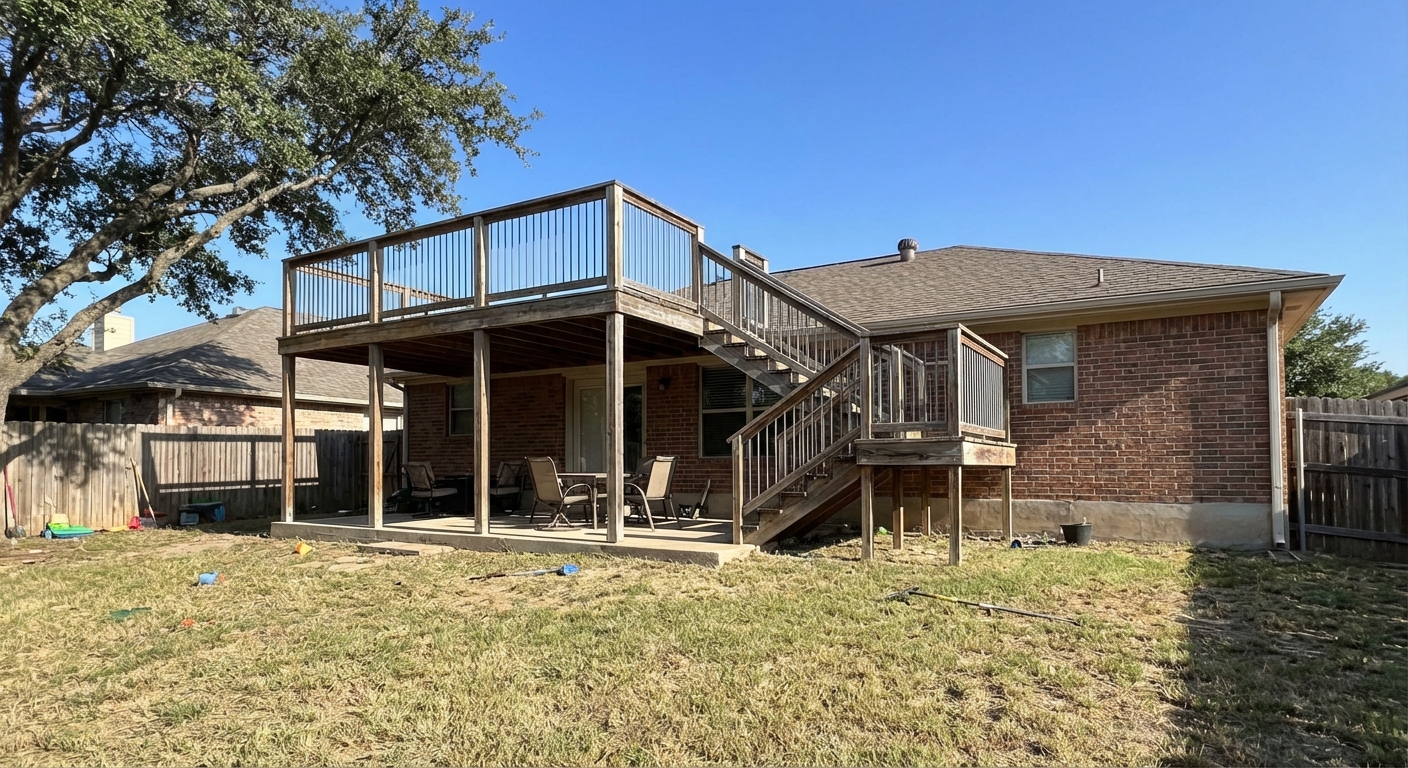
Want to expand your outdoor living space in Texas? A two-story deck can dramatically increase your usable area, offering stunning views and versatile entertainment options. However, building a multi-level deck in the Lone Star State requires careful planning, especially considering the Texas climate, building codes, and local regulations. This guide covers the key aspects of designing, costing, and building your dream two-story deck.
Two-Story Deck Costs in Texas: Material & Labor
Looking for more regional information? Check out our Texas State Decking Hub.
🏗️ Planning a deck project?
Get a free manual project review, or visualize your dream deck with AI before requesting quotes.
The cost of a two-story deck in Texas depends heavily on the materials you choose, the size of the deck, and the complexity of the design. Because Texas has no state income tax, many homeowners are willing to invest more in high-quality, durable materials for their home improvements. Here's a breakdown of typical costs per square foot, installed:
- Pressure-Treated Lumber: $25-45/sqft - The most budget-friendly option but requires regular maintenance.
- Cedar: $35-55/sqft - A naturally beautiful and rot-resistant option.
- Composite Decking: $45-75/sqft - Low-maintenance and durable, but can get hot in direct sunlight.
- Trex Decking: $50-80/sqft - A popular brand of composite decking known for its durability and variety of styles.
- Ipe (Brazilian Hardwood): $60-100/sqft - A premium, extremely durable, and naturally beautiful hardwood.
Keep in mind that these are just averages. Two-story decks require more complex framing and engineering, which typically adds to the labor costs compared to a single-story deck. Expect to pay a premium for experienced deck builders who understand local building codes and can handle the structural requirements of a multi-level deck.
<!-- slot:after-intro -->
Wondering what your design will cost? Our complete deck cost guide for Texas covers pricing for every material and style. Most covered and elevated decks require permits — see our guide on deck permit guide.
Cost Factors for Two-Story Decks
Several factors influence the overall price of your two-story deck project:
- Size: Larger decks require more materials and labor.
- Materials: As shown above, material choices significantly impact the cost.
- Design Complexity: Intricate designs with curves, angles, or custom features increase costs.
- Staircases: The number and design of staircases affect the price.
- Railing Systems: Different railing materials (wood, composite, metal) vary in cost.
- Permits: Permit fees vary by city.
- Site Preparation: Clearing land, leveling the ground, or addressing drainage issues can add to the cost.
- Geographic Location: Labor costs can vary slightly between major Texas cities like Houston, Dallas, Austin, and San Antonio.
- Features: Adding features like a covered roof, outdoor kitchen, or built-in seating will increase the price.
Example Two-Story Deck Cost Breakdown (Hypothetical)
Let's consider a hypothetical two-story deck project using composite decking:
- Deck Size: 20ft x 15ft per level (300 sqft per level, 600 sqft total)
- Material: Composite Decking ($60/sqft average)
- Estimated Material Cost: 600 sqft x $60/sqft = $36,000
- Estimated Labor Cost: (Typically 40-60% of material cost) - $14,400 - $21,600
- Permit Fees: (Varies by city, estimate) - $300
- Total Estimated Cost: $50,700 - $57,900
This is a rough estimate. Get multiple quotes from reputable deck builders in your area for a more accurate assessment.
Texas Deck Permit Requirements: City-Specific Guidelines
Most Texas cities require permits for decks exceeding a certain size or height. Generally, decks over 200 sqft or 30 inches above grade require a permit. Failing to obtain the necessary permits can result in fines, stop-work orders, and even the forced removal of your deck. Always check with your local permitting office before starting construction.
Here's a brief overview of permit requirements in some major Texas cities:
- Houston: Houston has no zoning, but you still need permits for deck construction from the City of Houston Permitting Center.
- Dallas: Permits are required and processed through Dallas Development Services. Expect to pay between $200-500 for a permit.
- Austin: Permits are obtained through Austin Development Services. Be prepared for potentially long processing times, often 8-12 weeks.
- San Antonio: Permits are handled by the Development Services Department, and the process is generally faster than in Austin.
See these related articles for more detailed permit information:
- Do You Need a Deck Permit in Texas? State & City Rules Explained
- Houston Deck Permit: Requirements, Costs & How to Apply
- Dallas Deck Permit Guide: What You Need Before Building
- San Antonio Deck Permit: Rules, Fees & Process
- Austin Deck Permit: Everything Homeowners Need to Know
It's also important to be aware of deck setback requirements, which dictate how close to your property line you can build. See Deck Setback Requirements in Texas: How Close to the Property Line? for more information.
Designing Your Two-Story Deck for the Texas Climate
Texas weather presents unique challenges for deck construction. The intense summer heat (95-105°F is common), high UV exposure, and humidity (especially along the Gulf Coast) can take a toll on deck materials. Careful design and material selection are crucial for longevity and comfort.
Material Considerations for Texas Heat
- Composite Decking: While low-maintenance, composite decking can get extremely hot in direct sunlight. Surface temperatures can exceed 150°F. Consider lighter colors to mitigate heat absorption. Look for brands specifically designed to resist fading and warping in high UV environments. See Best Composite Decking for Texas Heat: Top Brands Compared and Trex vs TimberTech in Texas: Which Composite Deck Is Better? for more info.
- Wood Decking: Cedar and redwood are naturally rot-resistant and perform well in Texas. Pressure-treated lumber is a more affordable option but requires regular sealing and staining to protect it from the elements.
- Fasteners: Use stainless steel or coated fasteners to prevent corrosion, especially near the coast.
Shade and Ventilation
Incorporating shade into your two-story deck design is essential for enjoying your outdoor space during the hot Texas summers. Consider these options:
- Covered Decks: A roof over part or all of your deck provides excellent protection from the sun and rain.
- Pergolas: Offer partial shade and can be enhanced with climbing plants for added coolness.
- Shade Sails: Affordable and stylish, shade sails provide flexible shade options.
- Umbrellas: Portable and versatile, umbrellas offer targeted shade where you need it most.
Proper ventilation is also important to prevent moisture buildup and promote airflow, especially under the deck.
Popular Texas Deck Features
Texans love to entertain outdoors. Here are some popular features to consider for your two-story deck:
- Outdoor Kitchen: A built-in grill, countertop, and sink create a functional cooking and dining space.
- Pool Deck: Integrate your deck seamlessly with your pool for easy access and relaxation.
- Hot Tub Platform: Create a dedicated space for your hot tub with reinforced decking.
- Fire Pit Area: Enjoy cozy evenings around a fire pit on your deck.
- Covered Seating Area: A covered area provides shade and protection from the elements for comfortable lounging.
Use PaperPlan (paperplan.app) to visualize your deck with PaperPlan design with different materials and layouts before committing to a contractor. Experiment with various shade structures, outdoor kitchen configurations, and seating arrangements to find the perfect design for your needs.
<!-- slot:mid-content -->
Texas-Specific Building Considerations
Beyond the general costs and design principles, here are some Texas-specific factors to keep in mind:
- Frost Line: Texas has a shallow frost line, typically only 6-12 inches deep in most areas. This means your deck footings don't need to be as deep as in colder climates, potentially saving you money on excavation.
- Termites: Termites are a significant concern in Texas, especially in the Gulf Coast region. Use treated lumber and take preventative measures to protect your deck from termite damage.
- Moisture: High humidity can lead to mold and mildew growth. Ensure proper ventilation and use moisture-resistant materials.
- Best Time to Build: The best time to build a deck in Texas is during the cooler months, from October to April, to avoid the extreme summer heat.
See these related articles for more details on Texas building codes:
- Texas Deck Building Codes: Key Requirements for 2026
- Deck Height Regulations in Texas: When Permits & Railings Are Required
- Pressure-Treated Deck Cost in Texas: Budget-Friendly Guide
- Cedar Deck Cost in Texas: Is It Worth the Premium?
Finding a Qualified Texas Deck Builder
Building a two-story deck is a complex project that requires expertise and experience. It's crucial to hire a qualified and licensed deck builder who understands local building codes and has a proven track record of successful projects.
Here are some tips for finding the right deck builder:
- Get Multiple Quotes: Obtain at least three quotes from different contractors to compare pricing and services.
- Check References: Ask for references from previous clients and contact them to inquire about their experience.
- Review Their Portfolio: Look at examples of their previous work to assess their quality and style.
- Verify Licensing and Insurance: Ensure the contractor is licensed and insured to protect yourself from liability.
- Read Online Reviews: Check online review sites like Google, Yelp, and the Better Business Bureau to see what other customers are saying.
- Detailed Contract: Make sure you have a detailed contract that outlines the scope of work, materials, payment schedule, and warranty information.
<!-- slot:before-faq -->
Building a two-story deck in Texas can be a rewarding investment that enhances your outdoor living space and increases your property value. By carefully considering the costs, permits, design options, and Texas-specific building considerations, you can create a beautiful and functional deck that you'll enjoy for years to come.
<!-- slot:end -->
🎨 Not sure which material to pick?
Upload a photo of your backyard and see exactly how Trex, TimberTech, or cedar would look — free and instant.
Frequently Asked Questions
Do I need a permit for a two-story deck in Texas?
Yes, in most Texas cities, you'll need a permit if your deck is over 200 sqft or more than 30 inches above grade. Check with your local permitting office for specific requirements in your area, such as Houston, Dallas, Austin, or San Antonio.
How much does a two-story deck cost in Texas?
The cost varies depending on the materials, size, and design complexity. Expect to pay anywhere from $25-100+ per square foot, installed. Pressure-treated lumber is the most affordable option, while Ipe hardwood is the most expensive. Composite decking falls in the middle range.
What are the best materials for a deck in the Texas heat?
Composite decking is a popular choice for its low maintenance, but it can get hot in direct sunlight. Choose lighter colors and consider brands designed for high UV exposure. Cedar and redwood are naturally rot-resistant wood options. Always use stainless steel or coated fasteners to prevent corrosion.
How can I keep my deck cool in the Texas summer?
Incorporate shade into your deck design with a covered roof, pergola, shade sails, or umbrellas. Ensure proper ventilation to promote airflow and prevent moisture buildup. Consider using lighter-colored decking materials to reduce heat absorption.
What are some popular deck features in Texas?
Texans love outdoor kitchens, pool decks, hot tub platforms, fire pit areas, and covered seating areas. These features enhance the functionality and enjoyment of your deck.
📋 Planning a deck project?
Get a free manual project review from our team — no obligation, no spam.
Get Free Project Review →Upload a backyard photo and preview real decking materials with AI — free, instant, no sign-up.
Permits, costs, material comparisons, and questions to ask before requesting quotes — delivered to your inbox.