
Deck Builders in London, Ontario
Find trusted deck builders in London, Ontario. Local permit info, climate tips, and quotes for composite and wood decks in Forest City.
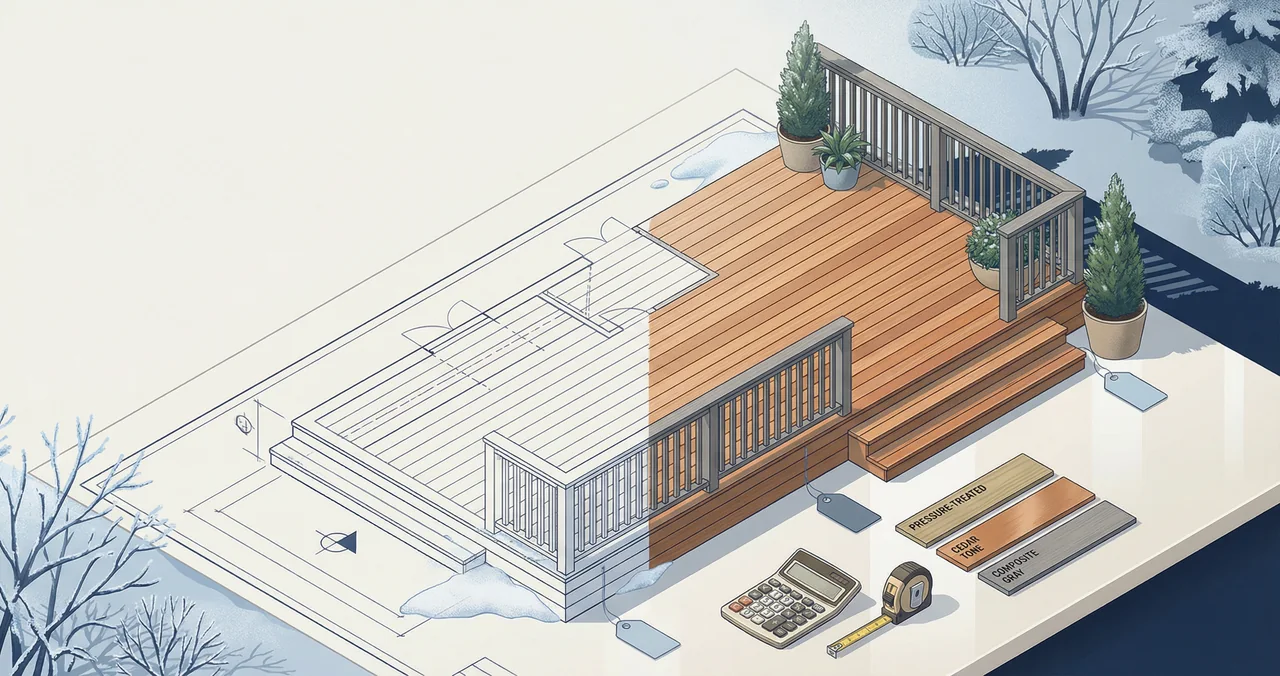
London homeowners know the value of outdoor living space. Whether you're backing onto a ravine in Byron, enjoying a mature treed lot in Old North, or maximizing a compact yard in Wortley Village, a well-built deck extends your home's usable square footage and creates a gathering spot for Ontario's short but beautiful summer season.
This guide covers what you need to know about building a deck in London, from local permits to climate considerations specific to Southwestern Ontario.
Common Deck Projects in London
Ravine and Treed Lots
🏗️ Planning a deck project?
Get a free manual project review, or visualize your dream deck with AI before requesting quotes.
Many London neighbourhoods feature mature trees and natural slopes. Elevated decks that work with grade changes are popular in areas like Byron, Medway, and Stoneybrook. These often require engineered footings and careful ledger attachment to handle height and load requirements.
Replacement Decks
Older London homes built in the 1970s-90s often have original wood decks that are past their lifespan. Homeowners are increasingly replacing pressure-treated lumber with composite materials that require less maintenance and handle freeze-thaw cycles better.
Walkout Basement Decks
Split-level and raised bungalows are common in London. Second-storey or elevated decks accessing walkout basements typically require permits and inspections due to their height and structural complexity.
Small Urban Decks
In denser areas like Old East Village and SoHo, compact ground-level decks (often under 200 sq ft) provide outdoor space without overwhelming small yards. Even these may require permits depending on height and setback.
London Deck Permits and Bylaws
The City of London requires building permits for most deck construction. Key rules include:
- Permit Required: Generally needed for decks over 24 inches (0.6m) above grade, or any deck attached to your home
- Setbacks: Decks must typically be set back from property lines (often 0.6m to rear/side yards, more to front yards)
- Zoning Compliance: Lot coverage and setback rules vary by zoning district
- Inspections: Footings/framing inspection before decking is installed, plus final inspection
Submit applications through the City of London's building division. Processing times vary, but expect 2-4 weeks for straightforward deck permits. For specific setback and zoning questions, check your property's zoning on the City of London GeoHub or call the building department directly.
If your property is designated heritage or in a heritage conservation district (common in Old North, Blackfriars, and parts of downtown), additional approvals may be needed.
Climate and Material Considerations
Freeze-Thaw Cycles
London experiences 60-80 freeze-thaw cycles annually. Footings must extend below the frost line (typically 4 feet in this area). Use frost-protected footings or helical piles in areas with poor drainage.
Moisture and Humidity
Proximity to the Thames River and London's clay soils mean some properties have higher moisture levels. Ensure proper flashing where the deck ledger attaches to the house, and consider joist tape to protect framing lumber from trapped moisture.
Material Durability
Pressure-treated lumber is the most affordable option but requires annual maintenance (staining, sealing). Composite decking costs more upfront but holds up better in London's wet springs and freeze-thaw cycles. For busy homeowners, composite often pays off over a 10-15 year period.
Snow Load
London averages 180-200cm of snow annually. Decks must be designed to handle snow loads per Ontario Building Code. This affects joist spacing, beam sizing, and post requirements—especially for larger or elevated decks.
Lot Sizes and Design
Lot sizes vary widely across London. Newer subdivisions (Oakridge, Summerside, White Oaks) often have smaller yards, while older areas (Lambeth, Westmount, Riverbend) feature larger lots with more flexibility.
Narrow Lots: Work with your builder to maximize usable space without violating setbacks. Multi-level decks or L-shaped designs can add square footage while staying compliant.
Corner Lots: Pay attention to front-yard setback rules, which often apply to both street-facing sides. Corner lot decks may need variance applications if they're visible from the street.
Privacy: London's mature neighbourhoods often have close neighbours. Lattice screens, privacy walls (check height restrictions), or strategic plantings can make your deck feel more private without a full fence.
Deck Types by Budget
Budget ($15-30/sq ft): Pressure-treated wood, basic railing, simple rectangular design
Mid-Range ($30-50/sq ft): Composite decking, upgraded aluminum or composite railing, built-in seating
Premium ($50-80+/sq ft): High-end composite or PVC, cable or glass railing, multi-level designs, integrated lighting, pergola or shade structure
Most London homeowners building a 200-300 sq ft deck spend $8,000-$15,000 for a mid-range composite deck installed.
Finding a Deck Builder in London
Look for builders with:
- WSIB coverage and liability insurance
- Experience with City of London permit process
- References from local projects
- Detailed quotes that itemize materials, labour, and permits
Get at least three quotes. Ask about warranty (2 years labour, 25+ years material for composite), timeline, and how they handle permit applications.
🎨 Not sure which material to pick?
Upload a photo of your backyard and see exactly how Trex, TimberTech, or cedar would look — free and instant.
Helpful Links
- Get Deck Quotes – Connect with local deck builders
- Deck Builders in Kitchener
- Deck Builders in Waterloo
- Deck Builders in Cambridge
- Best Time to Build a Deck in Ontario
- Composite vs Wood Decking: Ontario Homeowner's Guide
- Deck Permit Cost in KWC – Similar permit process to London
Upload a backyard photo and preview real decking materials with AI — free, instant, no sign-up.
Permits, costs, material comparisons, and questions to ask before requesting quotes — delivered to your inbox.