
Deck Builders in Bishop, Cambridge
Deck builders serving Bishop, Cambridge. Local permit expertise, climate-tested materials, and designs for Cambridge heritage homes. Get free quotes.
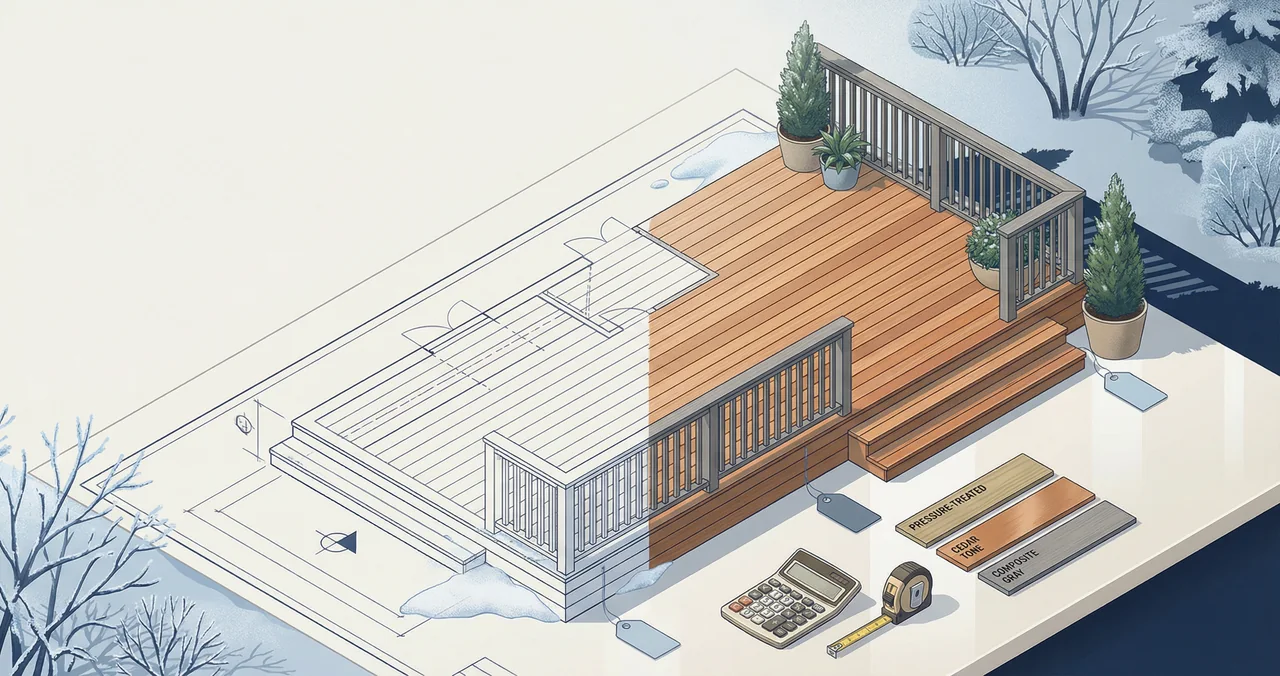
Bishop is one of Cambridge's mature neighbourhoods, characterized by well-established homes, mature trees, and lot configurations that often date back several decades. If you're planning a deck project here, you're likely working with an older home that may require structural considerations, permit applications through the City of Cambridge, and design choices that respect the neighbourhood's character.
Common Deck Projects in Bishop
Most Bishop homes were built between the 1960s and 1990s, and many have existing decks that are now at the end of their lifespan. Typical projects include:
🏗️ Planning a deck project?
Get a free manual project review, or visualize your dream deck with AI before requesting quotes.
Deck replacements: Older pressure-treated decks showing rot, loose railings, or outdated designs. Many homeowners upgrade to composite decking during replacement to avoid future maintenance cycles.
Ground-level rear yard decks: Bishop lots tend to be rectangular with moderate backyards. Ground-level decks (under 24 inches / 600mm high) are popular and often don't require a permit under Cambridge bylaws, making them a straightforward option.
Second-storey walk-out decks: Some Bishop homes have walk-outs from upper levels. These require structural ledger attachment to older framing, proper flashing to prevent water infiltration, and guardrails meeting current Ontario Building Code requirements (42 inches / 1070mm minimum height).
Privacy-focused designs: Lot spacing varies in Bishop, and many homeowners add privacy screens, lattice panels, or strategically placed planters to create screening from neighbouring properties.
Cambridge Permit Requirements
The City of Cambridge requires a building permit for most decks. Key permit triggers include:
- Decks over 24 inches (600mm) above grade
- Decks attached to the home (regardless of height)
- Decks over 108 square feet (10 m²)
Even if your deck falls under these thresholds, it must still comply with setback requirements (typically 0.6m from side and rear property lines) and lot coverage limits. Cambridge's permitting process involves submitting a site plan, framing drawings, and paying permit fees. Expect 2–4 weeks for approval.
If you're replacing an existing deck in the same footprint, the permit process is usually faster, but you still need to submit drawings and get approval before demolition. For detailed guidance, see our Cambridge deck permit guide.
Climate and Material Considerations
Bishop's location in southern Ontario means decks face freeze-thaw cycles, winter snow loads, and summer UV exposure. Material choices matter:
Composite decking has become the preferred option for many Bishop homeowners. It handles Ontario winters well, resists moisture damage, and eliminates the annual staining routine. Initial cost is higher, but long-term maintenance savings are significant. See composite vs wood decking comparison.
Pressure-treated lumber remains a cost-effective choice, especially for framing. All Bishop decks should use proper joist tape or flashing to prevent water penetration where the ledger attaches to the home—critical for older homes with limited exterior moisture barriers.
Footings and drainage: Cambridge's frost line requires footings at least 4 feet deep. Proper grading and drainage under the deck prevents ice buildup and water pooling near the foundation.
Working with Older Homes
Many Bishop homes have original siding, older rim joists, and settling foundations. Deck builders experienced with Cambridge heritage homes will:
- Inspect the condition of the rim joist and sheathing before ledger attachment
- Use proper flashing and membrane to prevent water damage to older framing
- Account for any foundation settling or unevenness when leveling the deck structure
- Match or complement the home's existing architecture and colour palette
If your home has brick exterior, ledger attachment requires masonry anchors and additional flashing details.
🎨 Not sure which material to pick?
Upload a photo of your backyard and see exactly how Trex, TimberTech, or cedar would look — free and instant.
Helpful Links
- Get Free Deck Quotes – Connect with local Cambridge deck builders
- Deck Builders in Cambridge – Cambridge-wide deck services and info
- Deck Builders in Kitchener
- Deck Builders in Waterloo
- Cambridge Deck Permit Guide
- Deck Cost in Cambridge 2026
- Best Time to Build a Deck in Ontario
Upload a backyard photo and preview real decking materials with AI — free, instant, no sign-up.
Permits, costs, material comparisons, and questions to ask before requesting quotes — delivered to your inbox.