
Above-Ground Pool: Deck vs Patio Surround in Ontario
Deck or patio around your above-ground pool? Compare costs, permits, safety, and longevity for Ontario's climate. Real 2026 pricing included.
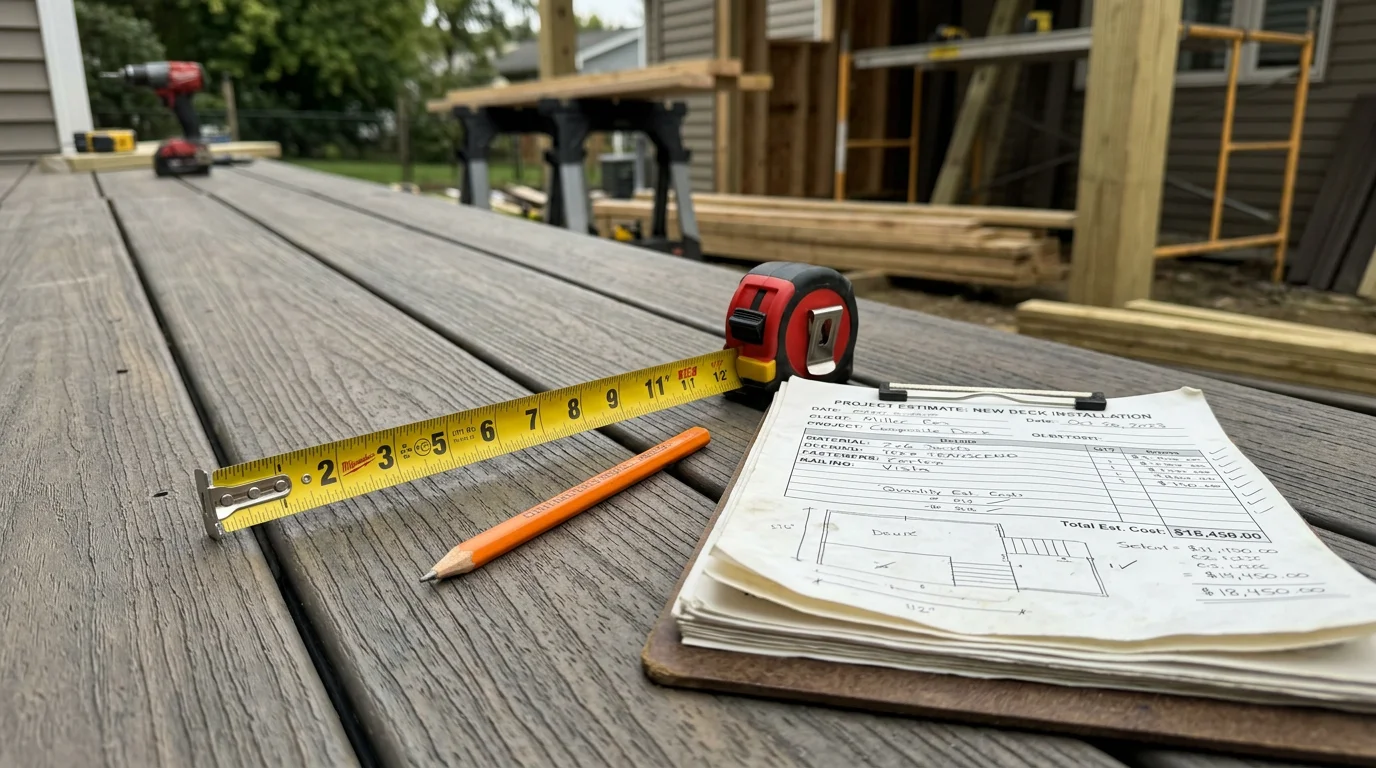
You've got an above-ground pool and you're tired of the flimsy ladder and mud pit around the rim. Should you build a deck or pour a patio surround?
The short answer: decks work better for most above-ground pools in Ontario because they create level access at the pool rim, handle grade changes easily, and don't require excavation. Patios work if your pool sits on flat ground and you're okay with a step-up entry.
Here's how to decide which option fits your site, budget, and how you actually use the pool. For full pricing details, see our Ontario deck cost guide.
Deck vs Patio: Key Differences
| Feature | Deck Surround | Patio Surround |
🏗️ Planning a deck project?
Get a free manual project review, or visualize your dream deck with AI before requesting quotes.
|---------|--------------|----------------|
| Cost (2026) | $25-50/sqft installed | $12-40/sqft installed |
| Pool Access | Level with rim (no stepping up) | Requires ladder or stairs unless pool is flush with grade |
| Ground Prep | Minimal — posts carry the load | Requires excavation, gravel base, compaction |
| Sloped Yard | Handles grade changes easily | Requires significant excavation or retaining walls |
| Permit Likely? | Yes, if >24" high or attached to house | Usually no, unless structural elements added |
| Winter Durability | Prone to freeze-thaw heaving if footings are shallow | Stable if base is properly compacted below frost line |
| Maintenance | Annual cleaning, staining/sealing for wood | Occasional power washing, rare crack repairs |
When a Deck Makes More Sense
Build a deck around your above-ground pool if:
You want level access at the pool rim. Decks can be built to any height, so you can step directly from the deck into the water without climbing a ladder. This is safer, more convenient, and essential if you have kids or older adults using the pool.
Your yard has a slope. Even a modest grade change (6-12 inches over 10 feet) makes patio construction expensive because you'll need to excavate tons of soil or build retaining walls. A deck uses posts to bridge the grade difference.
You don't want to dig. Deck footings go down 4 feet in Ontario (below the frost line), but you're only excavating narrow holes for sonotubes or helical piles. Patio construction requires excavating the entire footprint 8-12 inches deep, plus hauling away the spoil.
You're working with clay soil. KWC region clay expands and contracts dramatically with moisture changes. Deck posts isolated in concrete footings handle this better than a monolithic patio slab that can heave or crack.
You want a multi-level outdoor space. Decks naturally allow you to create zones — upper lounging area, pool-level platform, lower steps to the yard. Patios are flat.
Deck Cost Breakdown (2026 Ontario)
For a 10x20 foot deck surround (200 sqft, one long side of a typical 24-foot round pool):
- Pressure-treated wood: $5,000-7,500 installed ($25-37/sqft)
- Composite decking: $7,000-10,000 installed ($35-50/sqft)
Cost drivers:
- Height: Higher decks (36"+ above grade) require more structural lumber and longer posts
- Railing: Required if deck is 24"+ high — adds $30-60/linear foot
- Stairs: $800-1,500 per set
- Permit and inspection: $150-400 in KWC municipalities
A full wraparound deck (400-600 sqft around a 24-foot pool) typically runs $10,000-30,000 depending on material and complexity.
Composite decking requires less maintenance than pressure-treated wood, but costs 30-40% more upfront.
When a Patio Makes More Sense
Build a patio around your above-ground pool if:
Your yard is dead flat and the pool sits on grade. If there's no elevation change and you're comfortable using a ladder to enter the pool, a ground-level patio is the simplest option.
You want a lower upfront cost. Concrete and interlock patios cost $12-40/sqft, compared to $25-50/sqft for decks. For a 200 sqft surround, you'll save $2,000-4,000.
You prefer a low-maintenance surface. Concrete and pavers don't need annual staining or sealing. Power wash once a year and you're done.
You're planning to replace the pool soon. Patios are easier to repurpose than decks. If you upgrade to an inground pool in 3-5 years, the patio becomes patio furniture space. A deck built to pool rim height is awkwardly tall for general use.
You want a cooler surface. Composite decking gets hot in direct sun — too hot for bare feet on a July afternoon. Light-colored concrete or interlock pavers stay 10-15°F cooler.
Patio Cost Breakdown (2026 Ontario)
For a 10x20 foot patio surround (200 sqft):
- Poured concrete: $2,400-5,000 installed ($12-25/sqft)
- Interlock pavers: $4,000-8,000 installed ($20-40/sqft)
- Stamped concrete: $3,000-6,000 installed ($15-30/sqft)
- Natural stone: $6,000-12,000 installed ($30-60/sqft)
Cost drivers:
- Excavation depth: Clay soil in KWC requires 8-12" of excavation plus 6-8" compacted gravel base
- Drainage: Sloped sites need grading work or a retaining wall to prevent runoff under the pool
- Finishing: Stamped or exposed aggregate concrete costs more than basic broom-finish
Permit: Patios typically don't require permits in Kitchener, Waterloo, or Cambridge unless you're adding structural elements (roof, retaining wall over 3 feet).
Pool Access: The Make-or-Break Factor
Deck advantage: You can build the deck surface exactly level with the pool rim. Step from the deck directly over the wall into the water — no ladder needed.
Patio limitation: Unless you partially bury the pool (which creates drainage headaches and voids most pool warranties), the patio sits 2-4 feet below the pool rim. You'll still need an A-frame ladder or stairs built onto the pool wall.
If you have young kids, elderly family members, or anyone with mobility limitations, level access is a safety issue. Climbing a wet ladder is how people get hurt.
Ontario Building Code and Permit Requirements
Deck Permits
You likely need a permit for a pool deck if:
- Deck surface is 24 inches or more above grade (Kitchener's 24-inch rule applies)
- Deck is attached to your house
- Total deck area exceeds 10 square meters (~108 sqft) in some municipalities
Permit cost: $150-400 in KWC. Processing time: 2-4 weeks.
Your deck must meet Ontario Building Code requirements:
- Guardrails: Required if deck is 24"+ high, minimum 36" tall, pickets spaced max 4" apart (to prevent kids from squeezing through)
- Footings: Minimum 4 feet deep (below frost line) to prevent frost heaving
- Structural capacity: Decks must support 50 psf live load plus the weight of anyone leaning on the rail
Get the full breakdown of deck permit requirements for your municipality.
Patio Permits
Patios typically don't require permits unless you're adding:
- Retaining walls over 3 feet tall
- A roof or pergola structure
- Electrical for lighting
Check with your municipality if your patio involves significant excavation near your property line or drainage changes that affect neighbouring properties.
Handling Ontario's Freeze-Thaw Cycle
Ontario winters are brutal on outdoor structures. Here's how each option holds up:
Deck Durability
Frost heaving is the main risk. If your deck footings aren't deep enough (minimum 4 feet in Ontario), the freeze-thaw cycle will push them upward over winter, cracking the frame and creating an uneven surface.
Use helical piles or sonotubes with concrete footings below the frost line. Helical piles cost more upfront ($150-250 per pile vs $80-120 per sonotube) but install faster and don't require concrete curing time.
Decking material:
- Pressure-treated wood: Absorbs moisture, expands in summer, contracts in winter. Prone to cracking and splinters after 5-7 years without proper maintenance.
- Composite decking: Minimal expansion/contraction, no splinters, resists mold. Composite performs well in Canadian winters if you choose a brand rated for freeze-thaw cycles.
Patio Durability
Concrete slabs crack if the base isn't properly compacted or if water infiltrates before freezing. You need:
- 6-8 inches of compacted ¾" clear gravel base
- Proper slope (2% grade away from pool and house)
- Control joints every 8-10 feet to manage cracking
Interlock pavers handle freeze-thaw better than concrete because individual pavers can shift slightly without cracking. The polymeric sand between joints flexes with movement.
Drainage is critical. Water pooling under your patio or pool will freeze, expand, and heave the surface. Grade the base to direct runoff away from the pool and house foundation.
Combining Deck and Patio
Many Ontario homeowners build a hybrid: small elevated deck on one side of the pool (for level access) plus ground-level patio on the other sides (for lounging, furniture, lower cost).
Example for a 24-foot round pool:
- 8x12 deck on one side with stairs into pool (96 sqft, $3,000-4,800)
- Concrete patio around remaining perimeter (300 sqft, $3,600-7,500)
- Total: $6,600-12,300
This gives you easy pool access without the cost of wrapping the entire pool in elevated decking.
Maintenance Comparison
Deck Maintenance
Pressure-treated wood:
- Power wash annually (remove algae, mildew)
- Stain/seal every 2-3 years ($300-600 for materials + labour if you hire out)
- Inspect for loose boards, protruding nails, rot around footings
- Replace boards as needed (expect 10-15 year lifespan with proper care)
Composite decking:
- Power wash annually (low PSI, 1200-1500 max)
- No staining or sealing required
- Check fasteners and clips annually
- 25+ year lifespan with minimal maintenance
Winter maintenance matters too — avoid metal shovels and calcium chloride ice melt, which can scratch composite surfaces.
Patio Maintenance
Concrete:
- Power wash annually
- Seal every 2-3 years if you want to prevent staining and surface degradation ($0.50-1.50/sqft for sealer)
- Fill cracks as they appear (small cracks are normal, wide cracks indicate base failure)
Interlock pavers:
- Power wash and re-sand joints every 2-3 years ($200-400 for polymeric sand and labour)
- Replace individual pavers if they crack (easy fix, doesn't affect surrounding area)
- Re-level sunken sections if base settles
Patios generally require less annual maintenance than wood decks, but more intensive repairs if the base fails.
Resale Value and Pool Removal
Decks add perceived value because they look intentional and finished. A well-built deck signals that the pool area is a maintained outdoor living space, not just a seasonal afterthought.
Patios are more versatile if you remove the pool. A ground-level patio transitions easily to a seating area, fire pit zone, or garden space. An elevated deck built to pool rim height becomes a strange platform that doesn't fit the yard once the pool is gone.
If you're planning to sell within 5 years, consider whether the next buyer will want the above-ground pool. If not, a patio is easier to repurpose or remove.
What Contractors Actually Recommend
I talked to three deck builders and two concrete contractors in the KWC region. Here's what they see:
Deck builders: "Most clients want a deck because they're sick of the ladder. We usually build one side with full access and stairs, then the homeowner adds a small patio on the opposite side later if they want more space."
Concrete contractors: "Patios work if the yard is flat and you're just creating a splash zone around the pool. But if there's any slope or the client wants to walk straight into the pool, we tell them to call a deck builder."
Hybrid approach is popular: Small deck for access + patio for lounging gives you the best of both without blowing the budget.
🎨 Not sure which material to pick?
Upload a photo of your backyard and see exactly how Trex, TimberTech, or cedar would look — free and instant.
Common Questions
Can I build a deck around an above-ground pool myself in Ontario?
Yes, but you'll likely need a permit if the deck is over 24 inches high. You're also responsible for meeting Ontario Building Code requirements for footings, guardrails, and structural capacity. Most DIYers underestimate the complexity of attaching the deck frame to the pool structure safely — improper attachment can damage the pool wall or create a collapse risk. If you've never built a deck before, hire a pro or at least get the framing inspected before adding decking boards.
Do I need a fence around my above-ground pool in Ontario?
Yes. Ontario's pool enclosure requirements apply to above-ground pools if the pool wall is less than 48 inches high. If your deck provides access over a lower pool wall, the deck railing must meet pool barrier standards (max 4-inch gaps, self-closing/self-latching gate, no climbable elements within 3 feet). If the pool wall is 48"+ and there's no permanent access (ladder is removable), you may not need additional fencing — check with your municipality.
Will a patio crack under my above-ground pool?
Not if it's built correctly. The patio base (compacted gravel, proper drainage) needs to support the pool's weight when filled. A 24-foot round pool holds roughly 13,500 gallons (50,000 kg / 110,000 lbs). Spread over 450 sqft of base, that's about 245 psf — well within the capacity of a properly compacted gravel base and 4-inch concrete slab. The bigger risk is water pooling under the slab before freezing, which causes heaving. Grade the base away from the pool and ensure good drainage.
Can I use composite decking around a pool?
Yes, and it's popular because composite doesn't splinter (important for bare feet) and resists mold growth in wet environments. But composite gets hot in direct sun — surface temps can hit 120-140°F on a July afternoon, too hot to walk on. Choose a lighter color (grays, tans) to reduce heat absorption, or plan for shade structures over the deck. Read more about composite decking performance in Ontario.
How long does it take to build a deck or patio around a pool in Ontario?
Deck: 3-7 days for a simple surround (footings, framing, decking, railing). Add time for permit approval (2-4 weeks) and inspections (1-2 visits). Total timeline from quote to completion: 4-8 weeks.
Patio: 2-5 days for excavation, base prep, and installation. Concrete needs 7 days to cure before heavy use. Interlock pavers are ready immediately. No permit typically means faster start. Total timeline: 2-3 weeks.
Summer is peak season for both — expect longer lead times (6-10 weeks) if you're booking in May-July.
Looking for local pros? Check out Pool Deck Builders in New York: Best Materials & Contractors for 2026.
Looking for local pros? Check out Pool Deck Builders in Buffalo: Best Materials & Contractors for 2026.
Looking for local pros? Check out Pool Deck Builders in Georgetown: Best Materials & Contractors for 2026.
Upload a backyard photo and preview real decking materials with AI — free, instant, no sign-up.
Permits, costs, material comparisons, and questions to ask before requesting quotes — delivered to your inbox.