
Composite Decking Around a Pool in Canada: Best Options
Best composite decking for pools in Canada: slip-resistant, heat-tolerant boards that handle wet feet, chlorine, and Ontario winters. Compare brands, pricing, and installation.
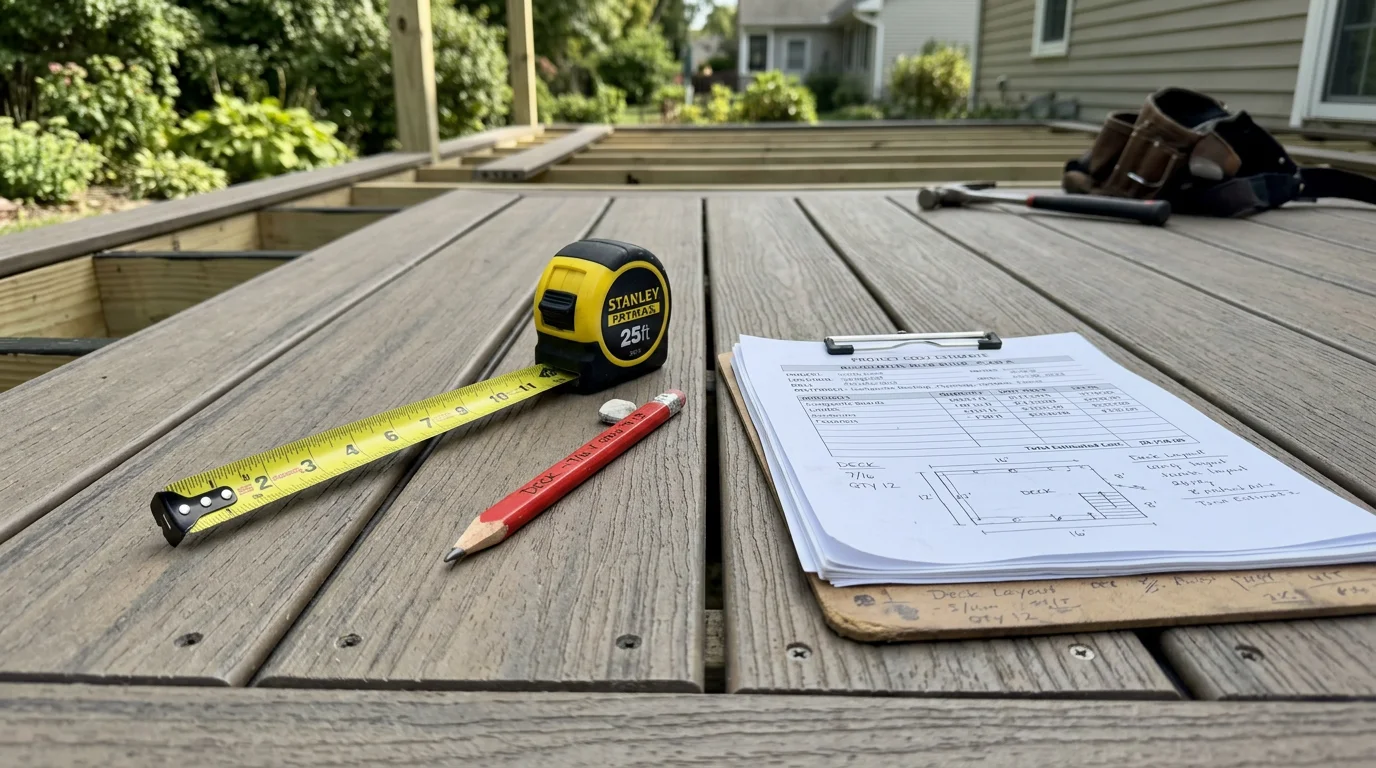
If you're building or replacing a pool deck in Ontario, composite decking solves the two biggest problems with wood around water: constant maintenance and splinter risk. But not all composite boards handle poolside conditions equally well. Some get uncomfortably hot in direct sun, others turn slippery when wet, and a few don't hold up against chlorine or freeze-thaw cycles.
Here's what actually works around pools in the Canadian climate—and what to avoid.
Why Composite Works Better Than Wood for Pool Decks
Wood pool Ontario deck guides face relentless punishment: chlorinated water splashes, barefoot traffic, UV exposure all summer, then freeze-thaw cycling all winter. Pressure-treated lumber cracks, splinters, and needs annual staining. Cedar resists rot better but still requires seasonal sealing and gets slippery when wet.
🏗️ Planning a deck project?
Get a free manual project review, or visualize your dream deck with AI before requesting quotes.
Composite decking eliminates the core maintenance loop. No staining, no sealing, no splinters. Most premium brands carry 25-year warranties covering fade, stain, and structural integrity—even in direct pool environments.
The typical installed cost difference in KWC:
- Pressure-treated pool deck: $45-65/sqft installed
- Composite pool deck: $65-95/sqft installed
That $20-30/sqft premium pays back in 5-7 years when you factor in wood staining ($3-5/sqft annually) and faster replacement cycles. See full regional pricing in our composite deck cost guide for Waterloo.
What to Look for in Pool-Grade Composite Decking
Not every composite board is pool-safe. You need three specific performance traits:
1. Slip Resistance When Wet
Wood-grain embossing provides better traction than smooth finishes. Look for boards with deep, varied grain patterns—not uniform linear grooves that channel water into slick tracks.
Best options:
- Trex Transcend: Multi-directional grain, rated for wet barefoot traffic
- TimberTech AZEK: Textured cap with high slip resistance even when saturated
- Fiberon Paramount: Deep wood-grain embossing, passes ASTM slip tests
Avoid: First-generation composite boards with smooth, glossy finishes. They're dangerous around pools.
2. Heat Tolerance and Reflectivity
Dark composite boards in direct sun can reach 60-70°C (140-160°F) on hot summer days—hot enough to burn bare feet. Light and mid-tone colors stay 10-15°C cooler than charcoal or dark brown boards.
Capped composite (polymer shell over composite core) reflects more heat than uncapped boards. If you want darker colors, stick with premium capped lines that use heat-reflective pigments.
Temperature comparison on a 32°C (90°F) sunny day:
| Board Color | Surface Temp |
|-------------|--------------|
| Light gray/tan | 40-45°C (104-113°F) |
| Medium brown | 50-55°C (122-131°F) |
| Dark charcoal | 60-70°C (140-158°F) |
For Ontario pools, light to medium grays and tans are the safest bet. If you're set on darker colors, consider partially shaded areas or adding pergola coverage over high-traffic zones (see pergola permit requirements).
3. Chlorine and Chemical Resistance
Pool water splashes chlorine, algaecides, and pH adjusters onto your deck constantly. Capped composite boards (Trex Transcend, AZEK, Fiberon Paramount) resist chemical staining and degradation far better than uncapped composite or PVC-only boards.
Uncapped boards absorb moisture and chemicals into the wood fiber core, leading to discoloration and surface breakdown over 5-10 years. Capped boards seal the core completely.
Best Composite Decking Brands for Canadian Pools
Trex Transcend
Why it works: Deep embossed grain, excellent slip resistance, 25-year fade/stain warranty. Proven freeze-thaw durability across Ontario winters.
Heat management: Medium. Lighter colors (Island Mist, Rope Swing) stay cool; darker colors (Spiced Rum, Lava Rock) get hot.
Cost in KWC (2026): Materials ~$8-12/sqft, installed $75-95/sqft
See full performance details in our Trex Canada review.
TimberTech AZEK
Why it works: 100% PVC construction (no wood fibers) means zero moisture absorption—critical for pool decks. Won't rot, warp, or absorb chlorine.
Heat management: Good. AZEK's "cool deck" technology reflects more heat than standard composites, though dark colors still warm up.
Cost in KWC (2026): Materials ~$10-14/sqft, installed $80-100/sqft
Best for: High-end pools, customers prioritizing lowest maintenance and longest lifespan.
Fiberon Paramount
Why it works: PermaTech capping resists scratches, fading, and chemical staining. Deep wood grain provides good wet traction.
Heat management: Medium. Similar to Trex—light colors perform well, dark colors heat up.
Cost in KWC (2026): Materials ~$7-11/sqft, installed $70-90/sqft
Best for: Budget-conscious builds that still need pool-grade performance.
Deckorators Voyage
Why it works: Mid-tier pricing with capped construction. Good slip resistance and fade warranty.
Heat management: Medium. No special heat-reflective tech, so stick to lighter colors.
Cost in KWC (2026): Materials ~$6-9/sqft, installed $65-85/sqft
Best for: Value option when premium brands exceed budget.
Compare more brands in our best composite decking guide for Canada.
Installation Considerations for Pool Decks in Ontario
Footing Depth and Drainage
Pool decks must meet the same Ontario Building Code footing requirements as any other deck: 48 inches (1.2 m) minimum depth to get below the frost line. If you're building on clay soil (common in KWC), expect some settling unless you use helical piles.
Drainage is critical. Slope the deck 1-2% away from the pool to prevent water pooling. Standing water shortens composite lifespan and creates slip hazards. See detailed drainage strategies in our under-deck water management guide.
Joist Spacing for Composite
Most composite manufacturers require 16-inch on-center joist spacing (some allow 12-inch for certain applications). Pool decks get heavier foot traffic and more thermal expansion/contraction than typical decks—don't try to save money by spacing joists wider.
Check the Ontario joist span table to ensure your framing meets code.
Fastener Selection
Use stainless steel or coated composite screws—never standard deck screws. Chlorine accelerates corrosion on exposed fasteners. Hidden fastening systems (Trex Hideaway, Fiberon Hidden Fastener) look cleaner and eliminate screw-head rust streaks.
Budget $1.50-3/sqft extra for hidden fastener systems.
Permit Requirements
Pool decks in Kitchener, Waterloo, and Cambridge follow standard deck permit rules. If your pool deck is:
- Elevated 24 inches or more above grade: Permit required
- Lower than 24 inches: Check municipal rules—some cities still require permits for pool surrounds regardless of height
Permit costs: $150-400 depending on city and deck size. Processing time: 2-6 weeks. See city-specific guides:
- Kitchener deck permit application
- Waterloo deck permit application
- Cambridge deck permit application
Maintenance: What You Actually Need to Do
Composite pool decks aren't zero-maintenance—they're low-maintenance. Here's the real routine:
Every 2-4 weeks (pool season):
- Hose down deck to remove chlorine residue, sunscreen, and dirt
- Sweep debris from between boards
Twice per year:
- Deep clean with composite deck cleaner or mild soap + water
- Check for mold/mildew in shaded areas (more common in humid summers)
Winter:
- Shovel snow promptly to prevent ice buildup
- Avoid metal shovels—use plastic blades to prevent scratches
- Don't use rock salt or calcium chloride; use composite-safe ice melt
See seasonal care details in our composite deck maintenance guide.
Expect 30-60 minutes per month for routine care—versus 8-12 hours annually for wood deck staining/sealing.
Cost Breakdown: Composite Pool Deck in KWC (2026)
Example: 400 sqft composite pool deck around above-ground pool
| Item | Cost |
|------|------|
| Composite decking (Trex Transcend, light gray) | $3,600-4,800 |
| Pressure-treated framing lumber | $800-1,200 |
| Hidden fasteners | $600-900 |
| Concrete footings (8 @ 48" depth) | $400-600 |
| Railing (40 linear feet, composite) | $1,600-3,200 |
| Labour (framing + decking) | $10,000-14,000 |
| Permit | $150-300 |
| Total installed | $17,150-24,000 |
Cost per sqft: $73-95/sqft installed
For pressure-treated wood with the same specs: $45-60/sqft installed
Budget tips:
- Choose mid-tier composite (Fiberon Paramount vs. AZEK) to save $2,000-3,000
- Skip railing if deck is under 24 inches high
- DIY the framing, hire pros for composite board installation (cuts labour by 30-40%)
Composite vs. PVC vs. Wood for Pool Decks
| Material | Pros | Cons | Cost (installed) |
|----------|------|------|------------------|
| Capped Composite (Trex, Fiberon) | Slip-resistant, moderate heat, low maintenance, Ontario-proven | Heats up in dark colors, higher upfront cost | $70-95/sqft |
| PVC (AZEK) | Zero moisture absorption, longest lifespan, good heat management | Most expensive, less "wood-like" feel | $80-100/sqft |
| Pressure-Treated Wood | Lowest upfront cost | Splinters, annual maintenance, slippery when wet, 10-15 year lifespan | $45-60/sqft |
| Cedar | Natural look, rot-resistant | Still requires sealing, splinters, gets slippery, expensive | $55-80/sqft |
Best choice for Ontario pool decks: Capped composite in light-to-medium colors. Balances cost, performance, and heat management.
Design Ideas for Composite Pool Decks
Multi-Level Pool Surrounds
Build two deck levels: upper level at pool coping height, lower level at ground grade with stairs connecting them. Creates visual interest and provides separate zones for lounging vs. wet foot traffic.
Add lighting on stair risers and deck perimeter for safety and ambiance (see deck lighting permit requirements).
Integrated Seating and Planters
Frame built-in benches using the same composite boards as decking. Run horizontal boards for seat surfaces, vertical boards for skirting. Add composite planter boxes at corners for greenery without maintaining in-ground beds.
Budget $200-400 per linear foot for built-in seating.
Border Patterns and Inlays
Use contrasting composite colors to create border patterns: dark perimeter boards with light field boards, or diagonal inlays around pool curves. Adds visual interest without paint or stain upkeep.
Expect 10-15% material waste for diagonal or patterned layouts vs. straight runs.
See more layout options in our pool deck ideas guide.
🎨 Not sure which material to pick?
Upload a photo of your backyard and see exactly how Trex, TimberTech, or cedar would look — free and instant.
Common Questions
Can you install composite decking directly on the ground around a pool?
No. Composite boards need airflow underneath to prevent mold and moisture buildup. Build a proper elevated deck frame with joists at least 6 inches above grade, even for low pool surrounds. This also ensures proper drainage away from the pool.
Do composite pool decks get too hot to walk on barefoot?
Dark colors (charcoal, espresso brown) can reach 140-160°F in direct sun—too hot for bare feet. Light to medium colors (grays, tans, light browns) stay 20-30°F cooler and remain walkable. If you want dark boards, add partial shade structures or limit dark colors to shaded areas.
How long do composite pool decks last in Ontario winters?
Premium capped composite (Trex Transcend, AZEK, Fiberon Paramount) handles freeze-thaw cycles well and carries 25-year warranties covering structural integrity and fade resistance. Expect 30+ year lifespan with basic maintenance. Uncapped composite or low-grade boards may show surface degradation after 10-15 years in wet pool environments.
Can you use composite decking around a hot tub?
Yes, but choose PVC or capped composite with high heat tolerance. Hot tub surrounds experience more extreme temperature swings and moisture exposure than pools. AZEK and TimberTech Premium perform best. Ensure your deck framing is engineered for the hot tub's filled weight (see hot tub structural requirements).
Do you need to seal or stain composite pool decking?
No. Composite boards come pre-colored and sealed during manufacturing. Never apply deck stain or sealant to composite—it won't absorb properly and voids your warranty. Routine cleaning with soap and water is the only maintenance required.
Upload a backyard photo and preview real decking materials with AI — free, instant, no sign-up.
Permits, costs, material comparisons, and questions to ask before requesting quotes — delivered to your inbox.